In this guide
- Why damp behaves differently in a listed building
- Do you need listed building consent for damp work?
- Finding the real cause of the damp
- Repairs that suit historic walls
- What to do, step by step
- Applying for consent when damp work is proposed
- For landlords, agents and buyers
- Perspective
- Book a survey before you plan the work
- FAQ
- Sources
Damp in a listed building is treated cause first, with the least intervention that works, and often with consent before anything is opened up. The right order is a careful survey that follows the water to its source, repairs to what is letting moisture in, and breathable materials where the fabric needs repair. A complimentary survey and written report from our in-house specialists gives you that evidence before you commit to any work or approach your local conservation officer.
Key Takeaways
- Work that affects a listed building’s special character needs listed building consent, and carrying it out without consent is an offence under section 9 of the 1990 Act.
- A high damp meter reading does not prove the cause. Historic England advises a staged, proportionate diagnosis that starts at the roof and follows water pathways.
- Gutters, drainage, ground levels, pointing and ventilation are the usual first fixes, and they often come before any wall treatment.
- Old walls dry through permeable materials such as lime. Cement, impermeable paints and sealed finishes can hold moisture in.
- A detailed written report from a specialist is what Dorset Council asks to see when a consent application involves damp.
Why damp behaves differently in a listed building
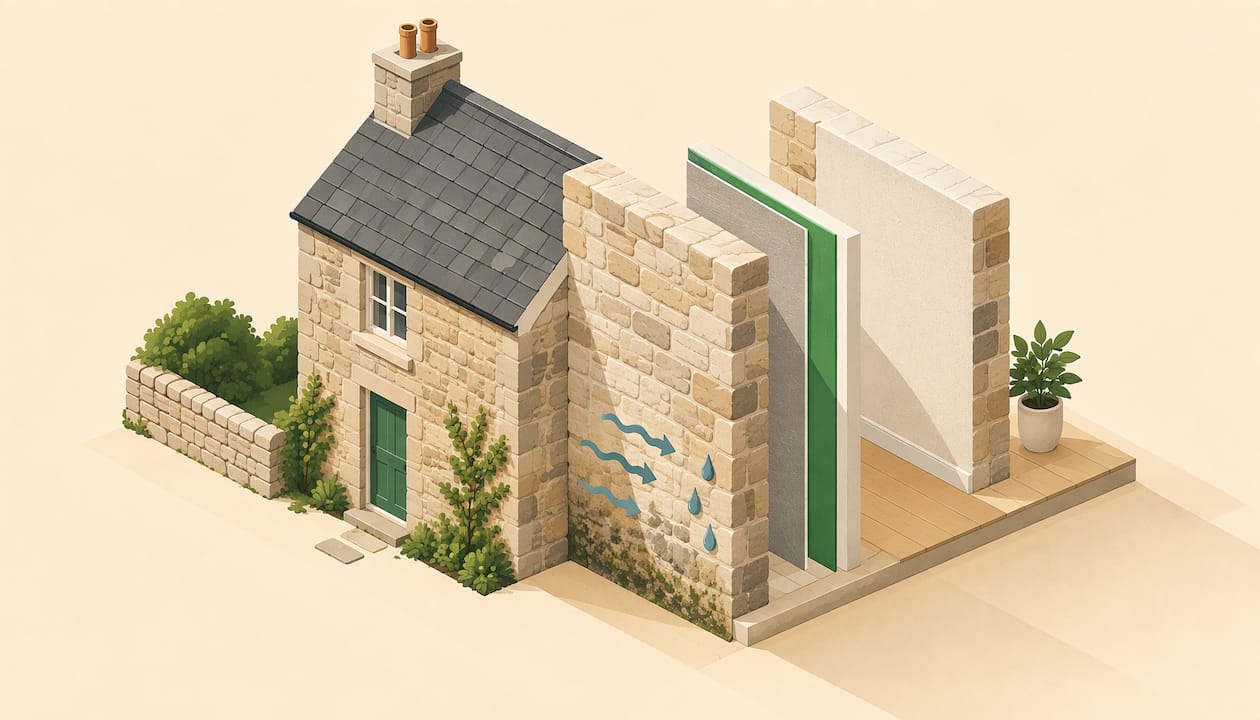
Most modern houses keep water out with barriers: a cavity, a damp-proof course, a sealed finish. Older solid-walled buildings work another way. They take in moisture and release it again through the surface. Historic England’s owners’ guide explains that older buildings rely on permeable materials, ventilation, heating and maintenance to stay dry.
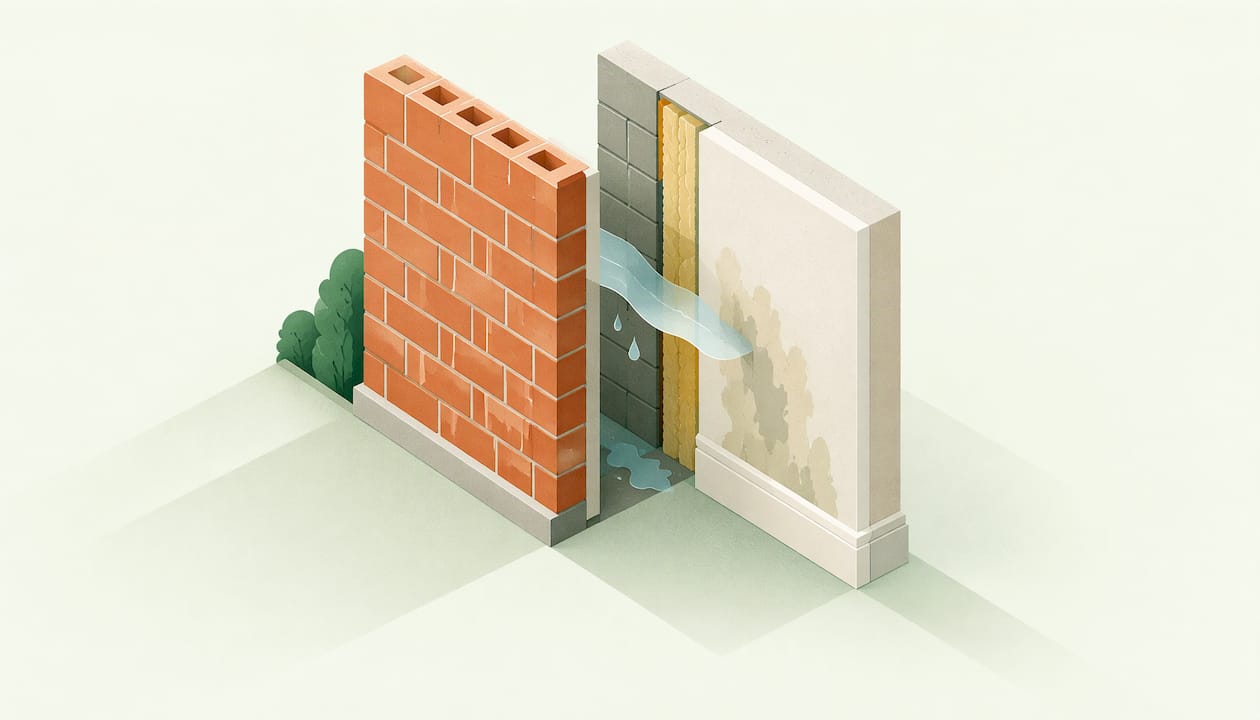
That changes what damp treatment means. A repair that is sensible in a 1990s house can upset the balance in a Georgian farmhouse or a medieval cottage. Cement pointing or render, for example, can stop evaporation from the wall and push moisture into timber, plaster or stone nearby.
For homeowners and landlords in Dorset, Hampshire and Wiltshire, this matters because the region has a large stock of listed cottages, farmhouses, town houses and converted barns, many with thick solid walls and lime or soft brick. Our guide to why homes in this area get damp covers the local pattern of rain, ground conditions and exposure.
Do you need listed building consent for damp work?
Listed building consent is permission from your local planning authority (the council) for work that affects the character of a listed building. The Planning (Listed Buildings and Conservation Areas) Act 1990 requires it for works affecting that character, and doing such work without it is a criminal offence. This applies in England and Wales.
The practical question is where damp work falls. Historic England says some work sits in a grey area: method, scale and intensity can change whether special interest is affected, so owners should ask the council before starting when unsure.
Work that usually needs consent
- Invasive investigation, such as opening up floors, stripping plaster or taking core samples. Historic England’s 2022 joint position statement says invasive investigations may need consent.
- Changing the type of material, for example replacing lime plaster with something else.
- Permanent new modern materials. The same statement says these are likely to need prior consent.
Work that often does not
Dorset Council says consent is not needed for damp repairs using permeable mortars, plasters or renders in matching materials. A change of materials does need consent. If you are unsure, the council’s conservation team is the body to ask. Routine upkeep, such as clearing leaves from a gutter, does not affect the building’s special interest.
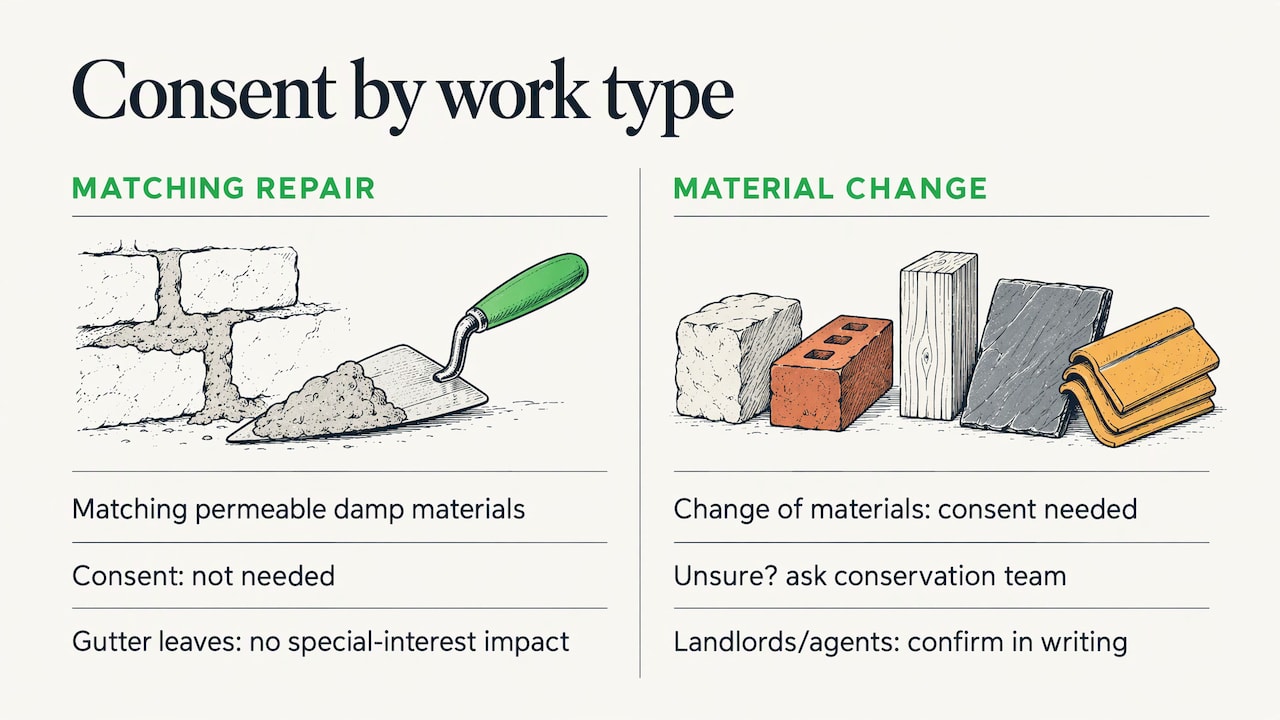
Rules sit with the local authority and can differ between councils and between a Grade II and a Grade I building. If you are a landlord or an agent handling a sale, confirm the position in writing with the conservation officer before work begins.
Finding the real cause of the damp
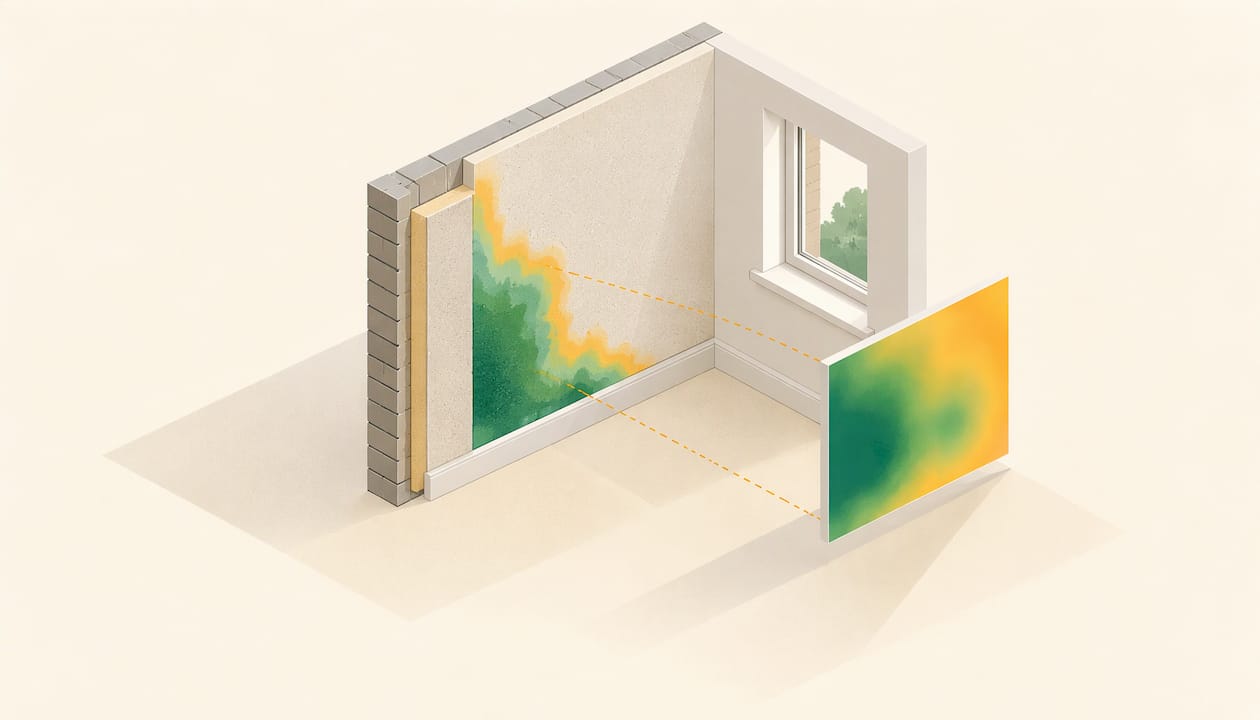
Most bad damp work in old buildings starts with a bad diagnosis. A meter reading on a wall tells you there is moisture there. It does not tell you why. Historic England’s guidance is blunt that high readings alone do not establish cause or justify invasive work. Salts in old walls can also distort meter results.
The recommended method is proportionate and staged:
- Look at the whole building. Its environment, construction, history and how it is used.
- Survey from the roof down. A leaking parapet gutter or failed valley can produce stains on a wall far from the source.
- Follow the water. Check rainwater goods, downpipes, gullies, pipework, window and door junctions, chimneys and flashings.
- Check ground and ventilation conditions. Raised external ground levels, hard paving against the wall and blocked air paths are common contributors.
- Monitor where needed. The 2022 joint statement recommends non-invasive inspection first, then correcting obvious defects, allowing time to dry and reassessing.
This is the approach our diagnostic survey is built around: identify the root cause, then tailor the treatment rather than guess. Our complimentary property survey is carried out by in-house specialists, and the findings come as a detailed written report you can keep, share with an agent or hand to a conservation officer.
A worked example
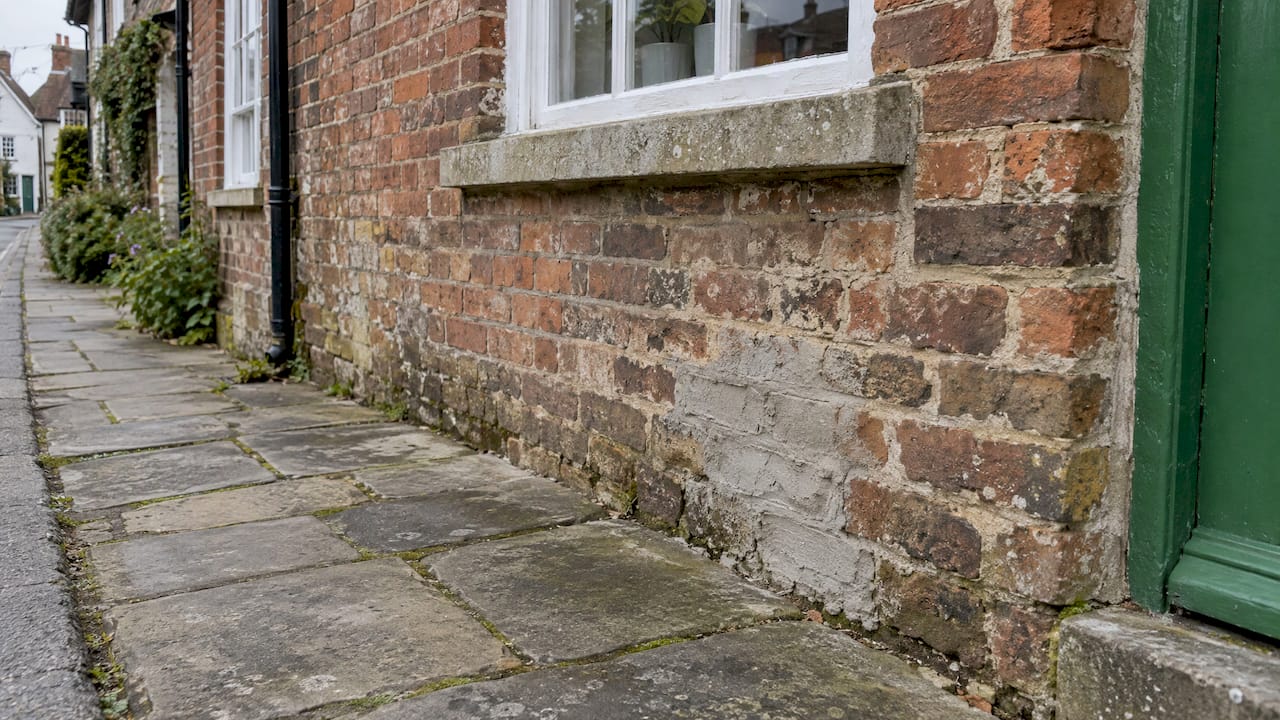
A damp patch appears low on the wall of a listed cottage near Salisbury. A meter shows high readings, and plaster is flaking. A symptom-led approach would strip the plaster and apply a barrier. A cause-led survey checks outside first and finds the gutter joint leaking onto the wall, a paved path raised against the base, and a cement-based repair to the pointing. Fixing those three items is a small, reversible job, and the wall is given time to dry before any internal finish is considered. Our Salisbury case study shows how drainage works feature in a real property.
Repairs that suit historic walls
Once the cause is known, the order of work for a listed building is consistent across the official and professional guidance.
Fix the source of water first
The Institute of Historic Building Conservation’s guidance says damp treatment should begin with effective rainwater goods and a check on whether cement render, plaster, mortar, paint, dry lining or tanking is contributing. It adds that drainage improvements and drying time can resolve many cases.
Roof and chimney defects are a frequent culprit. Our work on a leaking chimney in a Southampton home and a chimney breast in Southbourne show how stopping water at the point of entry removes the damp inside. Our roofing repairs and upgrades service covers this side of the work.
Use compatible, breathable materials
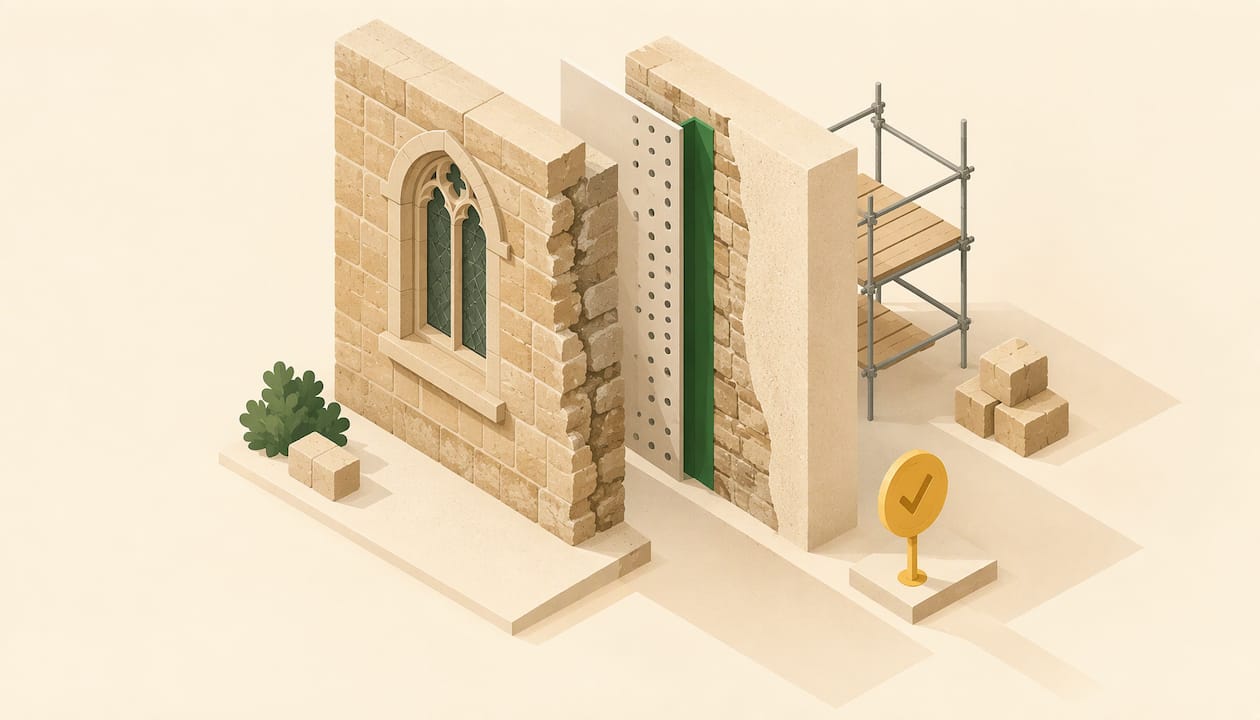
The Society for the Protection of Ancient Buildings (SPAB) advises first addressing the moisture source and then using conservative repair, noting that lime-based plaster and vapour-permeable finishes support drying in traditional buildings. The IHBC also cautions that soft, damp historic mortar may be helping the wall manage moisture, and that removing it without investigation or repointing with unsuitable material can damage fabric and change how the wall performs.
The same conservative thinking applies to every historic surface, including floors, where the aim is to keep original material and repair it sympathetically, as these historic floor preservation examples illustrate.
After earlier work, salts can remain in plaster. The New Forest National Park Authority notes that allowing plaster to dry, brushing off salts and repairing with lime plaster may be preferable where suitable.
Treat ventilation with care
More air is not automatically drier. Historic England’s 2025 guidance on environmental performance warns that outside air can carry more water vapour and cause condensation on cold historic surfaces, so ventilation should reflect indoor and outdoor conditions, the building’s condition and how it is used. Keeping existing air paths clear, and moving furniture away from affected walls, are simple first steps. For condensation and mould in occupied rooms, our condensation and ventilation and mould removal and air quality services address the moisture driving the problem.
Timber needs its own check
Persistent damp in old buildings often reaches roof timbers, floor joists, wall plates and lintels. Decay found early is easier to treat and smaller in scale. Our timber treatment service covers inspection and repair of affected timber.
What to do, step by step
| Step | What happens | Why it matters |
|---|---|---|
| 1. Confirm the listing | Check the grade and the list entry on the Historic England register | Sets the level of care and who to consult |
| 2. Non-invasive survey | Roof-to-ground inspection of water paths, with readings read in context | Avoids opening up fabric you may not need to touch |
| 3. Written report | Findings, likely causes, and proposed repairs set out | Supports your conversation with the council and any consent application |
| 4. Ask the conservation team | Confirm whether the proposed work needs consent | Unconsented work that needs consent is an offence |
| 5. Repair the source | Gutters, roof, chimney, drainage, ground levels, pointing | Often resolves the damp without touching the wall |
| 6. Allow drying and monitor | Give the wall time before any internal finish | Historic walls dry slowly |
| 7. Finish with breathable materials | Lime plaster and permeable finishes where repair is needed | Keeps the wall able to release moisture |
Applying for consent when damp work is proposed
Where consent is needed, the application must justify the work. The 2022 joint statement asks for the proposal to be justified and, where consent applies, a detailed heritage impact assessment. Dorset Council’s checklist, dated 31 July 2025, says applications involving damp should include the specialist technical report and recommendations where the work responds to specialist advice.
That is why the quality of the diagnosis matters beyond the repair itself. A clear written report, setting out what was found, where and why, gives the council what it needs to assess your proposal. Other councils publish their own checklists, so check yours.
For landlords, agents and buyers
Landlords carry the cost of getting damp wrong twice: once in repair, and again in tenant complaints and void periods. Estate agents and buyers need to know whether a listed property’s damp is a surface symptom or a structural issue before a sale proceeds. Our guide on whether you need a damp survey before buying covers that decision. For larger works, flexible finance is available for damp and mould projects.
Perspective
Listed buildings reward patience and punish shortcuts. The most common mistake we see described in the guidance is treating the wall that shows the damp rather than the defect that causes it.
Our approach is to survey first and to put what we find in writing. Every diagnostic and remedial job is carried out by our own in-house specialists, not subcontractors, so the person who reads the building is the person who repairs it. We follow industry standards and are PCA aligned and accredited.
For a listed property that means the conversation with a conservation officer starts from evidence: a specific cause, a proportionate repair and a clear record. Where we carry out treatment work, it comes with a 25-year insurance-backed guarantee.
The strongest outcome is a building that is dry because the water has been stopped at its source, and that still looks like the building it was.
Dylan
Book a survey before you plan the work
If your listed property in Dorset, Hampshire or Wiltshire has damp, mould or decayed timber, start with a diagnosis. Our complimentary survey is carried out by in-house specialists and produces a detailed written report, so you know the cause before you decide on repairs or speak to your council. See the full range on our damp, mould and timber services page or arrange your survey through the survey page.

Treatment work we carry out is covered by a 25-year insurance-backed guarantee.
FAQ
Can I use the same damp treatments on a listed building as on any other house?
Not automatically. Permanent new modern materials are likely to need prior consent, and changes of material in a listed building need consent. The usual route is to find the source of the water, repair it, and use matching permeable materials such as lime where finishes need replacing. Ask your council’s conservation team to confirm before work starts.
Is a damp meter reading enough to decide what work is needed?
No. Historic England says high readings alone do not establish the cause or justify invasive work. A survey that follows water pathways from the roof down, with monitoring where needed, gives a firmer basis for choosing repairs. Our written survey report sets out those findings.
Do I need consent to repair damp plaster or pointing?
Dorset Council says consent is not needed for damp repairs using permeable mortars, plasters or renders in matching materials, while a change of materials does need consent. Other councils may phrase their guidance differently, so confirm with your local conservation officer when you are unsure.
What happens if I do work without consent?
Carrying out work that needs listed building consent without it is an offence under section 9 of the Planning (Listed Buildings and Conservation Areas) Act 1990, in England and Wales. Check with your council first, and keep the written report and any correspondence on file.
Sources
- Planning (Listed Buildings and Conservation Areas) Act 1990
- Assessing Damp in Historic Buildings, Historic England
- Listed Building Consent advice note, Historic England
- Joint Position Statement on investigating moisture in traditional buildings
- A Guide for Owners of Listed Buildings, Historic England
- Understanding the Environmental Performance of Historic Buildings, Historic England
- Control of Dampness, SPAB
- IHBC guidance note on alterations to listed buildings
- Dorset Council, listed buildings and energy efficiency
- Dorset Council, listed building consent checklist
- Damp, rot and insect attack, New Forest National Park Authority