In this guide
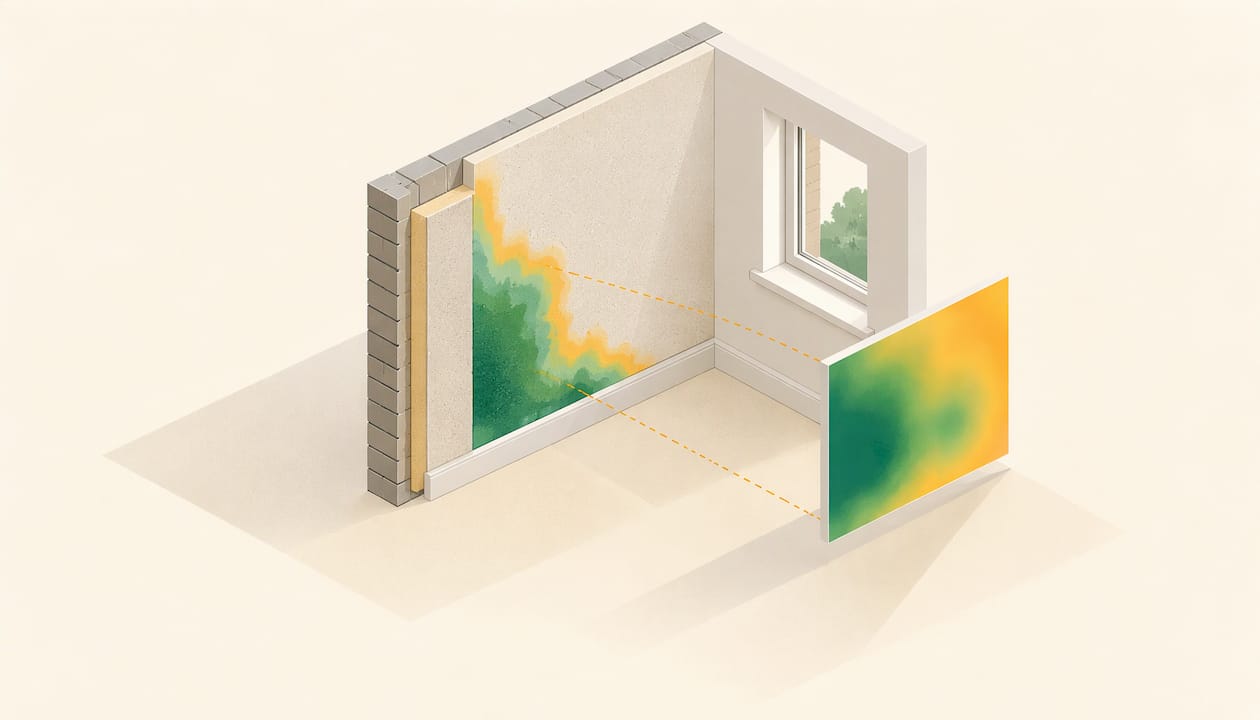
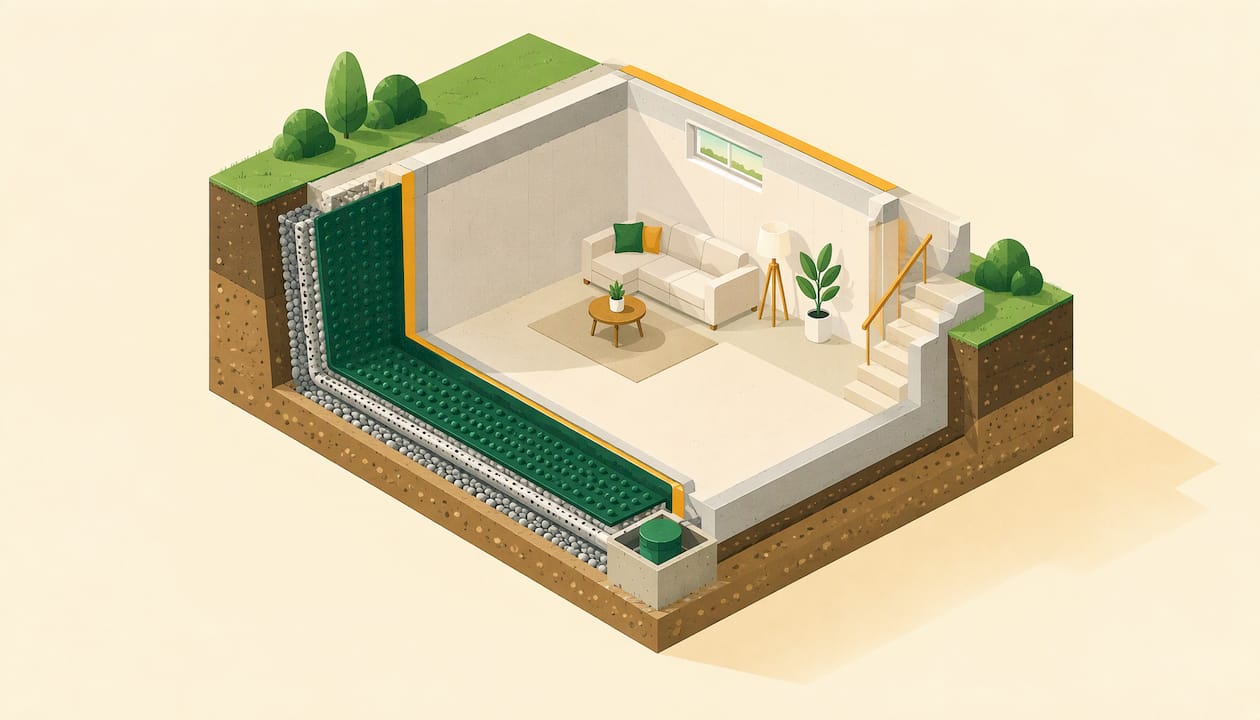
Damp in a Wiltshire stone cottage is rarely solved by treating the wall where the stain appears. Old solid walls behave differently from modern cavity walls, so the cause has to be found first and the repair matched to the building. That is how we approach every property: a complimentary survey, a written report that names the root cause, and treatment by our own in-house specialists. You can book one through our Wiltshire damp specialist page.
Key Takeaways
- Pre-1919 stone cottages are built to breathe: lime mortar, soft stone and lime plaster take in moisture and release it again.
- Most damp in these buildings traces back to defects such as failed gutters, high ground levels or blocked ventilation, not to rising damp.
- Repairs should be proportionate and staged: fix the obvious faults first, then monitor drying.
- Cement renders, tanking and paints can trap moisture in traditional walls and make the problem worse.
- A written report with a clear diagnosis and prioritised options protects owners, landlords and buyers.
Why stone cottages behave differently
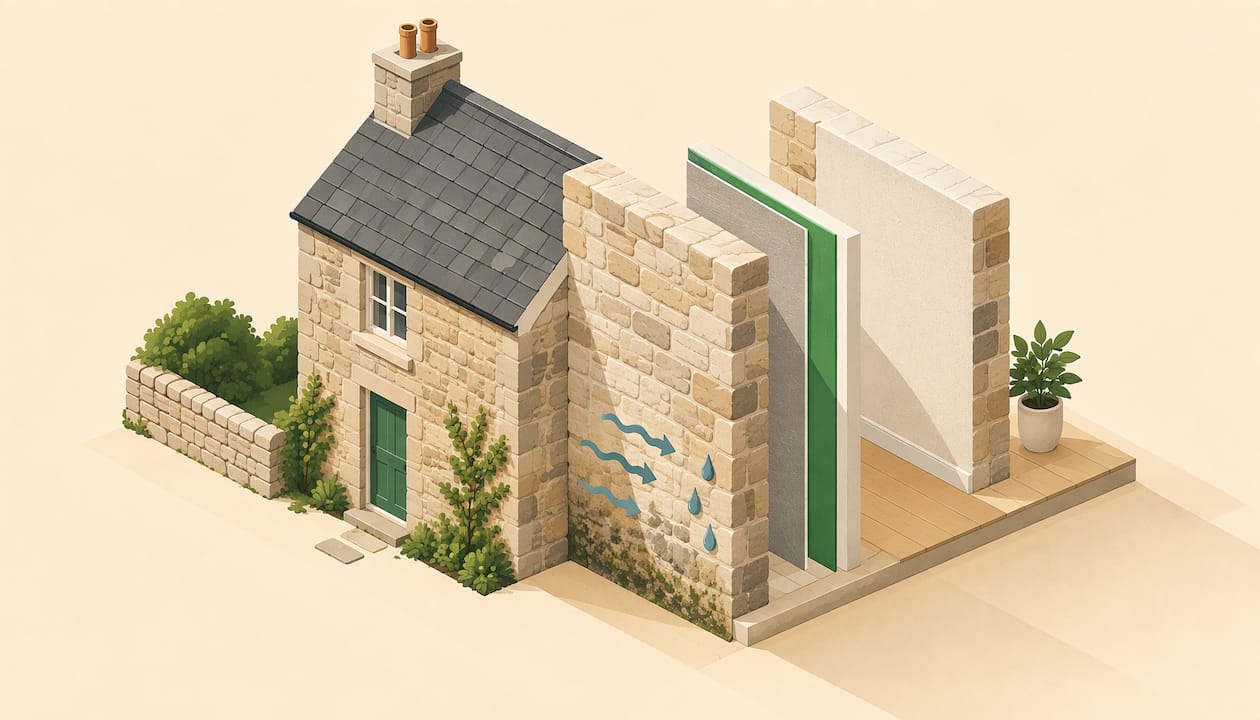
Most older Wiltshire cottages have solid walls of stone, lime mortar and lime plaster. The SPAB explains that buildings of this age typically use breathable materials that absorb more moisture than modern ones but also evaporate it readily. Where the construction can breathe, moisture rising from the ground is usually not a problem.
This changes what goes wrong. A modern house has a damp-proof course and a cavity. A cottage relies on moisture escaping through its walls. When something blocks that path, such as cement render, impermeable paint or raised soil outside, moisture builds up inside the wall and shows as stains, salts, peeling plaster or a musty smell.
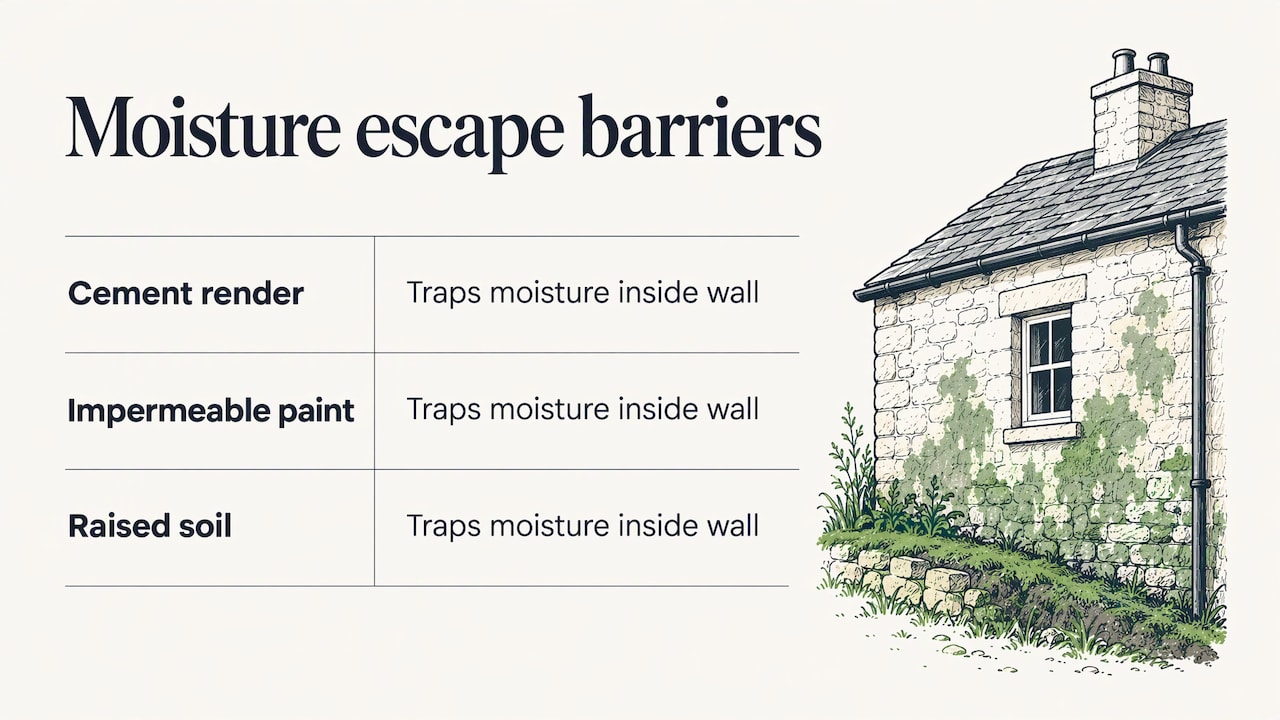
The practical result: the same visible symptom can have very different causes, and the wrong treatment can add to the damage.
Common causes of damp in Wiltshire stone cottages
Cotswold District Council lists the usual culprits in similar stone buildings:
- Blocked or damaged gutters and downpipes, which soak the wall below.
- Burst or leaking pipework.
- Slipped or damaged roof slates.
- Blocked ventilation bricks.
- A high water table.
- Ground levels raised against the wall, often by patios, paths or garden beds.
Each of these is a fault with the building or its surroundings. None is cured by a coating on the inside face of the wall.
Rising damp: real, but often over-diagnosed
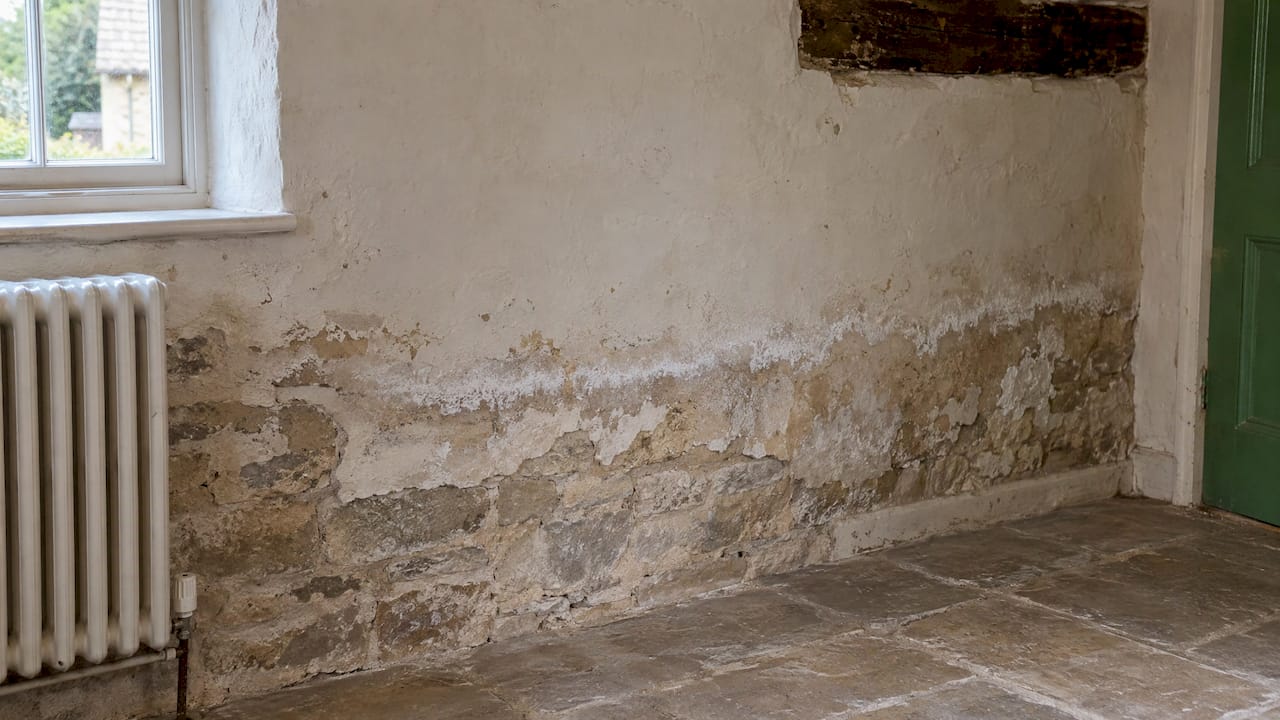
Rising damp is ground moisture moving up through masonry by capillary action. The SPAB notes it can reach 900 mm or more depending on the masonry, water table and evaporation rate, and leaves a horizontal tide-mark of salts. A moisture meter reading alone does not prove it, because salts in old walls can give false readings. This is why a survey must look at the whole building: roof, rainwater goods, ground levels, ventilation and how the cottage is lived in.
Condensation and mould
Cottages with new windows, blocked chimneys or limited extraction can trap humid air. The result is mould on cold walls and around windows. This is a ventilation and heating problem, and we treat it as one through our condensation and ventilation work and our mould removal and air quality service.
What a good survey covers
If the source is not obvious, Cotswold District Council advises using a suitably qualified surveyor whose work follows BS 7913, BS 5250, BS 6576 and the RICS Joint Position Statement.
Historic England’s Joint Position Statement, written with RICS and the PCA (Property Care Association), sets out what a report should contain:
- A summary of observations and an assessment of the building’s significance.
- An impartial diagnosis that deals with causes, not symptoms.
- Prioritised repair options with their advantages, disadvantages, cost and time.
- Where appropriate, a clear statement of whether the building is a financial risk to a buyer or lender.
Investigations should also be proportionate. Historic England’s guidance on assessing damp says one visit may be enough or a longer monitoring period may be needed, and that on historic buildings invasive measurement may not be permitted, so non-destructive methods are used.
Our survey follows this logic. It is complimentary, and the written report sets out the root cause so that treatment is tailored to it rather than guessed. Details are on our survey page.
What it costs
Our survey is complimentary. For independent reports from other types of surveyor, fees vary with property size, access and level of detail, so ask for a fixed quote that states what the report includes.
Repairs that suit traditional stone walls
The order of work matters. The Joint Position Statement describes damp treatment as often staged: deal with defects first, including ventilation, ground levels and lifestyle factors, then allow a monitoring period for walls to dry naturally before any further treatment.
In practice, for a Wiltshire cottage that means:
- Stop water getting in. Clear and repair gutters, downpipes and roof coverings. Our roofing repairs and upgrades team handles this, and a case such as our stable roof leak and mould fix near Andover shows the link between a roof fault and internal mould.
- Lower ground levels and improve drainage. Where soil or paving sits against the wall, reducing it lets the wall dry. Our Salisbury damp proofing and French drain case shows drainage used alongside an internal system.
- Restore ventilation. Unblock air bricks and add extraction where moisture is generated.
- Let the wall breathe. The SPAB recommends lime-based plasters and vapour-permeable paints, with limewash as the most tolerant and permeable finish.
- Monitor. Walls dry slowly, so periodic checks over several months show whether the repair has worked.
What to avoid
Cotswold District Council advises that in traditional buildings, injected damp-proof courses, cement plaster or render, and waterproofing such as tanking or paints are unlikely to solve the problem and may worsen it. The SPAB likewise argues for a presumption against retrofitted damp-proof courses in pre-1919 buildings, while noting that chemical injection is the only method currently holding an Agrément or third-party certificate. Where a treatment is justified, the survey report should say why, for that wall and that cause.
If your cottage was built after 1919, or has a modern extension or concrete floor, the picture can differ, and the diagnosis will show which approach fits each part of the building.
Listed cottages
Many Wiltshire cottages are listed or in conservation areas. Historic England’s statement notes that permanent new modern materials in a listed building are likely to need prior Listed Building Consent. Check with your local planning authority before work starts. Your survey report should record the building’s status so that options are chosen with it in mind.
Humidity control and heritage
If you are considering mechanical humidity control in a protected building, consent and humidity control for listed buildings is worth reading alongside your survey findings.
Landlords, agents and buyers
Damp often surfaces at sale. New Forest National Park guidance notes that mortgage valuation surveys frequently flag it, and that a wrongly interpreted report can lead to inappropriate conditions or damaging work.
For sellers, the NRLA says that if a buyer asks, remedial work such as damp-proofing must be disclosed, and paperwork, certificates and guarantees should be made available. The Law Society’s TA6 notes state that sellers must answer truthfully and completely, that buyers can rely on the answers, and that misleading information may lead to a compensation claim after completion. Speak to your conveyancing solicitor about what applies to your sale.
A written root-cause report, together with a guarantee on treatment work, gives agents, landlords and buyers a documented position. Our treatment work carries a 25-year insurance-backed guarantee.
Perspective
In our experience as an in-house team, the stone cottage problems that come back are the ones treated at the symptom. A stain on a plaster wall tells you where moisture is arriving, not why. That is why we start with diagnosis and put the findings in writing.
We carry out our diagnostic and remedial work ourselves rather than through subcontractors, and we work to industry standards as a PCA-aligned and accredited contractor. For a Wiltshire cottage, that means one team that understands the whole building: roof, drainage, ventilation, walls and timber. We want the owner to see the cause, the options and the order of work before any treatment is agreed.
Our aim is a repair that suits the wall, backed by a 25-year insurance-backed guarantee on treatment work.
Dylan
Getting your cottage assessed
We offer a complimentary property survey with a detailed written report covering damp, mould and timber. Treatment, where needed, is carried out by our own specialists and backed by a 25-year insurance-backed guarantee. Our Salisbury damp proofing page covers work in south Wiltshire.

Book your complimentary property survey to find the cause of damp in your cottage.
FAQ
Can you damp proof a stone cottage?
Yes, but the method must suit the building. Traditional walls usually do best when defects are fixed first and the wall is allowed to breathe with lime-based finishes. Any treatment should follow a written diagnosis of the cause.
What happens in a damp and timber survey?
The surveyor inspects the building, measures moisture, looks at the roof, drainage, ventilation and timbers, and identifies the cause. The report should give prioritised repair options. In older buildings, non-destructive methods are often used.
Is it illegal to sell a house with rising damp?
No. However, sellers must answer buyers’ questions truthfully and must not hide defects, for example by painting over damp patches. Remedial work such as damp-proofing must be disclosed if the buyer asks. Your conveyancer can advise on your sale.
Do I need consent to treat damp in a listed cottage?
Possibly. New permanent modern materials in a listed building are likely to need Listed Building Consent. Check with your local planning authority before work begins.
Sources
- SPAB: Control of Dampness
- SPAB: What is rising damp?
- Cotswold District Council: Damp
- Historic England: Joint Position Statement on investigating moisture
- Historic England: Assessing Damp in Historic Buildings
- New Forest National Park: Damp, rot and insect attack
- NRLA: Selling a property with physical problems
- Law Society: TA6 explanatory notes
- Consent and humidity control for listed buildings