
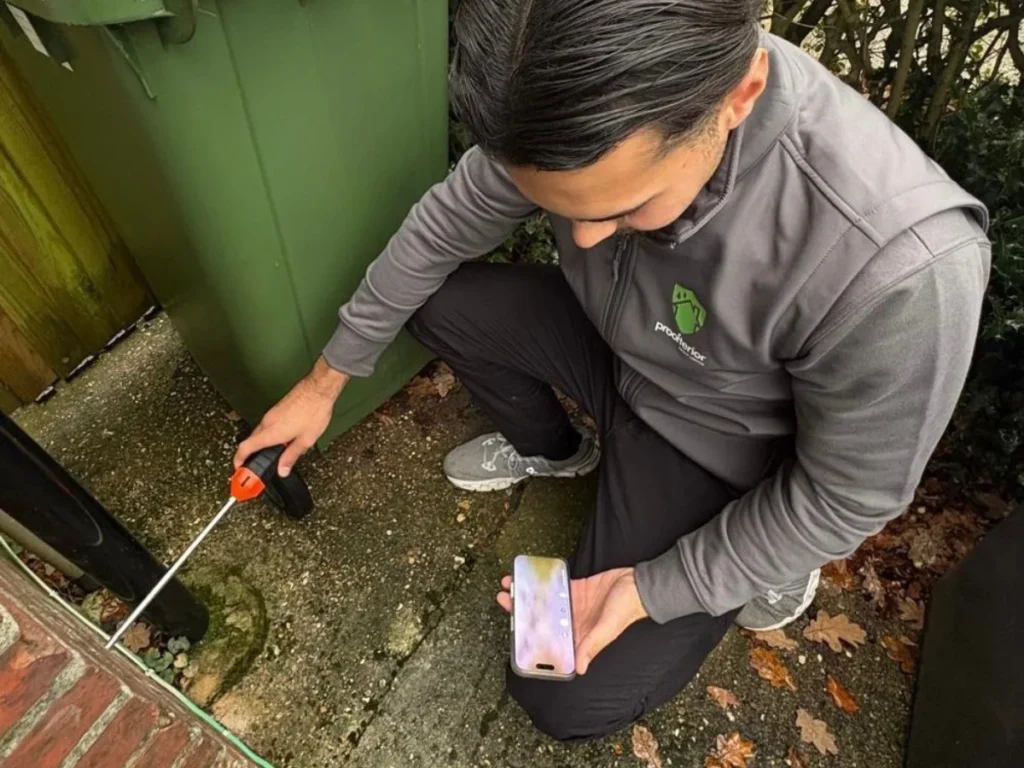
You need a specialist damp survey before buying a house if your RICS Home Survey or mortgage valuation mentions damp, high moisture readings or timber defects, or if the property is old, has solid walls, a basement or cellar, or visible signs such as tide marks, mould or a musty smell. A specialist survey tells you the real cause, the right repair and its likely scale before you commit.
Key facts
- General building surveyors usually use a moisture meter designed for timber. On masonry and salty plaster it can give high readings that do not mean the wall is wet.
- That is why RICS surveys often recommend “further investigation by a damp specialist” rather than giving a diagnosis.
- A specialist damp and timber survey identifies the type of damp (rising, penetrating, condensation or a leak), the cause and the repair needed.
- Mortgage lenders sometimes hold back part of a loan until a damp or timber report is provided.
- A written report can support price negotiations with the seller.
Why your home survey may flag damp
A RICS Level 2 or Level 3 survey is a general inspection of the whole building. Surveyors check walls with a handheld moisture meter. These meters are calibrated for wood, so on brick, stone and plaster, and especially where there are salts, they often read high even when the wall is not actively damp. The surveyor cannot dig further in a general survey, so they flag it and recommend a specialist.
That flag does not always mean there is a serious problem. It means someone needs to find out.
What a specialist damp survey checks
- Moisture profiles up and across walls, to show whether damp rises from the ground or comes from elsewhere.
- Salt testing, which separates genuine rising damp from contamination or condensation.
- Humidity and surface temperature readings for condensation risk.
- Timber checks for wet rot, dry rot and woodworm in floors, joists, skirting and roof timbers.
- Subfloor ventilation and air bricks.
- Outside: ground levels, pointing, render, gutters, downpipes and chimneys.
- Cavity walls, including whether insulation has got wet, using a borescope where needed.
You should receive a written report with photographs, the cause, the recommended repair and an itemised quote. See what a damp survey involves.
Which properties most need one
- Houses built before about 1920 with solid walls, common across Bournemouth, Southampton, Portsmouth and the market towns.
- Homes on low ground near rivers or harbours.
- Basement and lower-ground flats, and homes with cellars.
- Coastal homes exposed to driving rain and salt air.
- Homes with recent cavity wall insulation, cement render or fresh redecoration that may hide problems.
- Listed and period buildings, which need breathable repairs.
Warning signs to look for on a viewing
- A musty smell, especially in cupboards, under stairs and in cellars.
- Tide marks, bubbling paint or crumbling plaster low on walls.
- Black mould in corners, around windows or behind furniture.
- Fresh paint or new plaster on just one patch of wall.
- Soft or springy floors, or rotten skirting boards.
- Raised patios or flower beds against outside walls.
- Stained chimney breasts or ceilings.
Using the report to negotiate
A clear, itemised specialist report gives you facts to take back to the seller. You can ask for the price to reflect the work, ask the seller to complete repairs before exchange, or walk away knowing the scale of the problem. A report also gives your lender what it needs if it has asked for one.
Common questions
Do I need a damp survey if my RICS survey mentions damp?
Yes. A general survey can only flag possible damp. A specialist damp survey confirms whether it is real, what is causing it and what the repair involves, before you commit to buy.
Are moisture meter readings in a home survey reliable?
Not on their own. Most handheld meters are designed for timber and can give high readings on masonry and salty plaster that is not actually wet. Specialist testing is needed to confirm damp.
Can I still buy a house with damp?
Yes. Most damp problems can be fixed. A specialist report lets you understand the cost and use it to negotiate, or ask the seller to carry out the work before completion.
How long does a damp survey take?
Most take one to two hours on site, depending on the size of the property. You then receive a written report with photographs and a quote.
Do you carry out damp surveys for buyers in Dorset, Hampshire and Wiltshire?
Yes. Call 01202 287503 or request a callback, and tell us your timescale so we can fit around your purchase.
Get a straight answer for your home
Book a complimentary In-Depth Survey and one of our ISSE-accredited surveyors will find the cause, show you the readings and give you a written, itemised quote. Proofterior is a Which? Trusted Trader, and our work carries a 25-year, GPI insurance-backed guarantee. Call 01202 287503 or request a callback. We'll phone you back within 5 minutes.