
Penetrating Damp Treatment in Dorset & Hampshire - Identifying external moisture ingress and protecting your homefrom Moisture Damage and Structural Decay
Penetrating damp occurs when water passes through external walls, roofs, or structural defects and enters the internal fabric of a property. Unlike rising damp, which moves upward from the ground, penetrating damp travels horizontally through masonry and is usually linked to building defects or weather exposure.
At Proofterior, penetrating damp treatment is always survey-led. We identify the precise moisture pathway before recommending corrective works, ensuring the cause is resolved rather than symptoms being covered.
Rain penetration through masonry, commonly known as penetrating damp, occurs when moisture enters a building from the outside due to defects in the structure or external envelope. It can affect walls, ceilings, and internal finishes at any level of a property, not just ground floor areas.
Penetrating damp is typically caused by:
Wind-driven rain
Defective brickwork or eroded pointing
Cracked or porous render
Failed flashing around chimneys or roof junctions
Roof defects or slipped tiles
Blocked or leaking gutters and downpipes
External ground levels bridging damp protection
It is also increasingly common in cavity wall construction where cavity wall insulation has been poorly installed or used in walls unsuitable for insulation. Saturated insulation can bridge the cavity and allow rainwater to transfer from the outer wall to the inner wall. Water can also cross cavities due to incorrectly positioned wall ties, debris or mortar obstructions, or other construction defects that prevent proper drainage.
Because penetrating damp is linked to structural weaknesses and weather exposure, symptoms often worsen during heavy rainfall or prolonged wet conditions.
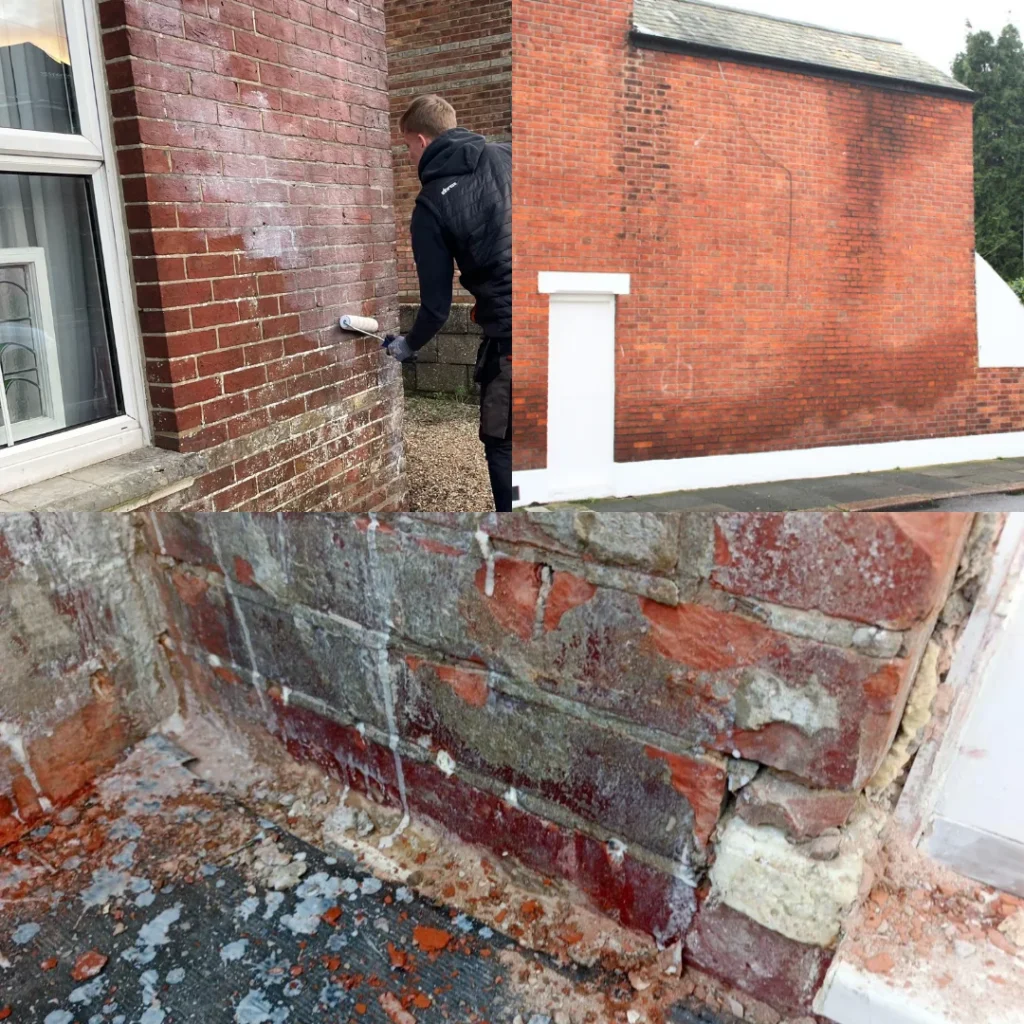
Identifying these early ensures swift action can be taken to stop penetrating damp before it causes further damage or causes structural issues such as wet rot or dry rot. A damp and timber survey can be used to identify the source of moisture and recommend remedial treatments, if necessary.
Damp patches that darken during heavy rain
Localised staining on walls or ceilings
Peeling paint or blistering plaster
Crumbling render externally
Moss growth or vegetation on walls
Damp around window reveals or chimney breasts
Salt deposits on wall surfaces
Mould growth in isolated areas
These signs often indicate water is entering through a defect rather than rising from below.
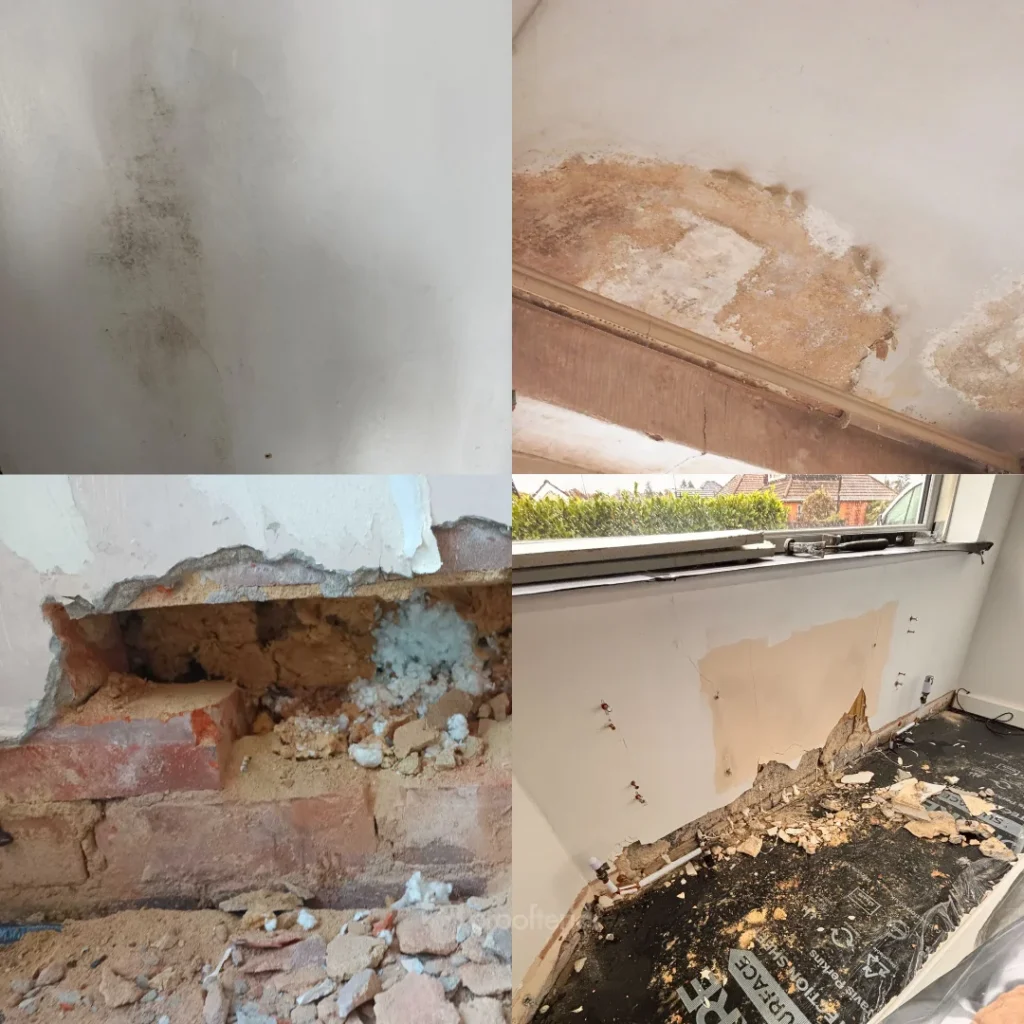
Penetrating damp can affect any part of a property where the external structure allows rainwater to enter. Unlike rising damp, it is usually linked to specific defects and often worsens during heavy rainfall.
The most common areas to check include:
Roof
- Missing or slipped tiles, damaged ridge tiles, failed pointing, and defective flashing around chimneys or roof junctions can all allow water to track into the structure. Even small defects at roof level can lead to damp ceilings and upper wall staining.
Windows and Door Frames
- Gaps, cracked sealant, or poorly sealed frames can let rainwater seep into surrounding masonry. Over time, this can cause damp patches around reveals and internal plaster damage.
External Walls
- Cracked brickwork, eroded mortar joints, porous masonry, or damaged render allow rainwater to soak into the wall. In exposed areas, wind-driven rain can push moisture deep into the structure.
Gutters, Downpipes and Drainage
- Blocked, leaking, or overflowing rainwater goods can saturate external walls. Persistent water running down masonry increases the risk of penetrating damp internally.
Chimneys
- Damaged brickwork, cracked flaunching, or failed flashing around chimneys can direct water into roof voids and internal walls.
If left unresolved, these defects allow repeated moisture ingress, which can lead to internal damp staining, mould growth, and deterioration of plaster and timber.
A professional damp survey identifies exactly where water is entering and ensures repairs focus on restoring the building’s weather protection rather than treating symptoms alone.
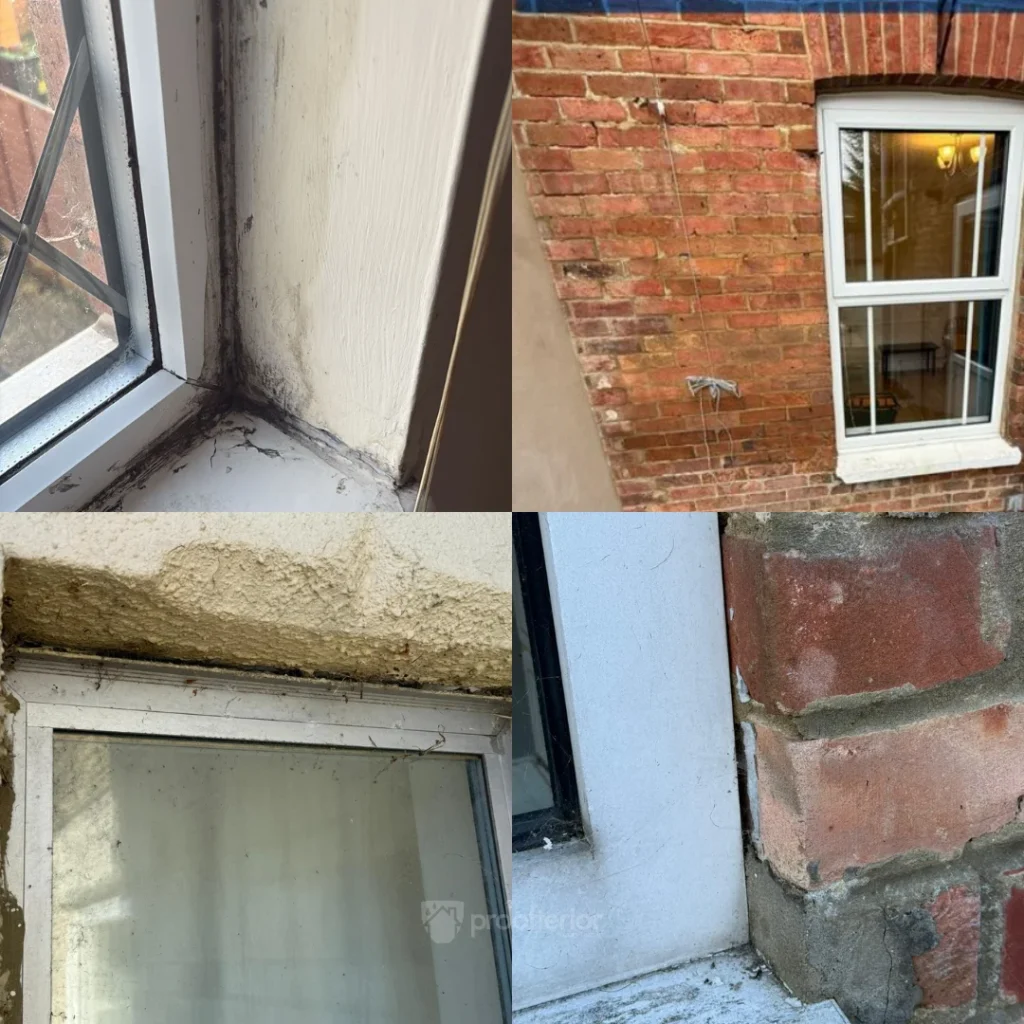
Penetrating damp treatment begins with a detailed damp survey to identify where water is entering the property. Because penetrating damp is caused by building defects, accurate diagnosis is essential before any remedial work is carried out.
At Proofterior, we inspect external walls, brickwork, render, flashing, roof coverings, gutters, and drainage systems, alongside internal moisture patterns, to pinpoint the exact source of water ingress. Once confirmed, we implement a tailored repair plan focused on restoring the building’s weather resistance.
Treatment may include:
Brick repointing and masonry repairs
Render crack repairs
Flashing replacement
Roof repairs
Gutter and drainage improvements
Breathable water-repellent masonry coatings
Our approach addresses the root cause of penetrating damp rather than masking symptoms, ensuring long-term protection for your home across Dorset and Hampshire.
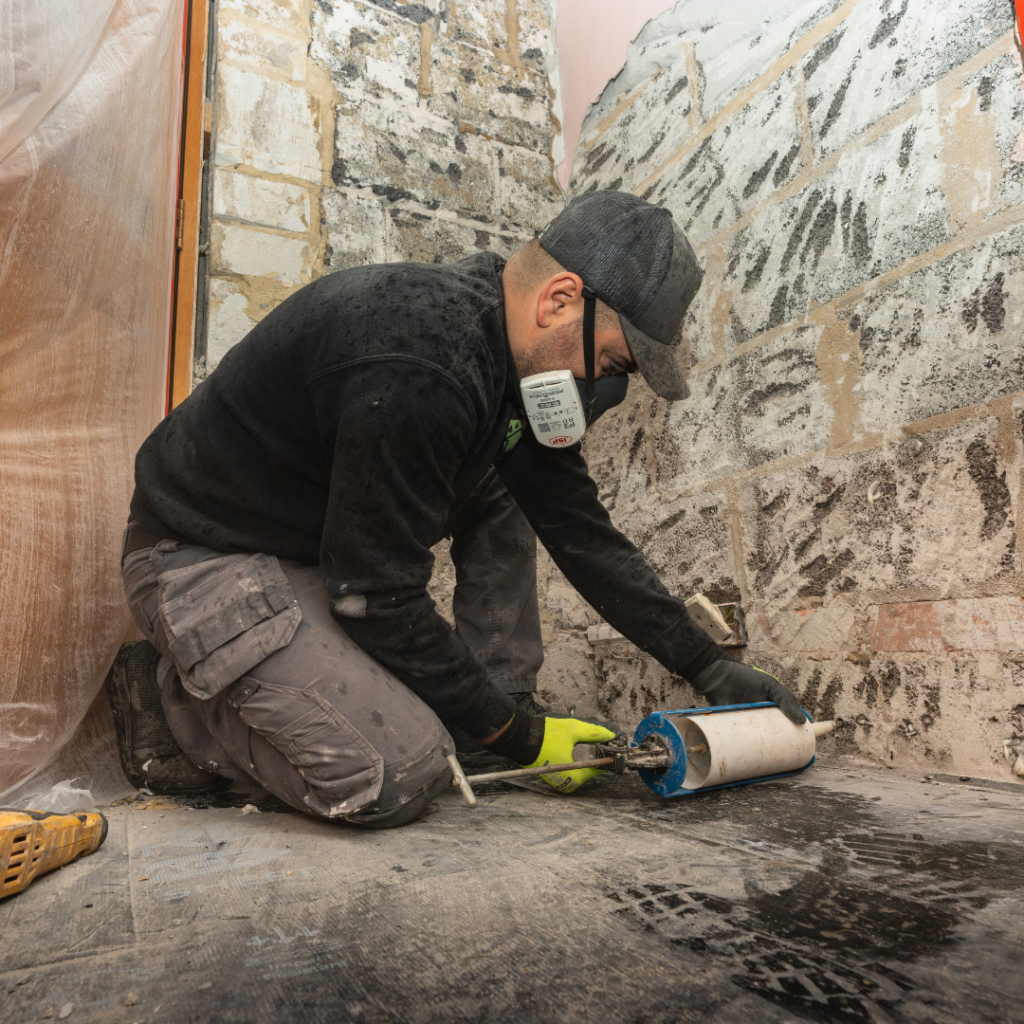
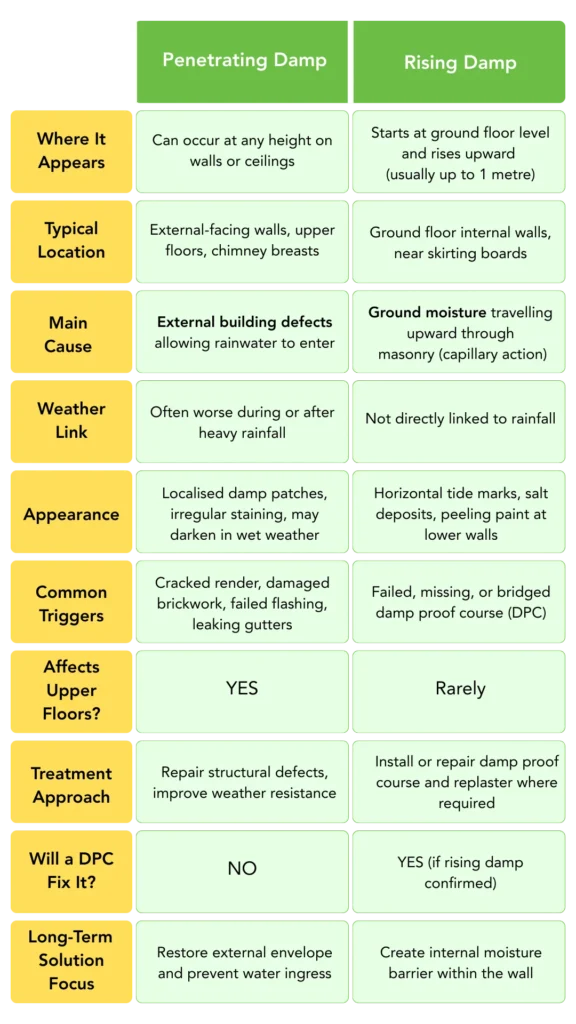
Penetrating Damp vs Rising Damp
Understanding the difference ensures the correct treatment
Misdiagnosing penetrating damp as rising damp can lead to unnecessary damp proof course installation. Likewise, repairing brickwork will not resolve genuine rising damp.
At Proofterior, every damp issue is assessed through a structured survey to confirm the moisture source before treatment is recommended.
Areas We Cover
Proofterior provides independent damp surveys and specialist damp proofing services across Dorset, Hampshire, and surrounding areas. We work with homeowners, landlords, property managers, and buyers who need clear answers, accurate diagnosis, and long-term solutions, not guesswork or sales-driven recommendations.