
The owners of this home in Southbourne, Bournemouth (BH6) had damp coming through the chimney breast in their living room. The wall above and around the fireplace felt cold, the decoration was starting to suffer, and it was getting worse after every spell of wet weather.
A damp chimney breast is a very common problem in Bournemouth homes. It is also one of the most often misdiagnosed. Here is how we traced it to the roof, fixed it there first, and then made the inside wall dry and ready to decorate.
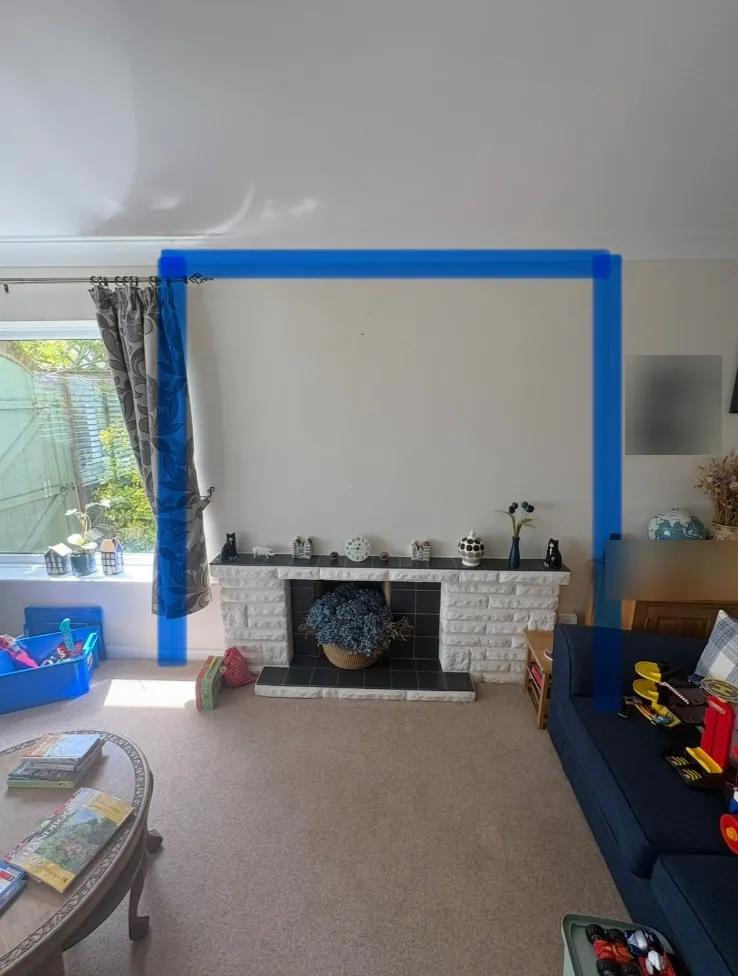
What we found on the survey
Our surveyor marked out the affected area of the chimney breast and took readings across it. The moisture meter showed the plaster in the "at risk" range, and a thermal camera picked up the cold, damp patches on the wall that you cannot always see by eye.
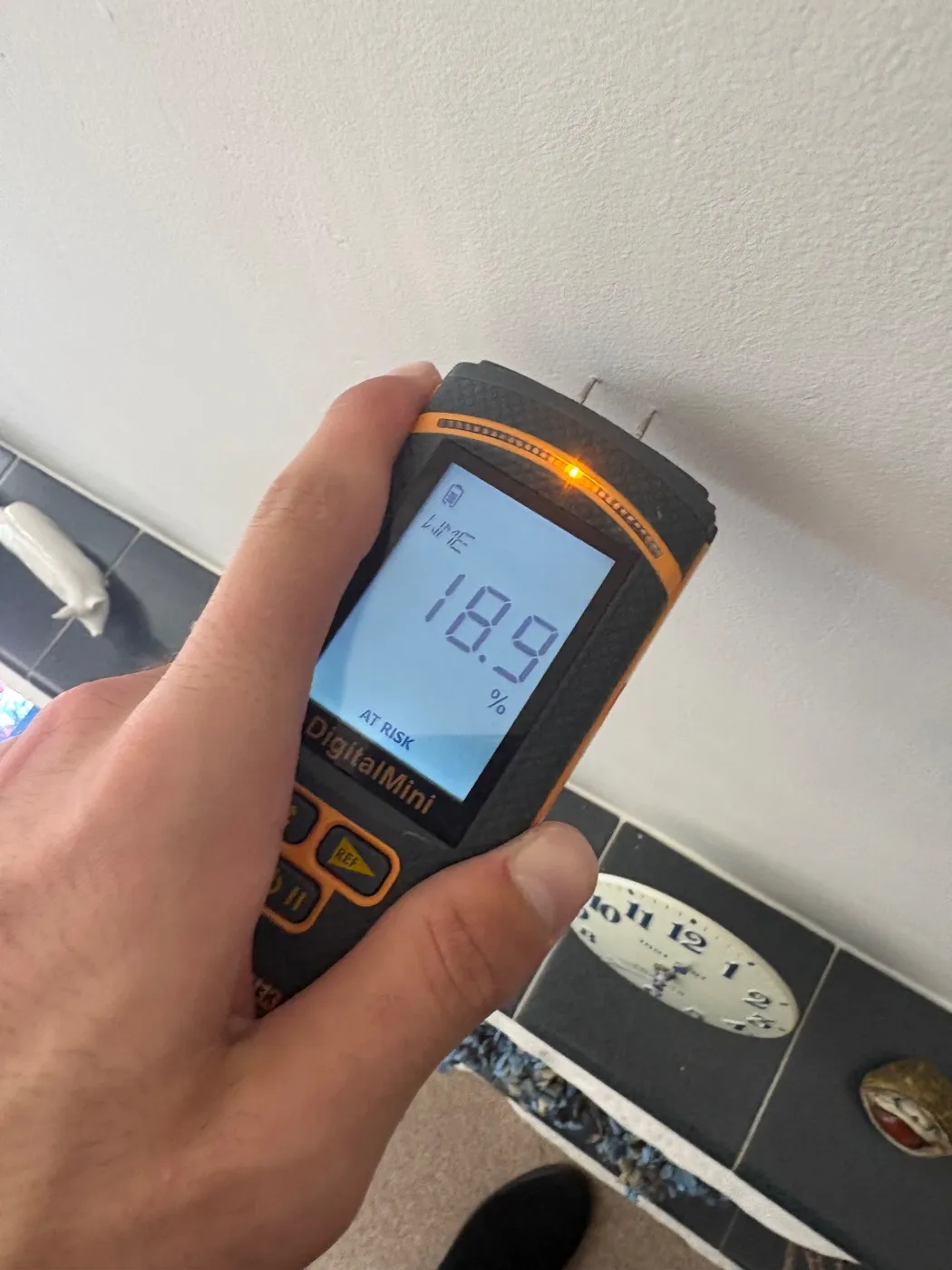
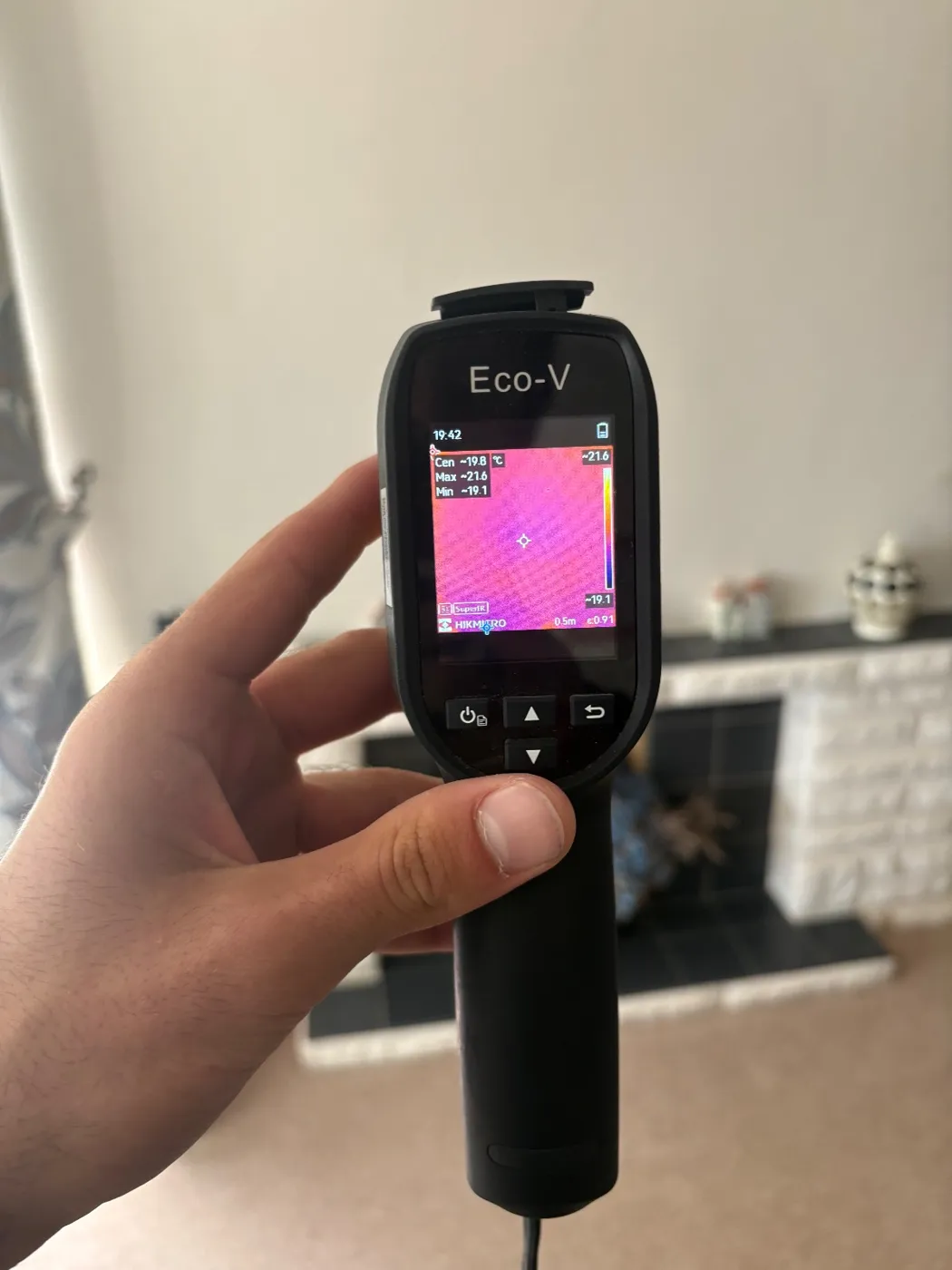
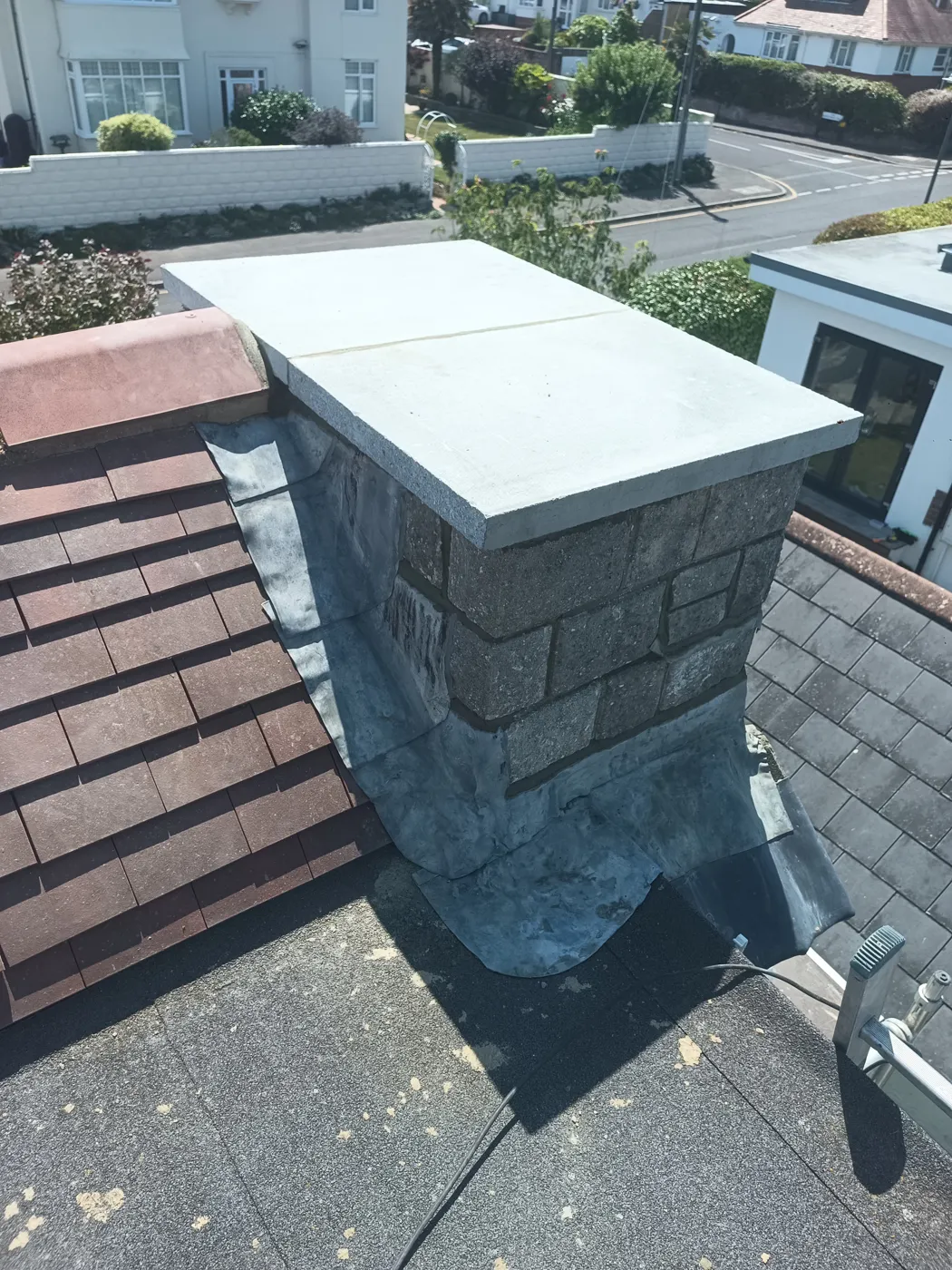
The damp was not coming up from the ground. It was coming down from above. The fireplace was no longer in use, but the stone chimney stack on the roof was still open at the top with an old pot. Rain was getting straight down the flue, and the weathered stonework and joints of the stack were soaking up water in driving rain. All of that moisture was working its way down into the chimney breast inside.
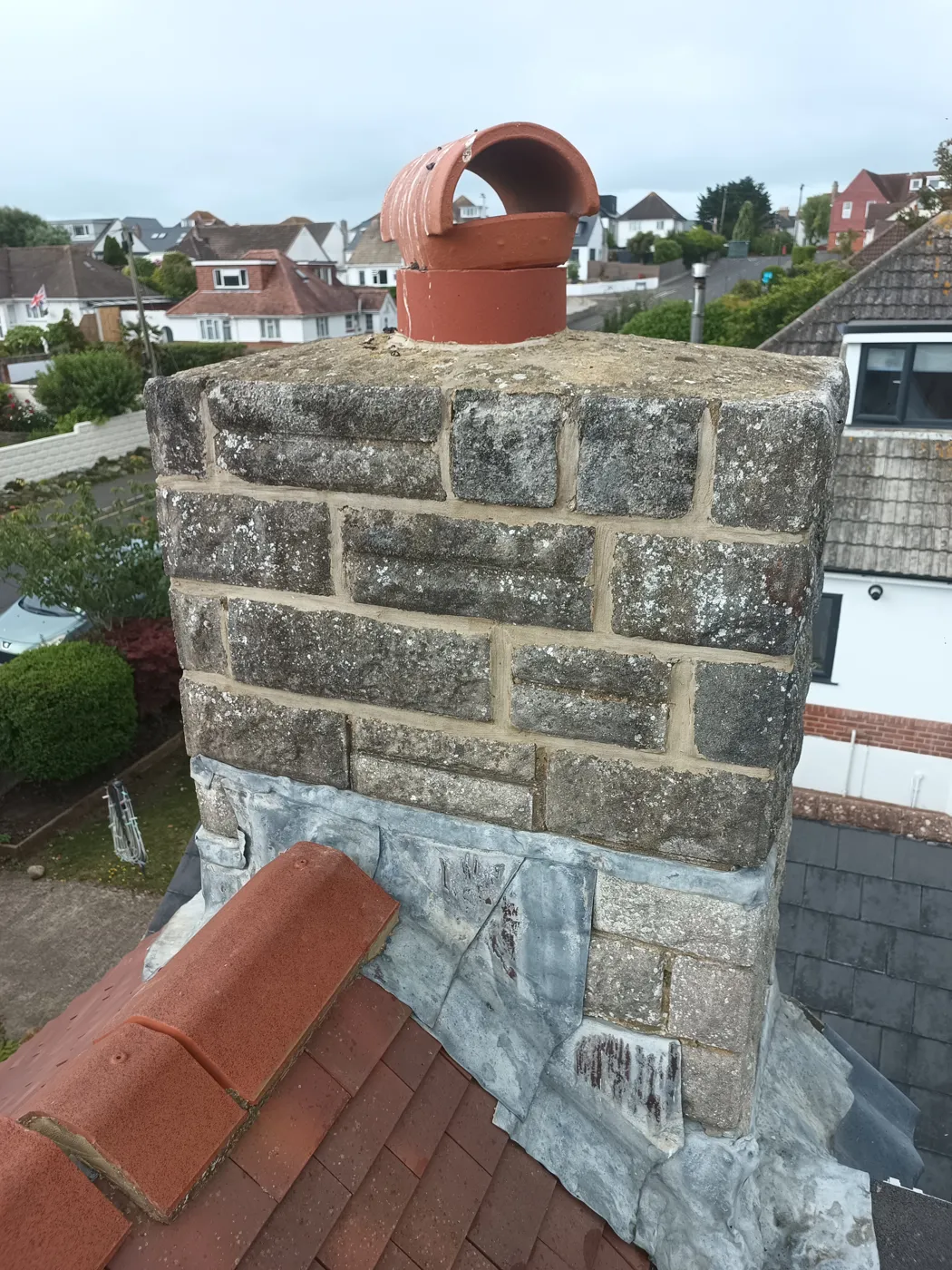
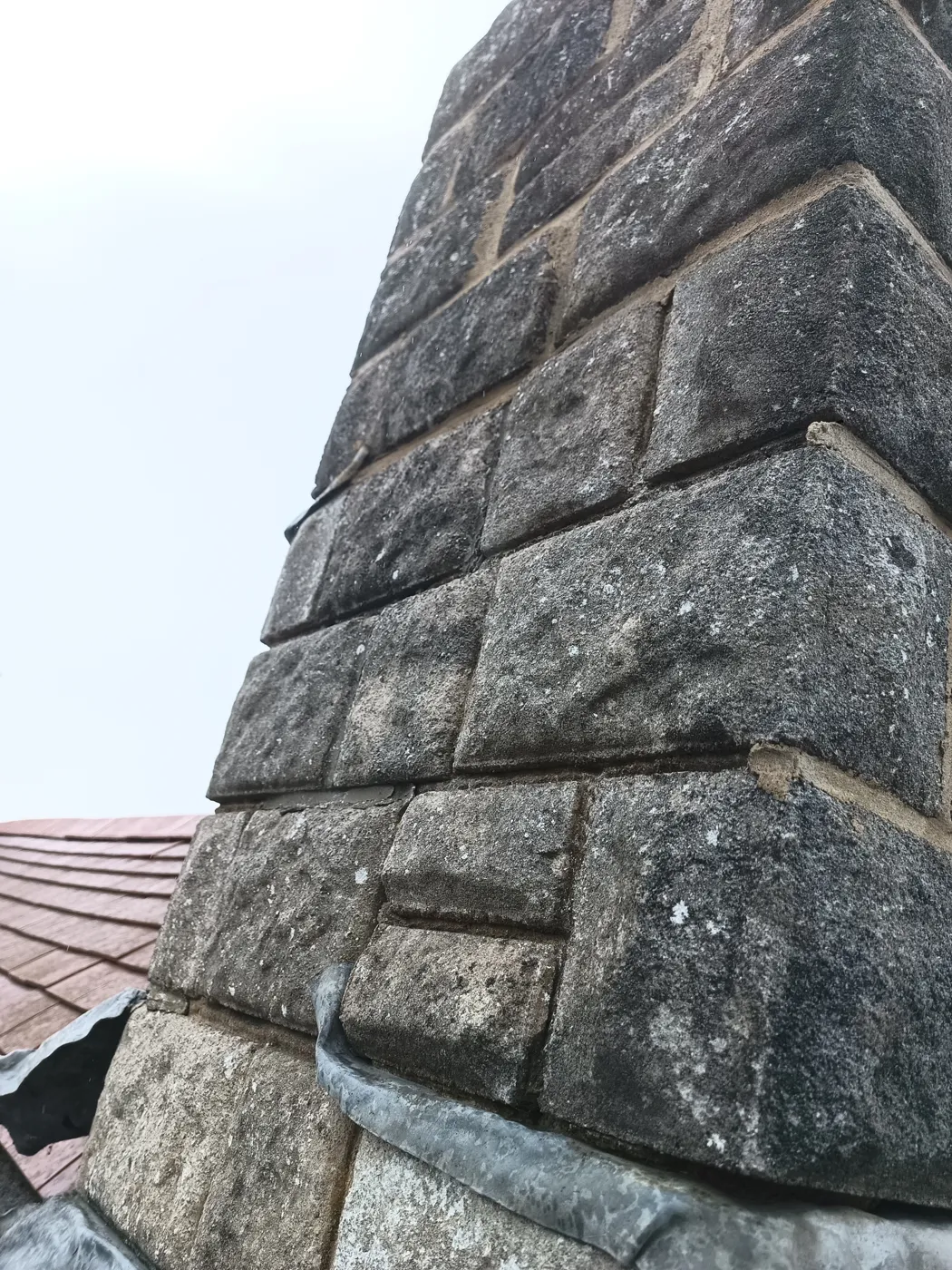
What we did
There is no point drying out an inside wall if water is still getting in from the roof. So we worked from the outside in.
- Chimney capping. We took the pot off, removed the loose top stones and brought the stack back to sound stonework. The flues were sealed over and the top bedded in mortar, then finished with new stone capping slabs that overhang the stack so rain is thrown clear of the walls. The disused flue now stays dry.
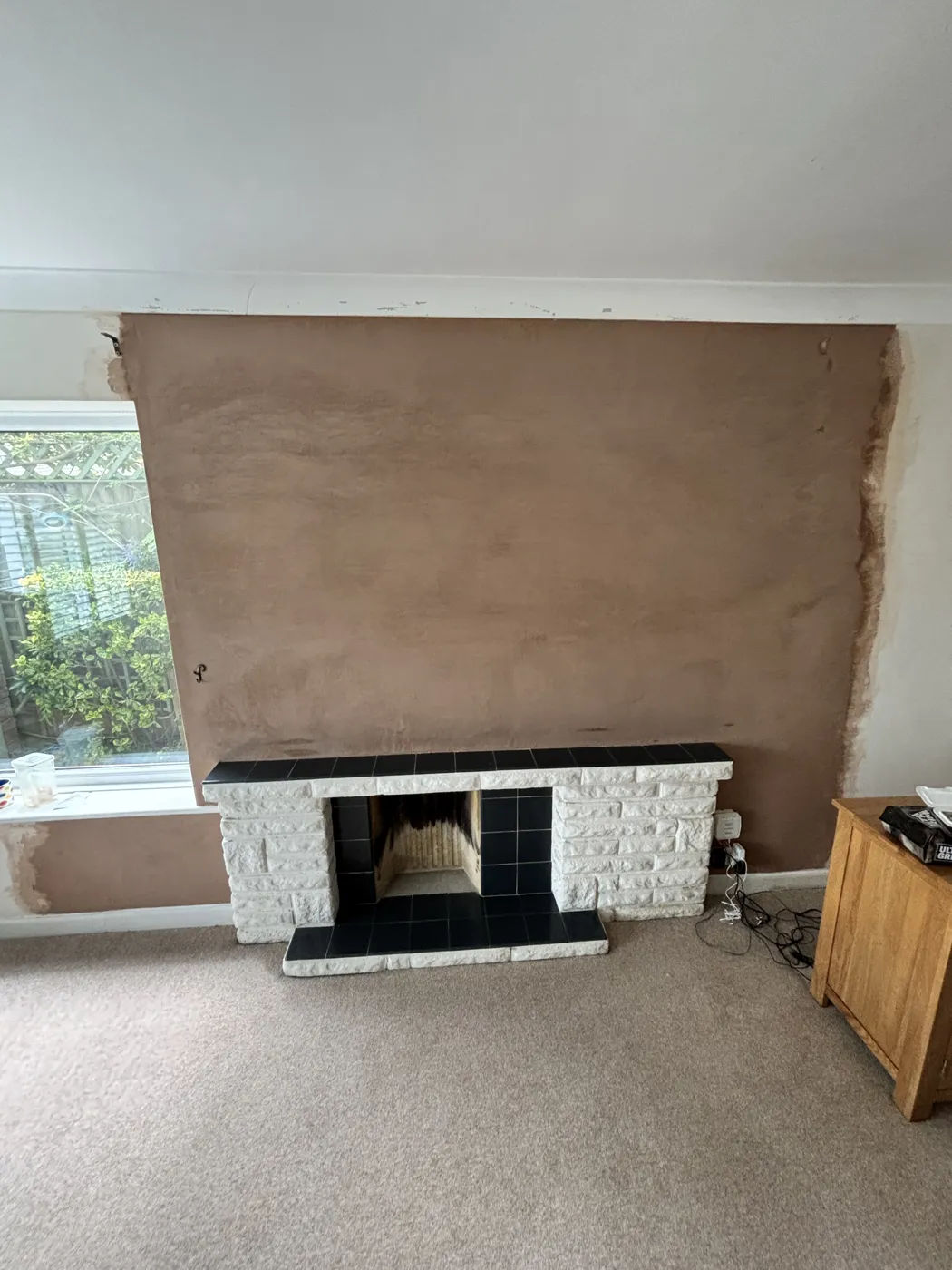
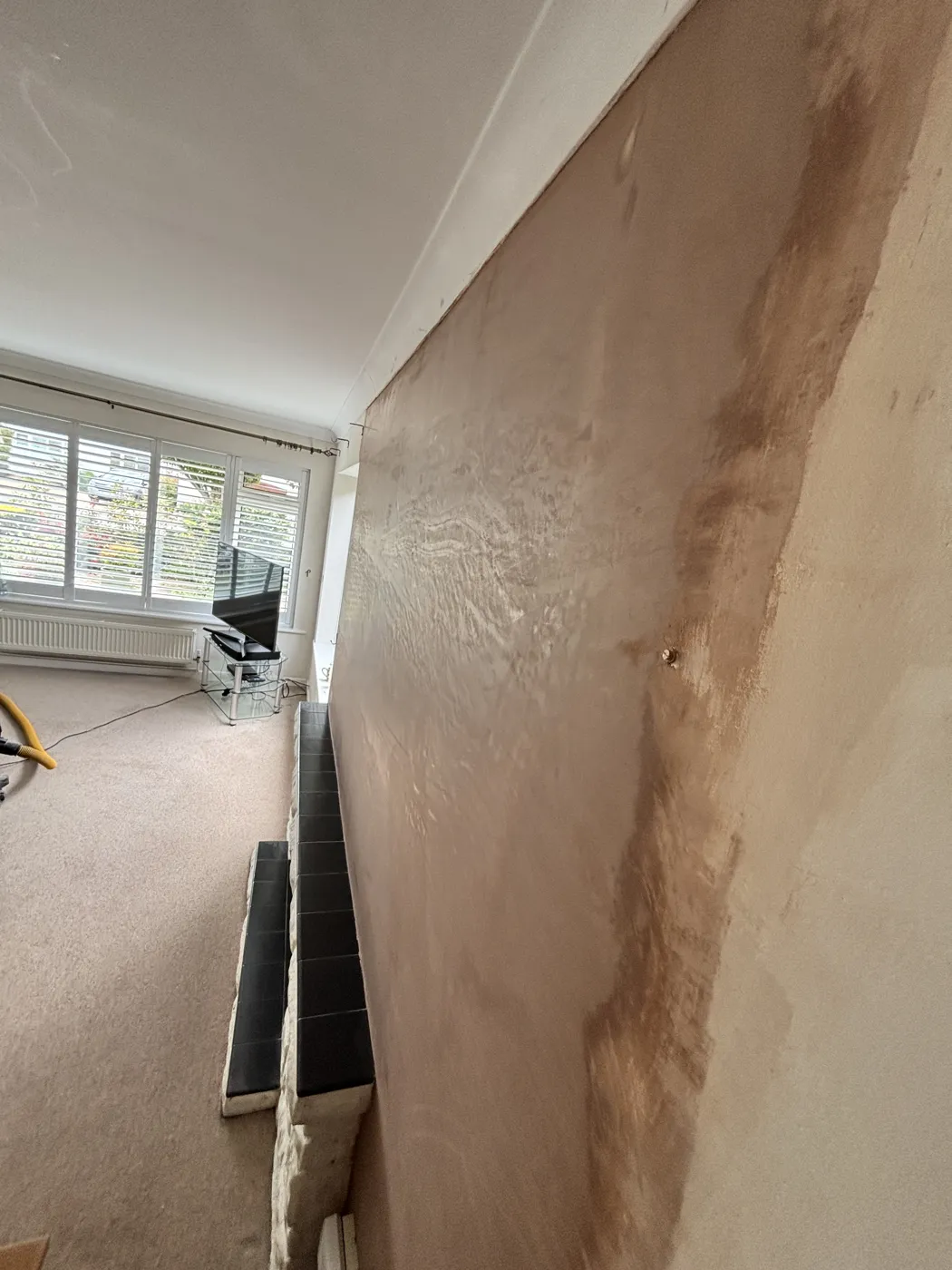
- Proofterior Dry System on the chimney breast. Inside, we stripped the damp plaster from the affected area and installed the Proofterior Dry System. This is a specialist membrane that stops any moisture left in the masonry from reaching the room. It was then replastered to give a smooth, sound wall ready for decoration.
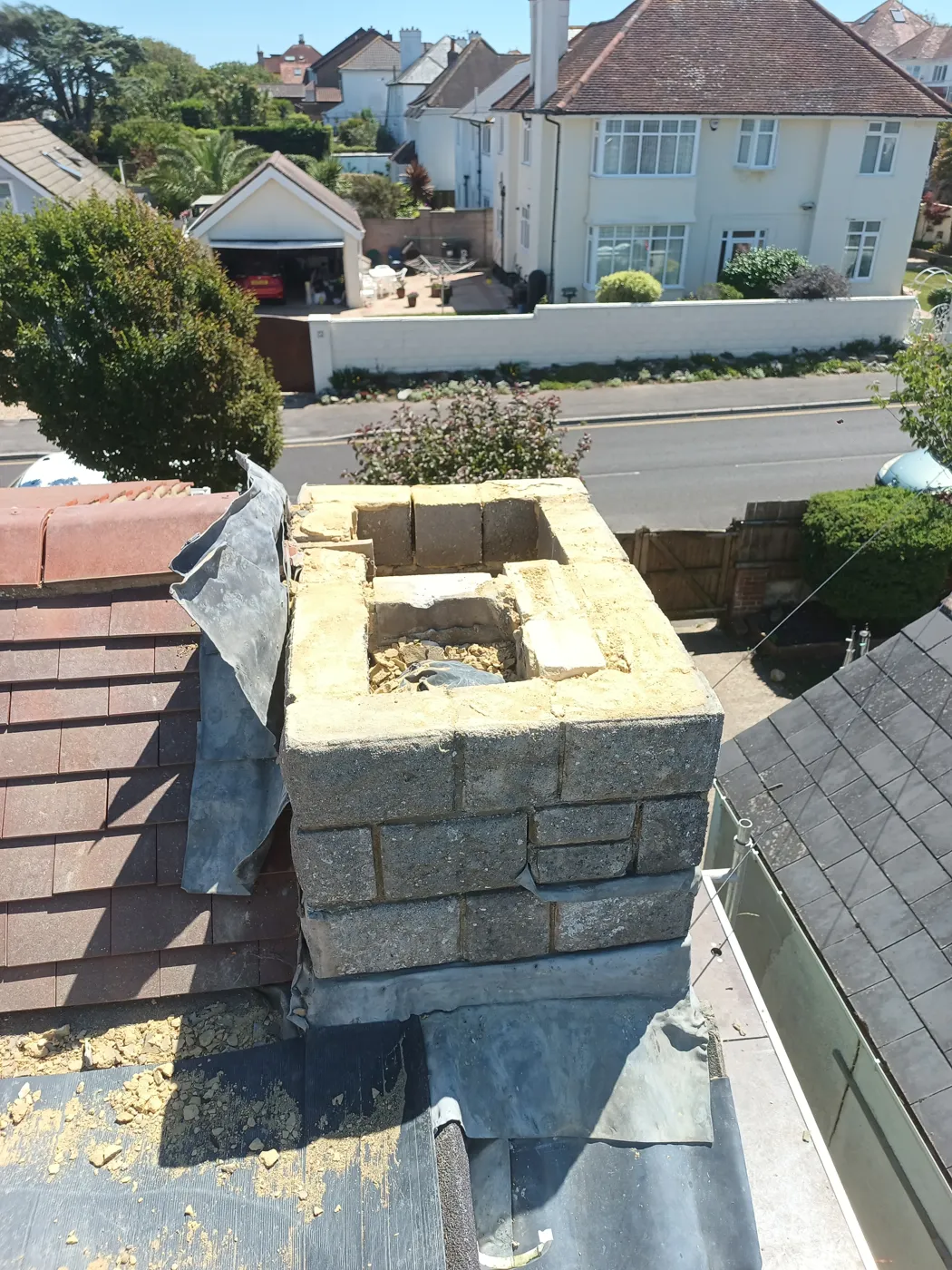
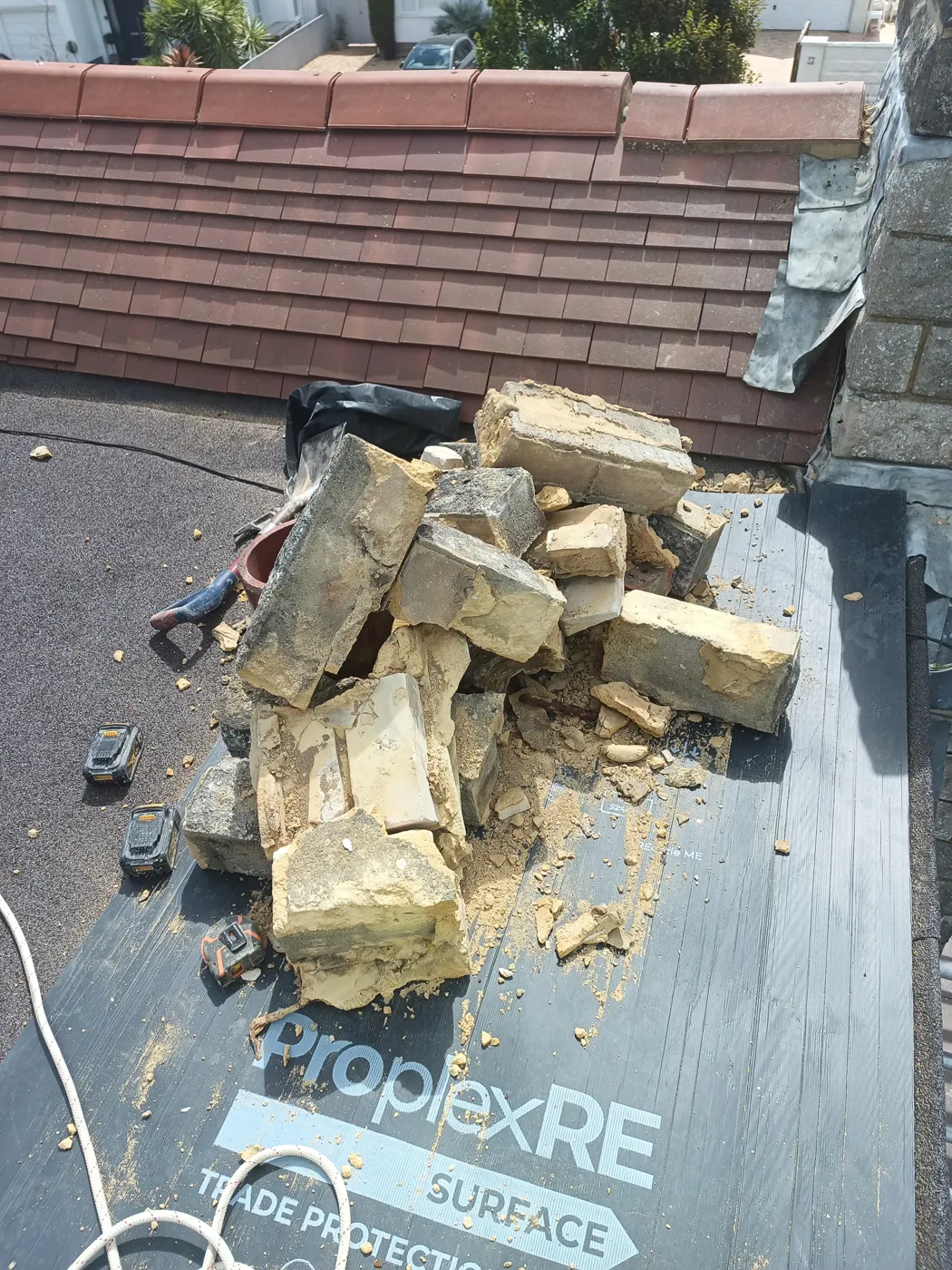
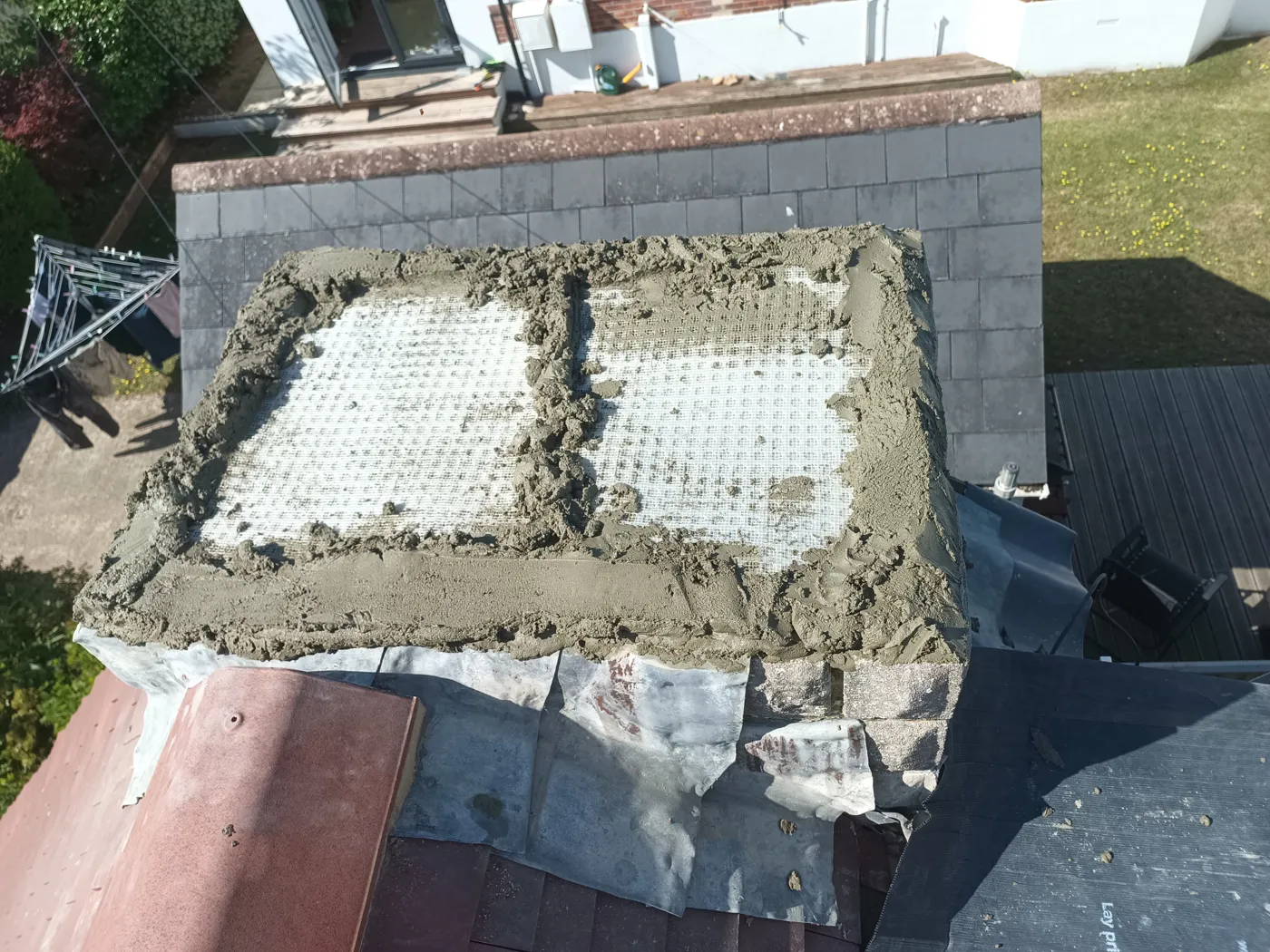
Our team protected the roof and the living room throughout and cleared everything away at the end of the job.
The result
The chimney is now capped and weathertight, so rain can no longer run down the flue or soak in through the top of the stack. Inside, the chimney breast has new plaster over the Dry System membrane. Once it has fully dried out, it can be decorated like any other wall in the room.
Why this approach works
A damp chimney breast is often treated as rising damp, or simply replastered. Neither lasts if rain is still getting in at the top. Disused chimneys with open flues and weathered stacks are one of the most common causes of penetrating damp we see. Stopping the water at the roof, then protecting the inside wall, deals with the cause and the symptom together. If a stack is in poor condition, we can also take it down and make it safe, as part of our chimney stack removal service.
Common questions
Why is my chimney breast damp if I never use the fireplace?
Disused chimneys are often the worst. With no fire to dry them out, rain coming down an open flue or through the stack just sits in the masonry.
Do I need to cap my chimney if I am not using it?
Usually, yes. Capping stops rain getting in. If the flue still needs some airflow, a vented cap can be used.
Do you cover the rest of Bournemouth?
Yes. Our Bournemouth team covers Southbourne, Boscombe, Christchurch, Poole and the rest of Dorset.
Seeing the same signs at home?
Book a complimentary In-Depth Survey and one of our ISSE-accredited surveyors will find the cause, show you the readings and give you a written, itemised quote. Call 01202 287503 or request a callback. We'll phone you back within 5 minutes.