In this guide
- Can cavity wall insulation cause damp?
- Why damp appears after insulation
- Signs the insulation may be involved
- How to tell what is causing your damp
- What a survey should establish
- Fixing the problem
- Who to contact, and in what order
- Reducing the risk after insulation
- Get the cause identified
- Our perspective
- FAQ
- Sources
Cavity wall insulation does not cause damp when the walls are suitable and the installation is sound, and it can reduce condensation. Damp that appears afterwards usually has a traceable source: a blocked or poorly filled cavity, rain getting through defective brickwork, or poor ventilation. The fix depends on which one it is, so the first job is a diagnosis, not a guess. Our cavity wall insulation survey is built for that: it finds out what is happening inside the wall before any work is recommended.
This guide is for homeowners, landlords and property professionals in the UK who have damp or mould after insulation was fitted, or who are deciding whether a wall is suitable.
Key Takeaways
- Correctly installed cavity wall insulation in a suitable, well-maintained wall should not cause damp and can reduce condensation on walls.
- When damp does follow insulation, the usual causes are wind-driven rain, an unsuitable cavity or exposure, voids and poor installation, or an existing building defect.
- Damp that worsens after rain points to water coming in from outside. Cold, mouldy patches that stay all year point to condensation or gaps in the fill.
- Contact the installer first, then the guarantee provider. Keep records and do not let a known problem get worse before it is inspected.
- A survey that identifies the cause comes before any decision to repair, extract or re-insulate.
Can cavity wall insulation cause damp?
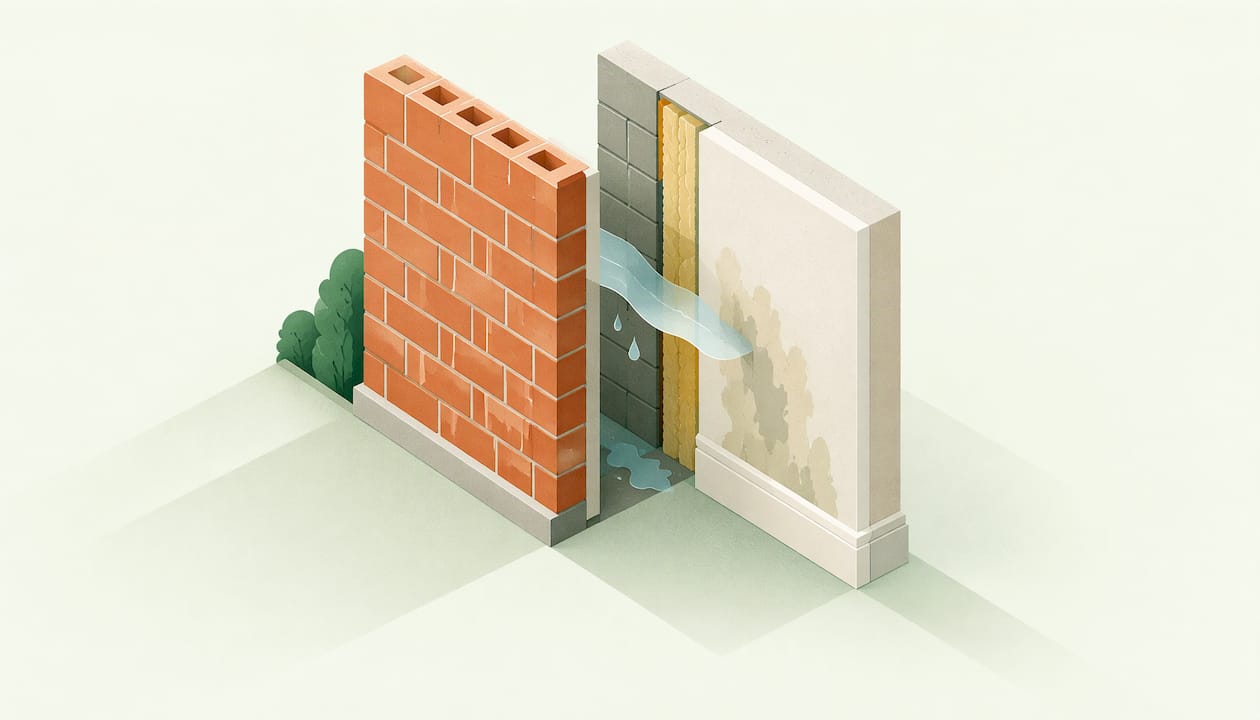
The fear is simple: fill the cavity and moisture has a bridge to cross from the outer leaf of brickwork to the inner wall. The evidence on well-suited walls does not support it. A government-sponsored study from the mid-1990s, cited in the Energy Saving Trust’s guide to cavity wall insulation in existing dwellings, found no statistical difference in rain penetration between filled and unfilled cavities (0.26% against 0.22%). Filled cavities had fewer problems overall: 84% reported none, against 78% of unfilled ones. Damp was reported in 3.5% of filled cavities against 8% of unfilled ones.
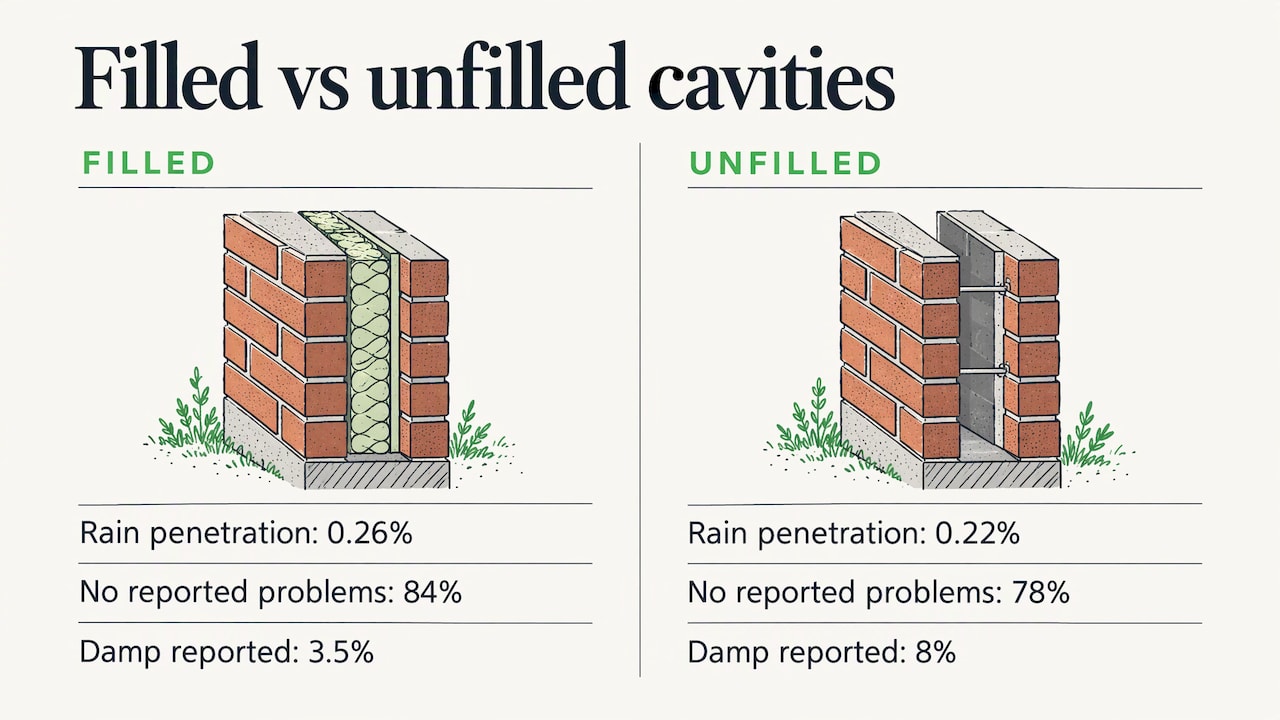
The same guide is clear on the condition attached to those results. The structural state of the wall is critical, and continuing maintenance such as repointing is a key factor in whether a wall is suitable at all.
The Energy Saving Trust also notes that insulation can reduce the risk of condensation by keeping the inner wall surface warmer, along with cutting heat loss and draughts. A warmer wall surface is less likely to collect the moisture that feeds black mould.
Centre for Sustainable Energy material reports that around 4 million UK homes have had cavity wall insulation retrofitted. It says cases where the insulation directly caused damp bridging are very small indeed, and that water penetration is usually down to construction defects rather than faulty installation.
That does not mean every wall is fine. Industry figures from the RISE Retrofit supply chain pack (April 2026) say insulation has gone into around 15 million UK homes, and sector estimates suggest up to 6 million may now hold defective, deteriorating or inappropriate insulation. The question for your property is which side of that line it sits on.
Why damp appears after insulation
The RISE pack lists the common causes of failure. Each one has a different remedy, which is why the cause matters more than the symptom.
| Cause | What happens | Typical clue |
|---|---|---|
| Wind-driven rain | Rain crosses the outer leaf and reaches the insulation or inner wall | Patches grow after storms, often on the most exposed elevation |
| Unsuitable exposure | Insulation fitted in a location too exposed for it, such as some coastal sites | Recurring damp on one side of the house |
| Unsuitable cavity width | Cavity too narrow for the fill | Problems across whole elevations |
| Poor installation | Voids, missed holes, over-compaction | Cold, damp or mouldy spots in a pattern, often near where holes were drilled |
| Long-term damp or flooding | Material stays wet and degrades | Musty smell, persistent dampness low in the wall |
| Material degradation | Insulation breaks down over time | Cold rooms, rising heating demand |
The Energy Saving Trust adds that insulation may not be suitable for homes exposed to extreme weather or flooding, walls in poor condition, or cavities under 50mm, and that exterior repairs should be completed first so that damp is not trapped.
Blocked cavities
A cavity partly filled with mortar droppings or rubble can carry moisture across to the inner wall whether or not it has insulation. RICS describes this in its guide to blocked cavities: if the gap is filled with rubble or poorly installed insulation, rainwater penetration can show as damp inside. The repair it describes is to clear the cavity of rubble and wet insulation, then reinstall suitable insulation if there was any before.
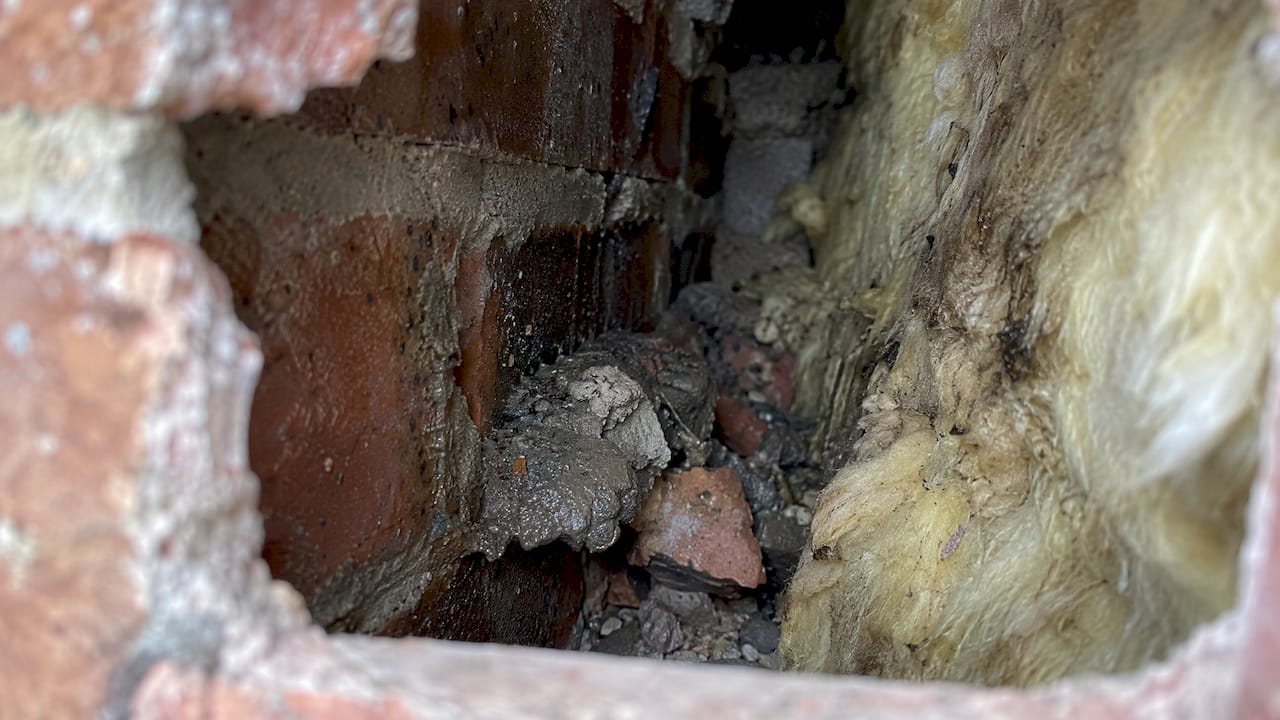
This is one reason a pre-installation check of the cavity matters, and why a post-installation inspection of the cavity itself is more informative than looking at the plaster.
Signs the insulation may be involved
The RISE pack lists these effects of failure:
- Cold internal wall surfaces
- Black mould or mildew
- Damp patches that get worse after rainfall
- Peeling paint or blown plaster
- Musty odours
- Rising heating demand or bills
It notes the risk is most pronounced in exposed or coastal locations and in properties that were unsuitable for insulation when it was installed.
None of these signs proves the insulation is at fault. CIGA, the Cavity Insulation Guarantee Agency, states that condensation or mould does not necessarily mean there is a problem with the insulation. Two houses with identical symptoms can have entirely different causes.
How to tell what is causing your damp
This is the step most households skip. Treating the wrong problem wastes money and lets the real one carry on. A rough sorting guide, before a professional looks:
- Check the timing. Damp that worsens within a day or two of heavy rain suggests water entering from outside. Damp that is worse in winter and in cold, unheated rooms suggests condensation.
- Check the pattern. Mould in corners, behind furniture and around windows, with water running down glass, usually comes from indoor humidity meeting cold surfaces. A single well-defined patch on an exposed wall points towards penetrating rain or a cavity fault.
- Look outside. Cracked render, open pointing, damaged brickwork, leaking gutters and downpipes, and blocked air bricks all let water in or keep walls wet. The Energy Saving Trust says damp caused by inadequate home maintenance will not be paid for by the installer or the guarantor, so this check also protects any claim.
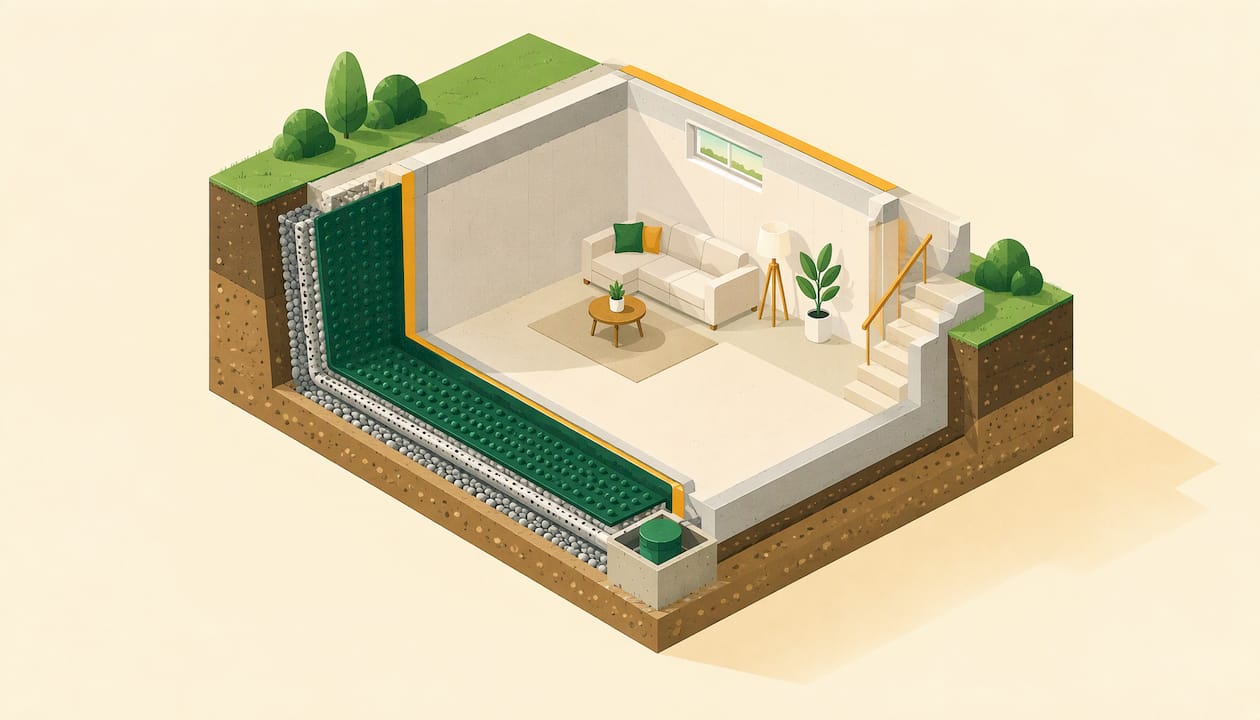
- Look at the ground and below. Damp low on the wall near ground level can come from a bridged damp proof course or from the ground. If the problem is below ground level, the methods used for basement waterproofing show how different that category of problem is from a cavity fault.
- Note the heating and ventilation. Insulation reduces draughts, and CIGA’s consumer information warns that inadequate ventilation can then result in mould and condensation. Extractor fans, trickle vents and air bricks need to work.
These observations narrow the field. They do not replace an inspection of the cavity itself, which is the only way to see voids, wet insulation or debris.
What a survey should establish
A damp survey after cavity wall insulation has to answer four questions: is the wall suitable and in good condition, what is in the cavity and in what state, where is the moisture coming from, and what is the proportionate response.
Our cavity wall insulation problems and damp page sets out the issues we deal with, and our survey uses a borescope, a small camera that looks inside the cavity so the insulation does not have to be guessed at from the outside. All our diagnostic and remedial work is done by in-house specialists, not subcontractors, and the survey is complimentary with a detailed written report.
Proportion matters. The RISE pack says the presence of indicators alone does not automatically mean extraction is required. The right response depends on severity, exposure, how the insulation interacts with building defects, and any planned retrofit measures. Sometimes the answer is a repair to the outer wall or better ventilation. Sometimes it is removal.
Fixing the problem
Repair the cause first
If rain is getting in through failed pointing, render or a leaking gutter, that is repaired before anything else. Insulation sealed into a wall that is still taking in water will stay wet. Where the roof or chimney is the route, as in our Southampton chimney leak case, stopping the water at source comes first.
Remove or re-insulate where needed
Where the cavity is blocked, the fill is wet or degraded, or the wall was unsuitable from the start, extraction is the remedy. Our cavity wall insulation removal and survey service covers this, and you can see a local example on our Bournemouth removal page. Once the cavity is clear and the cause of the moisture is dealt with, re-insulation with bonded beads can restore thermal performance where the wall is suitable. For costs and available support, see our cavity wall insulation cost and grants page.
Treat the damp and the air
Where damp or mould has already taken hold, the wall surface and indoor air also need attention. That can mean a condensation and ventilation assessment, mould removal, or an internal damp control system such as the one in our Bournemouth membrane case study.
Who to contact, and in what order
The UK government’s consumer guide on cavity wall insulation issues sets the sequence for insulation installed under Green Deal or ECO schemes. Contact the installer first, who should investigate and promptly rectify defects. If the installer has gone out of business or has not addressed your concerns, contact the guarantee provider. The Energy Saving Trust gives the same order and adds that an independent buildings surveyor can assess the walls if a dispute remains.
In Wales, the Welsh Government publishes an equivalent consumer guide with the same escalation.
Guarantees and claims
A CIGA guarantee runs for 25 years and covers faulty or inappropriate installation, according to the Centre for Sustainable Energy. Some practical points from CIGA’s own FAQ:
- If you cannot find your certificate, a replacement guarantee costs £60 including VAT. CIGA no longer issues retrospective guarantees for 1995 to 1 January 2012 installations where the installer did not apply for one.
- Claims may be rejected if a known problem was allowed to worsen by preventing CIGA from investigating. Report damp early and allow access.
- CIGA says it does not cold call or make unannounced visits. Trading Standards and CIGA urge anyone approached by a claims-management company to research it very carefully before signing.
If you are preparing a claim, our guarantee claims help page explains how an independent survey report supports it. A written report showing the cavity condition and the source of the moisture is the evidence that matters when the cause is disputed.
Reducing the risk after insulation
CIGA’s consumer information lists a short maintenance routine that suits owners and landlords alike:
- Inspect render, pointing, roofs and rainwater goods at least once a year, and after severe weather.
- Clear gutters twice a year, in autumn and spring.
- Keep sub-floor air bricks unblocked.
- Make sure ventilation is adequate, because insulation reduces draughts.
Sub-floor ventilation is often overlooked. Our guide to crawl space damp explains the causes and fixes. Local climate also plays a part, which we cover in why homes in Dorset, Hampshire and Wiltshire get damp.
Landlords and agents can use the same list as an inspection schedule between tenancies. A dated record of checks is useful if a guarantee claim ever has to be made.
Get the cause identified
If you have damp, mould or cold walls after insulation, the useful first step is a survey that looks inside the cavity and reports in writing. Our complimentary property survey covers homes across Dorset, Hampshire and Wiltshire, with all work done by in-house specialists and treatment backed by a 25-year insurance-backed guarantee.

Book your complimentary property survey, or see the full range on our damp proofing and treatment services page.
Our perspective
Most cavity wall insulation damp cases we are asked about arrive with the cause already assumed. The owner has read that insulation causes damp, or the installer has said it is condensation, and neither has looked inside the wall.
Our approach is to find the root cause first. That means looking at the cavity, the outer leaf, the roof and gutters, the ventilation and the way the house is used, then reporting what we find in writing. The treatment follows from that report, whether it is a repair, extraction, re-insulation or an internal damp system.
We carry out the work with our own specialists, not subcontractors, so the person who diagnosed the problem is accountable for the fix. Treatment work carries a 25-year insurance-backed guarantee. For owners and landlords, a clear written diagnosis is what makes later decisions simple, including a claim on an existing guarantee.
Dylan
FAQ
Can I get compensation for damp caused by cavity wall insulation?
Start with the installer, then the guarantee provider if the installer has closed or has not acted. A CIGA guarantee covers faulty or inappropriate installation, but not damp caused by poor home maintenance. A written survey report showing the cause of the moisture is the strongest evidence.
Does cavity wall insulation always need to be removed if there is damp?
No. The presence of damp signs does not automatically mean extraction. Where rain penetration or a defect in the outer wall is the cause, repairing that may be enough. Removal is for blocked, wet or unsuitable fills, and a survey determines which applies.
Is the damp condensation or a cavity problem?
Condensation tends to show as mould in cold corners and around windows, worse in winter. Water from a cavity or outer wall fault tends to leave defined patches that worsen after rain. Because the two can look alike, a cavity inspection is the reliable way to separate them.
How often should I check my walls after insulation?
CIGA advises inspecting render, pointing, roofs and rainwater goods at least once a year and after severe weather, and clearing gutters in autumn and spring. Keep air bricks clear and ventilation working.
Sources
- Cavity wall insulation, Energy Saving Trust
- Cavity wall insulation in existing dwellings: a guide
- Cavity wall insulation advice leaflet, Centre for Sustainable Energy
- Managing CWI extraction, RISE Retrofit, April 2026
- Blocked cavities, RICS
- Cavity wall insulation consumer guide to issues, UK government
- Consumer guide to issues arising from cavity wall insulation, Welsh Government
- Frequently asked questions, CIGA
- Cavity wall insulation consumer information, CIGA
- Basement waterproofing: methods, types and what to expect