
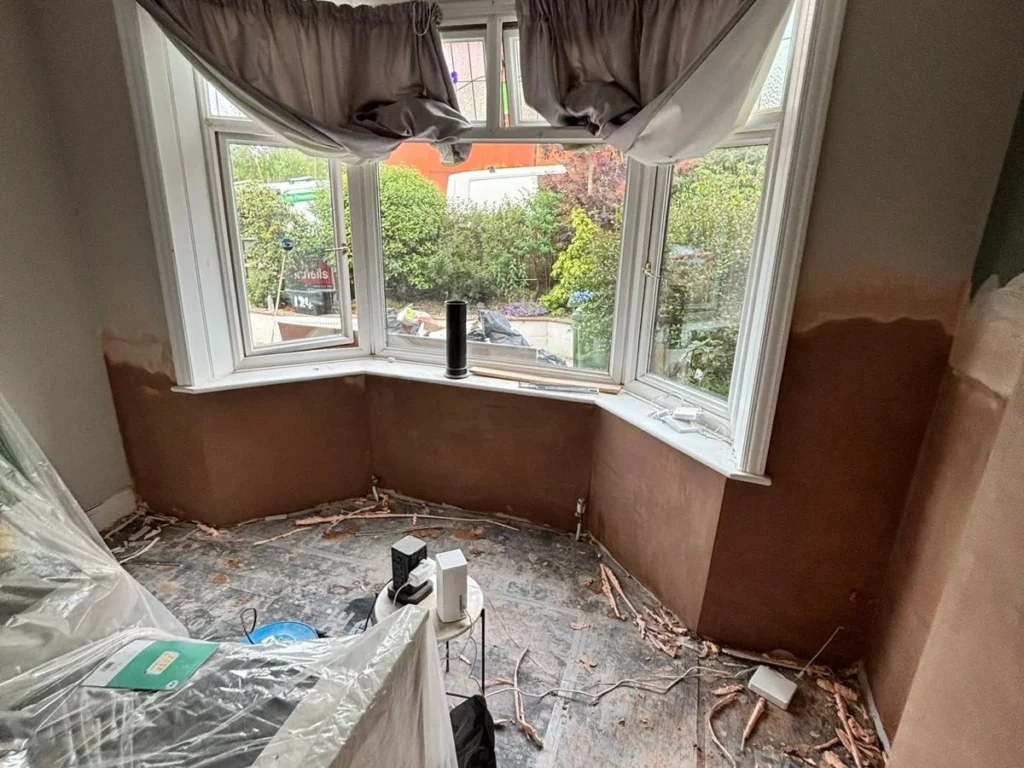
A damp wall under a window is usually caused by water getting in around the window rather than by rising damp: a failed sill, blocked drip groove, cracked seal, damaged cill or lintel, or condensation running down cold glass. Working out which one it is decides whether you need a sealant repair, a new cill or a specialist damp survey.
The area under a window is one of the most exposed parts of any wall, so it is where many homes in Dorset, Hampshire and Wiltshire first show signs of a problem.
Key facts
- Water under a window is usually a penetrating or condensation problem, not rising damp.
- Rising damp stays low on the wall, normally below about one metre, and rarely appears at window height.
- Blocked drip grooves, cracked cill ends and failed mastic let rain run behind the frame.
- Condensation on cold glass and frames can pool on the sill and soak the reveal beneath.
- A missing or bridged cavity tray above or beside the window can send water down the inner leaf.
- Check outside before opening up anything inside: most causes are visible from the garden.
- A moisture meter and salt test will separate the causes quickly.
Why the wall under a window gets wet
A window is a hole in a wall that has been filled with a different material, so there are several places where water can find a way in. Rain running down the glass collects on the cill, and if the cill is cracked, has no drip groove or slopes back towards the house, that water ends up in the wall below. In older homes the timber frame has often shrunk, leaving a gap where the frame meets the brickwork.
The common causes, from outside in
- Failed pointing or sealant. The mastic between frame and brickwork perishes after ten or fifteen years and lets wind-driven rain through.
- Damaged or poorly fitted cills. Stone and concrete cills crack; tiled cills lose their mortar bed. A cill without a drip groove sheds water onto the wall face instead of clear of it.
- Blocked or leaking gutters. An overflowing gutter above the window drenches the same piece of wall every time it rains.
- Missing cavity trays and cold bridges. In cavity walls a missing damp-proof tray over a lintel, or mortar droppings bridging the cavity, lets water travel to the inner leaf.
- Condensation. Single glazing, old aluminium frames and cold reveals collect condensation that runs onto the sill. The result is black mould and stained paint rather than salt marks.
How to tell it is not rising damp
Rising damp comes up from the ground and leaves a tide mark low on the wall, often with white salt deposits and damaged skirting. If the wet patch sits directly beneath the window, is worse after rain, and the wall beside it is drier, water is entering from above or around the frame. A moisture meter reading across the wall shows the pattern clearly: a patch that peaks under the cill points to the window, not the ground.
What to check yourself
- Look at the cill and the pointing around the frame for cracks, gaps and missing mortar.
- Check that the cill has a drip groove underneath that is clear of paint and debris.
- Run a hose over the window with a helper inside, working from the bottom upwards, to find where water enters.
- Look at the gutter and downpipe above for leaks or overflow stains.
- Wipe the sill after a cold morning to see whether condensation is pooling.
When to call a specialist
If you have fixed the obvious external faults and the wall stays damp, or you see crumbling plaster, mould or a musty smell, there may be a hidden cavity or lintel problem. A specialist survey uses moisture mapping, salt analysis and, where needed, a borescope to look inside the cavity without opening the wall. Plaster that has absorbed salts should be removed and replaced with a salt-resistant system once the source is stopped.
Common questions
Is damp under a window rising damp?
Rarely. Rising damp stays low on a wall and is tied to ground moisture. Damp directly under a window usually comes from rain entering around the frame, a defective cill or condensation.
Can condensation cause a damp wall under a window?
Yes. Cold glass and frames drip condensation onto the sill, which soaks the reveal below. It usually shows as black mould and peeling paint rather than a tide mark.
Should I seal around the window with silicone?
Fresh sealant helps where the old seal has failed, but it will not cure a cracked cill or a cavity fault. Find the cause first and use sealant as part of the repair, not instead of it.
How do I know if there is a cavity problem?
Persistent damp that returns after external repairs, especially beside or above the window, suggests a missing tray or bridged cavity. A borescope inspection will confirm it.
Get a straight answer for your home
Book a complimentary In-Depth Survey and one of our ISSE-accredited surveyors will find the cause, show you the readings and give you a written, itemised quote. Proofterior is a Which? Trusted Trader, and our work carries a 25-year, GPI insurance-backed guarantee. Call 01202 287503 or request a callback. We'll phone you back within 5 minutes.