
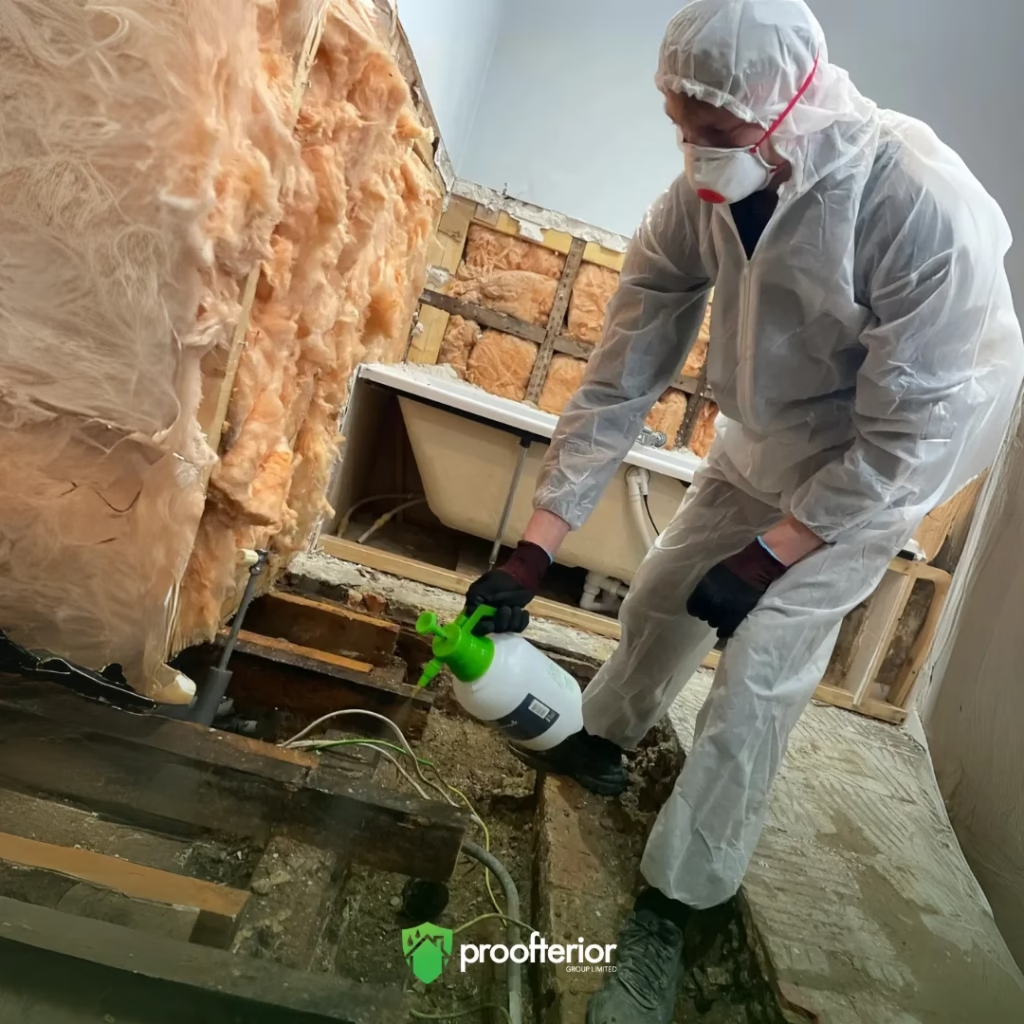
Wet rot and dry rot are both fungal decay in timber caused by damp, but they behave very differently. Wet rot stays where the wood is wet and stops when the timber dries out. Dry rot (Serpula lacrymans) can spread through masonry to reach new timber, needs much more extensive treatment, and is the more serious of the two. Both are stopped by finding and fixing the moisture source.
Key facts
- Both types of rot need timber to stay damp over time. Remove the moisture and the decay stops.
- Wet rot is far more common and is usually localised around a leak, a failed gutter or a bridged damp-proof course.
- Dry rot can send strands through brick and plaster to find fresh timber, so it can spread well beyond the original damp spot.
- Dry rot leaves timber with deep, cube-shaped cracking, and can produce white cotton-wool growth and rust-red spore dust.
- Correct identification matters: dry rot repairs are larger in scope, and treating wet rot as dry rot means unnecessary work.
What is wet rot?
Wet rot is a general name for several fungi that decay timber which stays wet for long periods. The most common in UK homes is the cellar fungus, Coniophora puteana. Wet rot is usually confined to the area that is wet, such as a window sill under a failed seal, joist ends in a damp wall, or skirting boards above a bridged damp-proof course.
Signs of wet rot: timber that feels soft or spongy, darkened wood, cracking along the grain, paint that flakes over soft wood, and a damp, musty smell.
What is dry rot?
Dry rot is caused by one fungus, Serpula lacrymans. The name is misleading: it still needs damp timber to start. What makes it different is that once established, it can grow fine strands through masonry, plaster and behind skirting to reach dry timber elsewhere, carrying moisture with it. It thrives in poorly ventilated, damp, enclosed spaces such as subfloors and behind panelling.
Signs of dry rot:
- Timber that shrinks, darkens and breaks into deep cube-shaped pieces.
- White, fluffy, cotton-wool growth in humid conditions, sometimes with yellow or lilac patches.
- Grey strands running across masonry.
- A pancake-shaped fruiting body with a rust-coloured centre.
- Fine rust-red spore dust on surfaces.
- A strong mushroom smell.
Wet rot vs dry rot at a glance
| Wet rot | Dry rot | |
|---|---|---|
| Cause | Several fungi, often Coniophora puteana | One fungus, Serpula lacrymans |
| Moisture | Needs timber to stay wet | Needs damp timber to start, then spreads to drier wood |
| Spread | Stays where the timber is wet | Can travel through masonry to new timber |
| Timber appearance | Soft, spongy, dark, cracks along the grain | Deep cube-shaped cracking, dry and crumbly |
| Other signs | Musty smell, flaking paint | White cotton-wool growth, grey strands, rust-red spore dust, mushroom smell |
| Treatment scope | Fix the moisture, replace or repair affected timber | Fix the moisture, remove decayed timber well beyond the visible damage, treat masonry, improve ventilation |
How each is treated
Wet rot: we find and fix the moisture source, such as a leak, gutter, bridged damp-proof course or blocked air bricks. Decayed timber is cut out and replaced with treated timber, and sound timber nearby is treated with preservative.
Dry rot: we trace the full extent of the growth, which may mean lifting floors and opening walls. The moisture source is fixed and ventilation improved. All decayed timber is removed with a safety margin, masonry the fungus has travelled through is treated, and new timber is pre-treated and isolated from damp walls.
See our wet rot treatment, dry rot treatment and timber treatment pages, and our guides to timber decay diagnosis and subfloor ventilation.
Common questions
What is the main difference between wet rot and dry rot?
Wet rot stays where the timber is wet and stops when it dries. Dry rot can spread through masonry to reach new timber, so it needs far more extensive treatment.
Is dry rot worse than wet rot?
Generally yes. Dry rot can spread well beyond the original damp area and cause serious structural damage, so repairs are larger. Both should be dealt with promptly.
Does dry rot need water?
Yes. Despite its name, dry rot needs damp timber to start. Once established, it can carry moisture with it to spread into drier wood nearby.
Can I treat rot myself?
Small areas of wet rot, such as a window sill, can sometimes be repaired once the leak is fixed. Suspected dry rot should always be assessed by a specialist because of how far it can spread.
Will my home insurance cover rot?
Most policies exclude gradual damage such as rot. Check your policy wording, and act early to keep repair costs down.
Get a straight answer for your home
Book a complimentary In-Depth Survey and one of our ISSE-accredited surveyors will find the cause, show you the readings and give you a written, itemised quote. Proofterior is a Which? Trusted Trader, and our work carries a 25-year, GPI insurance-backed guarantee. Call 01202 287503 or request a callback. We'll phone you back within 5 minutes.