
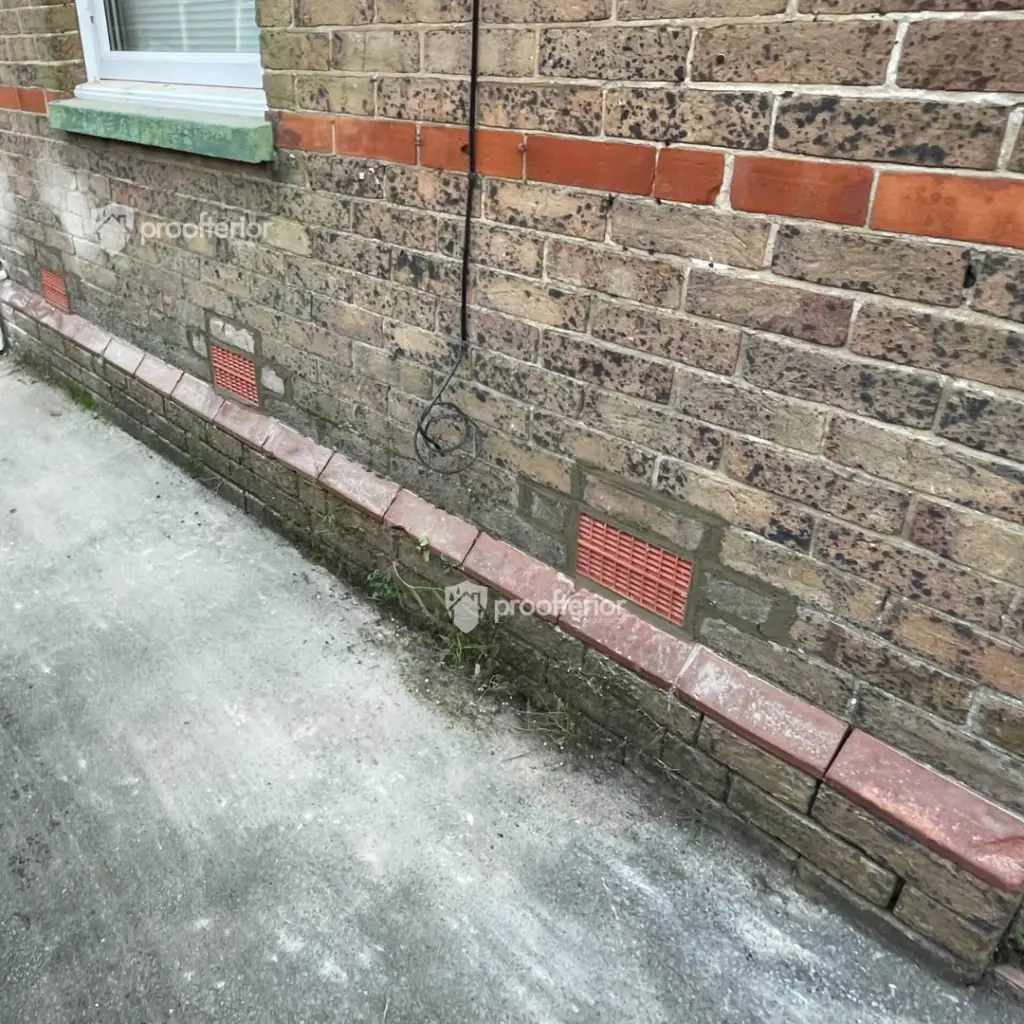
Yes, missing, blocked or buried air bricks can cause damp, because they stop air moving beneath a suspended timber floor, letting moisture build up and encouraging wet rot, dry rot and woodworm. Restoring airflow is usually simple, but only after you have checked the ground levels and drainage outside.
Air bricks are easy to overlook, and in Dorset, Hampshire and Wiltshire we regularly find them covered by patios, flower beds or render.
Key facts
- Air bricks ventilate the void beneath suspended timber floors and keep joists dry.
- Blocked vents allow humid air to stagnate, raising the moisture content of the timber.
- Typical signs are a musty smell, cupped or springy floorboards, fungal growth and a rise in humidity.
- Raised patios, soil and paint over the vent are the most common causes of blockage.
- Adding more air bricks is a ventilation fix, not a substitute for treating a leak or high ground level.
- Solid concrete floors do not need air bricks, so check what type of floor you have.
- A survey can measure timber moisture content and decide whether treatment is needed.
What air bricks actually do
A house with a suspended timber ground floor has a void underneath, usually between 150mm and 600mm deep. Air bricks set into the external walls let air pass through that void, carrying away moisture that rises from the soil. Without that airflow, humidity climbs, and timber that stays above roughly 20 per cent moisture content becomes vulnerable to fungal decay.
How air bricks get blocked
- Raised ground levels. Patios, paths, driveways and soil built up against the wall can cover the vent entirely.
- Render and paint. Cement render applied over the wall often seals the air brick without anyone noticing.
- Extensions. A new extension can block vents on the original wall, leaving the void behind it unventilated.
- Debris and vegetation. Leaves, nests and plant growth reduce airflow.
- Deliberate blocking. Some owners cover them to stop draughts, which trades a cold floor for a damp one.
Signs the subfloor needs attention
Look for a damp, earthy smell, floorboards that cup or feel soft, skirting boards with black staining, and mould growing at the base of walls. Lifting an access hatch or a floorboard will often show white mycelium or damp joist ends. Floors that feel cold and slightly spongy underfoot are worth a closer look.
How to put it right
- Clear any soil, debris or paint from the existing air bricks.
- Lower external ground levels to at least 150mm below the vent where possible.
- Fit additional air bricks on opposite walls so air can cross the whole void.
- Clear rubble from the subfloor and make sure vents are not blocked internally by insulation or fallen debris.
- Fix any leaking pipes, drains or gutters feeding the soil beneath.
When ventilation alone is not enough
If the timber is already decayed, ventilation will stop it getting worse but will not repair it. Affected joists may need to be cut out and replaced and the remaining timber treated. Where the void is very damp or the air cannot cross it, a surveyor may recommend mechanical subfloor ventilation. A proper survey establishes which approach suits the property.
Common questions
Can blocked air bricks cause damp inside the house?
Yes. Moisture trapped in the subfloor can affect timbers, skirting and lower walls, and raise humidity inside the property.
How many air bricks does a house need?
It depends on the size of the floor and the void, but vents should be spaced evenly on opposing walls so air flows right across. A surveyor can calculate what your property needs.
Can I cover air bricks to stop draughts?
It is better not to. Blocking them risks decay in the floor timbers. Draughts are better dealt with by insulating at floor level while keeping the void ventilated.
Do houses with concrete floors need air bricks?
Not for the floor, since there is no void. Some older homes have a mix of solid and suspended floors, so check each room.
What if I find rot under the floor?
Do not disturb it more than necessary. Have a timber and damp specialist identify the type of rot and plan treatment.
Get a straight answer for your home
Book a complimentary In-Depth Survey and one of our ISSE-accredited surveyors will find the cause, show you the readings and give you a written, itemised quote. Proofterior is a Which? Trusted Trader, and our work carries a 25-year, GPI insurance-backed guarantee. Call 01202 287503 or request a callback. We'll phone you back within 5 minutes.