
How to Fix Rising Damp in a Southampton Home Using a Chemical DPC and Full Wall Treatment System
A detailed damp proofing case study in Southampton showing how rising damp across living areas and extensions was diagnosed through moisture testing and resolved using a chemical DPC and the Proofterior Dry System.
Rising Damp Affecting Multiple Ground Floor Areas in a Southampton Property
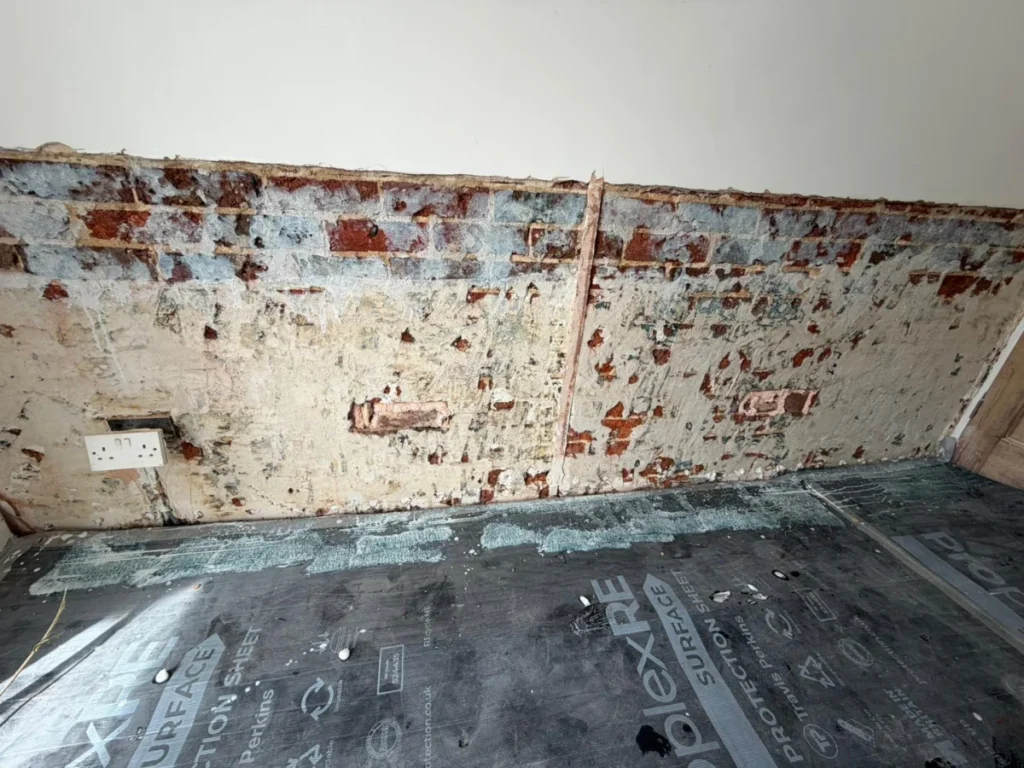
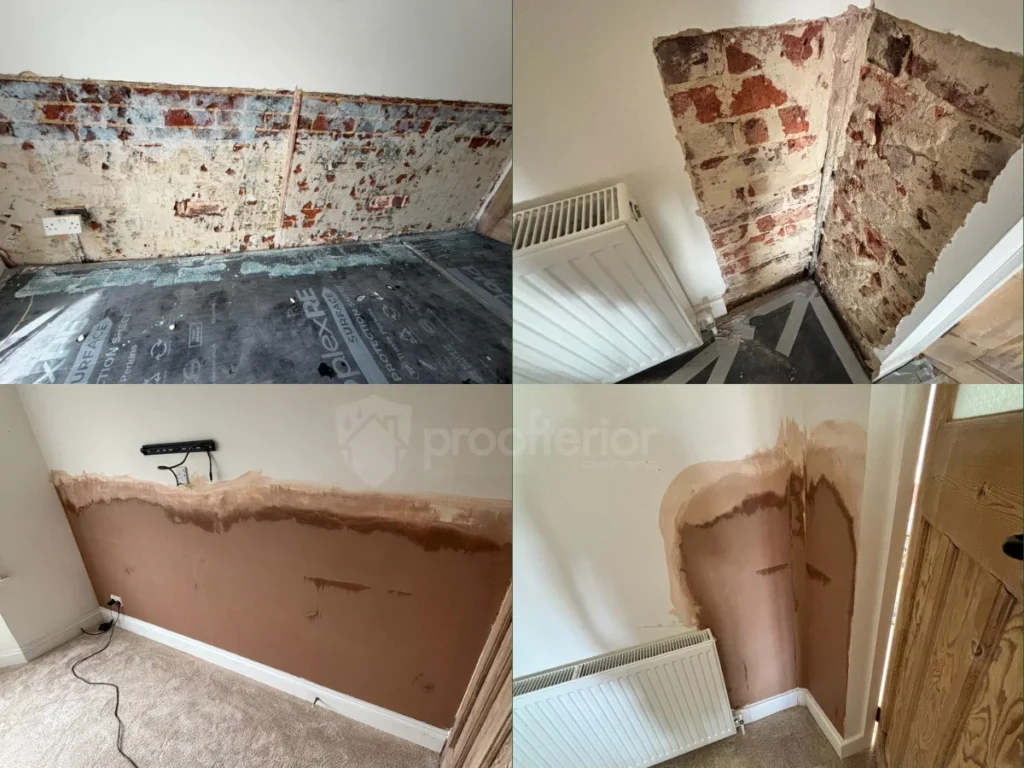
During a professional damp survey in Southampton (SO31), this semi-detached property presented with clear signs of rising damp affecting multiple internal wall sections, particularly within the main living room and the hallway/extension/conservatory areas .
Moisture readings taken using professional diagnostic equipment showed elevated levels concentrated at the base of the walls, extending up to approximately 1.5 metres before tapering off with height. This pattern is a key indicator of rising damp, caused by capillary action drawing groundwater upward through porous masonry.
In the extension area, the client also reported a historic shower tray leak. While this may have contributed to localised saturation, the consistent moisture pattern across multiple walls confirmed that rising damp was the primary issue, not just residual moisture from a past leak .
This is a common scenario in Southampton homes, where older or compromised damp proof courses allow moisture to travel through the wall structure, leading to visible damp patches, plaster deterioration, and long-term internal damage.
Objective: Eliminate Rising Damp and Protect the Entire Ground Floor Structure
The objective of this damp proofing project in Southampton was to implement a long-term, system-based solution that addressed both the source of moisture and its effects across all affected areas.
Key goals included:
- Stopping capillary moisture rise at source
- Installing a new chemical damp proof course (DPC)
- Removing salt-contaminated and damaged plaster
- Treating hygroscopic salts within the masonry
- Restoring internal walls to a dry, stable condition
- Ensuring protection across the living room and extension areas
- Providing a guarantee-backed damp proofing solution
Without addressing the root cause, any cosmetic repairs would fail, as salts within the wall would continue attracting moisture and causing recurring damp issues.
Step-by-Step Damp Proofing Process Using the Proofterior Dry System
1. Preparation and Access to Affected Wall Areas
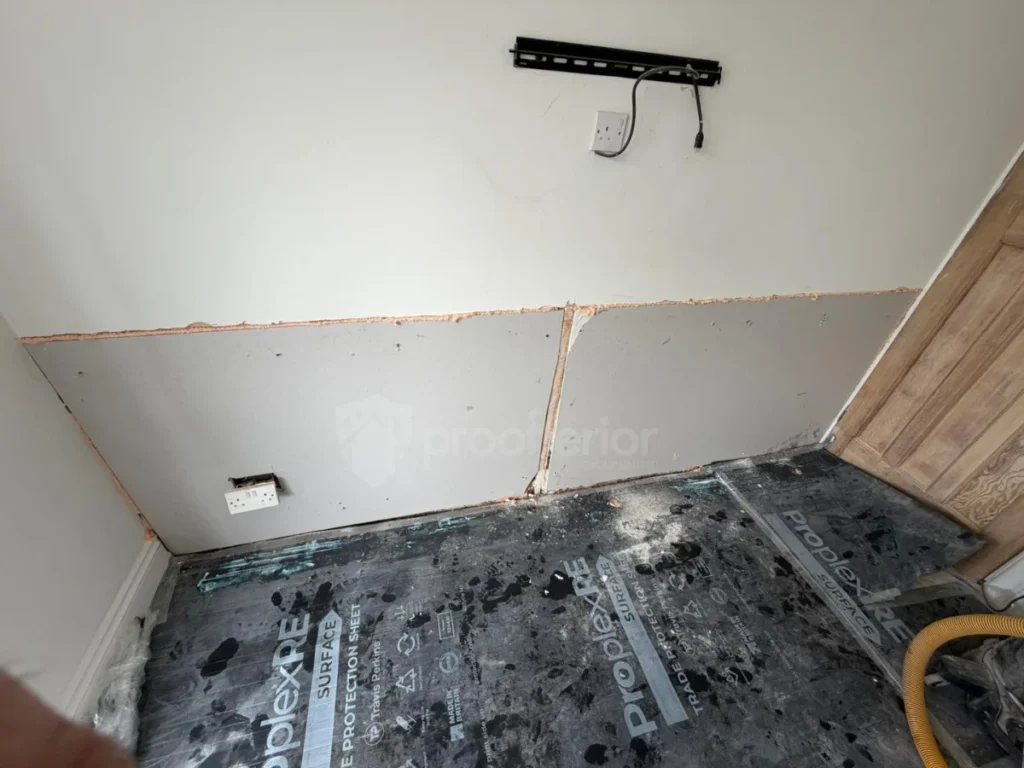
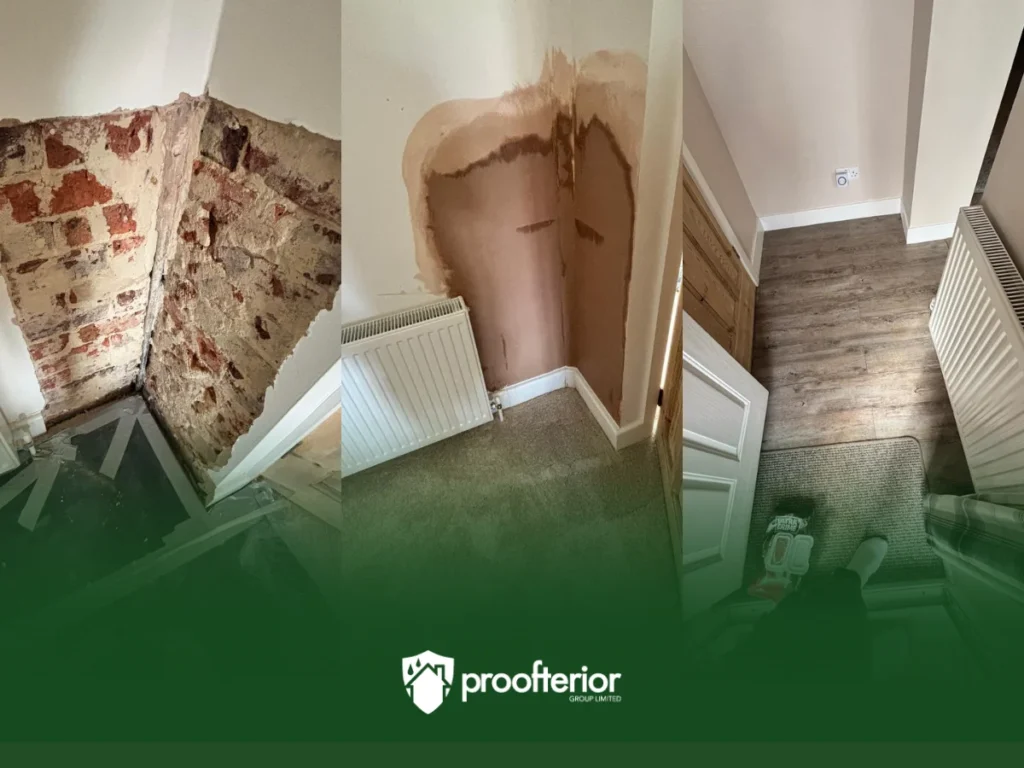
All work areas were carefully prepared, with floors and furnishings protected using professional coverings. Fixtures such as skirting boards, radiators, and electrical fittings were removed where necessary to allow full access to the affected wall surfaces .
This ensures that damp proofing treatments can be applied thoroughly and consistently across all affected zones.
2. Removal of Damp and Salt-Contaminated Plaster
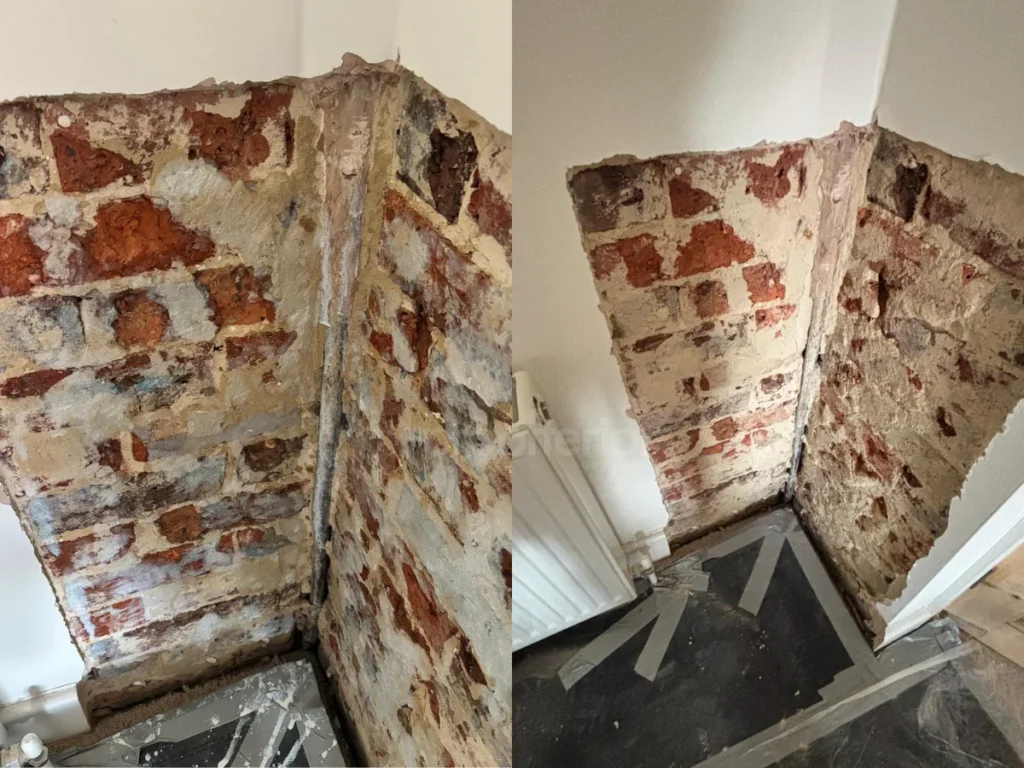
All defective plaster was hacked off to a minimum of 300mm above the highest visible damp line, typically up to around 1.5 metres as identified during the survey .
This step is critical in damp proofing Southampton properties because plaster often contains hygroscopic salts, which continue to attract moisture even after the wall begins to dry. Removing this contaminated material prevents future damp staining and decorative failure.
3. Chemical Damp Proof Course (DPC) Installation
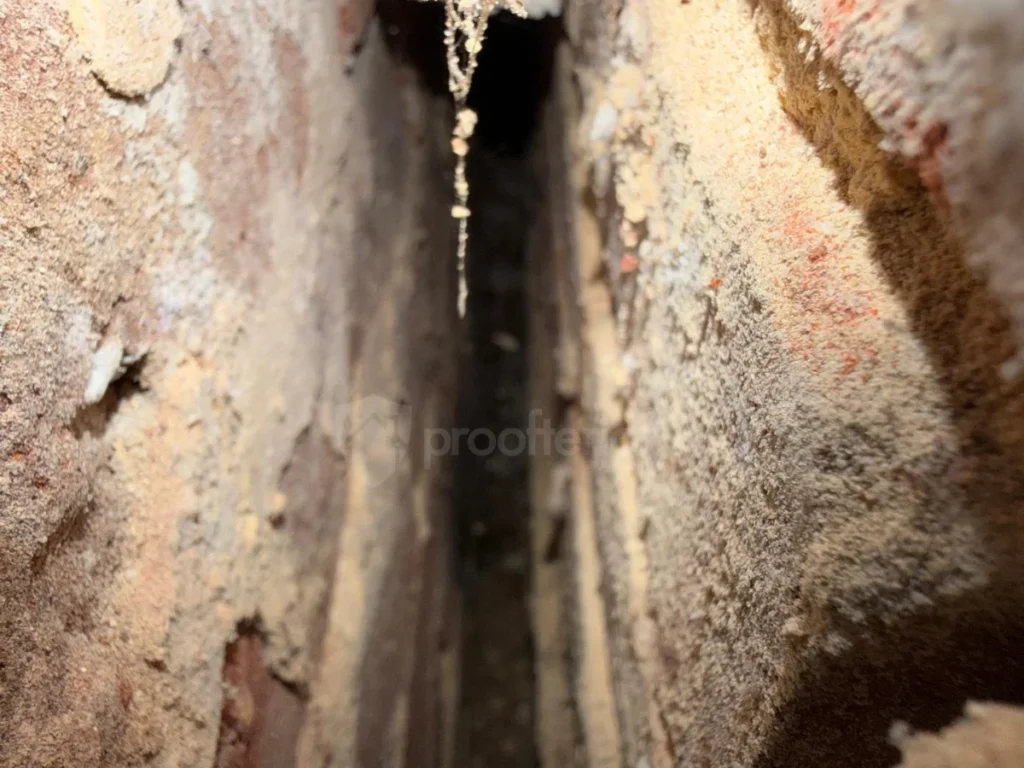
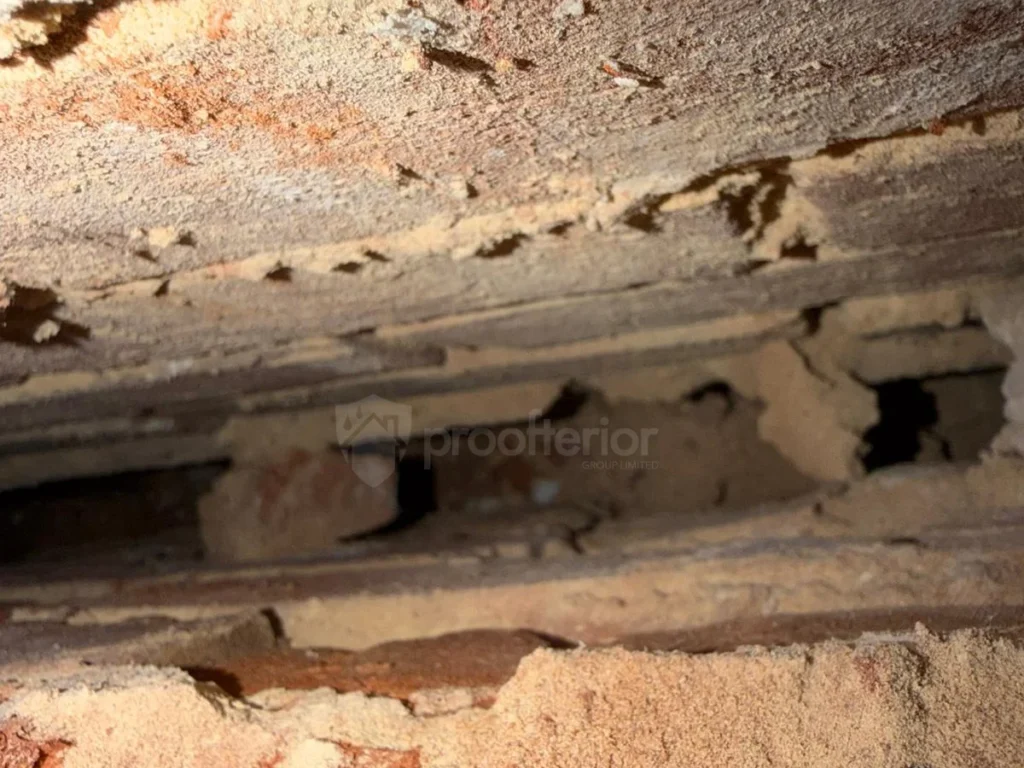
A new chemical damp proof course was installed into the mortar bed at the correct level along all affected wall sections .
This creates a continuous barrier that:
- Stops rising damp at its source
- Prevents further moisture from entering the wall structure
- Stabilises internal moisture levels
Chemical DPC installation is one of the most effective and widely used methods for treating rising damp in Southampton homes.
4. Salt Neutralisation and Damp Proof Membrane (Where Required)
A specialist salt-neutralising treatment was applied to the exposed masonry to stabilise hygroscopic salts and prevent them from attracting moisture into the new plaster finish .
Where required, an internal damp proof membrane (DPM) was installed to further isolate the new wall finish from any residual moisture within the substrate.
This dual approach ensures both the cause and the consequences of rising damp are addressed.
5. Reinstatement and Finishing
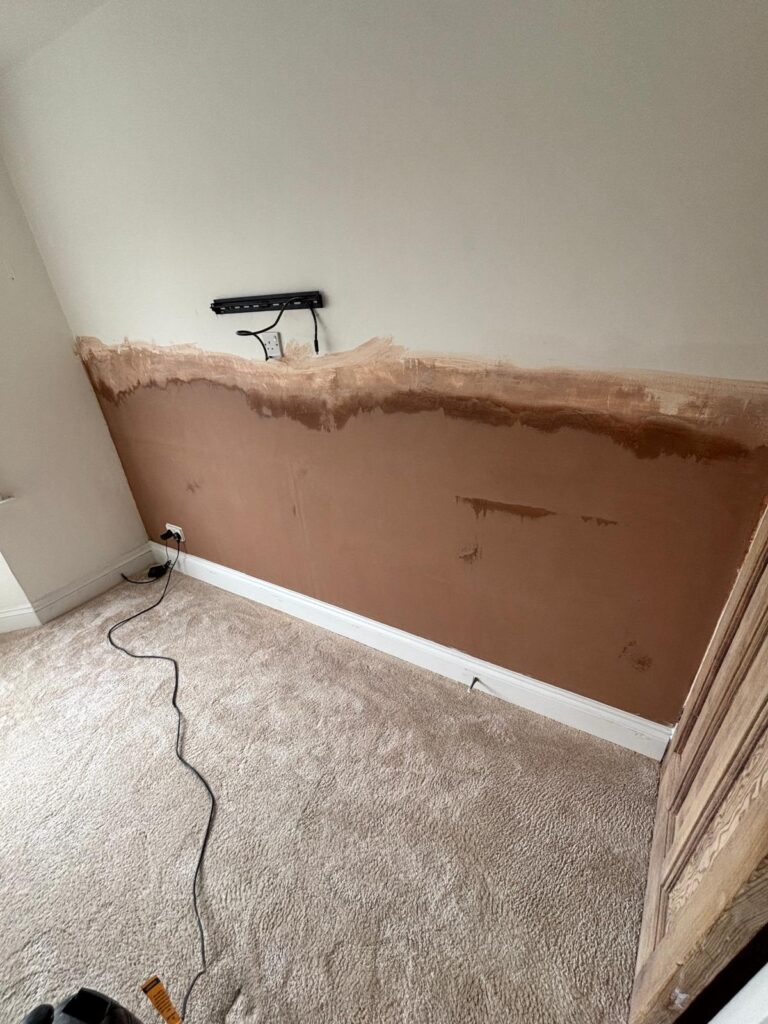
The treated wall areas were reinstated using a damp-resistant plaster system, providing a smooth, durable, and decoration-ready surface.
All fixtures, including skirting boards and radiators, were refitted, and the property was left clean and ready for redecoration .
Why Rising Damp Is Common in Southampton Homes
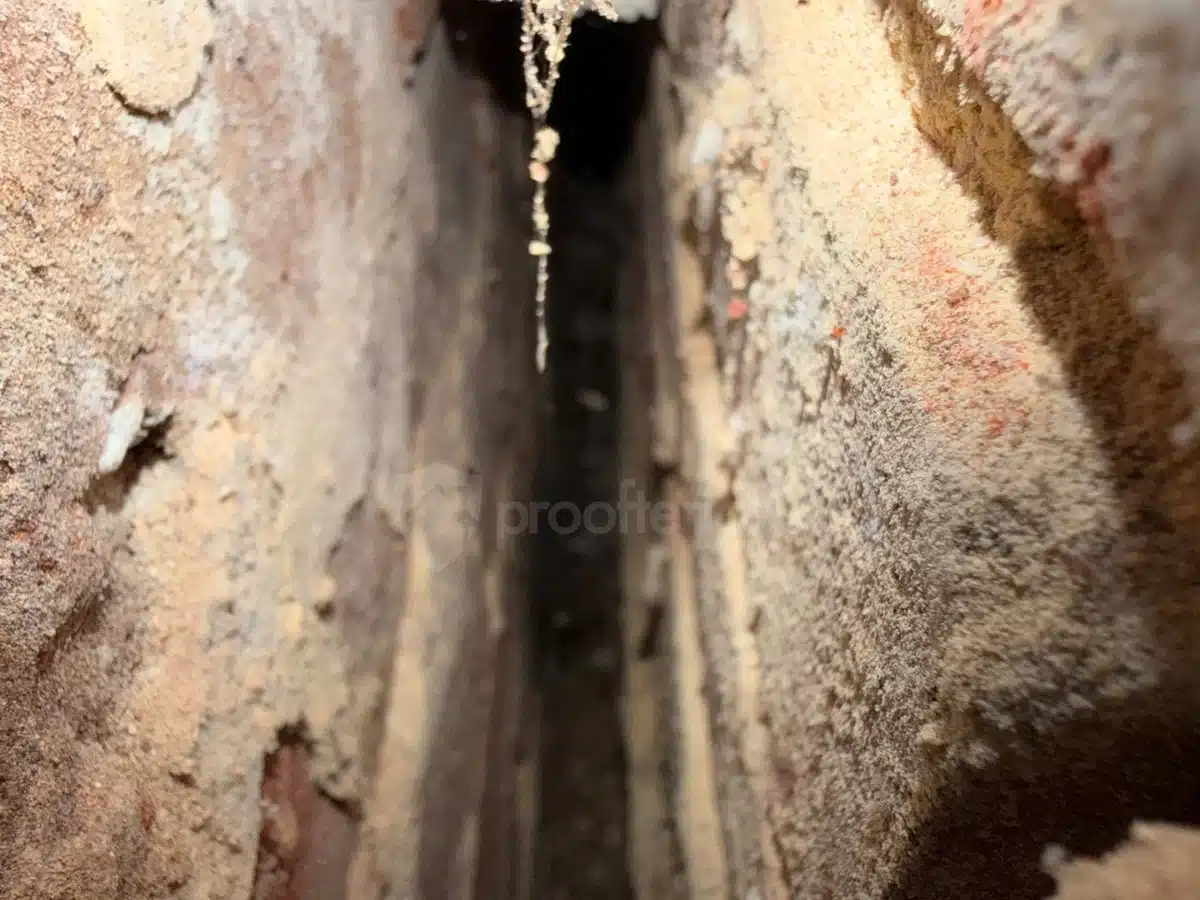
Rising damp is a frequent issue in Southampton properties, particularly in older homes or those with compromised damp proof courses.
Common contributing factors include:
- Ageing or failed damp proof courses
- Ground moisture levels and soil conditions
- Bridging of the original DPC
- Poor ventilation combined with moisture ingress
In this case, the presence of a historic leak added complexity, but the consistent moisture pattern confirmed that rising damp was the primary cause.
A professional damp survey in Southampton is essential to accurately diagnose these overlapping issues and apply the correct treatment.
What Southampton Homeowners Should Know About Rising Damp
- Rising damp typically appears up to 1–1.5 metres from floor level
- Moisture patterns help distinguish rising damp from other issues
- Historic leaks can contribute but are often not the main cause
- Removing contaminated plaster is essential for long-term success
- Chemical DPC installation is a proven solution for rising damp
- System-based treatments prevent recurring damage and costly repairs
If you’re experiencing damp patches, peeling paint, or musty odours in your Southampton property, a professional damp survey is the first step toward a permanent solution.
Frequently Asked Questions About Bornemouth Damp Proofing
1. Will installing a chemical damp proof course solve the rising damp problem permanently?
Yes, our work is carried out to PCA (Property Care Association) standards and based on a thorough ISSE-accredited survey of your property. Every recommendation is designed to address the root cause of rising damp, not just the visible symptoms.
By installing a chemical damp proof course, applying salt-neutralising treatments, and reinstating walls using the Proofterior Dry System, we stop moisture at source and prevent it from returning. All work is backed by a 25-year guarantee for long-term peace of mind.
2. Can rising damp affect multiple areas like living rooms and extensions?
Yes, rising damp can affect multiple ground floor areas within a property. In this Southampton case, both the living room and extension areas showed similar moisture patterns, confirming a shared underlying issue within the wall structure .
Treating all affected areas together ensures the problem is fully resolved and prevents damp from spreading or reappearing elsewhere.
3. How do I know if I need a damp proof membrane system in my Bournemouth home?
If damp keeps returning after replastering or decorating, or if moisture is present across wider wall areas rather than just at low level, an internal damp proof membrane system may be required.
A professional damp survey in Bournemouth will determine whether the issue is rising damp, penetrating damp, or cavity-related moisture, ensuring the correct solution is applied.
4. Can a historic leak still cause damp problems years later?
Yes, historic leaks can leave residual moisture within wall structures, particularly if they were not properly dried or treated at the time. However, they are often only part of the problem.
In this case, while a previous shower leak contributed to localised damp, the primary issue was rising damp, which required a full damp proofing solution rather than a simple repair
5. How do I know if I need damp proofing in my home?
Common signs include damp patches at low level, peeling paint, crumbling plaster, and musty odours. Rising damp typically appears up to around 1 to 1.5 metres and follows a consistent vertical pattern.
The most reliable way to confirm the issue is through a professional damp survey in Southampton, where moisture readings and expert assessment determine the exact cause and appropriate treatment.
Ready to protect your Southampton property?
Book a damp survey with Proofterior. Our local damp specialists deliver clear diagnosis, tidy repairs, and long-lasting proofing that keeps homes dry, healthy, and comfortable.