
Rising Damp in Bournemouth Ground Floor Flat Resolved with Chemical DPC Installation and Proofterior Dry System
A detailed damp proofing case study in Bournemouth showing how moisture diagnostics identified rising damp in lounge walls, and how a chemical DPC installation with the Proofterior Dry System restored a dry, stable internal environment.
Diagnosing Rising Damp in a Bournemouth Ground Floor Flat
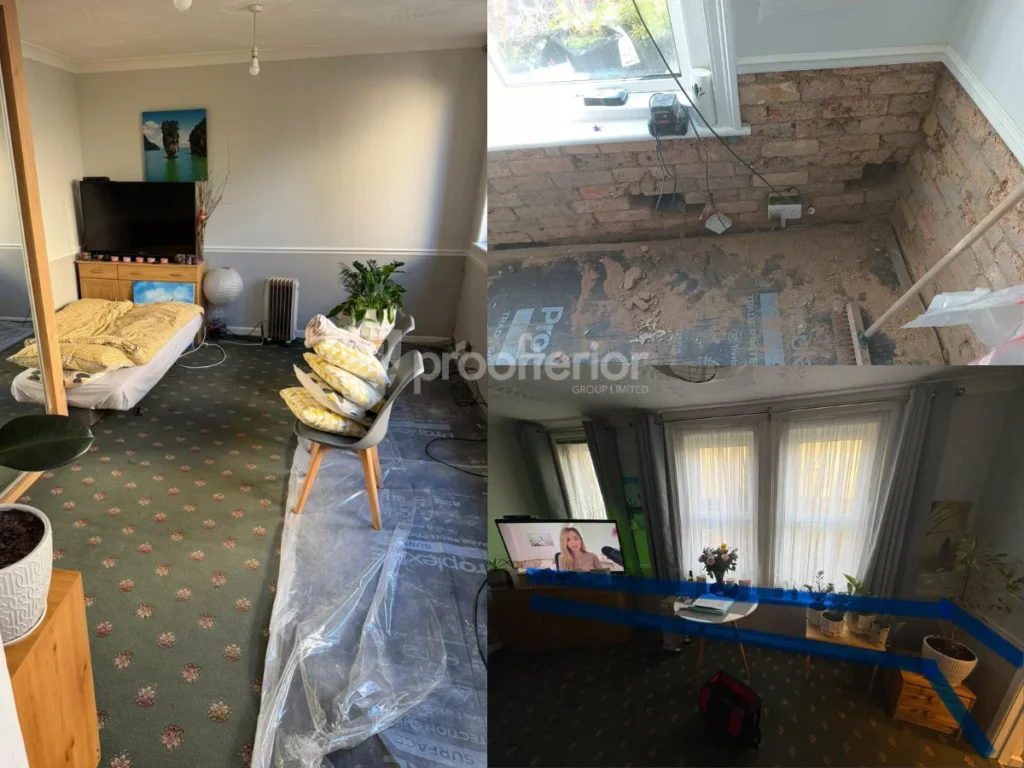
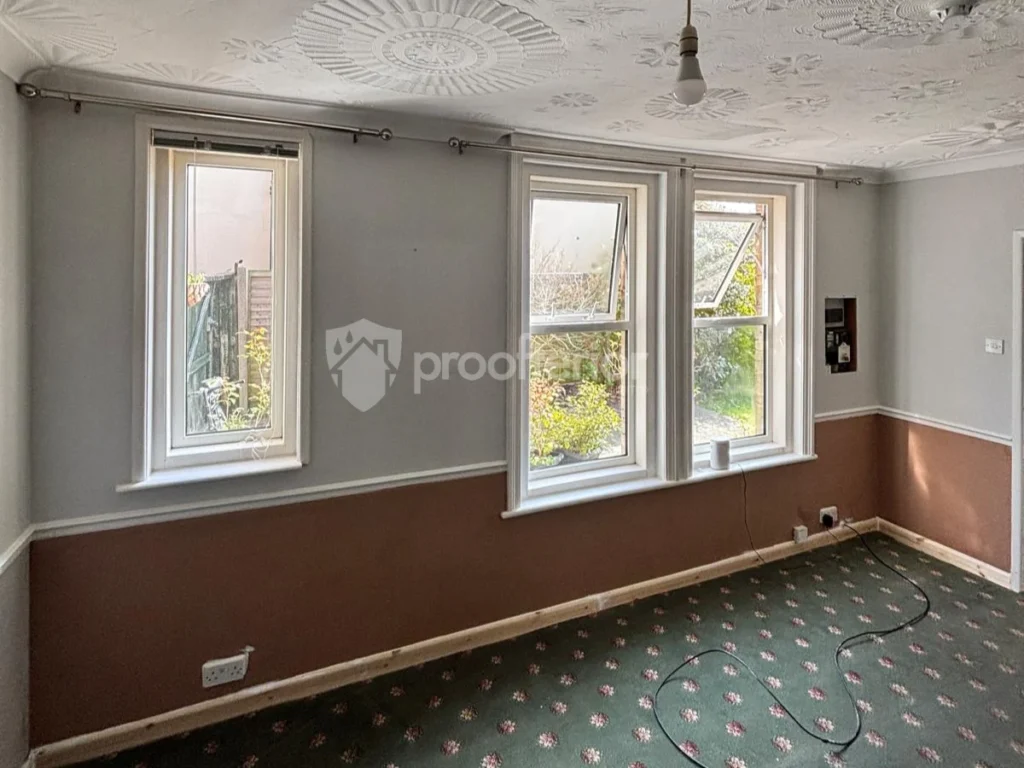
During a professional damp survey in Bournemouth (BH14), this ground floor flat presented with clear and visible damp patches affecting the lower sections of the lounge walls .
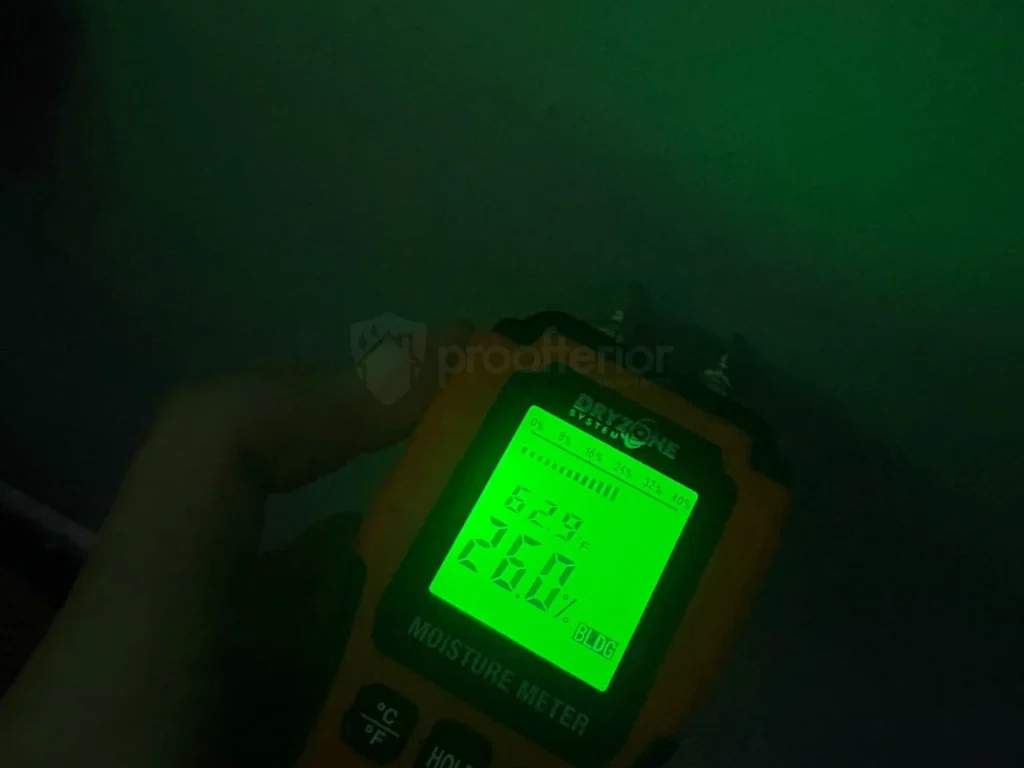
Moisture diagnostics were carried out using a calibrated moisture meter across the affected wall areas. Readings exceeded 40% moisture content at low level, with elevated readings confined to the lower wall zones and reducing progressively with height .
This moisture pattern is critical. The findings showed:
- Damp rising from floor level
- A clear horizontal damp line
- Moisture limited to approximately 1.0–1.5m
- Reduced readings above this height
This is a textbook example of rising damp caused by capillary action, where groundwater is drawn upward through porous masonry due to a failed, missing, or bridged damp proof course (DPC).
Importantly, the damp was not caused by condensation or plumbing leaks. The consistent vertical moisture gradient confirmed a structural moisture issue requiring professional damp proofing in Bournemouth.
Objective: Eliminate Rising Damp and Restore a Dry Living Space
The objective of this damp proofing project in Bournemouth was to:
- Stop capillary moisture rise at source
- Install a new chemical damp proof course
- Remove salt-contaminated plaster
- Prevent recurring damp patches and staining
- Restore a dry, stable wall surface suitable for decoration
- Provide a long-term, guarantee-backed damp proofing solution
Without installing a new DPC, any cosmetic repair would fail, as hygroscopic salts within the wall would continue attracting moisture.
Step-by-Step Rising Damp Treatment Process in Bournemouth
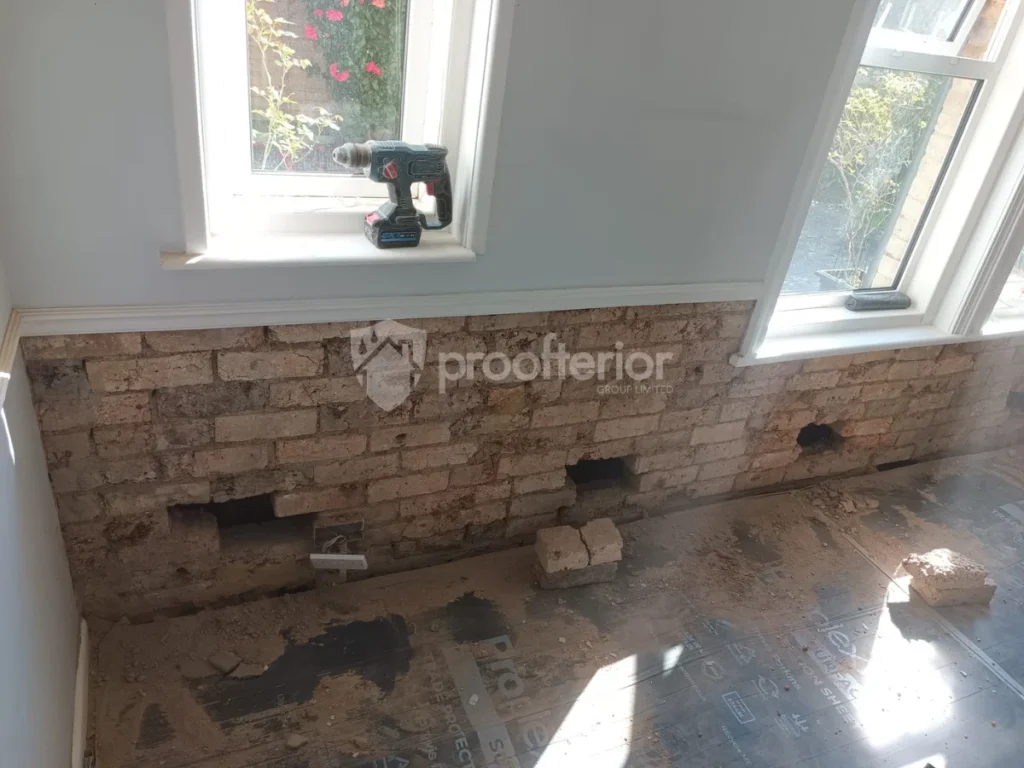
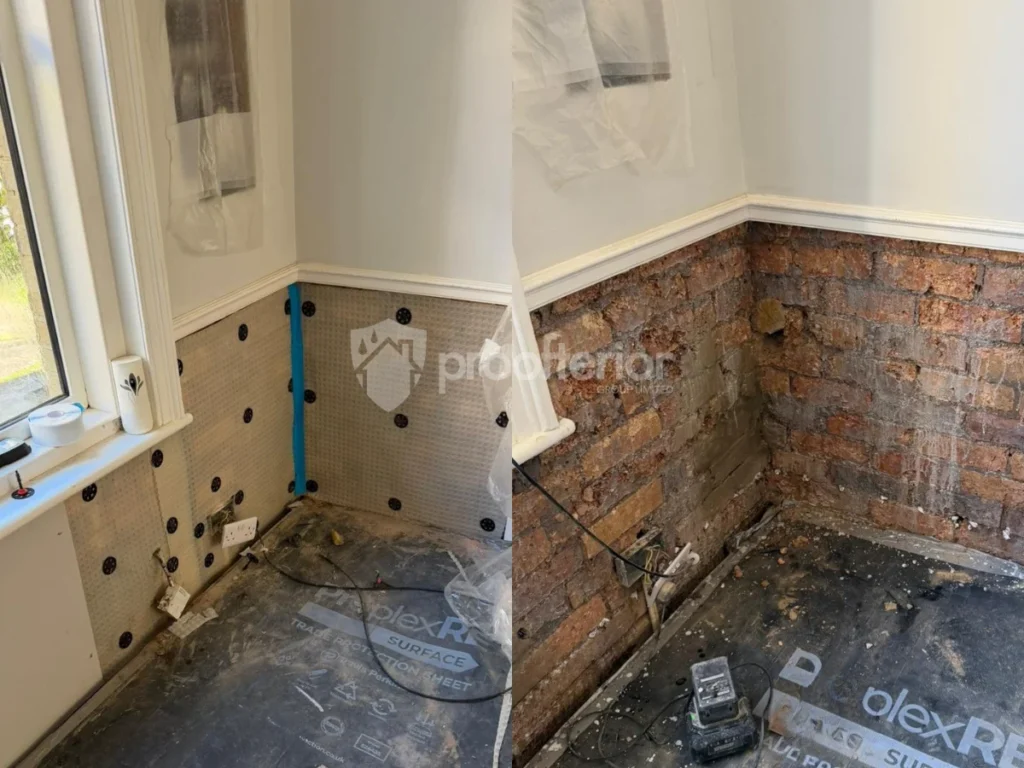
1. Preparation and Protection of the Living Space
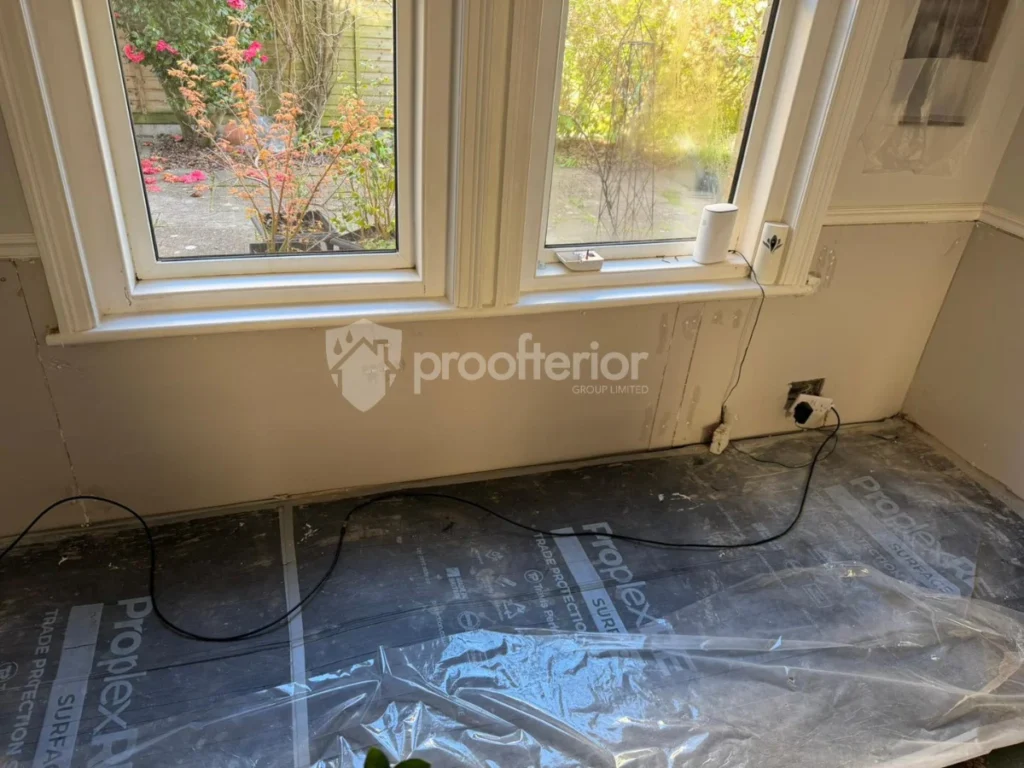
The lounge area was carefully prepared to minimise disruption. Floors, furniture, and fixtures were protected using dust sheets and protective coverings .
Skirting boards, radiators, and electrical fittings within the treatment zone were removed or adjusted to allow full access to the affected walls.
2. Removal of Damp and Salt-Contaminated Plaster
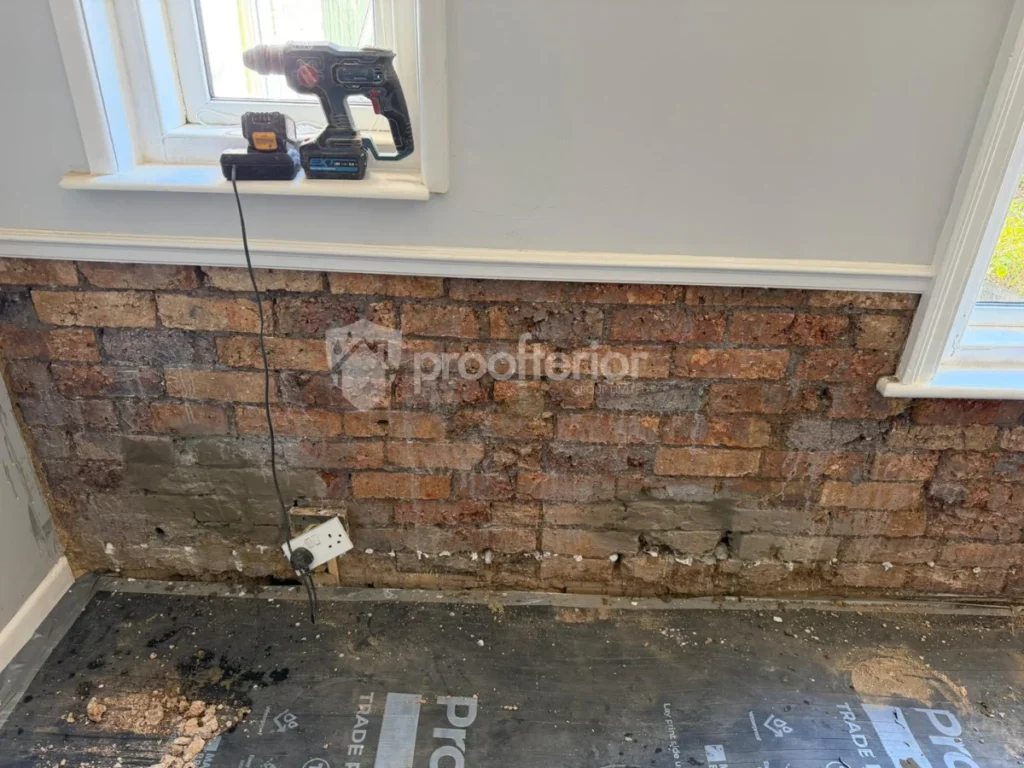
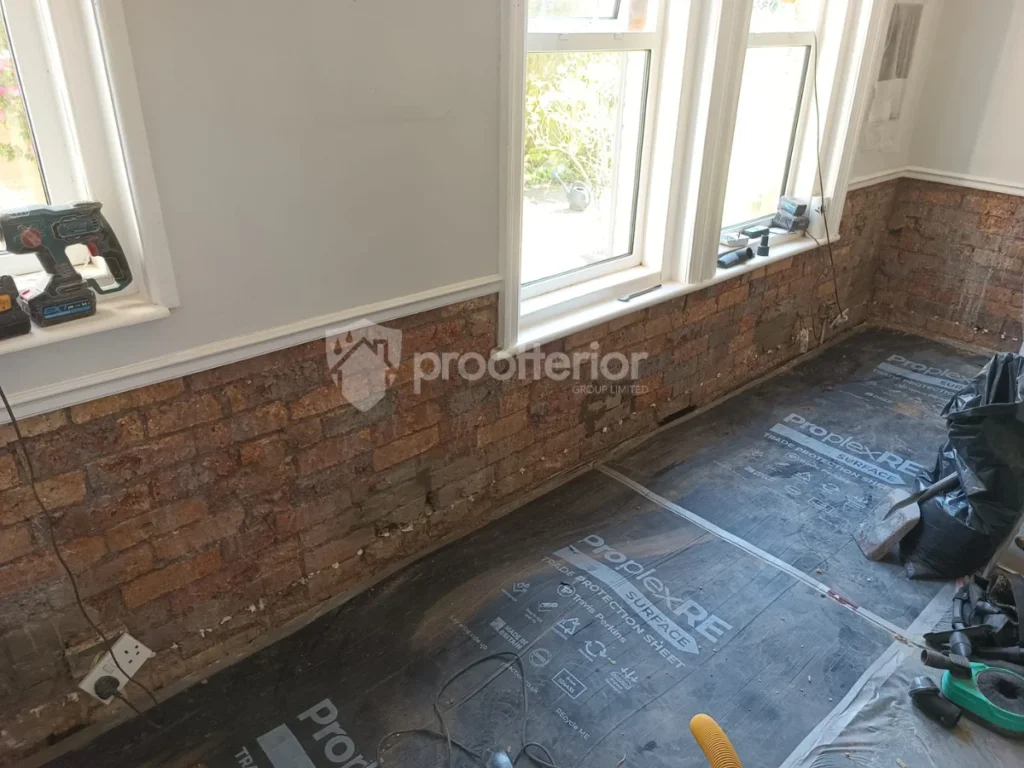
All defective and contaminated plaster was hacked off to a minimum of 300mm above the highest damp line, typically up to around 1.5 metres .
This step is essential in damp proofing Bournemouth properties, as salts embedded in plaster continue to attract moisture even after walls begin to dry.
3. Chemical Damp Proof Course (DPC) Installation
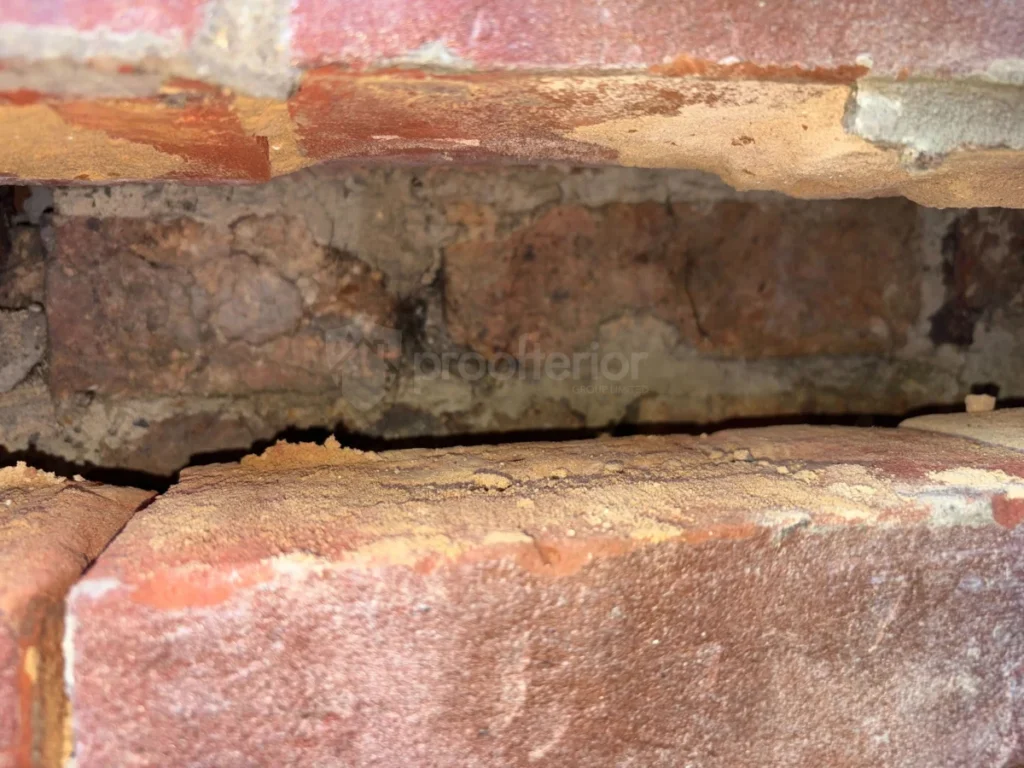
A new chemical damp proof course was installed into the mortar bed at the correct level along the affected walls .
This creates a continuous moisture barrier that:
- Stops capillary moisture rise
- Prevents further groundwater ingress
- Stabilises the wall structure
Chemical DPC installation is a proven and widely used rising damp treatment method in Bournemouth and across Dorset.
4. Salt Neutralisation and Damp Proof Membrane
The exposed masonry was treated with a salt-neutralising solution to stabilise hygroscopic salts and prevent future moisture attraction .
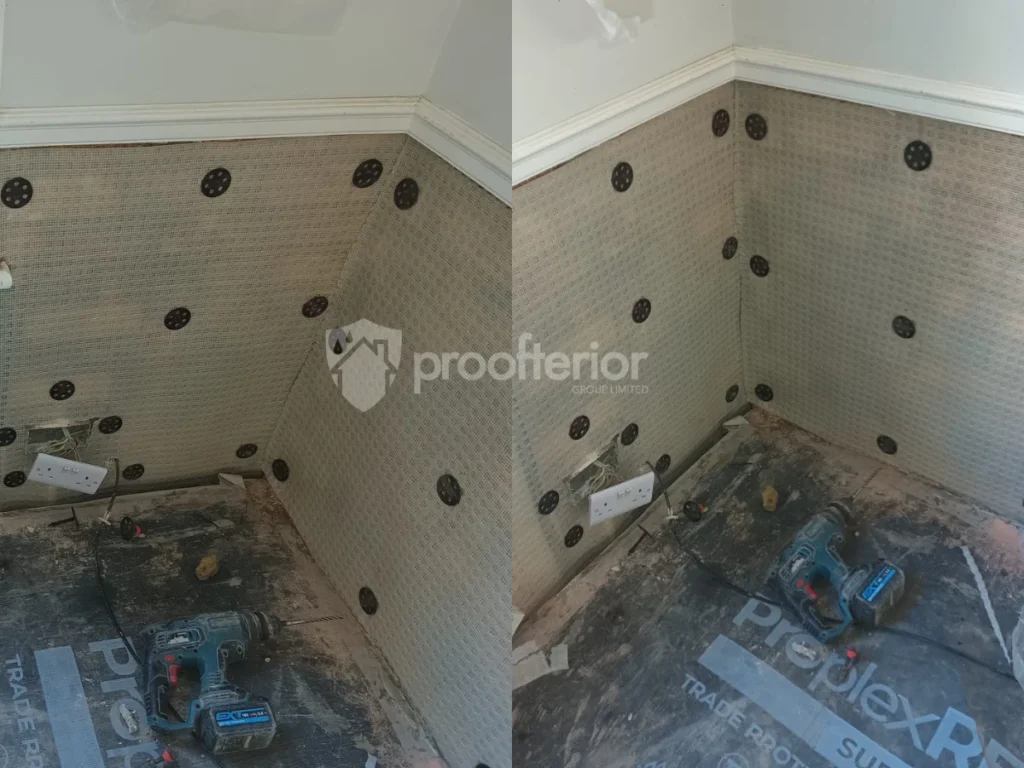
Where required, a damp proof membrane (DPM) was installed to isolate new plaster finishes from any residual background moisture within the wall.
5. Reinstatement and Finishing
Before treatment:
- Moisture readings exceeding 40% at low level
- Visible damp patches and deterioration
- Salt contamination within plaster
- Ongoing moisture migration from the ground
After installation of the Proofterior Dry System:
- Capillary moisture rise arrested
- New chemical DPC barrier in place
- Salt contamination neutralised
- Walls restored to a dry, stable condition
Over time, residual moisture will evaporate naturally, leaving a fully dry internal environment.
The system is backed by a 25-year company guarantee, with optional 30-year third-party backing.
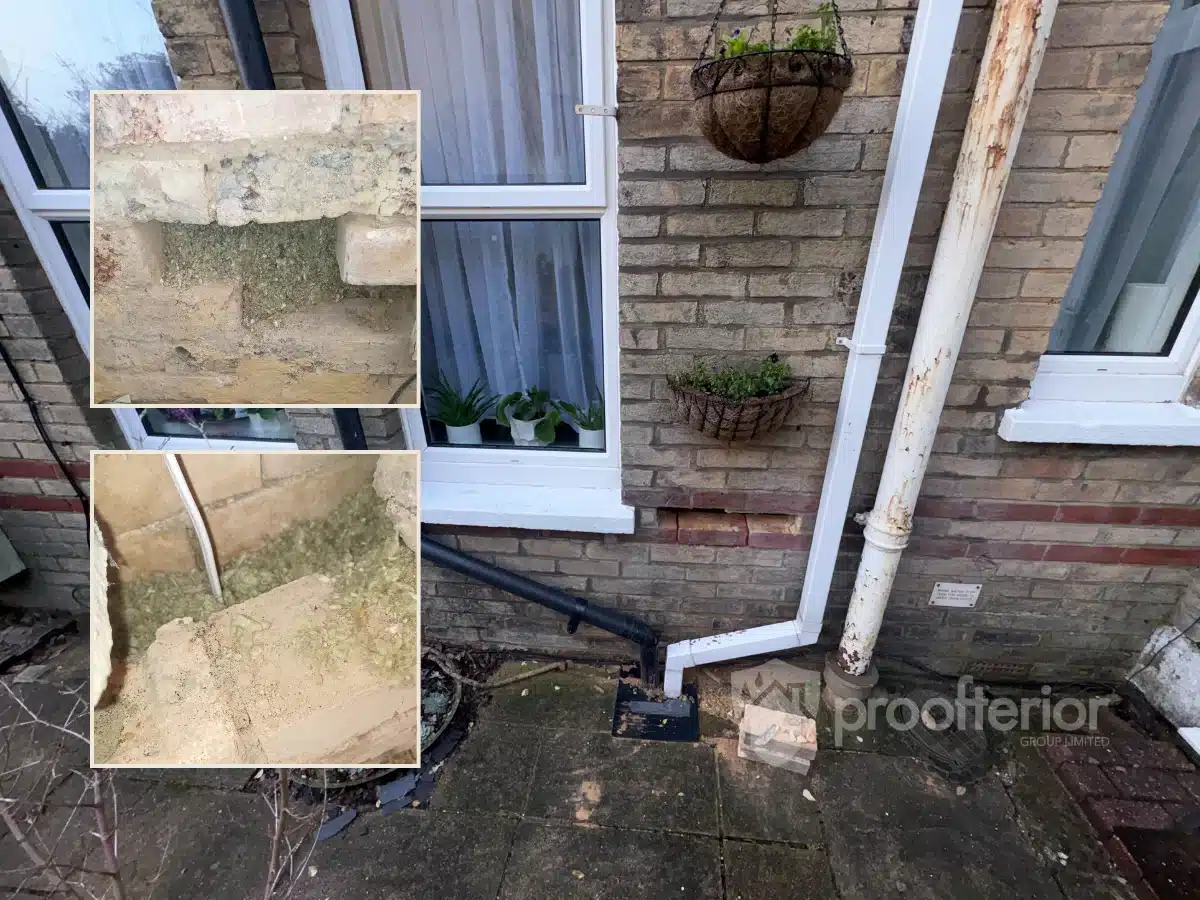
Why Rising Damp Is Common in Bournemouth Ground Floor Flats
Ground floor flats in Bournemouth are particularly vulnerable to rising damp due to:
- Direct contact with ground moisture
- Ageing or failed damp proof courses
- Bridging caused by internal or external finishes
- Porous masonry construction
Without professional damp proofing in Bournemouth, moisture can continue rising through walls, leading to:
- Plaster breakdown
- Timber decay in skirting boards
- Mould growth and poor indoor air quality
A professional damp survey in Bournemouth ensures the correct diagnosis before treatment, preventing unnecessary or ineffective repairs.
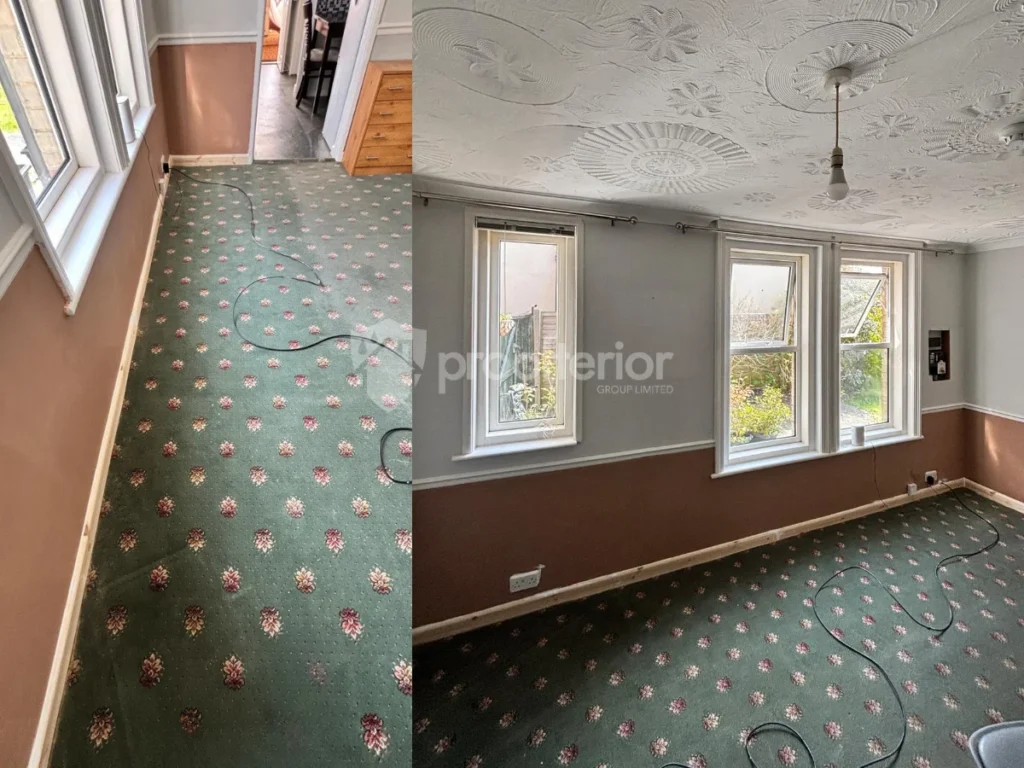
What Bornemouth Homeowners Should Know About Rising Damp
- Rising damp typically presents as moisture up to 1–1.5m from floor level.
- High moisture readings at low level confirm capillary moisture movement.
- Cosmetic repairs will fail without installing a new damp proof course.
- Salt contamination must be removed to prevent recurring damp patches.
- Professional damp proofing provides long-term protection and guarantees.
If you’re experiencing damp patches, peeling paint, or deterioration in your Bournemouth property, arranging a professional damp survey is the safest first step toward a permanent solution.
Ready to protect your Bornemouth property?
Book a damp survey with Proofterior. Our local damp specialists deliver clear diagnosis, tidy repairs, and long-lasting proofing that keeps homes dry, healthy, and comfortable.