
A detailed damp proofing case study in Bournemouth showing how a professional damp survey, thermal imaging diagnostics, and advanced moisture testing identified penetrating damp in a kitchen extension wall. Using the Proofterior Dry System alongside external masonry protection cream, we delivered a complete damp proofing solution in Bournemouth that eliminated rain penetration, stabilised salt-contaminated plaster, improved wall insulation performance, and provided long-term protection against recurring damp issues in Dorset properties.
Diagnosing Penetrating Damp in a Bournemouth Kitchen Extension
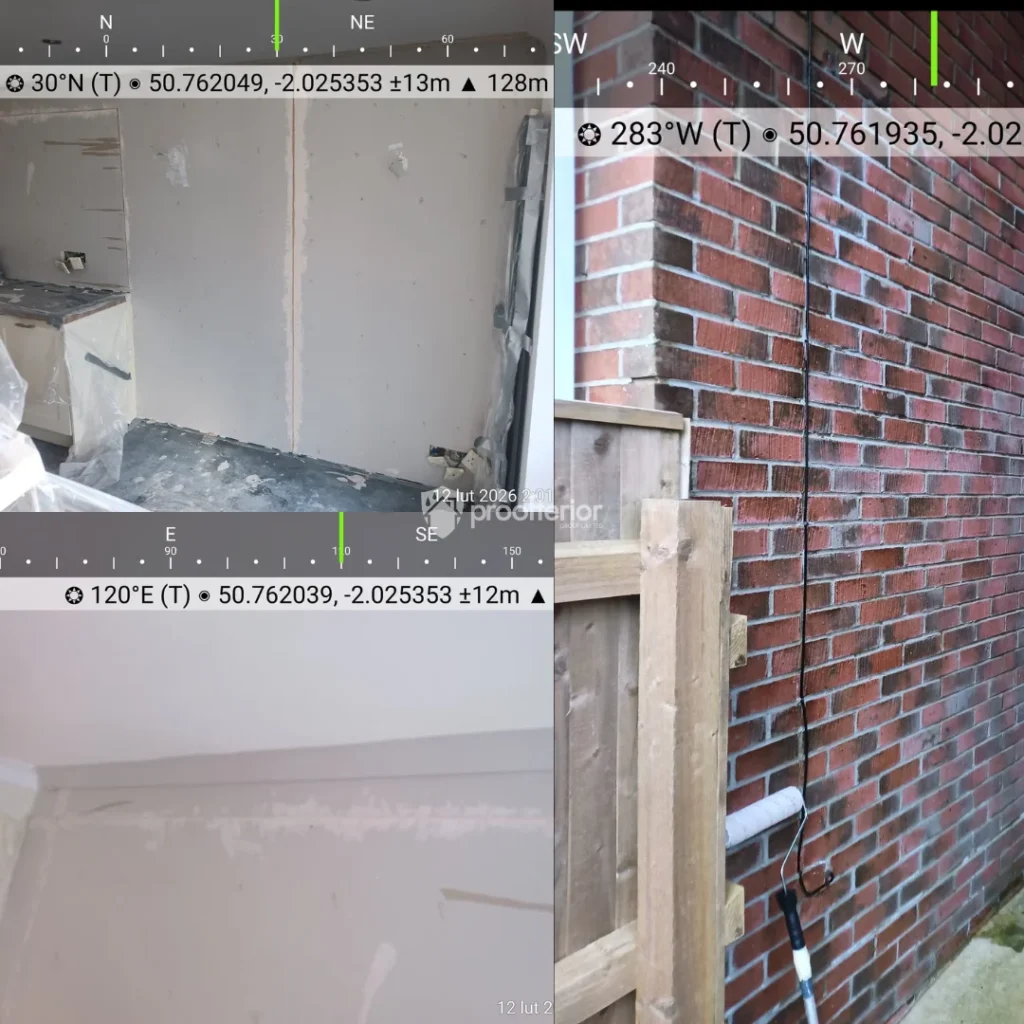
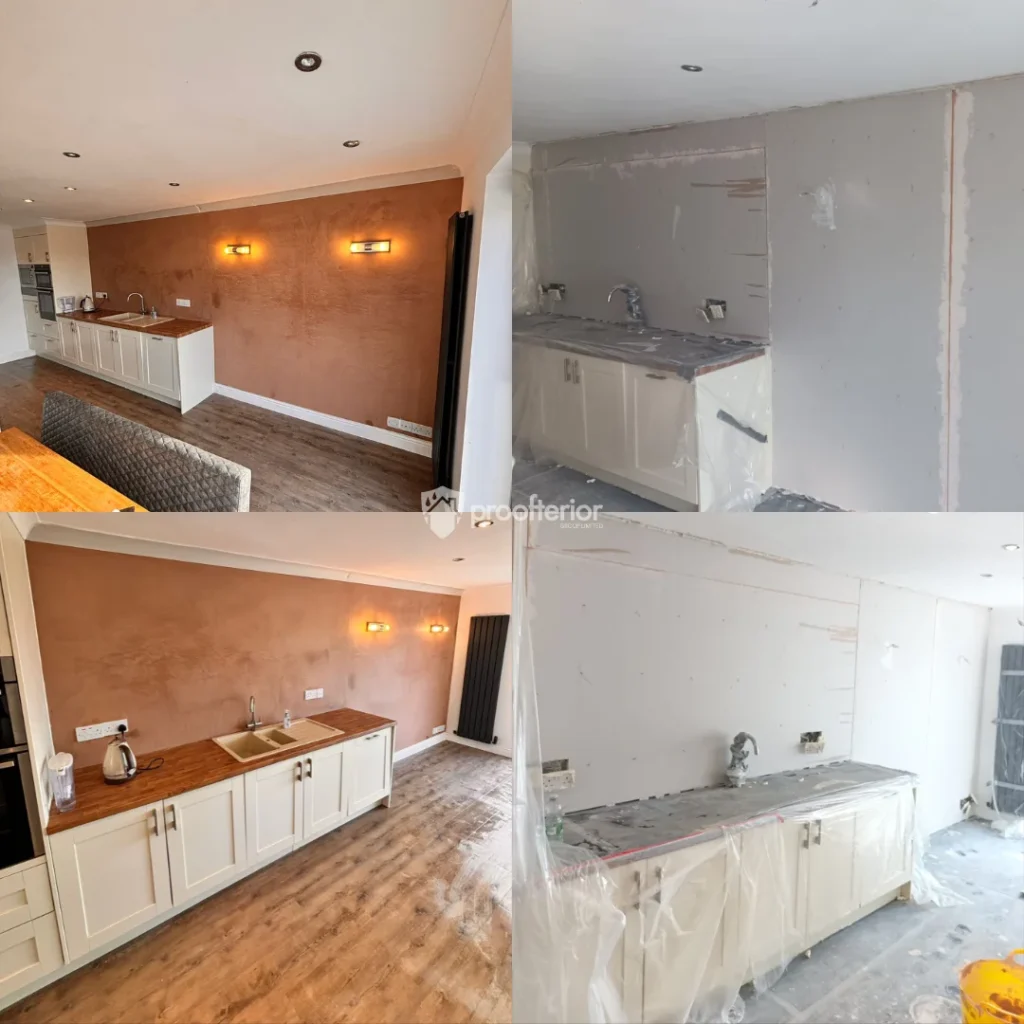
This detached BH postcode property near Bournemouth presented with visible bubbling and cracking plaster along the internal face of the external kitchen wall. There were immediate signs of salt damage and moisture-related deterioration affecting the lower wall finishes.
A professional damp survey in Bournemouth was carried out using:
- Moisture meter diagnostics across the full wall length
- Thermal imaging to identify cold bridging
- Visual inspection of external brickwork condition
The moisture readings were consistently high, confirming the masonry was damp throughout rather than suffering from isolated condensation. Thermal imaging identified cold bridging zones, indicating areas of heat loss and lower surface temperature, which increase the risk of condensation forming on already moisture-laden substrates.
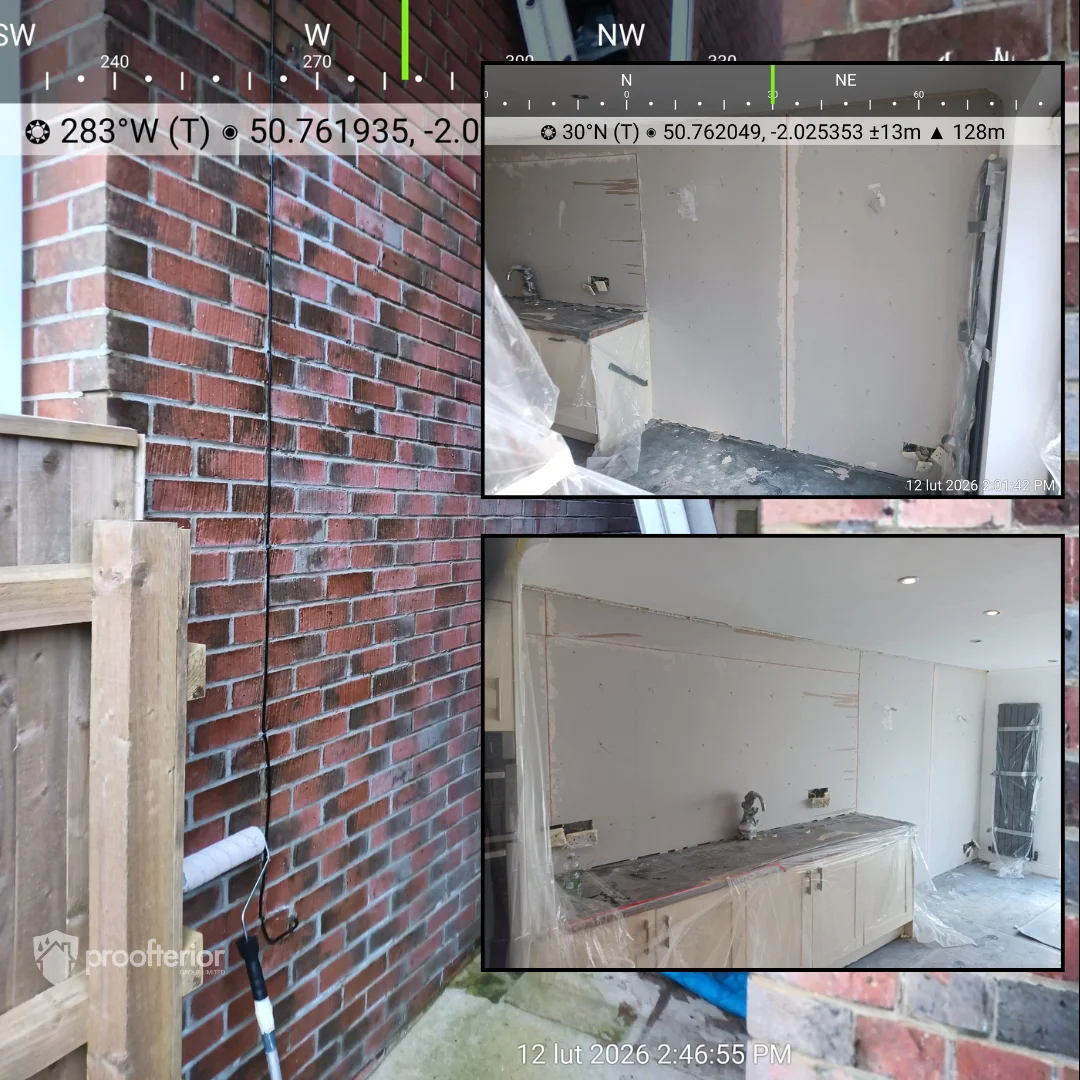
Externally, the east-facing elevation was highly exposed to wind-driven rain. The neighbouring property partially shielded the wall from direct sunlight, limiting natural drying. The brickwork forming part of a 30-year-old extension showed signs of corrosion and weathering, reducing resistance to rain penetration.
This combination of penetrating damp, salt contamination, and cold bridging created a self-reinforcing cycle of deterioration.
Objective: Eliminate Rain Penetration and Restore a Dry Internal Surface
The objective of this damp proofing project in Bournemouth was not simply to repair cosmetic damage but to implement a system-based solution addressing both cause and consequence.
Clear measurable goals included:
- Stop wind-driven rain penetrating porous brickwork
- Remove salt-contaminated internal plaster
- Isolate new finishes from damp masonry
- Improve internal wall surface temperature
- Provide long-term guarantee-backed protection
The strategy required both internal damp control measures and external masonry weatherproofing.
Step-by-Step Damp Proofing Process in Bournemouth
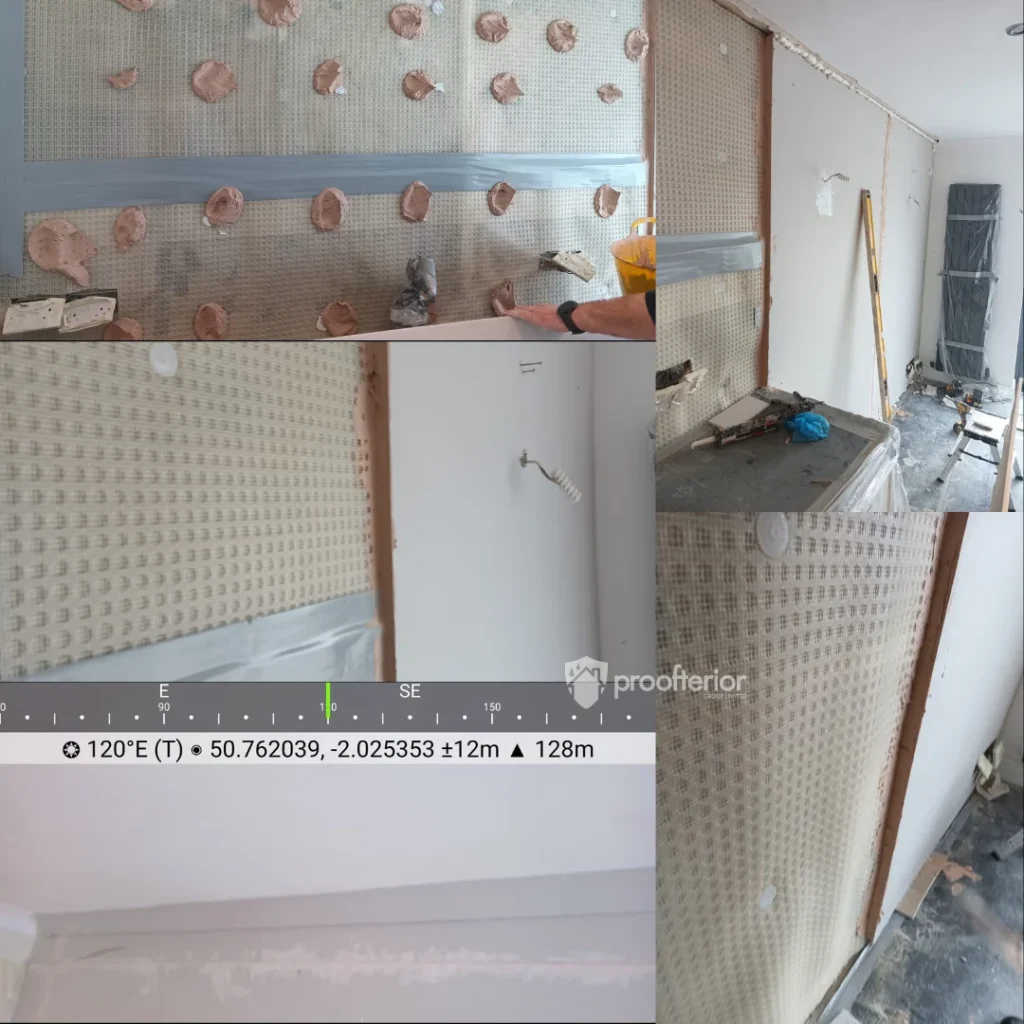
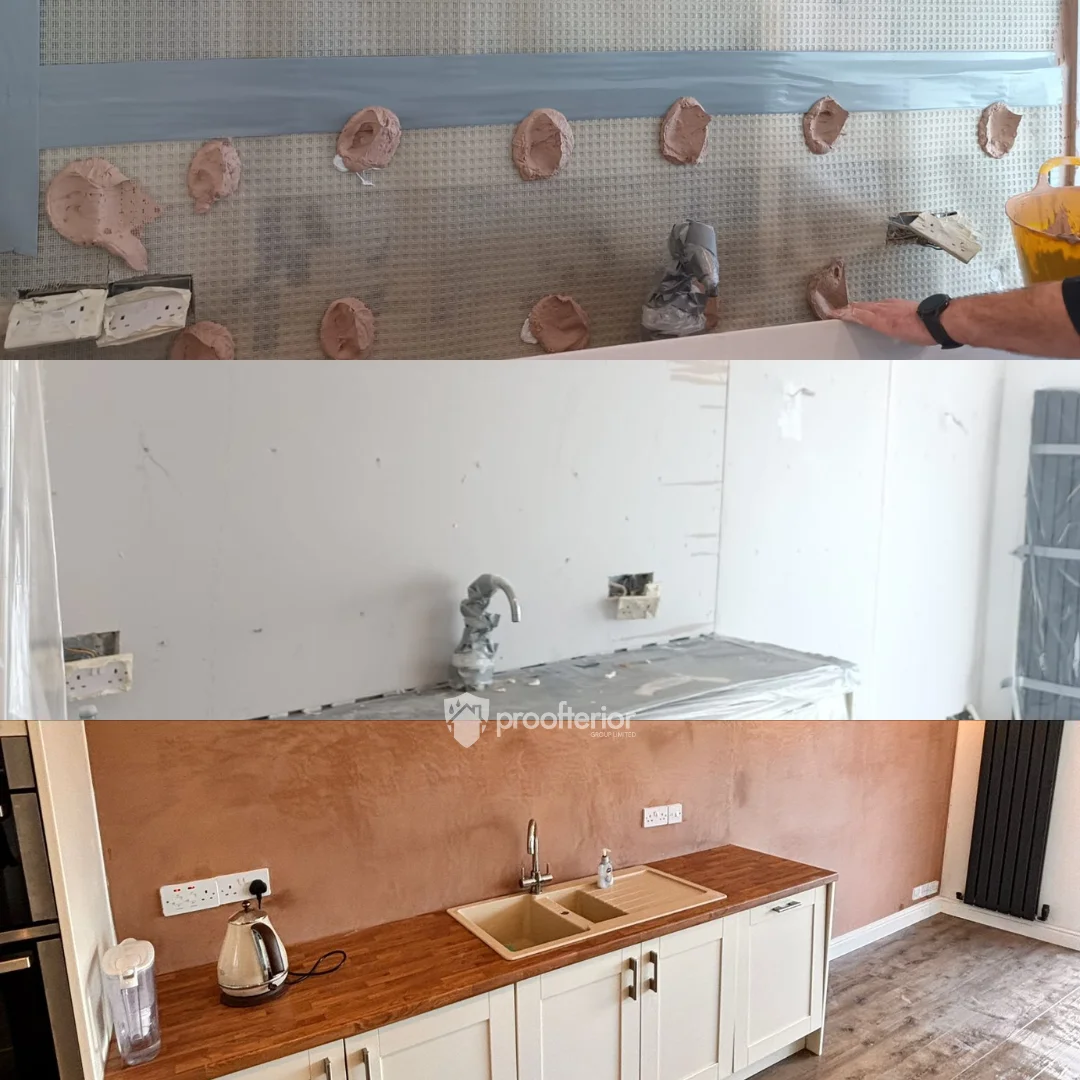
The affected kitchen wall was fully prepared and protected before works commenced. All salt-contaminated and defective plaster was hacked off above visible damp lines to expose underlying masonry.
Exposed brickwork was assessed for moisture pattern confirmation. Where required, a salt-neutralising treatment was applied to stabilise hygroscopic salts that would otherwise continue attracting atmospheric moisture.
A specialist internal damp proof membrane (DPM) was then installed as part of the Proofterior Dry System. This membrane isolates the new internal finishes from residual moisture within the masonry, creating a controlled dry cavity behind the surface.
The wall was reinstated using a compatible plaster system, producing a durable, decoration-ready finish suitable for long-term use.
This internal system:
- Prevents recurring blistering
- Stops salt migration reaching surface finishes
- Creates a warmer internal wall face
- Reduces condensation risk
Internal measures alone would not be sufficient if rain penetration continued externally.
Therefore, a breathable masonry protection cream was applied to the aged external kitchen extension wall. This treatment penetrates into porous brickwork and forms a vapour-permeable water-repellent barrier.
- Significantly reduces rainwater absorption
- Maintains breathability
- Allows trapped moisture to evaporate
- Preserves the visual appearance of the brickwork
By reducing wind-driven rain ingress, this external treatment directly tackles the root cause of penetrating damp in Bournemouth’s exposed elevations.
A new chemical DPC was installed into the mortar bed at correct height.
This:
- Interrupts capillary moisture movement
- Creates a continuous moisture barrier
- Prevents further ground moisture rise
In older Bournemouth properties, original DPCs often fail or become bridged over time.
Exposed masonry was treated with salt-neutralising solution.
Where required, a studded or meshed damp proof membrane may be applied to isolate new plaster finishes from residual moisture within masonry.
Walls were rebuilt using a compatible plaster system suitable for damp-proofed substrates.
The result:
- Stable, dry surface
- Decoration-ready finish
- Long-term structural protection
All works are backed by a 25-year company guarantee, with optional 30-year third-party backing
Results: Moisture Control, Thermal Improvement and Long-Term Protection
Before treatment:
- High moisture meter readings along full wall length
- Visible salt crystallisation and plaster deterioration
- Cold bridging identified on thermal imaging
- Ongoing exposure to rain penetration
After system implementation:
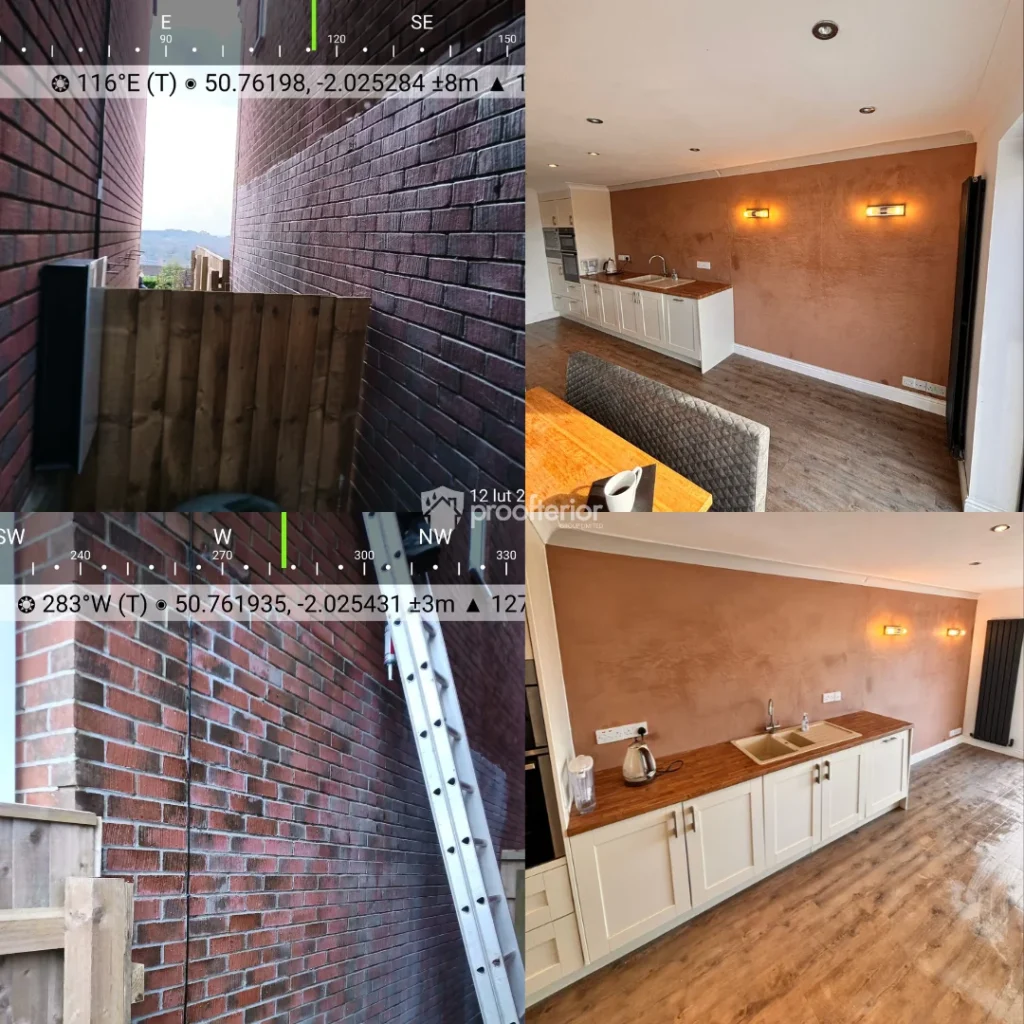
- Internal finishes fully isolated from damp masonry
- External brickwork protected against rain absorption
- Reduction in long-term moisture retention
- Improved wall surface stability and thermal performance
Over time, the treated wall will progressively dry as rain penetration is reduced and residual moisture evaporates naturally.
The works are supported by a 25-year company guarantee, with optional 30-year third-party backing.
Why Penetrating Damp Is Common in Bournemouth Properties
Bournemouth and surrounding Dorset areas experience frequent wind-driven rain due to coastal exposure. East-facing and south-facing elevations often receive the highest rain lash, particularly where properties lack consistent solar drying.
Older extension brickwork, especially from 20–40 years ago, can become porous and corroded, increasing water absorption rates. When masonry remains damp, salts migrate internally and cold surfaces encourage condensation, accelerating internal damage.
Without professional damp proofing in Bournemouth, homeowners may repeatedly replaster or redecorate without resolving the underlying rain penetration issue.
A professional damp survey in Bournemouth ensures that penetrating damp, condensation, and rising damp are correctly distinguished before treatment.
What Bournemouth Homeowners Should Know About Penetrating Damp Treatment
- Bubbling plaster on external-facing kitchen walls often indicates penetrating damp, not just condensation.
- Thermal imaging is critical in identifying cold bridging and moisture retention zones.
- Internal damp proofing must be combined with external weather protection for long-term success.
- Breathable masonry protection is essential for exposed elevations in coastal Dorset.
- Early damp treatment prevents structural deterioration and reduces mould risk.
If you are experiencing damp patches, salt staining, or recurring plaster damage in your Bournemouth home, arranging a professional damp survey is the safest first step toward a guaranteed solution.
Frequently Asked Questions About Damp Proofing.
Penetrating damp in Bournemouth properties is most commonly caused by wind-driven rain entering through porous brickwork, damaged pointing, cracked render, or defective external seals. Coastal weather conditions in Dorset can increase rain exposure, particularly on east- and south-facing elevations that receive heavy rain lash. Over time, older or weathered masonry absorbs moisture, allowing water to travel through the wall structure and appear internally as damp patches, plaster deterioration, and salt staining.
In many Bournemouth homes, penetrating damp is worsened by limited sun exposure, which slows natural drying. A professional damp survey in Bournemouth can identify whether moisture ingress is caused by rain penetration rather than rising damp or condensation.
Penetrating damp and rising damp are often confused, but they behave very differently. Rising damp occurs at ground level and moves upward through capillary action, typically presenting up to around one metre in height. Penetrating damp, on the other hand, can occur at any height on an external wall and is usually linked to rainwater entering through defective masonry or building fabric.
In Bournemouth properties, penetrating damp often appears on exposed elevations or kitchen extension walls where brickwork has become porous. A professional damp survey using moisture diagnostics and thermal imaging is essential to correctly distinguish between rising damp and penetrating damp before recommending damp proofing treatment.
Yes, prolonged penetrating damp can increase the risk of mould growth and negatively impact indoor air quality. When external walls remain damp, surface temperatures drop, encouraging condensation to form. This combination of moisture retention and cool surfaces creates ideal conditions for mould spores to develop.
In Bournemouth homes, especially those with limited ventilation or shaded elevations, damp and mould can spread gradually if left untreated. Addressing penetrating damp early through professional damp proofing in Bournemouth helps protect both the building structure and the health of occupants.
Seeking expert advice can further clarify specifics related to your property’s unique needs. Professional assessments are invaluable in providing tailored solutions. Always consult with a specialist for the most accurate guidance.
Ready to protect your Bornemouth property?
Book a damp survey in Bornemouth with Proofterior. Our local damp specialists deliver clear diagnosis, tidy repairs, and long-lasting proofing that keeps homes dry, healthy, and comfortable.