
Floor Damp in Dorset Property Resolved with Specialist 2-Step Waterproof Resin System
A detailed damp proofing case study in Dorset showing how external ground moisture caused rising damp through a concrete floor slab, and how a high-performance 2-step waterproof resin floor system permanently protected the internal living space.
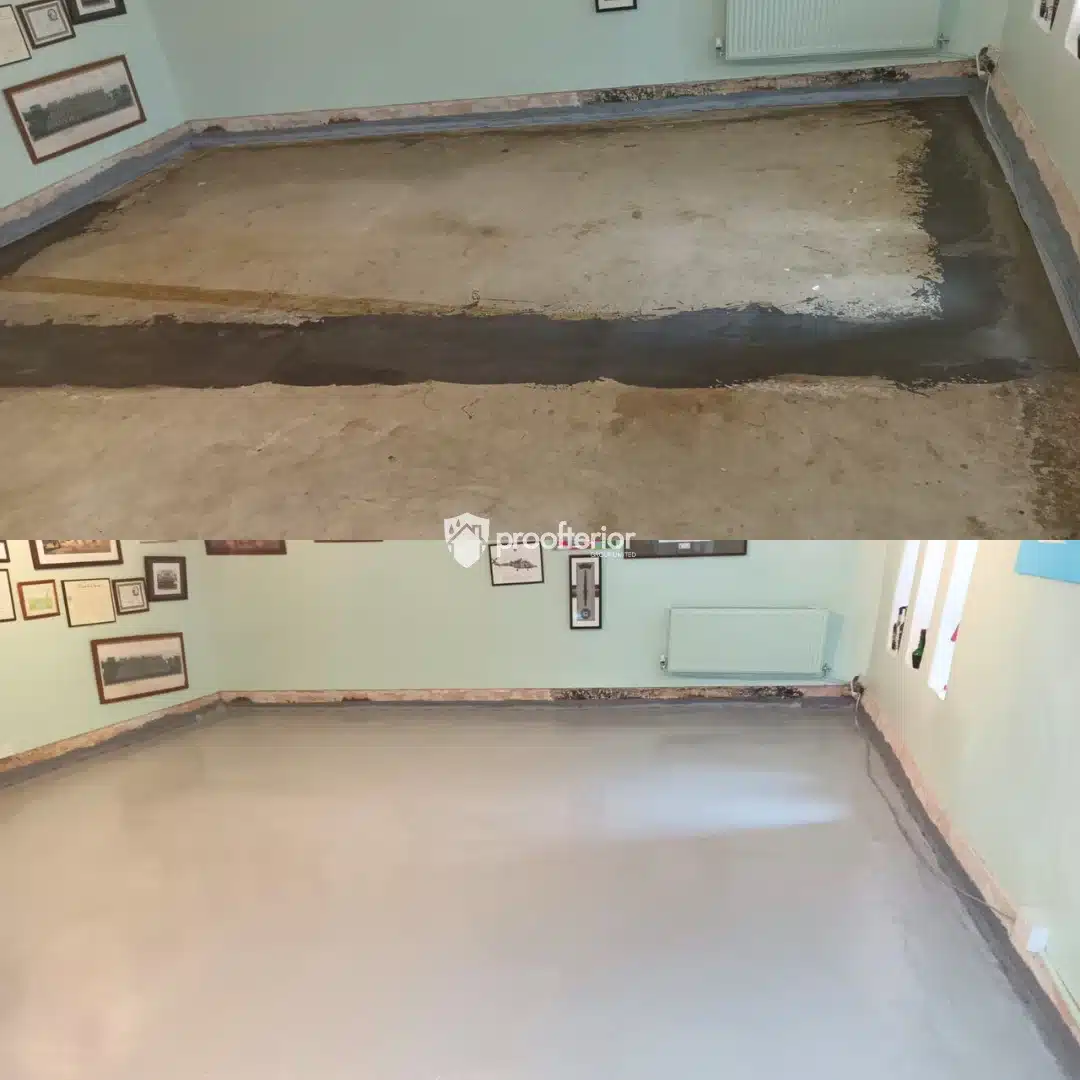
Diagnosing Floor Damp Caused by External Ground Pressure
During a professional damp survey at this detached DT9 property in Milborne Wick, Dorset, attention was drawn to dampness affecting the rear living space floor zone.
Externally, an earth bank was retained directly against the rear wall of the property. The bank was holding sustained high moisture levels, with visible water tracking down its face and concentrating at the base of the structure.
Over time, this persistent external moisture loading increased hydrostatic pressure at the wall and floor junction. The investigation confirmed that moisture had been absorbed into the concrete slab and was transmitting upward through or around the existing damp proof membrane (DPM) beneath the floor.
This was not caused by plumbing leaks or surface condensation. Instead, it was a clear case of:
External ground saturation
Capillary moisture movement through porous concrete
Compromised floor-level damp protection
Rising damp manifesting through the slab
Concrete is naturally porous. When exposed to sustained external moisture pressure, it can transmit water upward, particularly if the original sub-floor DPM has deteriorated or been bridged.
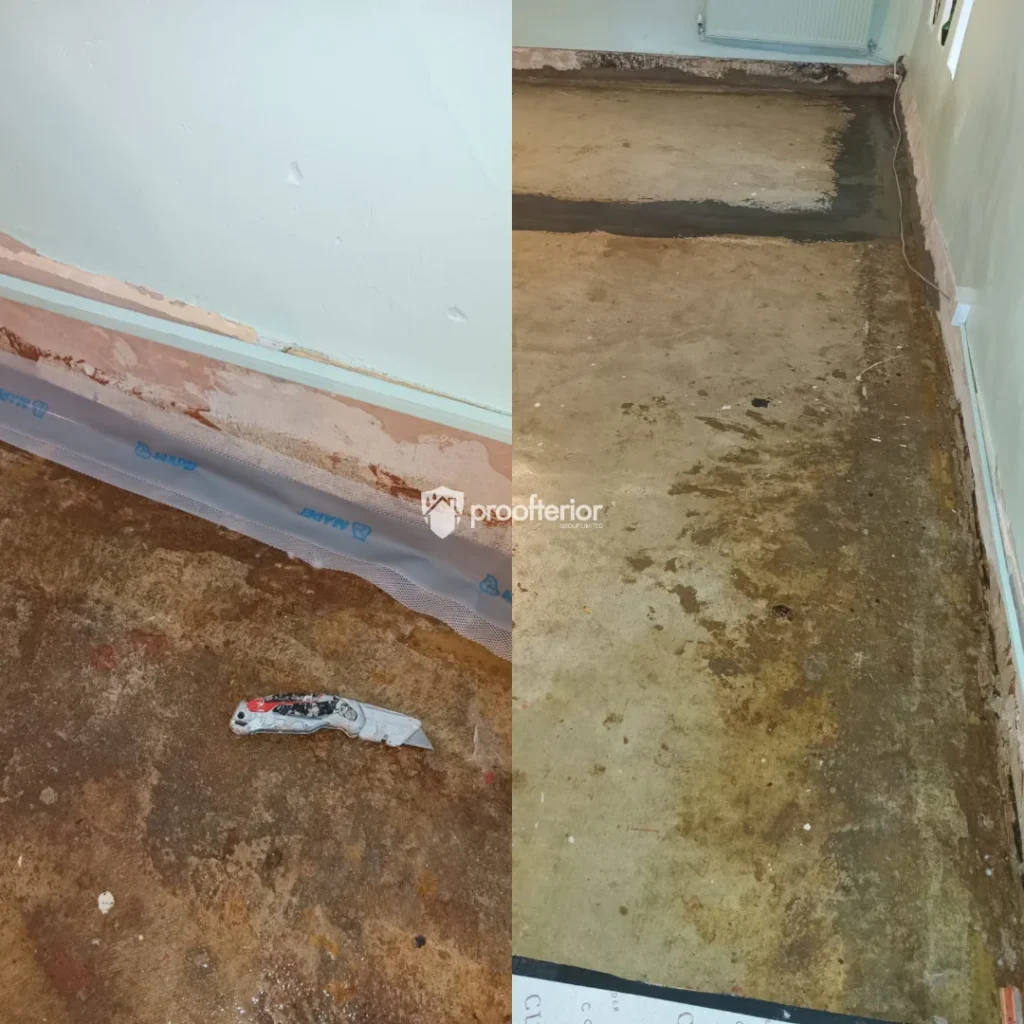
Objective: Stop Rising Damp Through the Concrete Floor Slab
The primary objective of this damp proofing project in Dorset was to:
Arrest moisture transmission through the concrete floor
Create a continuous impermeable barrier
Protect skirtings, floor finishes and adjacent wall constructions
Improve internal air quality and reduce condensation risk
Provide a long-term, guarantee-backed waterproofing solution
Simply installing new floor coverings would not solve the problem. Without isolating the slab from internal finishes, moisture would continue to migrate upward and cause recurring damage.
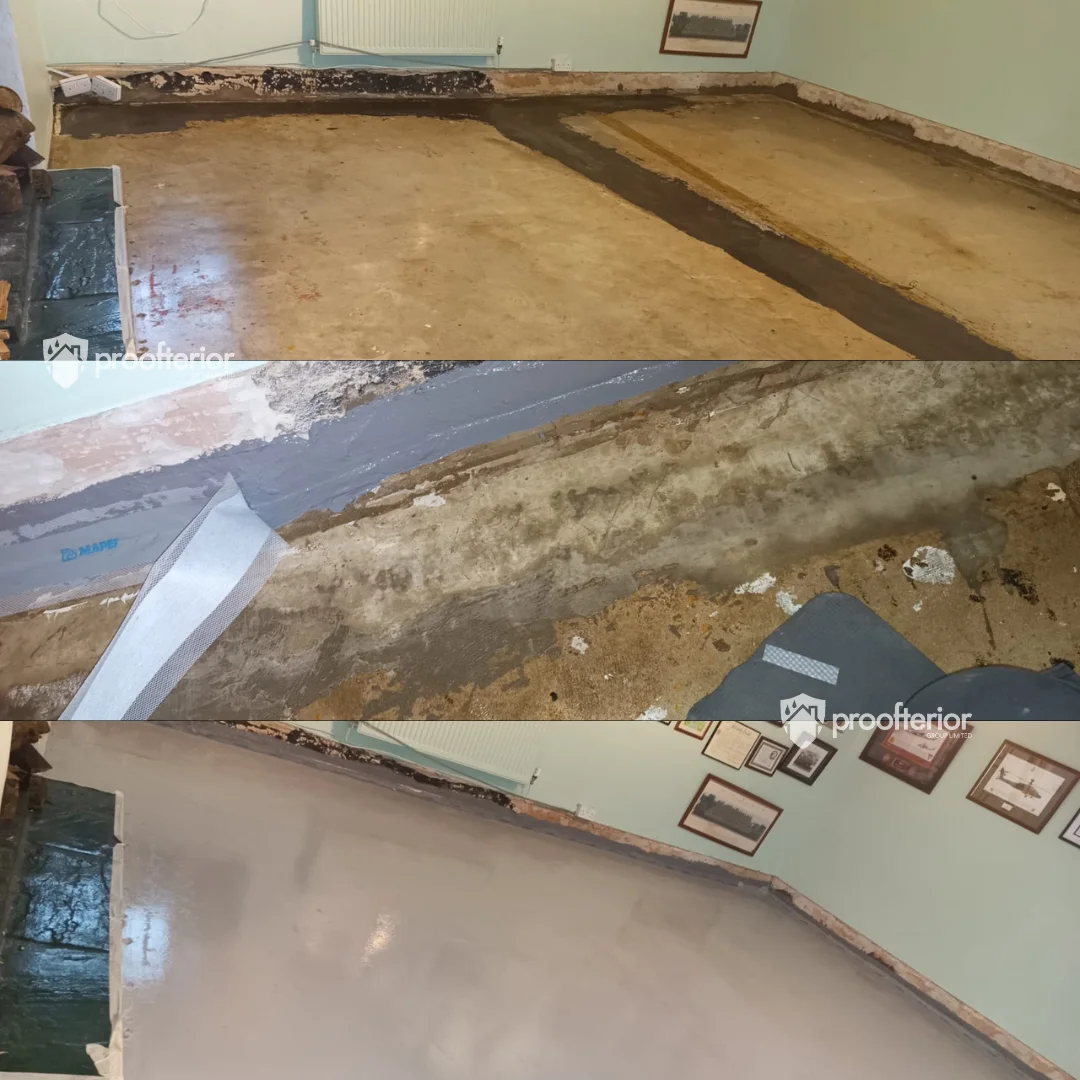
Step-by-Step Floor Waterproofing Process
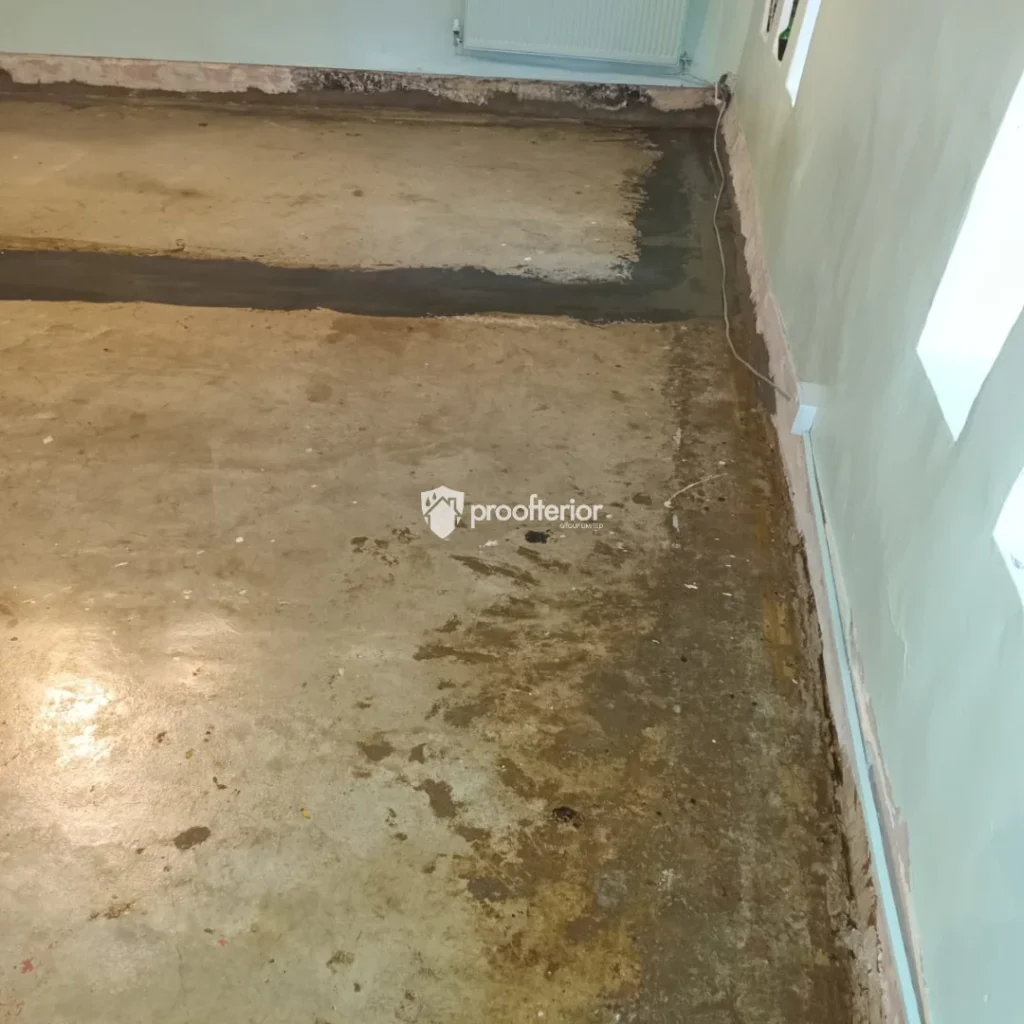
The existing concrete base was fully exposed by removing floor coverings, adhesives and loose materials.
The slab was mechanically prepared through light grinding and abrasion to:
Open the surface capillaries
Remove contaminants
Ensure optimal resin adhesion
All cracks and surface defects were repaired with resin-based fillers to create a uniform substrate.
This preparation stage is critical in professional floor damp treatment in Dorset. Without correct preparation, resin systems cannot bond effectively.
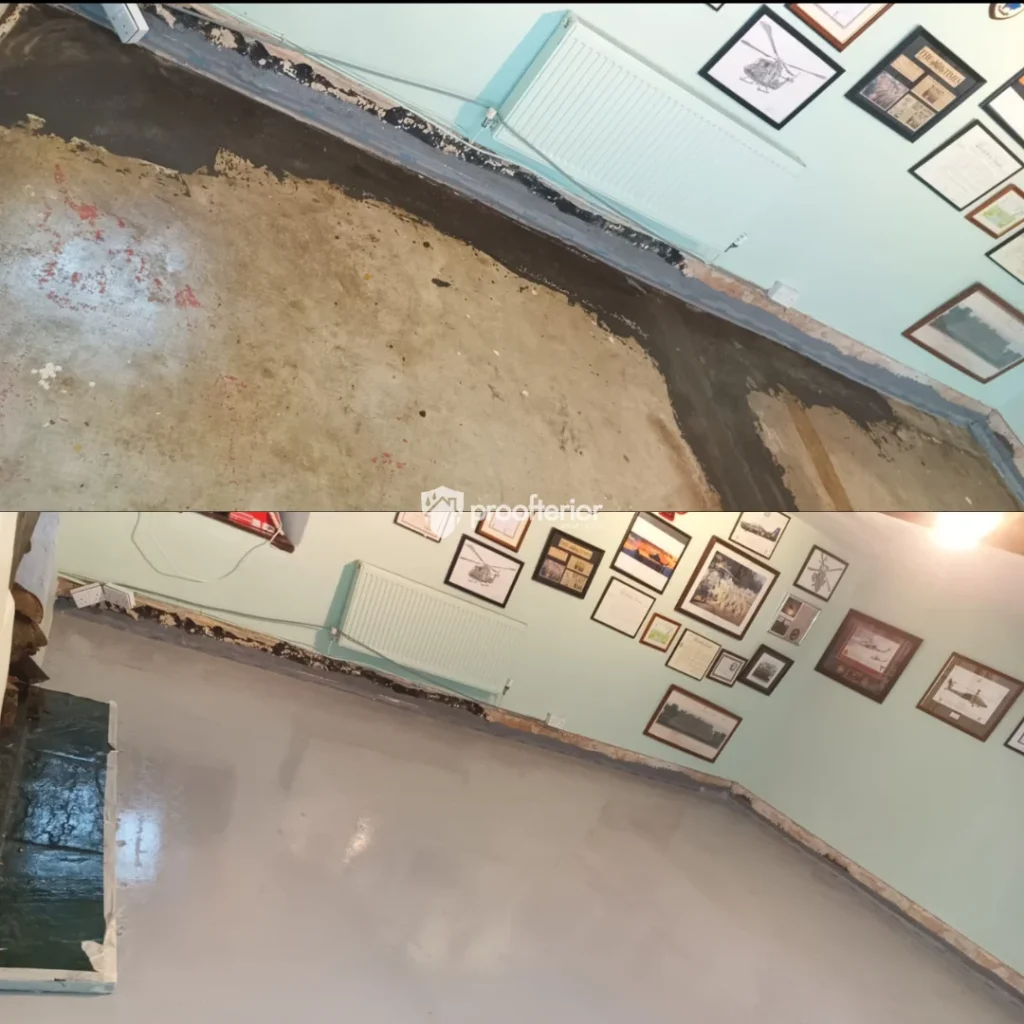
The first stage of the specialist system involved applying a penetrating waterproof primer or base resin coat
This primer:
Soaks into the concrete substrate
Seals capillaries and pores
Significantly reduces moisture transmission capacity
Forms the foundational waterproof layer
Special attention was given to perimeter junctions at the wall/floor interface, the historically vulnerable area where moisture ingress had been most pronounced.
The second stage involved applying a high-build waterproof resin top coat to manufacturer-specified thickness.
This created:
A seamless, non-porous waterproof barrier
A durable, hard-wearing floor finish
A hygienic, easy-to-clean surface
Long-term moisture isolation
Where required, the coating was taken slightly up the wall perimeter to create a tanked skirting detail, reinforcing the wall/floor junction and preventing lateral moisture tracking.
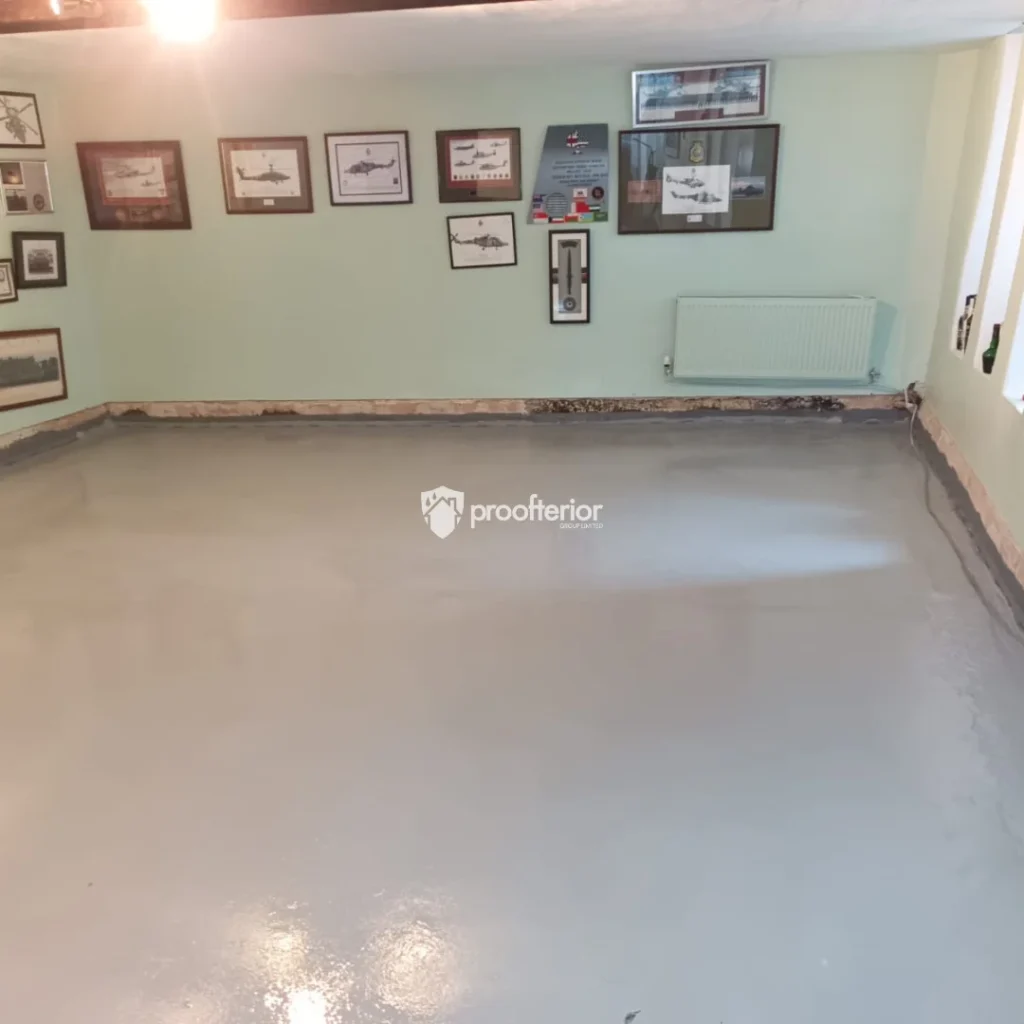
Results: Long-Term Floor Protection and Internal Stability
Before treatment:
Sustained moisture loading from external bank
Rising damp through concrete slab
Compromised effectiveness of original DPM
Risk of mould growth and floor covering deterioration
After installation of the specialist 2-step waterproof resin floor system:
Continuous impermeable barrier created
Rising damp via slab arrested
Wall/floor junction reinforced
Internal living space stabilised
Long-term structural protection achieved
As stated in the report conclusion, this system introduces a new continuous internal waterproof barrier rather than relying solely on the original sub-floor DPM.
The installation is supported by a 25-year company guarantee, with optional third-party 30-year backing
Why Floor Damp Is Common in Dorset Properties.
Properties in Dorset, particularly those with retained external banks or high surrounding ground levels, are vulnerable to hydrostatic pressure at wall and floor junctions.
When external soil remains saturated:
Concrete slabs can transmit moisture upward
Damp proof membranes can be compromised
Rising damp can appear through the floor
Internal condensation risk increases
Without professional damp proofing in Dorset, homeowners may repeatedly replace floor finishes without addressing the root cause of moisture ingress.
A detailed damp survey ensures accurate diagnosis and specification of the correct waterproofing system.
What Dorset Homeowners Should Know About Floor Damp.
- External earth banks can significantly increase floor-level moisture pressure.
- Concrete floors are porous and can transmit moisture via capillary action.
- Compromised sub-floor DPMs allow rising damp to manifest internally.
- Specialist waterproof resin systems create new impermeable barriers.
- Addressing moisture pathways prevents long-term structural deterioration.
If you are experiencing damp floor surfaces, mould at skirting level, or recurring moisture issues in your Dorset home, arranging a professional damp survey is the safest first step toward a guaranteed solution.
Frequently Asked Questions About Damp Proofing.
What causes floor damp in Dorset properties?
Floor damp in Dorset homes is often caused by sustained external ground moisture, high surrounding soil levels, or retained earth banks that increase hydrostatic pressure at the wall and floor junction. Over time, moisture can penetrate porous concrete slabs, especially if the original damp proof membrane (DPM) beneath the floor has deteriorated, been bridged, or was inadequately detailed. In many cases, this results in rising damp manifesting through the concrete floor rather than the walls.
A professional damp survey in Dorset can confirm whether moisture is travelling through the slab and determine the appropriate damp proofing solution.
Can rising damp come through a concrete floor?
Yes. Although concrete feels solid, it is naturally porous and can transmit moisture via capillary action. When exposed to sustained external moisture pressure, rising damp can travel upward through the concrete slab and affect floor finishes, skirting boards, and adjacent walls. This is particularly common in Dorset properties with high external ground levels or poor drainage conditions.
Specialist damp proofing in Dorset may require installation of a waterproof resin floor system to create a new impermeable internal barrier.
Is a new damp proof membrane always required?
Not always. In some cases, the original sub-floor damp proof membrane may still exist but has become compromised or bridged. Rather than excavating the floor, a modern waterproof resin floor system can be applied internally to create a new continuous moisture barrier above the slab. This is often a more practical and less disruptive damp proofing solution for Dorset homeowners.
A detailed damp survey in Dorset will determine whether the issue stems from DPM failure, ground pressure, or both.
How do I know if my floor damp is serious?
Signs of serious floor damp include persistent moisture at skirting level, mould growth near floor edges, blistering floor coverings, musty odours, and cold floor surfaces. If left untreated, floor damp can lead to deterioration of finishes, timber decay in adjacent elements, and increased condensation risk within the property.
Professional damp proofing in Dorset addresses the root moisture pathway rather than masking the symptoms, helping protect both the structural integrity and indoor air quality of the home.
Seeking expert advice can further clarify specifics related to your property’s unique needs. Professional assessments are invaluable in providing tailored solutions. Always consult with a specialist for the most accurate guidance.
Ready to protect your Dorset property?
Book a damp survey with Proofterior. Our local damp specialists deliver clear diagnosis, tidy repairs, and long-lasting proofing that keeps homes dry, healthy, and comfortable.