
Not every damp problem starts with a damp patch. Sometimes it is renovation work itself that
uncovers the real issue, a wall opened up for entirely different reasons, revealing something
underneath that changes the whole job. That is exactly what happened on a recent Proofterior
Southampton visit, where ongoing building works on a property in the SO30 postcode area uncovered
nitrate contamination hidden behind the original plaster. Here is what nitrate contamination actually
is, how it was found, and the full process used to treat it properly rather than cover it up.
What Is Nitrate Contamination?
Nitrate contamination is not the same thing as rising damp or penetrating damp, even though it often gets lumped in with both. Rising damp and penetrating damp describe how moisture enters a wall. Nitrate contamination describes what is already inside the wall once it gets there.
Nitrates, alongside chlorides, are hygroscopic salts, meaning they actively pull moisture out of the surrounding air rather than simply sitting there once deposited.
Once these salts are present in masonry, they will keep drawing atmospheric moisture to the surface indefinitely, whether or not there is still an active source of water getting into the wall. This is why a wall can be nitrate-contaminated and still show damp symptoms long after any original cause has been resolved, and why the two problems need to be diagnosed and treated separately.
Where Nitrate Contamination Typically Comes From
Nitrate salts usually get into a wall over a long period, not overnight. Common origins include
prolonged contact with nitrate-bearing ground moisture in older solid-wall construction, historic
organic or agricultural contamination, particularly relevant across parts of Southampton, Dorset, and
Hampshire where a number of older properties were originally farm buildings or sit on land with a
farming history, and previous water damage or drainage issues that introduced contaminated moisture
into the masonry over time. In most cases, the contamination has been sitting in the wall for years,
long before any visible symptoms appeared on the surface.
How This Was Found During the Renovation
In this case, Proofterior was called out to a property in the SO30 postcode area of Southampton because of renovation work already underway, not initially for a damp complaint. As part of that renovation, walls were opened up and original finishes removed, and it was during this process that
damp became visible on the internal walls, damp that had nothing to do with the renovation itself and had simply been hidden behind sound-looking plaster for years.
On inspection, the cause was identified as nitrate contamination within the masonry. The original plaster was carrying that contamination, which meant it had to be removed entirely before any lasting repair could go back on the wall. Leaving it in place, even under brand-new plaster, would only have delayed the same staining from reappearing.
Why You Cannot Just Replaster Over It
This is one of the most common mistakes made with salt-contaminated walls, and one of the main reasons a damp problem returns after what looked like a proper fix. Because nitrate and chloride salts are hygroscopic, they will keep pulling moisture from the surrounding air and pushing it back out to the surface regardless of what is applied on top. A fresh skim of plaster might look perfect for a few weeks or months, and then the same staining, the same tide marks, and the same damp patches start creeping back through.
The only way to permanently resolve a contaminated wall is to remove the affected plaster completely and neutralise the salts within the masonry itself before any new finish goes back on. Skipping this step is exactly the kind of shortcut that gives the wider damp industry a bad name, and it is why homeowners are right to ask what is actually being done to a wall, not just what it will look like afterwards.
Signs You Might Have Salt or Nitrate Contamination
Nitrate and chloride contamination can be harder to spot than rising or penetrating damp, because it does not always follow the patterns homeowners are told to look for. Signs worth having checked include staining or tide marks that reappear after redecoration with no obvious new source of water, a fine white powdery deposit on the wall surface known as efflorescence, damp patches that seem to fluctuate with humidity rather than rainfall, plaster that stays damp to the touch long after any original leak has been repaired, and damp meter readings that do not fit the usual pattern of rising damp confined to the base of a wall.
Why Renovations Are Often When This Gets Found
This job is a good example of something we see fairly often; renovation work is frequently what
actually brings a hidden contamination problem to light. A wall can look perfectly sound for years,
right up until it is opened up for an entirely unrelated reason. Older properties, in particular, can be
carrying salt contamination behind plaster that shows no outward signs at all.
If you are planning renovation work on a period or older property anywhere across Dorset,
Hampshire, or Wiltshire, it is worth having any exposed masonry checked before new plaster goes
back on. Treating contamination at this stage, while the wall is already open, is far simpler and far less
disruptive than waiting for it to reappear once the renovation is finished and decorated.
The treatment process step by step
Once the contamination was confirmed, the following sequence was carried out to make sure the wall would stay dry for good, rather than simply masking the problem behind new plaster.
I. Hacking Back the Contaminated Plaster
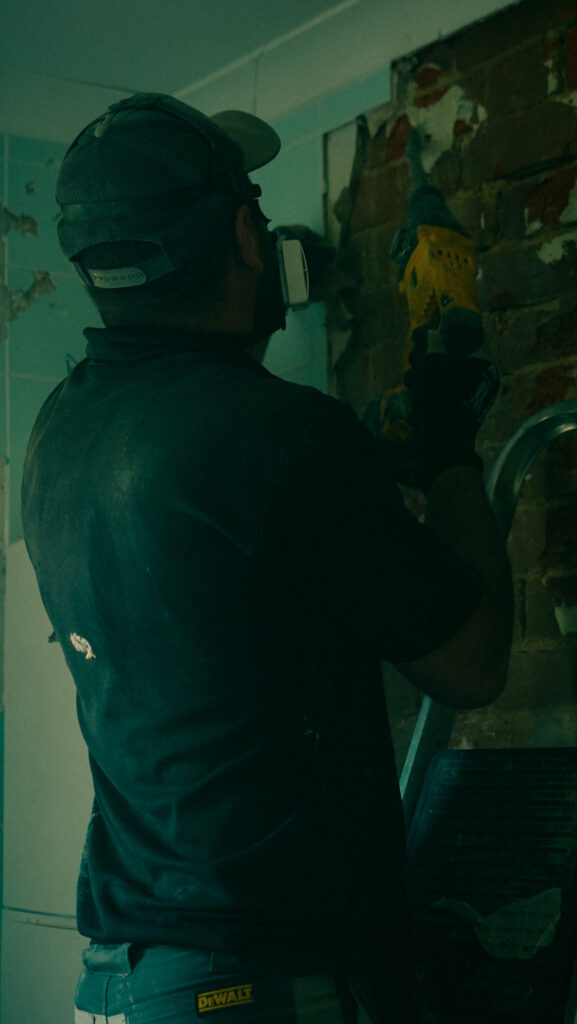
All plaster affected by the nitrate contamination was hacked back from the wall, exposing the bare
masonry underneath. With any salt-contaminated wall, this step is non-negotiable. Contaminated
plaster left in place, even partially, will continue drawing moisture into the room regardless of what
treatment is applied around it.
II. Neutralising the Salts
A salt-neutralising treatment was applied directly to the exposed brickwork. This step stabilises the nitrate and chloride content within the masonry so the salts can no longer actively attract atmospheric moisture into the new finish. It is one of the most important steps in the whole process, and one of the easiest to skip if a contractor is trying to save time.
III. Installing the Damp-Proof Membrane
With the masonry neutralised, a studded, meshed damp-proof membrane was fixed over the treated brickwork. This creates a physical break between the old masonry and the new internal finish, so the wall face stays dry regardless of any residual moisture still working its way out of the brickwork
behind it.
IV. Damp-Proofing Over the Membrane
A damp-proofing layer was then applied over the membrane, adding a further barrier before the final finish went on and reinforcing the separation between the treated masonry and the room itself.
V. Replastering to a Finished Surface
Finally, the wall was replastered to a smooth, decoration-ready finish, allowing the homeowner’s
renovation to continue exactly as planned, with the underlying problem actually resolved rather than
hidden behind a new layer of plaster.
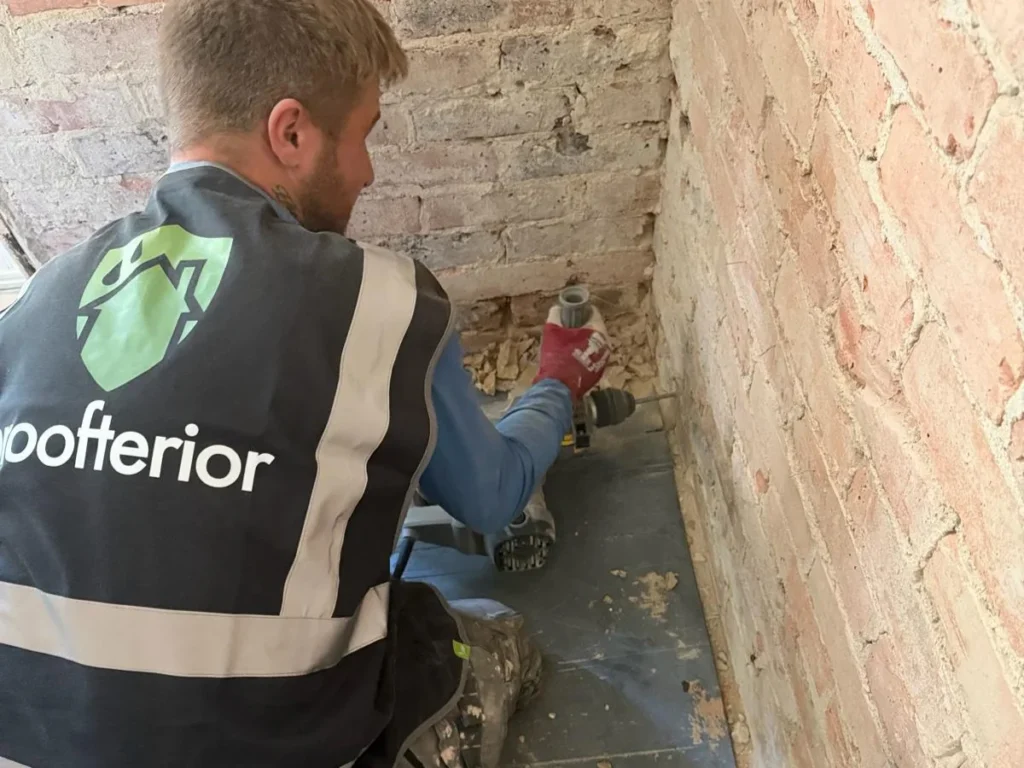
How Proofterior Treats Nitrate and Salt Contamination
Proofterior is a PCA and ISSE-accredited specialist serving Southampton, Dorset, Hampshire, and
Wiltshire, with no subcontractors used at any stage. The same in-house team that diagnoses a
contamination issue during a free damp survey is the team that carries out the hacking back,
neutralising, membrane installation, and replastering, so nothing is lost in handover between a
surveyor and a separate treatment crew.
Every job is backed by a 25-year workmanship guarantee. Surveys are free, and where renovation
works are already underway across Southampton and the SO30 area, we can usually attend at short
notice to assess exposed masonry before it gets replastered over.
Frequently Asked Questions
Is nitrate contamination the same as rising damp?
No. Rising damp describes moisture travelling up through a wall from ground level, usually because a damp-proof course has failed or is missing. Nitrate contamination describes hygroscopic salts already present within the masonry, which can exist with or without an active rising damp problem and needs to be diagnosed and treated separately.
Can I just repaint over the staining if it keeps coming back?
No. If the underlying plaster is contaminated, repainting will only mask the problem temporarily. The salts will continue drawing moisture to the surface, and the staining will return, usually within weeks or months. The contaminated plaster needs to be removed and the masonry neutralised before any new finish is applied.
Do I need a full damp-proof membrane for every case of contamination?
Not always, it depends on what a survey finds. In this case, a membrane was used alongside salt neutralisation to guarantee a dry finish, but the right combination of treatments always depends on the extent of the contamination and the condition of the masonry underneath.
My renovation has just exposed damp-looking plaster, what should I do?
Avoid replastering over it until it has been checked. If contamination is present and gets sealed behind a new finish, the same problem will simply reappear later. A free survey can confirm what is actually causing it before any further work goes back on the wall.
Do you treat nitrate and salt contamination in Southampton?
Yes. Proofterior regularly surveys and treats nitrate and salt-contaminated walls across Southampton, including the SO30 postcode area, as part of our wider coverage of Dorset, Hampshire, and Wiltshire. If a renovation on your property has exposed damp-looking plaster, book a free survey and we can assess it before any new finish goes back on.