
What Is Rising Damp? Causes, Signs and How to Treat It
Rising damp is one of the most commonly misunderstood property problems in the UK. It gets blamed for things it is not causing, and it gets missed when it is the actual culprit. If you have noticed moisture on the lower section of your walls, a persistent musty smell at ground level, or paint and plaster that keeps deteriorating no matter how many times you redecorate, rising damp could be the reason.
Here is what it actually is, how to recognise it, and what proper treatment involves.
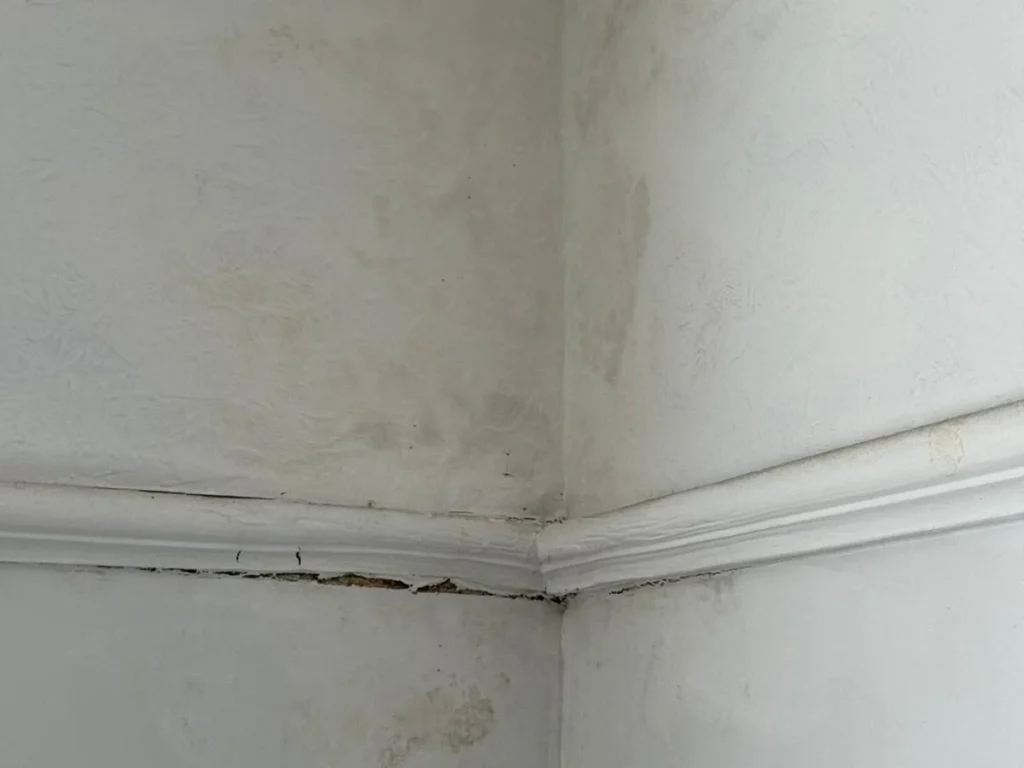
What is rising damp?
Rising damp is groundwater moving upward through the porous masonry of a building’s walls. Bricks, mortar, and stone are all capable of absorbing moisture from the ground through a process called capillary action, where water is drawn upward through tiny channels in the material, against gravity.
In most properties built from the mid-twentieth century onward, a damp proof course sits within the wall at a low level, typically above ground level, to prevent this from happening. It acts as a horizontal barrier that groundwater cannot pass through. When that barrier fails, deteriorates, or was never installed in the first place, groundwater has an unobstructed route upward through the wall.
Rising damp is most common in older properties, particularly those built before damp proof courses became standard practice. Victorian and Edwardian homes across Dorset, Hampshire, and Wiltshire are particularly susceptible, though any property with a failed or absent damp proof course can be affected.
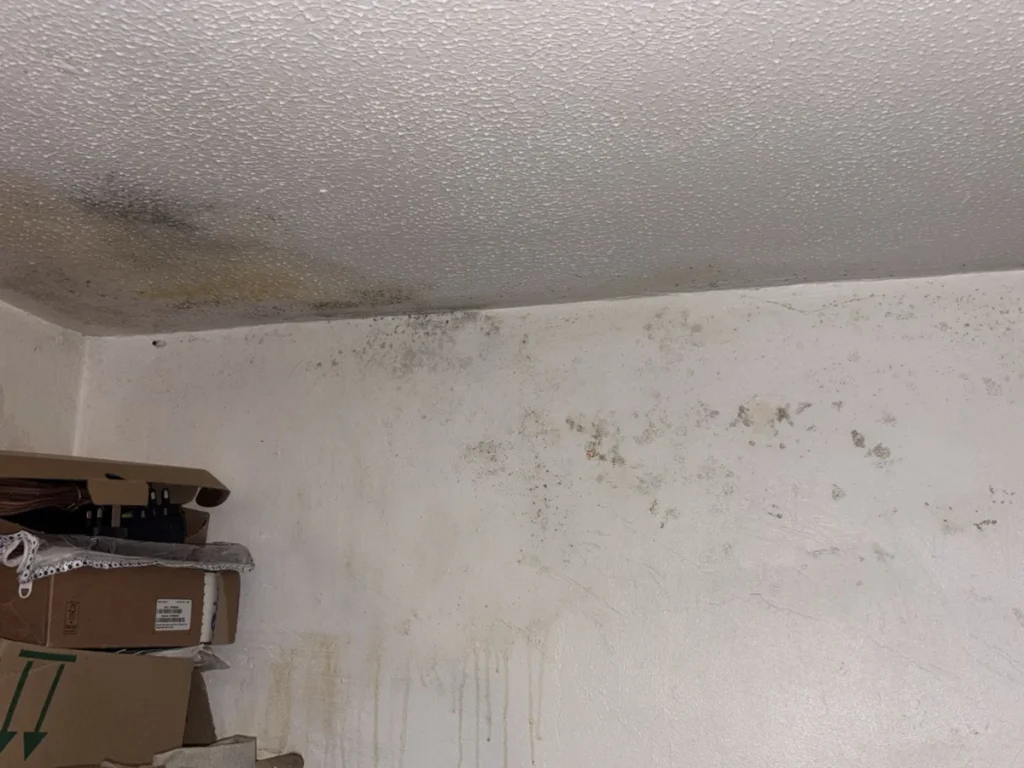
What causes rising damp?
The underlying cause is always the same: groundwater reaching the wall base and travelling upward through the masonry without an effective barrier to stop it. But several factors determine whether that happens and how severe it becomes.
A failed damp proof course. Original damp proof courses in older properties were often made from slate, bitumen, or lead. Over time these materials crack, shift, or degrade, leaving gaps that groundwater can exploit.
No damp proof course at all. Properties built before damp proofing was commonplace may never have had one. Without any barrier, rising damp is almost inevitable in areas with high groundwater levels.
Bridging the damp proof course. Even a functioning damp proof course can be bypassed. Raised external ground levels, built-up render, internal floor screeds laid too high, or soil piled against an external wall can all create a bridge that allows moisture to bypass the barrier entirely.
High groundwater levels. In areas with naturally high water tables or poor drainage, the volume of moisture available at the wall base increases the upward pressure.
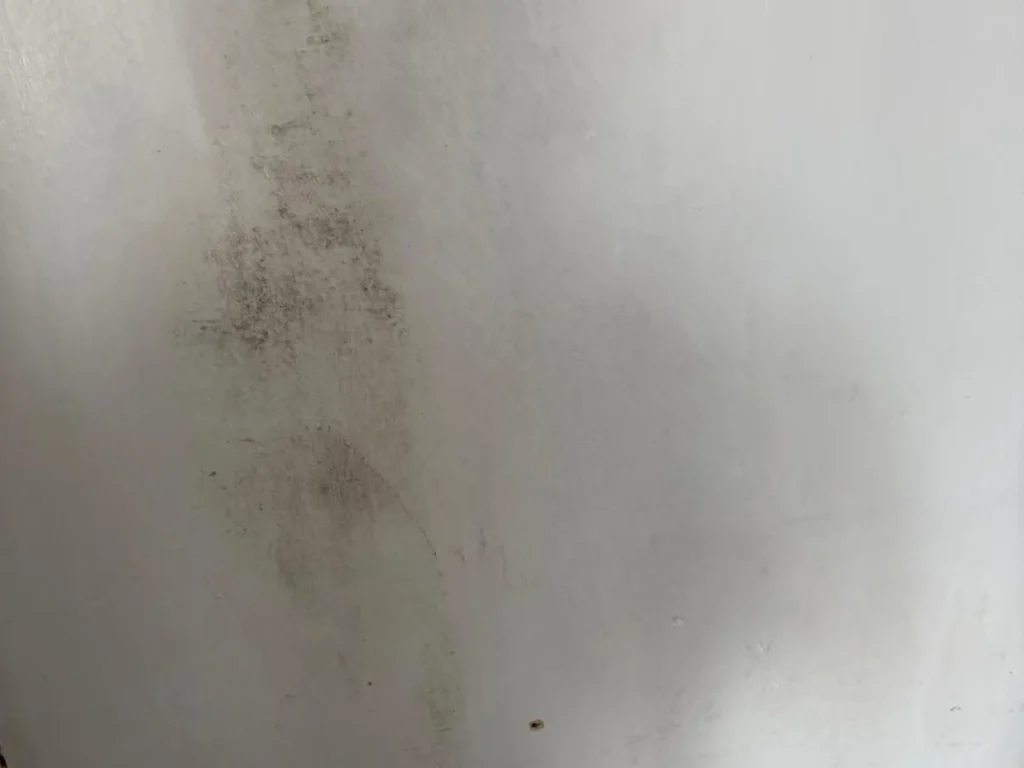
What are the signs of rising damp?
Rising damp has a recognisable set of symptoms. The challenge is that some of them overlap with other moisture problems, which is why professional diagnosis matters.
A tidemark on internal walls. This is the most distinctive sign. As groundwater rises through the wall and evaporates, it deposits salts from the ground in a horizontal band. That band, typically between half a metre and one metre above floor level, is the tidemark. It does not appear with condensation or most forms of penetrating damp.
Salt deposits and efflorescence. The salts carried up with the groundwater crystallise on the wall surface as white or yellowish powdery deposits. These hygroscopic salts continue to absorb moisture from the air even after the rising damp itself has been treated, which is why salt neutralisation is an essential part of any proper treatment.
Damaged plaster and finishes. Plaster affected by rising damp breaks down from the inside. It becomes soft, crumbles, or separates from the wall. Paint bubbles or flakes from the substrate outward rather than peeling from the surface.
Damp patches confined to the base of walls. Rising damp does not appear above the first metre of a wall in most cases, because capillary action can only carry water so far before evaporation balances it out. If damp patches are appearing high on walls or on ceilings, the cause is likely penetrating damp or a plumbing issue rather than rising damp.
A persistent musty smell at low level. The combination of moisture and salt activity in the wall produces a distinctive smell that does not clear with ventilation alone.
What rising damp does not do is worsen significantly after rainfall or improve in dry weather. If your damp patches are clearly weather-related, penetrating damp is the more likely explanation.
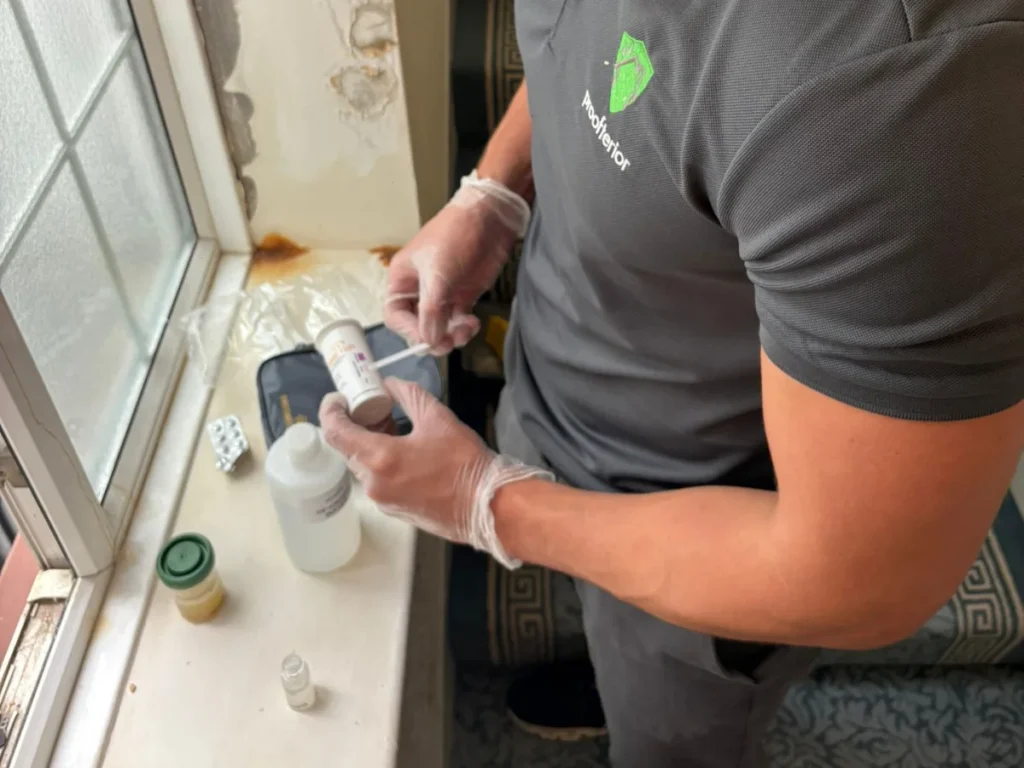
How is rising damp diagnosed?
A proper rising damp diagnosis requires more than a visual inspection. Moisture meters are used to measure the moisture content of the wall at different heights, building a profile of how moisture levels change from floor to ceiling. That profile, combined with visual assessment of the salt pattern and wall condition, allows an ISSE-accredited surveyor to confirm whether rising damp is present and how severe it is.
It also rules out other causes. Condensation, penetrating damp, and plumbing leaks can all produce moisture on walls. Getting the diagnosis right is what makes the difference between a treatment that works and one that does not.
Proofterior offers free damp surveys across Dorset, Hampshire, and Wiltshire. Every survey is carried out by an ISSE-accredited surveyor, with a written report and fixed quote returned within 24 hours.
How is rising damp treated?
Effective rising damp treatment addresses the barrier failure, the salt contamination, and the damaged wall finish. Surface treatments alone do not fix the problem. The moisture source has to be dealt with at the structural level.
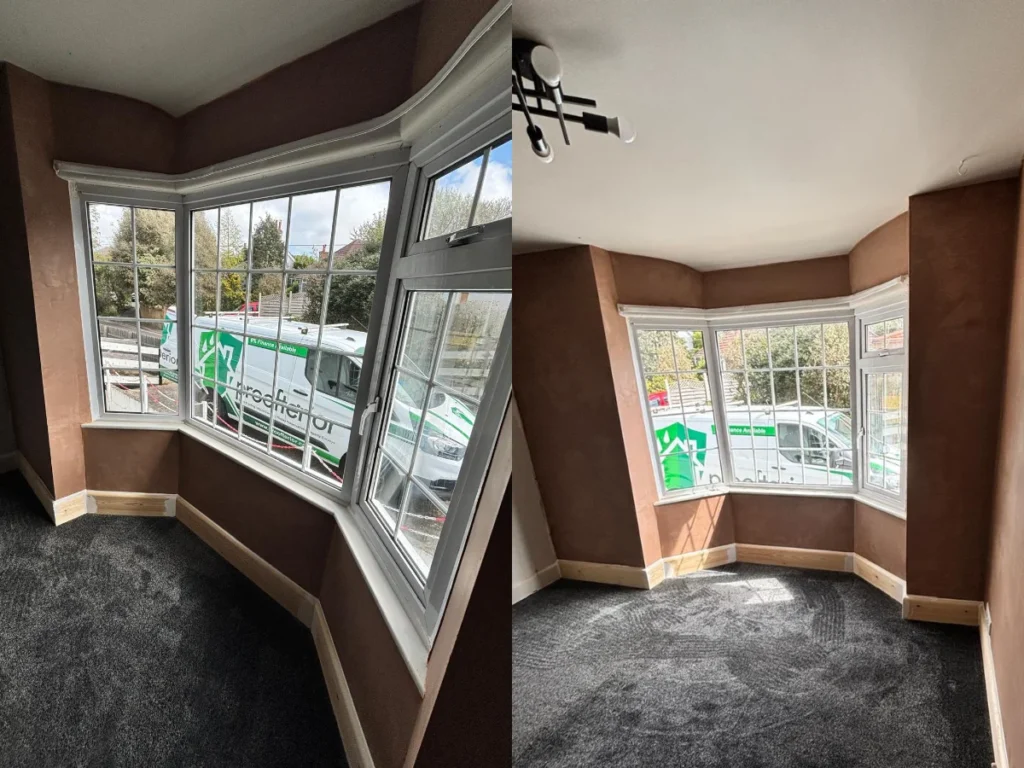
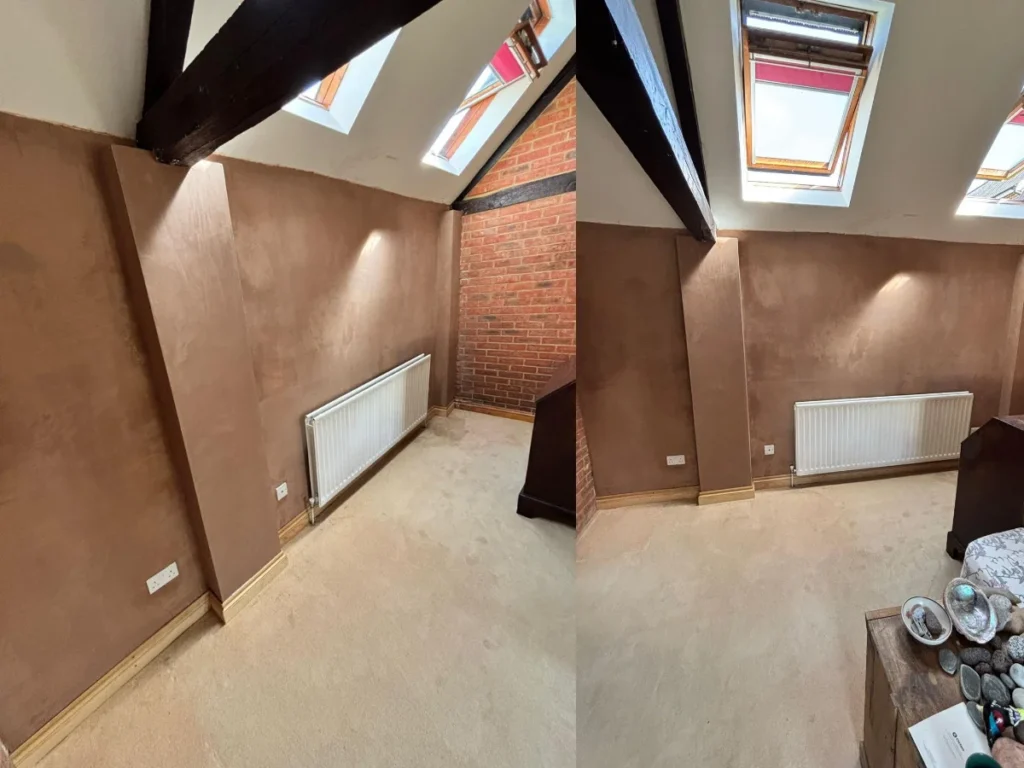
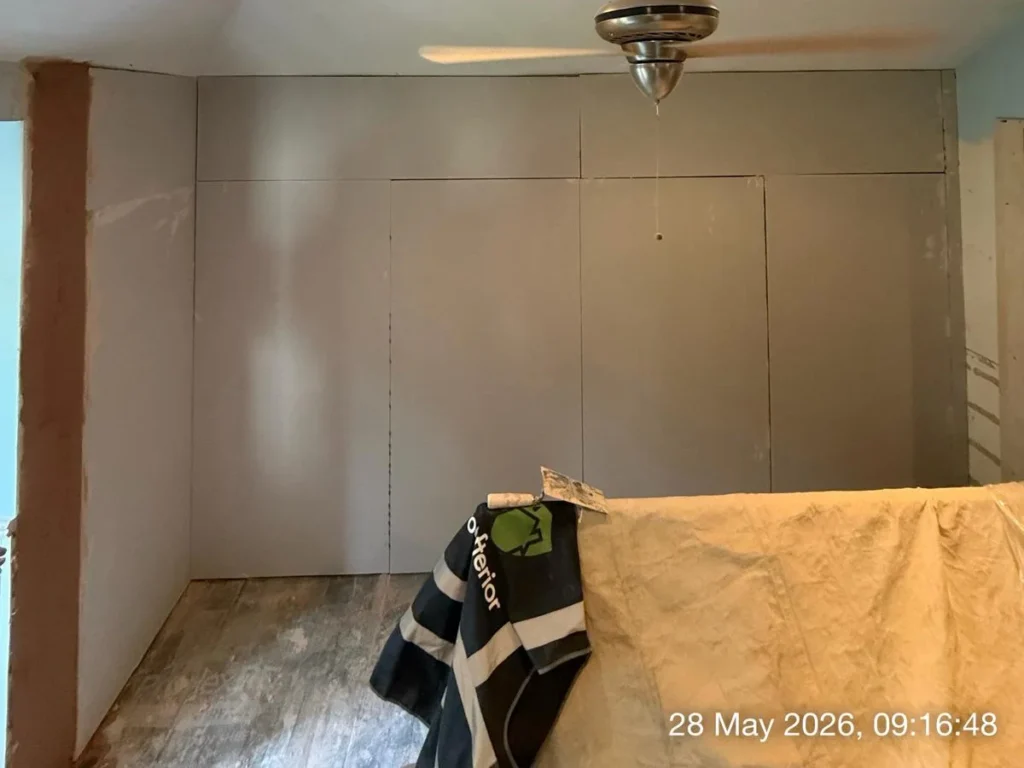
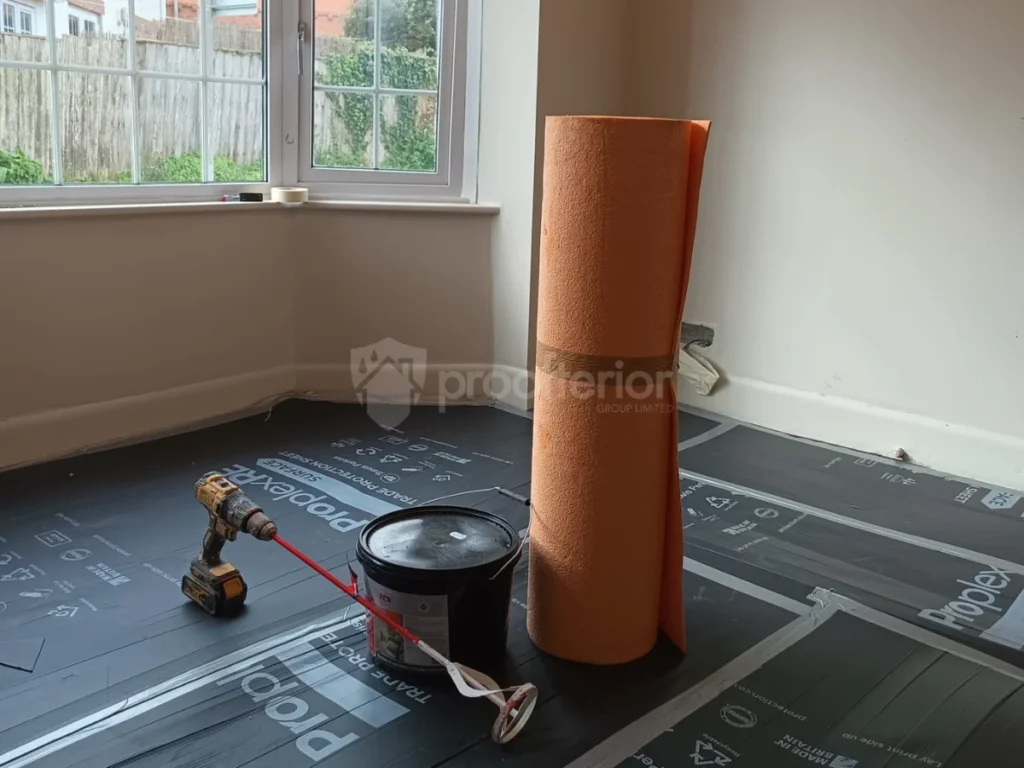
1. Chemical damp proof course injection
A new damp proof course is introduced into the wall by drilling a series of holes along a horizontal course of masonry at low level, then injecting a specialist silane and siloxane-based cream into each one. The cream works by diffusing through the tiny pores in the brickwork and mortar, reacting with the silica in the masonry to form a hydrophobic, water-repellent barrier from within the wall itself. It does not simply coat the surface. It becomes part of the wall structure.
Masonry has tiny pores, and through capillary action those pores draw up moisture from the ground. The cream lines those pores and creates a waterproof barrier that groundwater cannot pass through. Above the horizontal barrier created by the injection, the masonry remains dry, even if moisture continues to push up from below. The active ingredient reduces surface tension, water ingress through capillary action is stopped, the wall dries out, and the masonry gains long-lasting protection.
This is the industry-standard method for rising damp treatment and the approach used in the Proofterior Dry System.
2. Salt Treatment and Plaster Removal
Once groundwater has been rising through a wall over months or years, it deposits salts from the ground into the masonry and the plaster. These are hygroscopic salts, meaning they continue to attract and hold moisture from the surrounding air even after the damp proof course has been reinstated. If contaminated plaster is left in place, it will draw moisture from the air and cause damp patches and decorative failure on an otherwise treated wall.
All plaster and render contaminated with rising damp salts must be removed before a salt-resistant system is applied. A salt-resistant damp proof plaster, often referred to as renovation plaster, is specifically designed for the replastering of properties affected by salt contamination in masonry after a rising damp problem has occurred. The exposed masonry is then treated to neutralise residual salts before any new plaster is applied.
Skipping this stage is one of the most common reasons rising damp treatment appears to fail. The DPC may be working correctly, but the hygroscopic salts in the old plaster continue to pull moisture from the air, giving the impression the damp has returned.
3. Damp proof membrane where required
In walls with particularly severe salt contamination, heavily saturated masonry, or where the substrate is too damaged to hold new plaster directly, a damp proof membrane is fixed to the wall before replastering begins. Cavity drain membranes create an air gap between the membrane and the wall, allowing any moisture to drain away safely rather than soaking through to the interior. This provides a physical separation between the contaminated substrate and the new finish, and provides a water-resistant key for replastering damp walls where the masonry alone cannot support a direct application.
4. Replastering with a salt-resistant backing coat
The final stage is replastering using materials specified for post-rising-damp treatment. Standard plaster is not suitable. The traditional practice is to replaster using a salt-resistant sand and cement render as a basecoat, applied in two coats with a salt-resistant additive, followed by a final coat of plaster. This prevents residual salts in the masonry from migrating into the new surface and causing decorative failure after the work is complete.
The Proofterior Dry System uses purpose-specified materials at every stage, from DPC injection through to the final plaster coat, to ensure the finish holds and the treatment stands behind the 25-year guarantee.
How Proofterior Treats Rising Damp
Proofterior is a specialist damp proofing company serving Dorset, Hampshire, and Wiltshire. Rising damp treatment is carried out entirely in-house by a directly employed, fully qualified team. No subcontractors, no gaps between the surveyor who diagnosed the problem and the technicians who fix it.
The Proofterior Dry System covers the complete rising damp treatment process: chemical DPC injection, salt neutralisation, damp proof membrane where needed, and full replastering with a salt-resistant backing coat. Every stage is handled by the same team, with the same standard of workmanship, on every job.
Every rising damp treatment carried out by Proofterior comes with a 25-year guarantee. The survey is free, the written report and fixed quote are returned within 24 hours, and the 24-hour contact line means you can reach the team directly with any questions before, during, or after the work.
Frequently Asked Questions
What is rising damp?
Rising damp is groundwater moving upward through the porous masonry of a building’s walls via capillary action. It occurs when the property’s damp proof course has failed, been bridged, or was never installed.
What does rising damp look like?
The most distinctive sign is a tidemark on internal walls, usually between half a metre and one metre above floor level, often accompanied by white salt deposits, damaged or crumbling plaster, and paint peeling from the wall outward.
What causes rising damp in older properties?
In older properties, rising damp is usually caused by a failed or absent damp proof course. Original materials such as slate or bitumen degrade over time. Properties built before damp proofing was standard practice may never have had a damp proof course installed.
Can rising damp be treated permanently?
Yes. Chemical damp proof course injection reinstates the barrier against groundwater. Combined with salt treatment and replastering using appropriate materials, the treatment resolves the problem at source. Proofterior backs every rising damp treatment with a 25-year guarantee.
How do I know if I have rising damp or condensation?
Rising damp is confined to the base of walls, leaves a tidemark, and is consistent year-round. Condensation tends to appear in corners and poorly ventilated areas, worsens in winter, and responds to improved ventilation. A professional survey with moisture meters will confirm which one you have.