
What Is a Damp Survey and What Does It Include?
If you have noticed damp patches, mould, or a musty smell in your property, the first thing most people do is look for an obvious cause. Sometimes it is obvious. Most of the time it is not. Damp has a habit of appearing somewhere different from where it actually originates, and treating the visible symptom without identifying the source is why so many damp problems come back after they have been treated.
A professional damp survey is the process that establishes what type of moisture problem you have, where it is coming from, how extensive it is, and what it will take to fix it. This guide explains exactly what that involves.
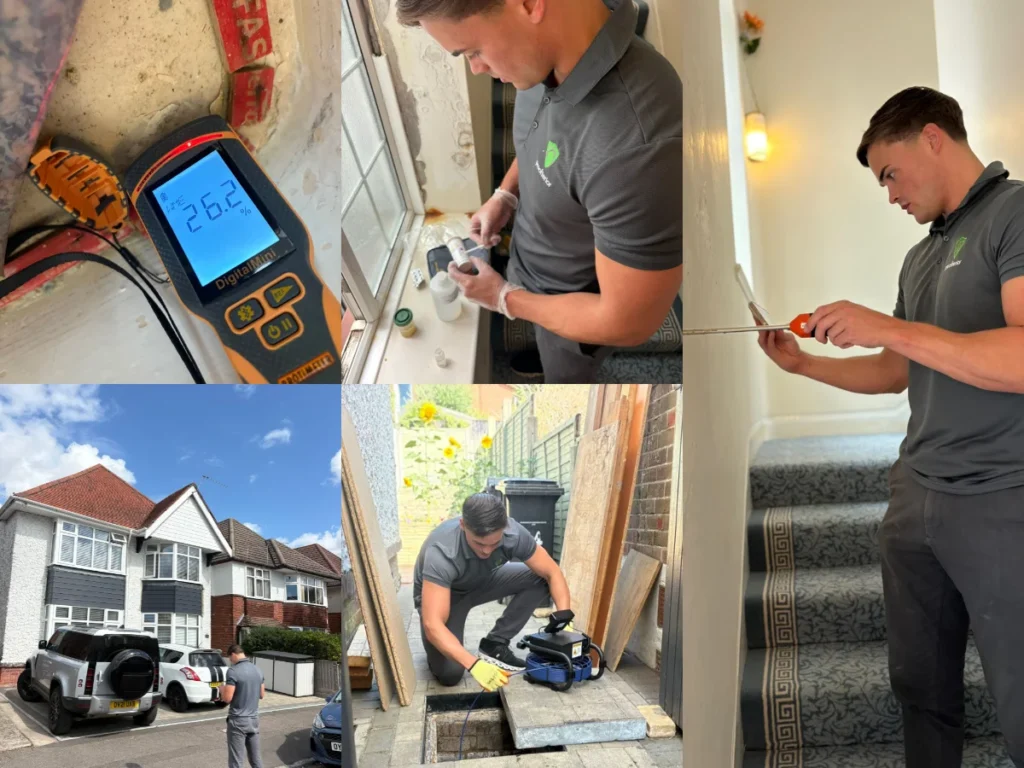
What is Damp Survey?
A damp survey is a targeted inspection carried out by a qualified specialist using professional-grade diagnostic equipment. Its purpose is not to tell you that damp is present. You already know that. Its purpose is to identify the type of damp, trace it to its source, and produce a written report that gives you a clear and accurate picture of the problem before any treatment begins.
A damp survey is a targeted inspection carried out by a qualified damp specialist. Rather than appraising the entire fabric of the building, the surveyor focuses specifically on moisture: measuring it, mapping where it is coming from, and diagnosing why it is present.
Damp often hides behind plaster, under floors, or within cavities. A professional survey employs tools like moisture meters, thermal imaging cameras, and borescopes to detect concealed moisture and its source. Persistent damp can compromise the structural integrity of your property over time, leading to rot in timbers, weakening of brickwork, and damage to foundations. Early diagnosis protects your investment.

Who should carry out a damp survey?
Not all damp surveys are equal, and the qualifications of the person carrying it out matter significantly. A surveyor with no specialist training can take a moisture reading and tell you a wall is wet. A qualified specialist can tell you why it is wet, what the pattern of moisture means, and what that wall will need to return to a dry and stable condition.
The benchmark qualifications for damp surveyors in the UK are the CSRT (Certified Surveyor in Remedial Treatment) and CSSW (Certified Surveyor of Timber and Damp in Dwellings), both assessed under the Property Care Association (PCA). ISSE accreditation, awarded by Independent Surveyors and Specialists Ltd, denotes an additional level of competency specifically in damp diagnosis and reporting. A PCA-accredited damp and timber report stands up to scrutiny from lenders, councils, and insurers in a way that reports from unaccredited companies frequently do not.
Proofterior’s surveys are carried out by ISSE-accredited surveyors, and the company holds PCA accreditation. That means the diagnosis you receive is grounded in recognised professional standards.
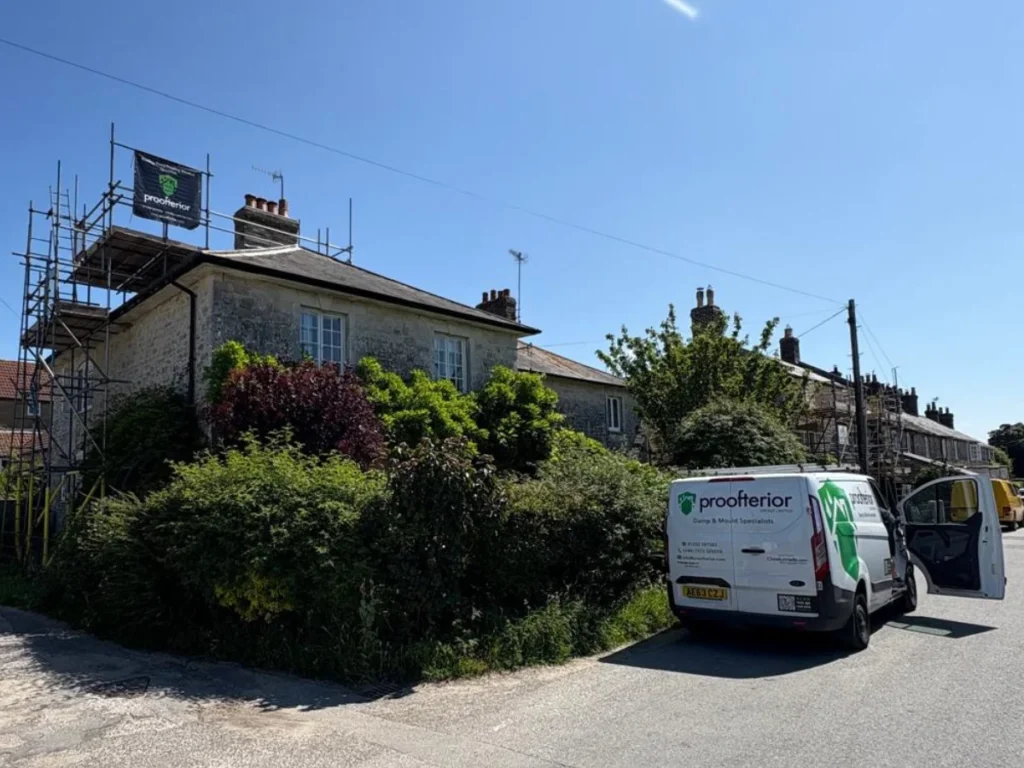
When do you need a Damp Survey?
The most obvious trigger is visible damp, mould, or a persistent musty smell. But there are several other situations where a damp survey is either advisable or necessary.
You are buying a property. A standard RICS homebuyer survey provides a general overview of a property’s condition and flags areas of concern, recommending further specialist investigation where needed. When it comes to damp, the surveyor will typically use a basic moisture meter to take a few readings and note any visible signs. They are not damp specialists and their equipment and methodology are limited. It is common for homebuyer surveys to contain a recommendation along the lines of “further investigation by a specialist damp and timber company is advised” without providing any detail on the severity. A specialist damp survey gives you the specific detail a general survey cannot, and puts you in a position to negotiate the purchase price or request remediation before exchange.
You are selling a property. You are legally required to disclose known damp problems on the TA6 property information form. If you conceal damp that is later discovered, the buyer may have grounds for legal action. Getting a survey before listing means you know exactly what you are disclosing, and a treatment guarantee from a PCA-accredited company is a significant reassurance to buyers and their solicitors.
Your mortgage lender has flagged damp. A mortgage valuation exists solely to confirm that the property is worth the amount being borrowed. If the valuer flags potential damp, the lender may require a specialist report before releasing funds. A well-structured report from a PCA-accredited specialist usually gives lenders and valuers the confidence they need to proceed.
You are a landlord. Under the Housing Health and Safety Rating System (HHSRS), significant damp and mould is classified as a category one hazard. A professional damp survey with a written report provides documented evidence of the property’s condition, the cause of any moisture problem, and the recommended remediation. That documentation matters under Awaab’s Law obligations and in any dispute with tenants or local authorities.
What happens during a damp survey?
A professional damp survey follows a systematic process. For a typical residential property, a damp survey usually takes between one and two hours. Larger properties or those with a history of water problems may require more time due to the number of rooms and construction types involved.
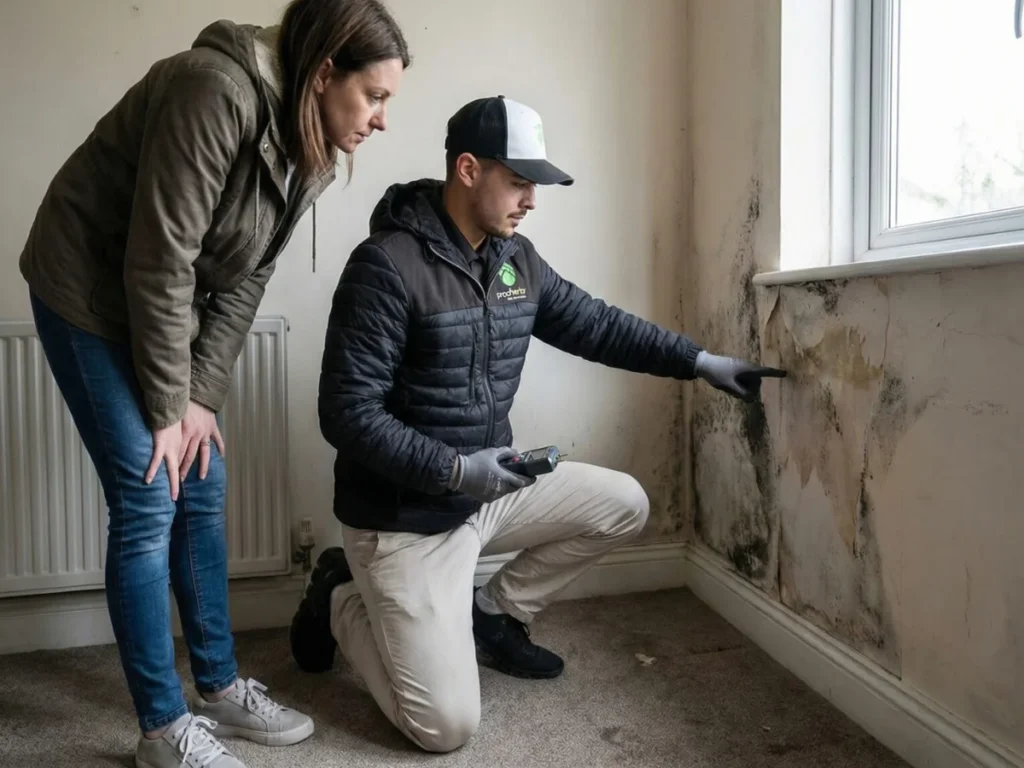
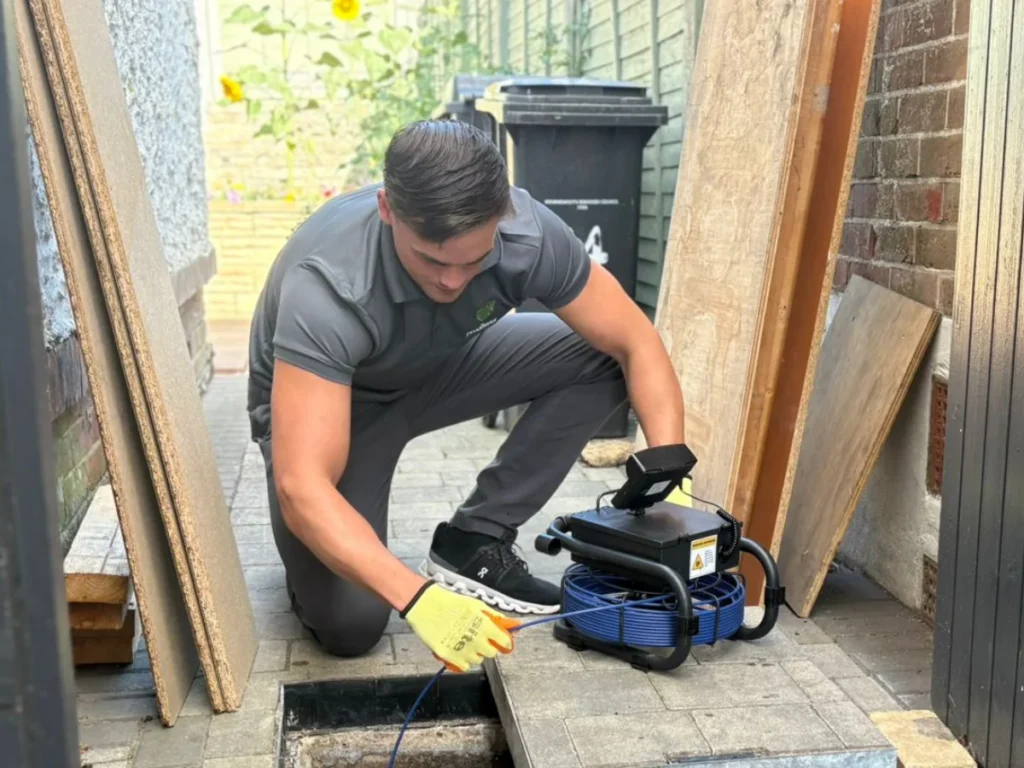
Visual inspection of the whole property.
The surveyor carries out a thorough visual assessment of all accessible internal rooms, external elevations, roof features, and the surrounding ground conditions. This includes checking for visible signs of moisture, salt deposits, plaster deterioration, mould growth, and any external defects that could be contributing to moisture ingress. The external inspection is important because penetrating damp and DPC bridging often have their origin on the outside of the building rather than the inside.
Cold bridges and poor insulation create structural elements that stay colder than surrounding surfaces, encouraging condensation and mould growth. Rooms most at risk include bathrooms, kitchens, basements, unheated spare rooms, and corners behind furniture.
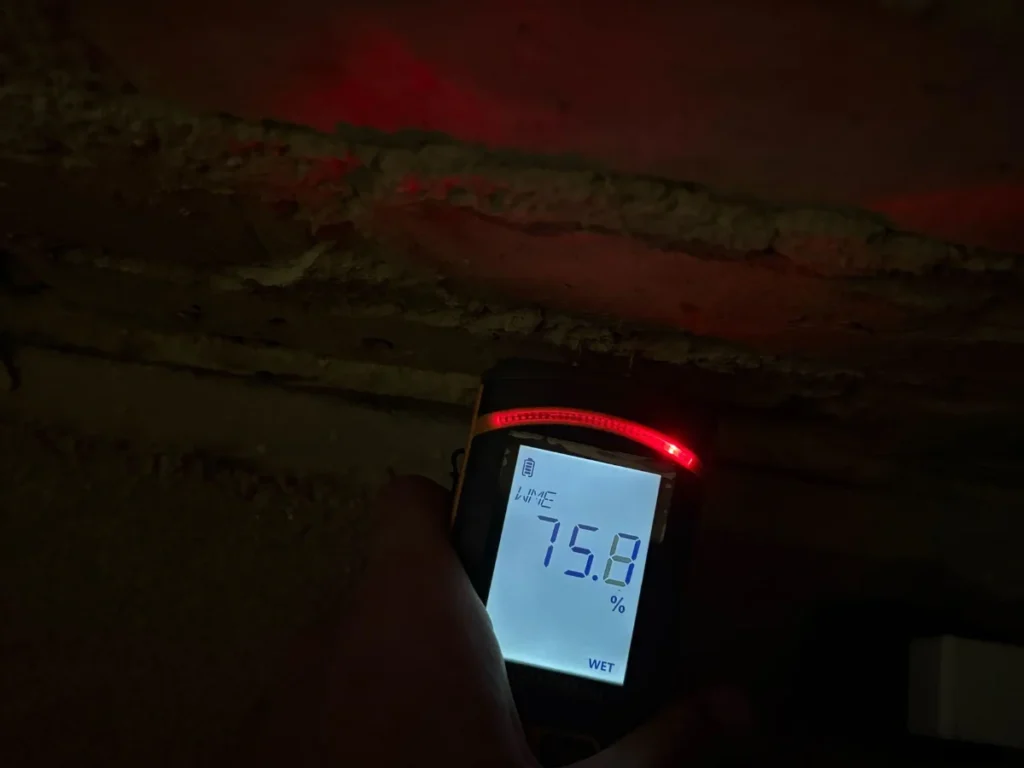
Moisture meter readings.
Moisture meters are used for the accurate measurement of moisture content both on and under the surface in floors, walls, and ceilings. Readings are taken at multiple points on each affected wall, building a vertical and horizontal moisture profile. The pattern of those readings is diagnostic: rising damp produces a gradient that is highest at the base and decreases with height; penetrating damp produces localised elevated readings that correlate with an external defect; condensation typically produces surface readings without the deeper sub-surface moisture that structural damp generates.
Thermal imaging.
Thermal imaging uses advanced infrared technology to detect temperature variations on surfaces that are invisible to the naked eye. It identifies cold spots where insulation is missing and damp spots where moisture is causing evaporative cooling, allowing the surveyor to see what is happening behind walls without having to open them up. Thermal cameras do not see water directly. They see heat. Because damp materials hold thermal energy differently from dry materials and often appear colder due to the evaporative cooling effect, the camera highlights anomalies that are then confirmed with a physical moisture meter.
Hygrometer readings.
Hygrometers check the level of ambient humidity and confirm the ventilation profile throughout the property. This is particularly relevant where condensation is suspected. Relative humidity above 70% creates conditions where condensation will form on cold surfaces. Where multiple rooms show elevated humidity alongside moisture on walls, a condensation or ventilation problem is indicated rather than a structural damp source.
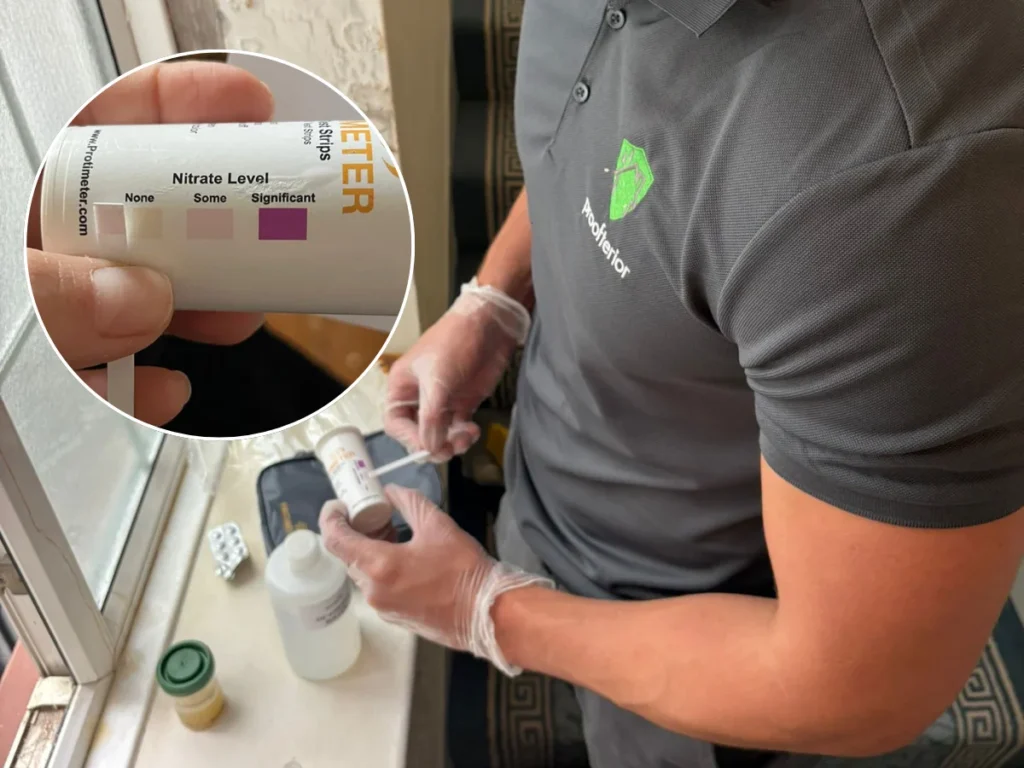
Salt analysis where required.
Salt analysis kits identify nitrates and chlorides in the plaster, which are signs of rising damp. Hygroscopic salts are carried up through the wall by groundwater and deposited in the plaster as the water evaporates. Their presence is a significant diagnostic indicator that the moisture source is from below rather than from condensation or rain penetration.
Borescope inspection where required.
Borescope cameras are used to inspect hidden areas inside walls and cavities where visual inspection and moisture meters cannot reach. This is particularly useful where cavity wall bridging is suspected, where the cavity fill condition needs to be assessed, or where moisture is presenting in an unexpected location with no obvious external source.
What does the survey report contain?
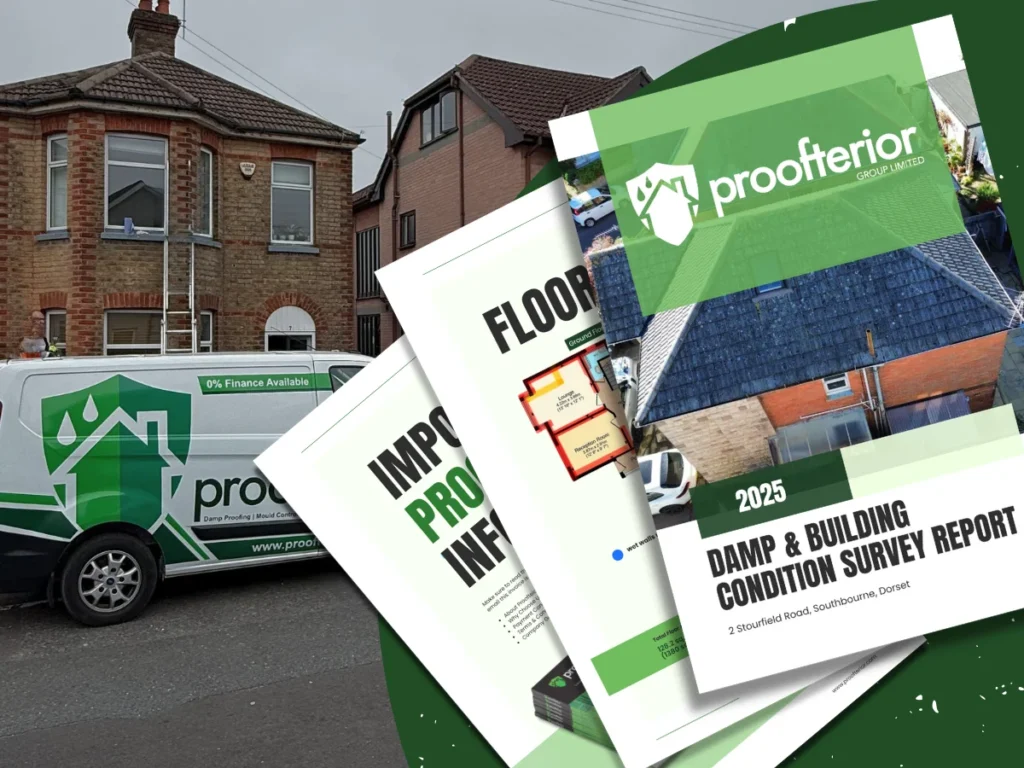
The report is the most important output of the survey. It is what you use to understand the problem, compare treatment quotes, and hold the contractor accountable for the work they carry out.
A survey-grade report will usually include photos, moisture readings, salts analysis where needed, a discussion of likely causes such as bridging, leaks, or condensation, and proportionate recommendations rather than a one-size-fits-all treatment. A good report will also outline the likely follow-on works, including cut-back plaster, drying times, redecoration, and ventilation upgrades, so you can budget realistically rather than discovering them mid-project.
The report is usually concise, typically 10 to 20 pages, and delivered quickly. This is a focused specialist exercise, ideal when a Level 2 or Level 3 home survey has flagged possible damp and recommended further investigation.
Where remedial work is recommended, the report should include a detailed specification of the proposed treatment and a fixed quote. That fixed quote matters. It removes the uncertainty about what you are committing to before work begins and gives you a clear basis for comparing proposals from different contractors.
Proofterior returns the written report and fixed quote within 24 hours of every survey, so you are not waiting days or weeks to understand what you are dealing with.
How Proofterior carries out a free damp survey
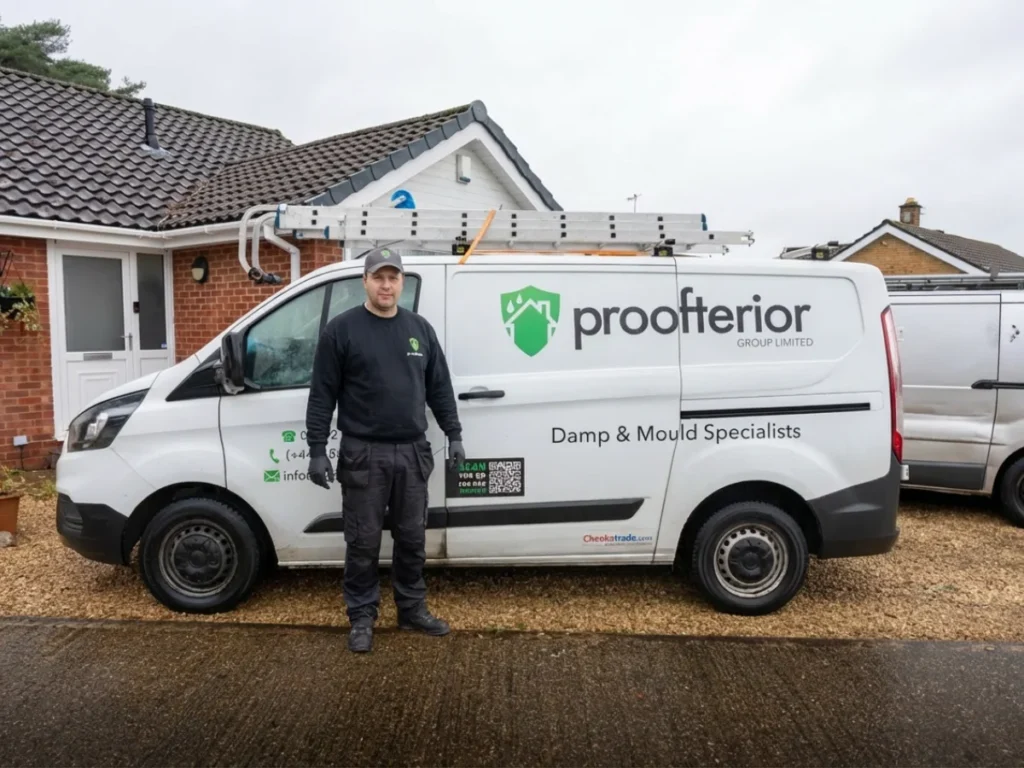
Proofterior offers free damp surveys across Dorset, Hampshire, and Wiltshire. Every survey is carried out by an ISSE-accredited surveyor using the full diagnostic toolkit: moisture meters, thermal imaging, hygrometers, and salt analysis where the pattern of moisture warrants it.
The survey covers the full property, not just the room where symptoms are visible. Damp in one room often has its source elsewhere, and a thorough inspection of all accessible internal and external areas is what ensures the diagnosis is accurate rather than assumed.
The written report details the findings, identifies the type and source of moisture, and makes a clear recommendation with a fixed quote for any treatment required. If no treatment is needed, that is what the report will say.
Everything is carried out in-house by Proofterior’s own directly employed, fully qualified team. No subcontractors. The ISSE-accredited surveyor who diagnoses the problem is connected to the team who carry out any treatment, with full accountability from inspection through to completed work. Every treatment carries a 25-year guarantee, and the 24-hour contact line means you can reach the team directly with any questions at any point.
Frequently Asked Questions
What is a damp survey?
A damp survey is a specialist inspection carried out by a qualified surveyor using professional diagnostic equipment including moisture meters, thermal imaging, and hygrometers. It identifies the type, source, and extent of any moisture problem and produces a written report with a recommended treatment and fixed quote.
What does a damp survey include?
A thorough damp survey includes a full visual inspection of internal rooms and external elevations, moisture meter readings at multiple points across affected walls, thermal imaging to detect hidden moisture, hygrometer readings to assess humidity and ventilation, salt analysis where rising damp is suspected, and a written report with photographic evidence and a treatment recommendation.
Is a free damp survey worth it?
Yes, provided it is carried out by a qualified specialist and includes a written report. A free survey that produces only a verbal quote with no documented findings is not the same as a professional assessment. Proofterior’s free surveys are carried out by ISSE-accredited surveyors and include a full written report and fixed quote within 24 hours.
Do I need a damp survey when buying a house?
A standard homebuyer survey is not a specialist damp inspection. If the survey flags any sign of damp or recommends further investigation, a specialist damp survey is the appropriate next step. It gives you specific detail on the type, cause, and cost of any problem before you commit to the purchase.
How is a damp survey different from a homebuyer survey?
A homebuyer or RICS Level 2 survey covers the general condition of the whole property. When it comes to damp, a general surveyor will take a limited number of moisture readings and flag visible concerns. A specialist damp survey uses a full range of diagnostic equipment, carries out a systematic moisture profile of the affected areas, and produces a detailed report specifically on moisture, its sources, and the treatment required.