
What Is a Damp Proof Course? And When Do You Need One?
If a damp surveyor has told you your damp proof course has failed, or you have noticed moisture creeping up the base of your walls and want to understand why, this guide covers what a damp proof course actually is, how it can fail or be bypassed, and what a chemical injection involves. It is one of the most misunderstood elements of a property, and getting it wrong is expensive.
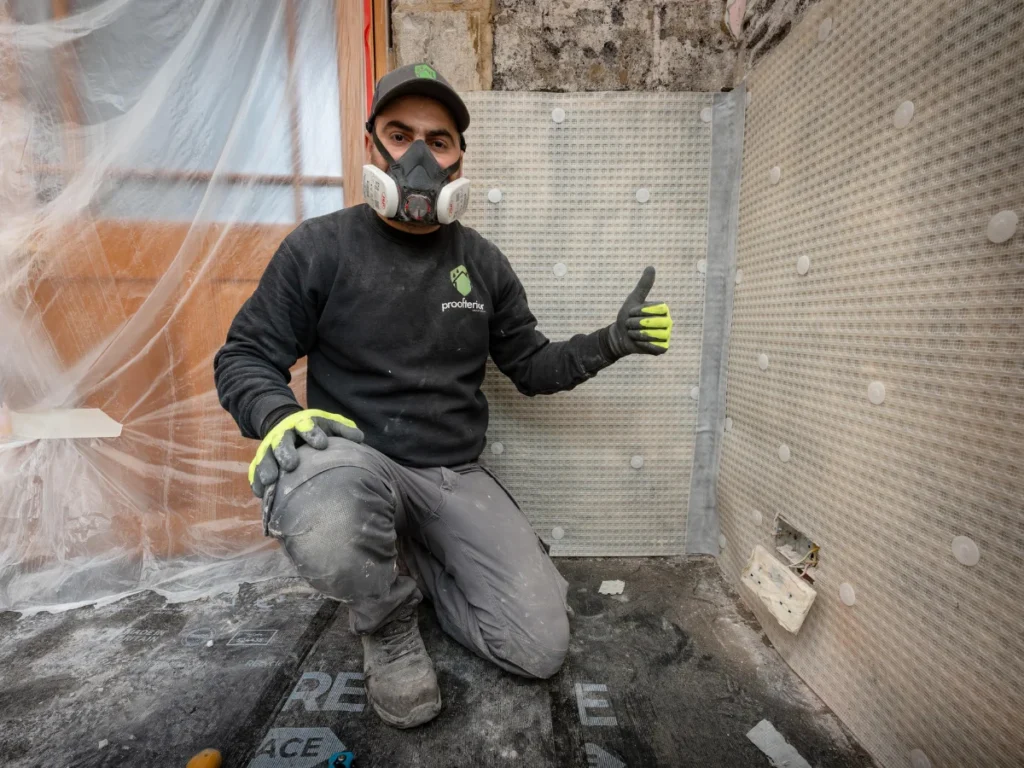
What is Damp Proof Course?
A damp proof course, commonly referred to as a DPC, is a horizontal barrier built into the walls of a property at low level, typically around 150mm above external ground level. Its purpose is straightforward: to stop groundwater from travelling upward through porous masonry by capillary action, the same process that draws water up through the tiny pores in brick and mortar against gravity.
Without a functioning DPC, groundwater has an unobstructed route from the ground into your walls. Over time that leads to rising damp, salt contamination, and the progressive deterioration of plaster, finishes, and in serious cases, structural timbers at floor level.
Approved Document C of the Building Regulations specifies that a damp proof course may be constructed from bituminous material, polyethylene, engineering bricks, slates in cement mortar, or any other material that will prevent the passage of moisture. In modern new-build properties, a DPC typically takes the form of a continuous polyethylene strip. In older properties, it was more commonly slate, bitumen felt, or engineering brick, all of which have a finite lifespan.
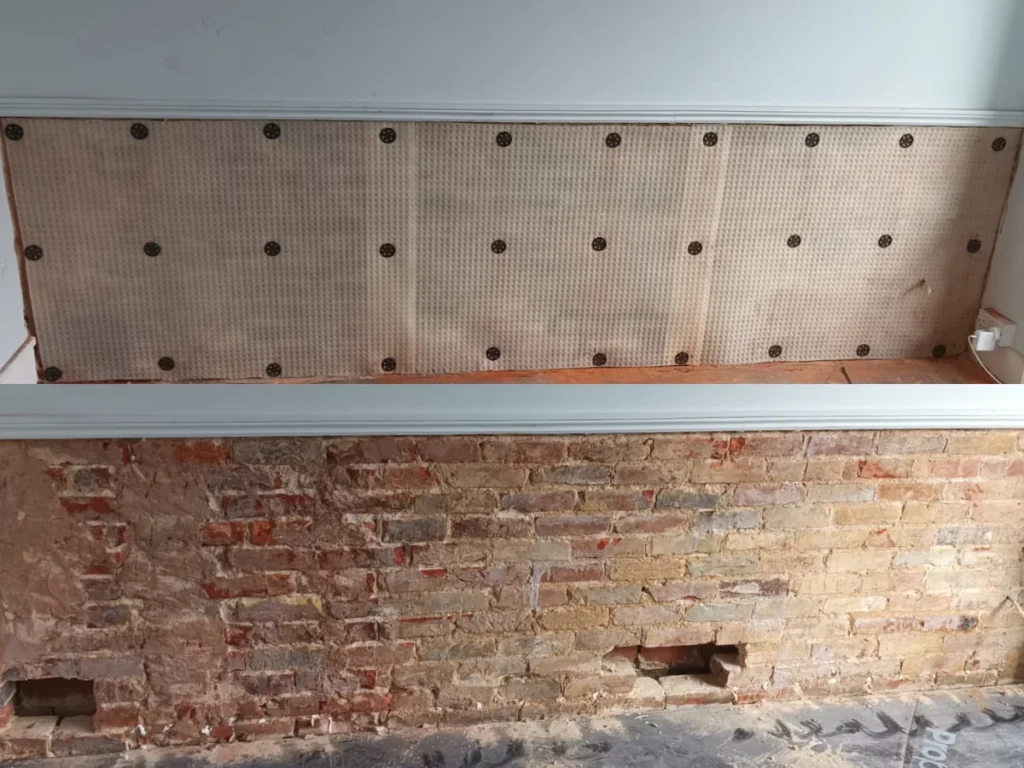
How long have DPCs been required in UK properties?
Ground-level damp proof courses have been mandatory in all British buildings since the Public Health Act of 1875. That means any property built before that date is unlikely to have had one installed at all. Georgian properties built between 1714 and 1837, and early Victorian properties built before 1870, were not usually built with physical DPCs. Residents of that era relied on thick walls, lime mortars, and ventilation to manage moisture rather than a dedicated barrier.
This matters today because a significant proportion of housing stock across Dorset, Hampshire, and Wiltshire consists of Victorian and Edwardian properties. Some of these have original DPCs that have since degraded. Others were built without one entirely. Either way, the result is the same: groundwater can rise freely through the wall structure if nothing has been done to address it.
Why do Damp Proof Courses Fail?
A DPC does not usually fail suddenly. DPCs are affected by slow changes in the building, the soil, and the way the home is used. The most common reasons a DPC stops working are degradation of the original material and bridging.
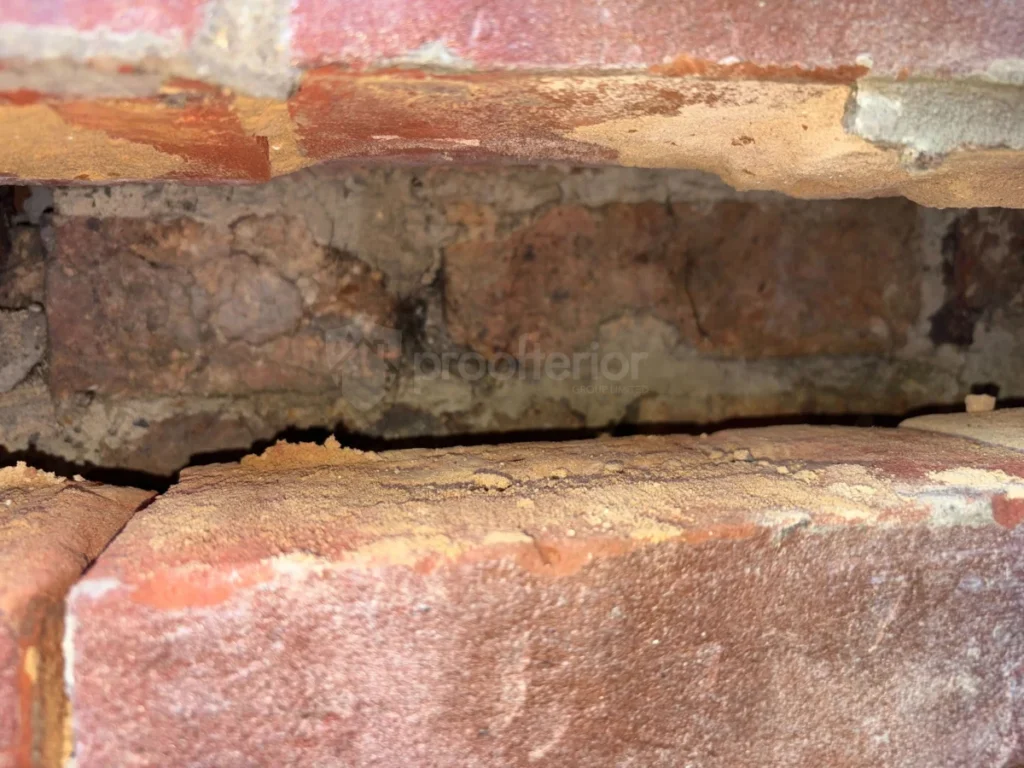
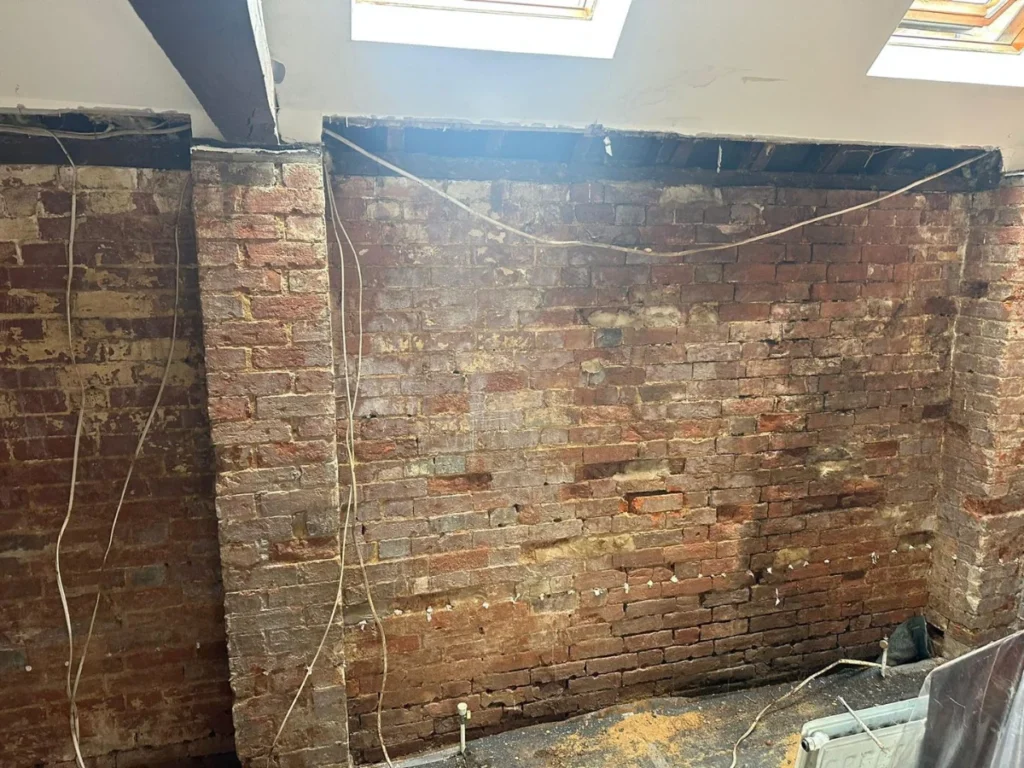
Material degradation.
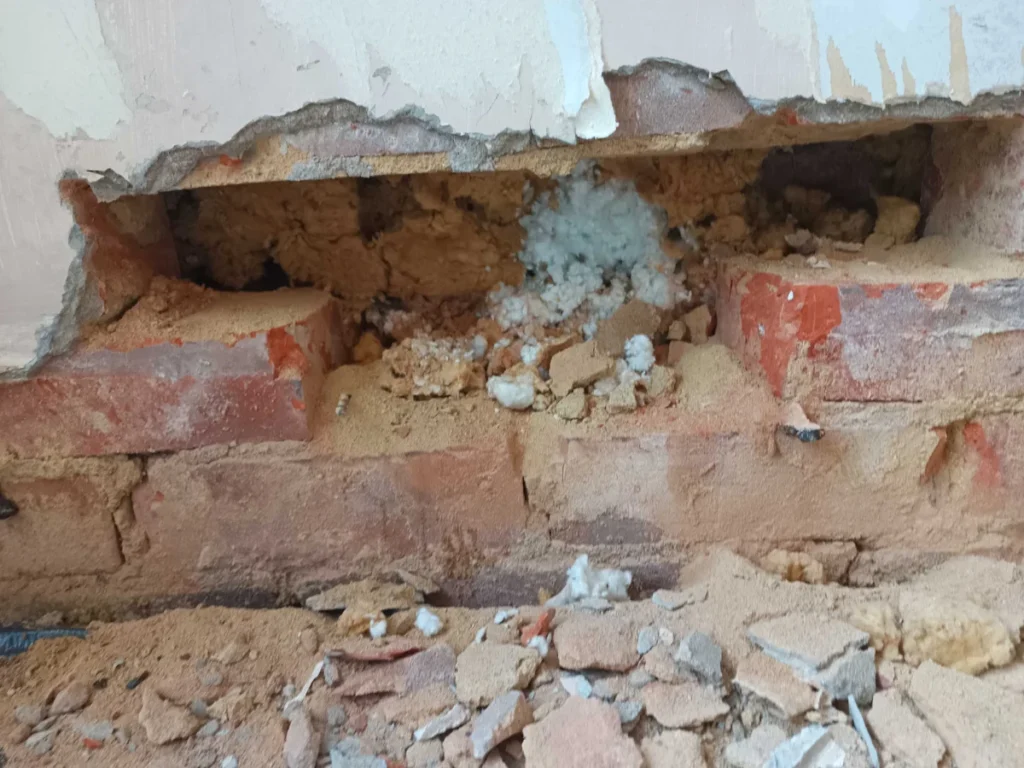
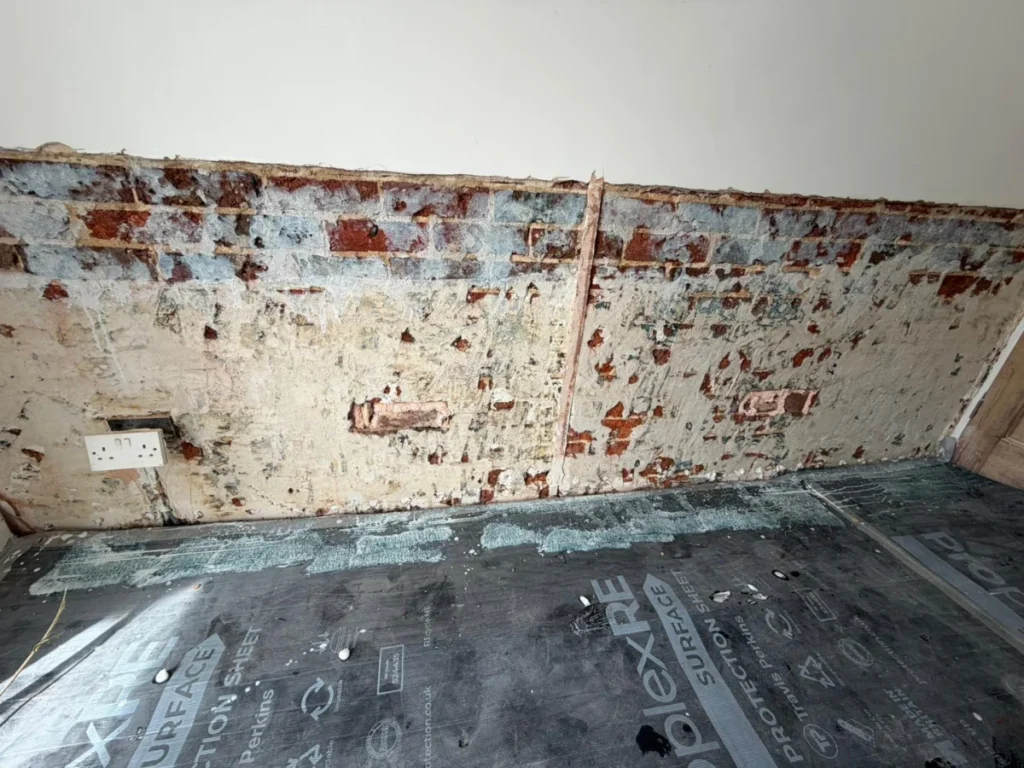
Original DPCs in older properties were made from slate, bitumen felt, lead, or engineering brick. Each material has a different failure profile. Bitumen felt DPCs can become brittle with age, and once brittleness sets in, the thermal cycling of a building through winter and summer temperatures causes the material to crack along its length. Those cracks do not need to be visible from the outside to allow capillary action to resume through the wall. Slate is a very effective form of DPC, but it can crack or become damaged over time, possibly due to structural movement in the property, which results in areas of rising damp from the ground. Where mortar joints around a slate DPC deteriorate, the continuity of the barrier is lost even if the slate itself remains largely intact.
Physical barriers like original slate or robust membranes can reliably last over 50 years, sometimes outliving even the building’s first roof, but only when they have not been disturbed by subsequent building works and are free from cracking caused by structural movement. The honest reality is that many original DPCs in Victorian and Edwardian properties across Dorset, Hampshire, and Wiltshire are now well beyond the point where their integrity can be assumed without professional assessment.
Bridging: the most common cause.
In many properties, the DPC itself may still be present and doing its job, but something like raised ground, render, plaster, screed, or debris is quietly short-circuiting it. This is called bridging, and it is responsible for the majority of DPC-related problems seen in UK homes. Critically, bridging does not require the DPC material to have failed at all. The barrier can be completely intact and still be rendered useless.
Bridging happens through several distinct routes. The DPC is required to sit at least 150mm above external ground level under Building Regulations Part C. This is to reduce the incidence of splashback from rain and to ensure a minimum elevation above standing water. When external ground levels are raised through landscaping, new patios, driveways, or soil accumulation over time, that 150mm clearance shrinks or disappears entirely. Even a few centimetres of raised ground can bypass a functioning DPC and allow damp to rise through capillary action in the brickwork and mortar.
Inside the property, bridging occurs when internal plaster or backing coats extend down below the DPC line. Where thick backing coats or dot-and-dab adhesive extend down to a damp slab or into the base of a wall below the DPC, moisture from the floor or lower masonry wicks upward through those finishes, bypassing the barrier and appearing as damp higher up. Skirting boards fixed tightly over such plaster can conceal the bridge while absorbing moisture themselves.
In cavity wall properties, the problem can be invisible from any internal inspection. When mortar droppings, offcuts of insulation, or mis-seated cavity trays accumulate at or below DPC height, they can form a shelf that sits in contact with the wettest part of the outer leaf. Over time that shelf carries moisture across to the inner wall and presents as low-level damp on the inside. You can rarely see this from inside the room. Tell-tale signs outside include missing or blocked weep holes, inconsistent detailing around window heads and sills, or areas where workmanship was obviously rushed. Targeted borescope inspection is usually needed if cavity bridging is suspected.
The important thing to understand about bridging is that it is almost always caused by works carried out after the property was built. Most DPC failures stem from secondary works, not age. A well-intentioned renovation, a new garden feature, or a builder applying render without awareness of where the DPC sits can create a bridging problem that presents years later and is difficult to trace back to its source without professional diagnosis.
Incorrect or failed installation.
If the DPC was installed incorrectly, for example at the wrong height or with gaps in coverage, it will not provide adequate protection. This issue is particularly common in extensions or renovations where older and newer wall sections meet. Where a new section of wall joins an existing one, the DPC levels need to be continuous and correctly lapped. If they are not, a gap at the junction point becomes a reliable entry point for groundwater.
In remedial chemical DPC work, poor installation technique is a documented cause of treatment failure. In some cases there is a correct diagnosis of rising damp, but the contractor fails to treat it properly. In most cases, this involves a failure to successfully inject a chemical DPC cream. An incorrectly installed chemical DPC simply does not work. Injection holes drilled at the wrong spacing, cream injected at insufficient depth, or application into masonry that is too saturated to allow the silane and siloxane to diffuse correctly all produce a result that looks like a completed treatment but provides no meaningful barrier. This is one of the clearest reasons why PCA accreditation and an in-house qualified team matter. The standard of installation determines whether the treatment holds, and a failed remedial DPC typically means the homeowner pays twice.
High groundwater levels and hydrostatic pressure.
Even a correctly installed and intact DPC can come under sustained pressure in certain site conditions. Hydrostatic pressure occurs where the weight of water in saturated soil forcefully drives moisture upward through small pores in construction materials. This condition is prevalent in regions where soil saturation is common, particularly during prolonged periods of wet weather or in areas with inadequate drainage systems.
In areas with naturally high water tables, the volume of moisture pressing against the wall base is significantly greater than in well-drained ground. In areas with persistently high groundwater or poor drainage, hydrostatic pressure can push moisture through even minor weaknesses in a DPC. Over time, this can cause the barrier to fail completely. Properties in low-lying areas, those close to rivers or streams, or those with dense clay soils that retain water rather than draining it are the most susceptible. Modern UK weather patterns are changing the equation. Rising groundwater levels, heavier rainfall events, urban drainage overload, and increased surface-water flooding are placing older properties under greater hydrostatic pressure than they were originally designed to withstand. Ground saturation now lasts longer, and older drainage infrastructure has become overloaded.
Where hydrostatic pressure is the primary driver, standard chemical DPC injection alone may not be sufficient. Structural waterproofing or drainage management around the building perimeter needs to be considered as part of the solution, which is why an accurate diagnosis from a qualified surveyor is the essential first step before any treatment is recommended.
How do you know if your DPC has failed?
The signs of a failed or bridged DPC closely mirror the signs of rising damp, because a failed DPC is the cause of rising damp in most cases.
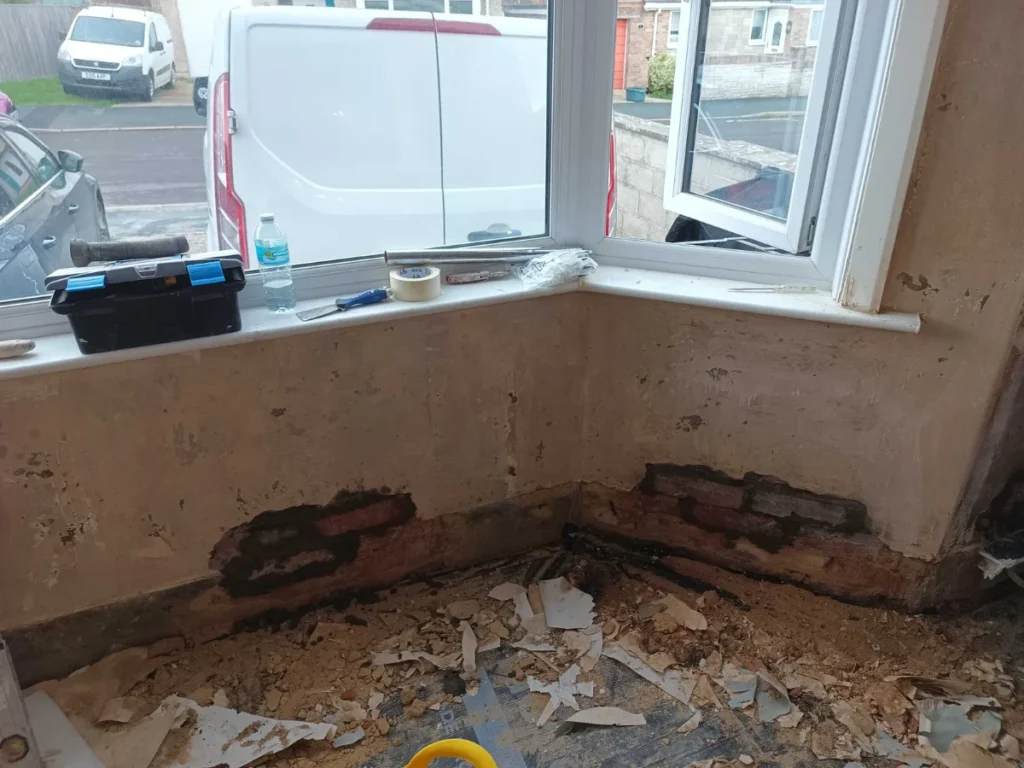
Tidemarks and salt crusts on lower walls, damp staining that rises from the base of walls, musty smells or mould growth at floor level, and flaking paint or soft skirting boards are all indicators that groundwater is moving upward through the wall unchecked.
The pattern matters. Rising damp from a DPC failure is relentless. It might look slightly better in dry months, but it never truly disappears because the ground is always wet. Condensation, by contrast, responds to changes in ventilation and heating patterns and tends to worsen specifically in winter. If the damp patches at the base of your walls are consistent year-round and unaffected by ventilation, a DPC problem is the more likely explanation.
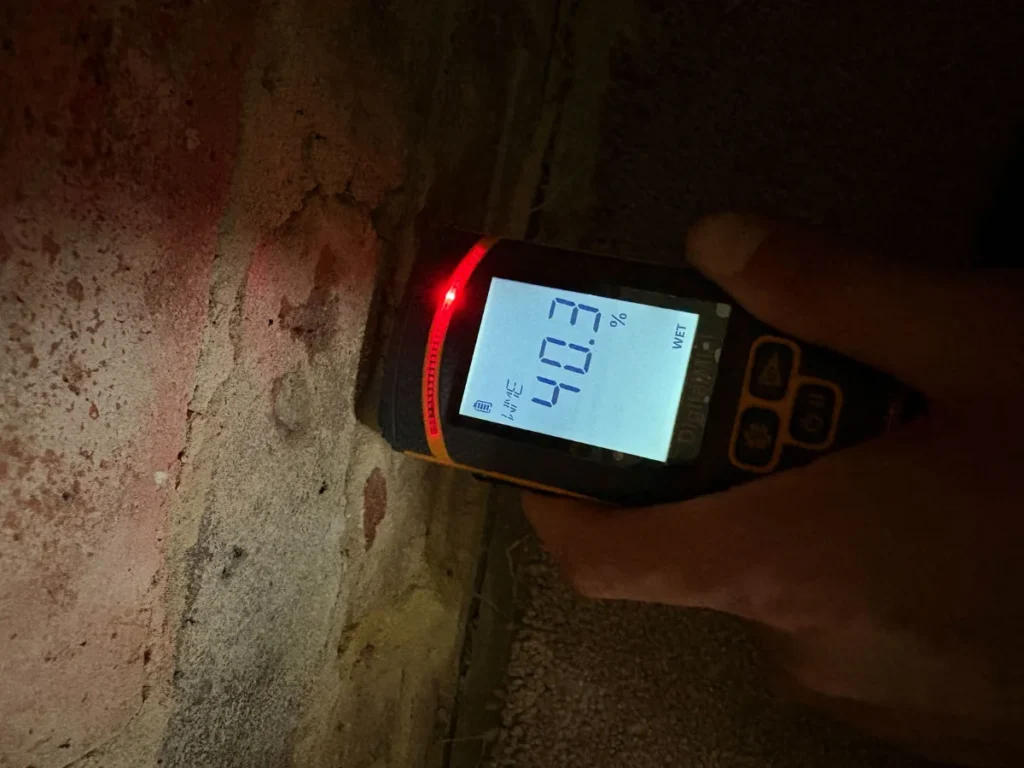
A professional damp survey with moisture meters will confirm whether the moisture pattern is consistent with a failed or bridged DPC, and rule out other causes before any treatment is recommended.
Do I need a damp proof course if my property is older?
Not every older property needs a new DPC. The answer depends on whether moisture is actively entering the wall and, if so, what is causing it.
Some pre-1875 properties were built with sufficiently thick walls, breathable lime mortars, and good ventilation to manage moisture without a dedicated barrier. Others have had remedial DPCs installed at some point. A professional survey establishes the current moisture profile of the wall and whether a new DPC is genuinely needed, rather than assumed.
The Building Research Establishment states that in most instances it is likely that a DPC has been compromised or bridged by render, internal plaster, or higher external ground levels, rather than the DPC material itself having failed. In cases where bridging is the cause, correcting the bridge may resolve the problem without the need for a full DPC injection. A thorough diagnosis is what separates a targeted fix from unnecessary and expensive treatment.
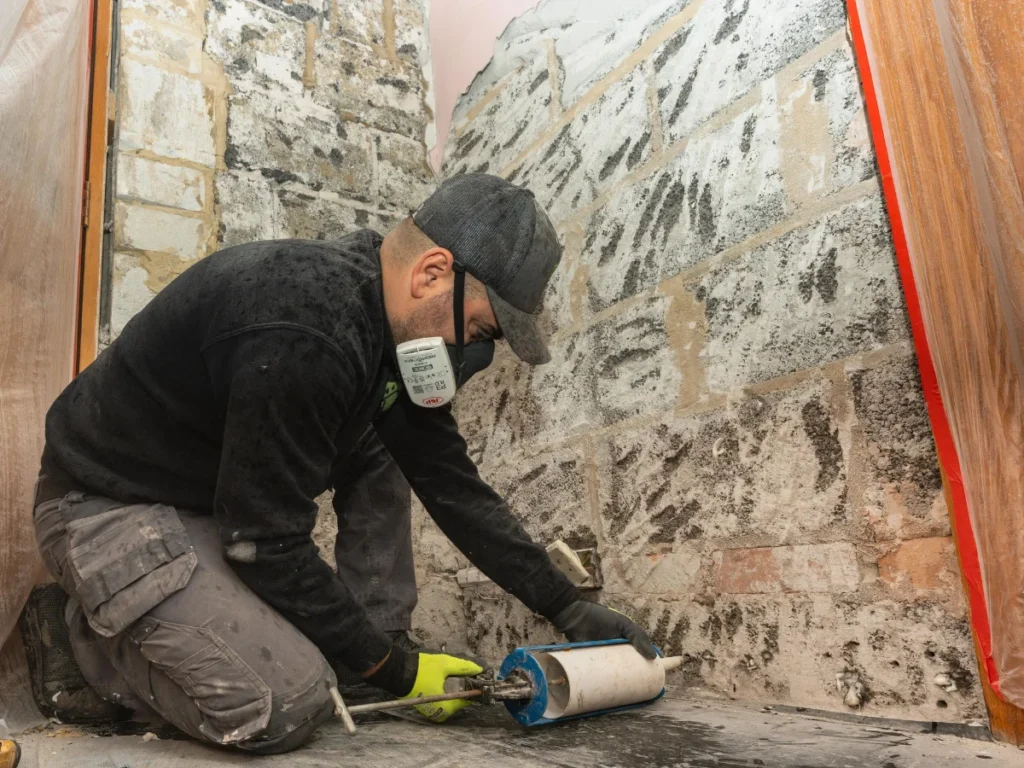
What does a chemical DPC injection involve?
Chemical DPC injection is the industry-standard remedial treatment for a failed or absent damp proof course. It is the method used in the Proofterior Dry System and the approach recommended by the PCA for most residential rising damp cases.
The process involves drilling a series of evenly spaced holes along a horizontal mortar course in the wall, typically at a height of around 150mm above external ground level. A specialist silane and siloxane-based cream is then injected into each hole. The liquid silane and siloxane components spread by diffusion into the masonry and react with the available silica to form a waterproof barrier, preventing moisture from rising up the walls.
Above the horizontal barrier created by chemical damp proofing, the masonry remains dry even if moisture continues to push up from below. The active ingredient reduces surface tension, water ingress through capillary action is stopped, the wall dries out, and the masonry gains long-lasting protection against moisture.
Once the injection holes are filled and the cream has cured, the contaminated plaster is removed, the wall is treated for salts, and the area is replastered using a salt-resistant backing coat. The injection itself is minimally disruptive compared to physical DPC replacement, which involves removing and replacing sections of brickwork and is rarely necessary in standard residential cases.
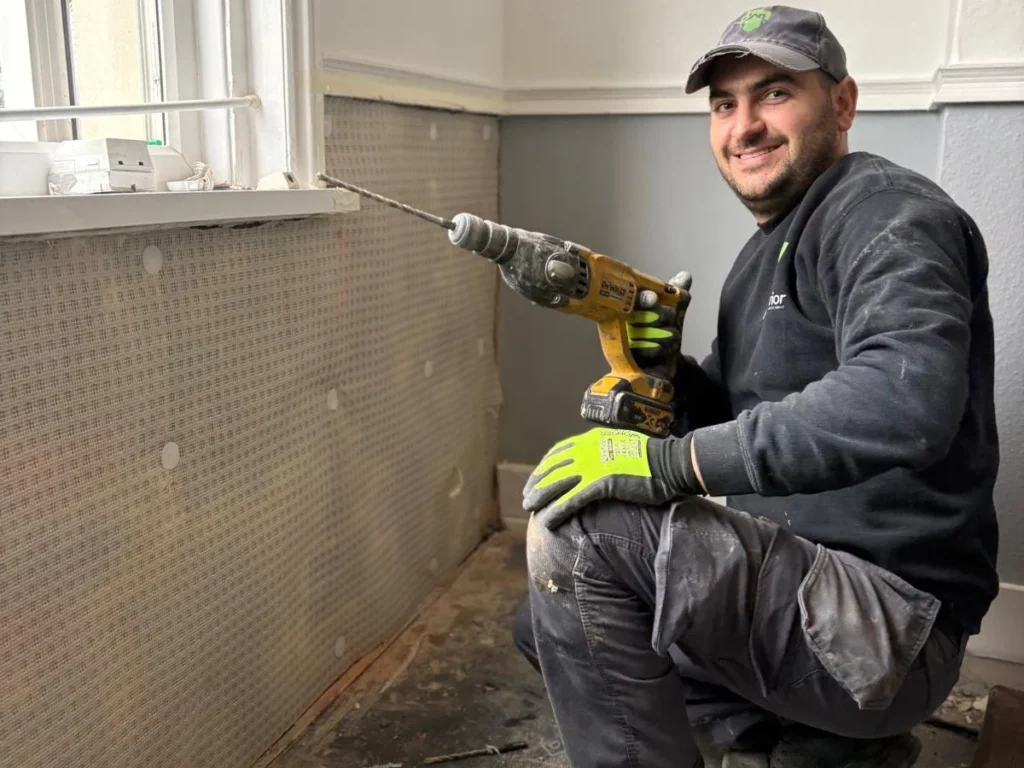
How Proofterior carries out DPC injection.
Proofterior is a PCA and ISSE-accredited damp proofing specialist serving Dorset, Hampshire, and Wiltshire. Every DPC survey is carried out by an ISSE-accredited surveyor who assesses the full moisture profile of the property before any treatment is recommended. If the problem is bridging rather than DPC failure, that is what the report will say.
Where chemical DPC injection is the right course of action, Proofterior’s in-house team carries out the complete Proofterior Dry System: DPC injection, salt neutralisation, damp proof membrane where required, and full replastering with a salt-resistant backing coat. No subcontractors. The same qualified team handles the job from survey through to completed finish.
Every DPC treatment carries a 25-year guarantee. The survey is free, the written report and fixed quote are returned within 24 hours, and the 24-hour contact line means you can reach the team directly at any point.
Frequently Asked Questions
What is a damp proof course?
A damp proof course is a horizontal barrier built into the base of a property’s walls to stop groundwater travelling upward through the masonry by capillary action. It sits typically around 150mm above external ground level and is a legal requirement in all new UK buildings.
Does my older property have a damp proof course?
If your property was built before 1875, it may not have a physical DPC at all. Properties built between 1875 and the mid-twentieth century may have original slate or bitumen DPCs that have since degraded. A professional damp survey will confirm whether an effective barrier is in place.
What is DPC bridging?
Bridging happens when something creates a physical connection between the ground and the wall above the DPC line, giving groundwater a route around the barrier. Common causes include raised external ground levels, garden soil built up against walls, internal plaster applied too low, and paved areas laid flush with or above the DPC.
How do I know if my DPC has failed?
The main signs are damp patches confined to the base of walls, a tidemark at low level, white salt deposits on the plaster or masonry, peeling paint and crumbling plaster near the floor, and a persistent musty smell. These symptoms tend to be consistent year-round rather than seasonal.
Is chemical DPC injection disruptive?
It is significantly less disruptive than physical DPC replacement, which involves removing and relaying sections of brickwork. The injection itself is carried out through drilled holes in the mortar. The more involved part of the process is the replastering that follows, which requires the contaminated plaster to be removed and replaced with a salt-resistant system.