
How Proofterior Treated Rising Damp and Wall Bridging in a Dorset Bungalow: Full Floor-to-Ceiling
When a homeowner in Upton, Dorset, reported long-standing damp problems in their main bedroom that had persisted for years without a lasting resolution, our professional damp survey identified something that a standard low-level patch repair would have completely missed. This case study explains why the dual-pathway moisture problem required a full floor-to-ceiling approach, and what the Proofterior Dry System delivered for this detached bungalow in the BH postcode area.
Diagnosing Rising Damp and Upper-Wall Bridging in a Dorset Bungalow
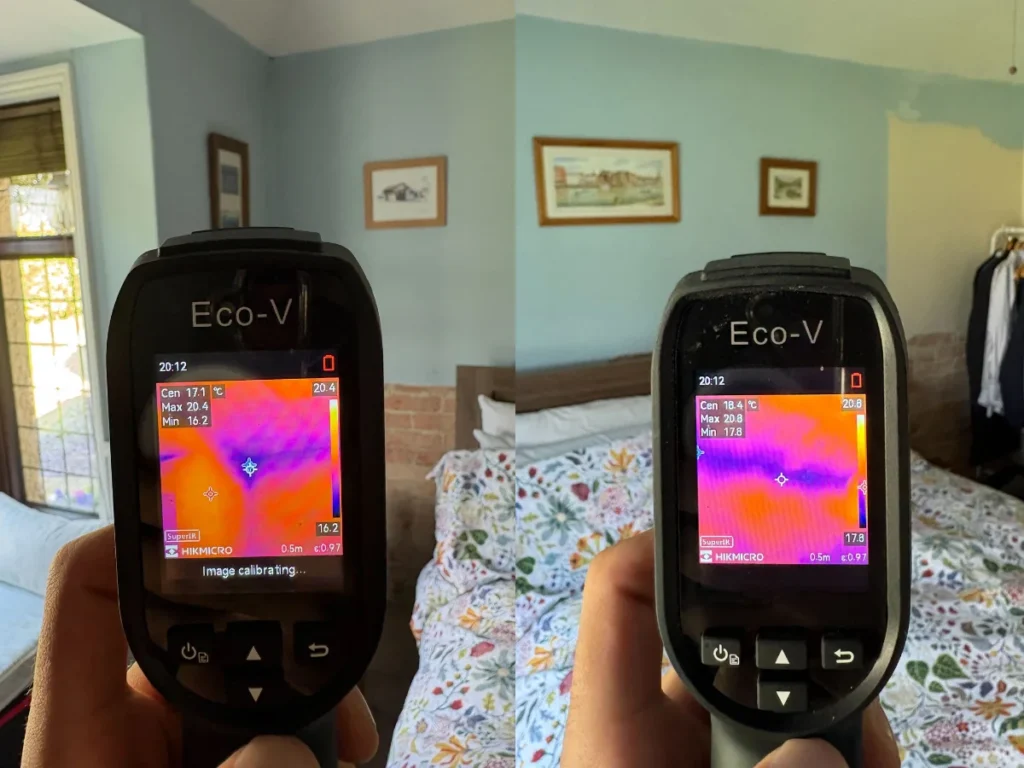
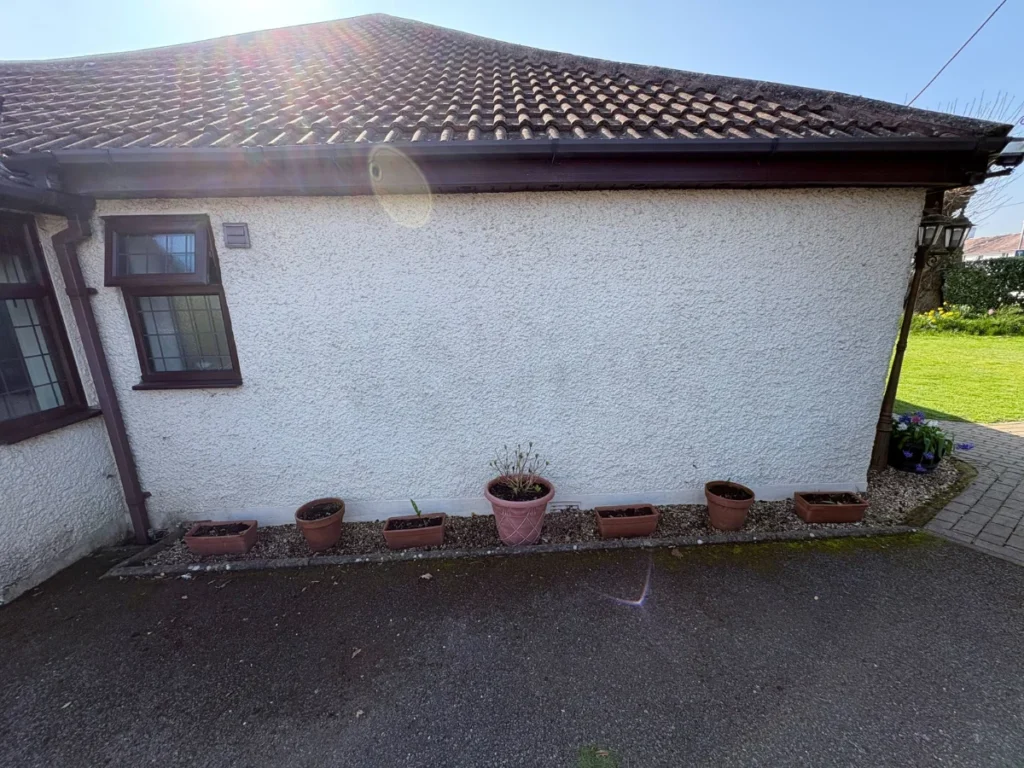
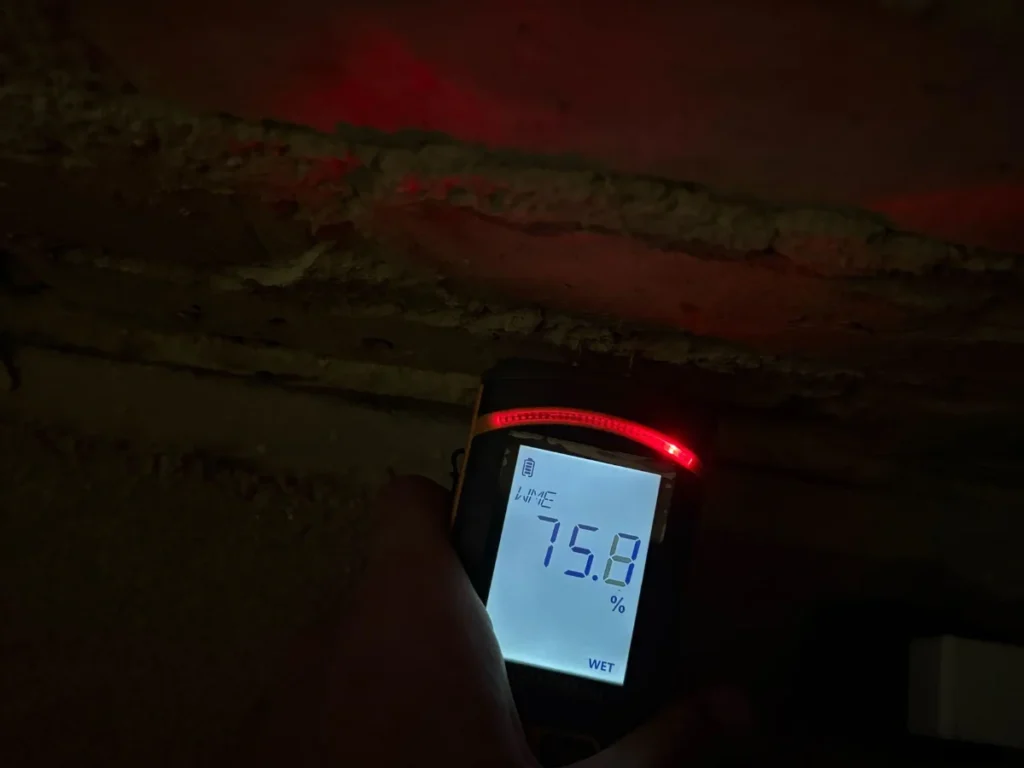
The most common reason a damp problem keeps returning after treatment is that only part of the moisture pathway was ever addressed. At 203 Sandy Lane, Upton, Proofterior’s ISSE-accredited survey identified exactly that scenario. Using a professional moisture meter, elevated readings of 70% and above were recorded consistently up to approximately 1.5 metres above floor level on the main bedroom external wall, confirming active rising damp driven by capillary action through masonry where the existing damp proof course was absent, failed, or bridged.
What made this case particularly important was the finding beyond that initial rising damp band. Further investigation of the same external-facing wall identified additional dampness higher up, indicating a secondary bridging issue or related constructional defect at the upper section of the wall. This meant the wall was being affected simultaneously from below through rising damp and from a higher-level moisture transfer pathway, not a single isolated defect that a low-level intervention could resolve. A partial, low-level repair would have left the upper bridging pathway entirely untreated, meaning moisture would have continued penetrating mid and upper wall finishes and the problem would have returned.
Objective: A Full-Height Solution for a Dual-Pathway Moisture Problem
The correct response to this survey finding at this Upton bungalow was a full floor-to-ceiling treatment rather than the limited low-level hack and patch approach that had likely been attempted or considered before. Salt-contaminated plaster remaining in the wall after previous failed remediation acts as a hygroscopic reservoir, continuously drawing atmospheric moisture back to the wall surface and causing damp patches to reappear on new finishes even after the active water source is nominally stopped. Proofterior specified the full Proofterior Dry System installed from floor to ceiling across all identified areas of the main bedroom wall, combining chemical DPC injection, full plaster removal, salt neutralisation, damp proof membrane installation, and complete replastering, all backed by a 25-year guarantee.
Step-by-Step Proofterior Dry System Treatment Process
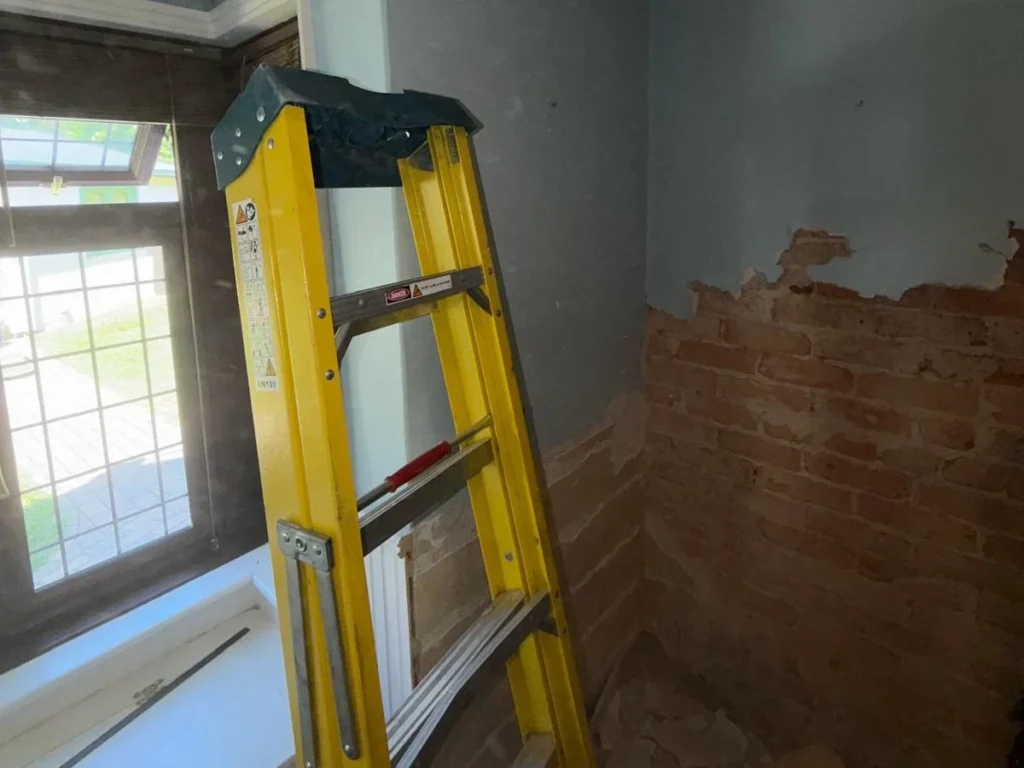
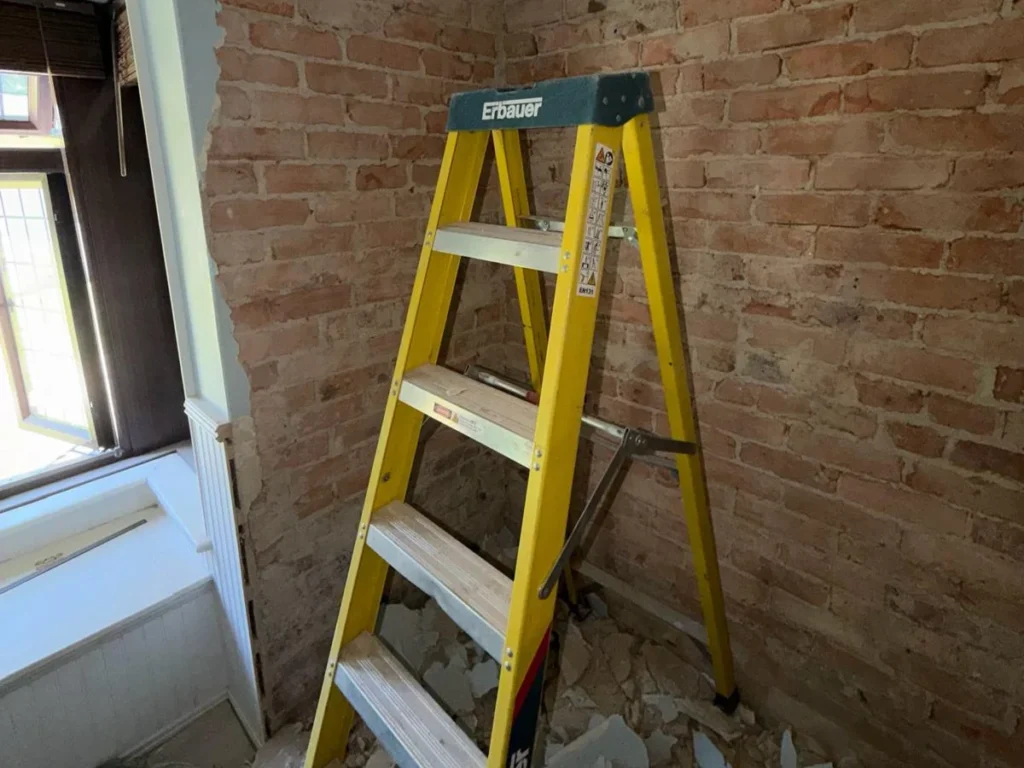
1. Preparation, Protection and Access
The work area was carefully cleared and fully protected with dust sheets to safeguard flooring and furnishings throughout. Skirting boards, radiators, and electrical faceplates were removed from the affected bedroom wall to allow complete access from floor level to ceiling height. Relevant electrical circuits were isolated where necessary to establish safe working conditions before any works began.
2. Full Plaster Removal and Substrate Inspection
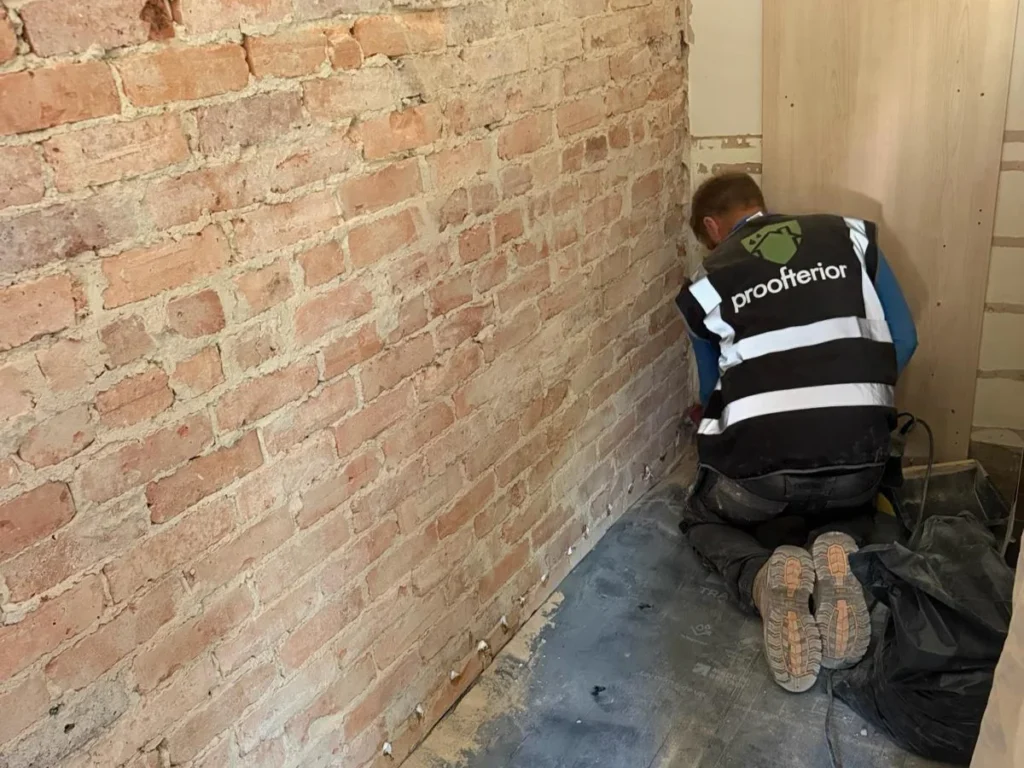
All contaminated, damp, and salt-affected plaster was mechanically hacked off across the marked main bedroom wall areas from floor level to ceiling height, with removal extended at least 300mm beyond the last visible signs of damp or salt contamination. This exposed the full extent of the underlying masonry for inspection and allowed any loose or degraded materials within joints or surface defects to be removed, closing secondary pathways that could carry moisture or bridge the new DPC.
3. Chemical DPC Injection and Salt Neutralisation
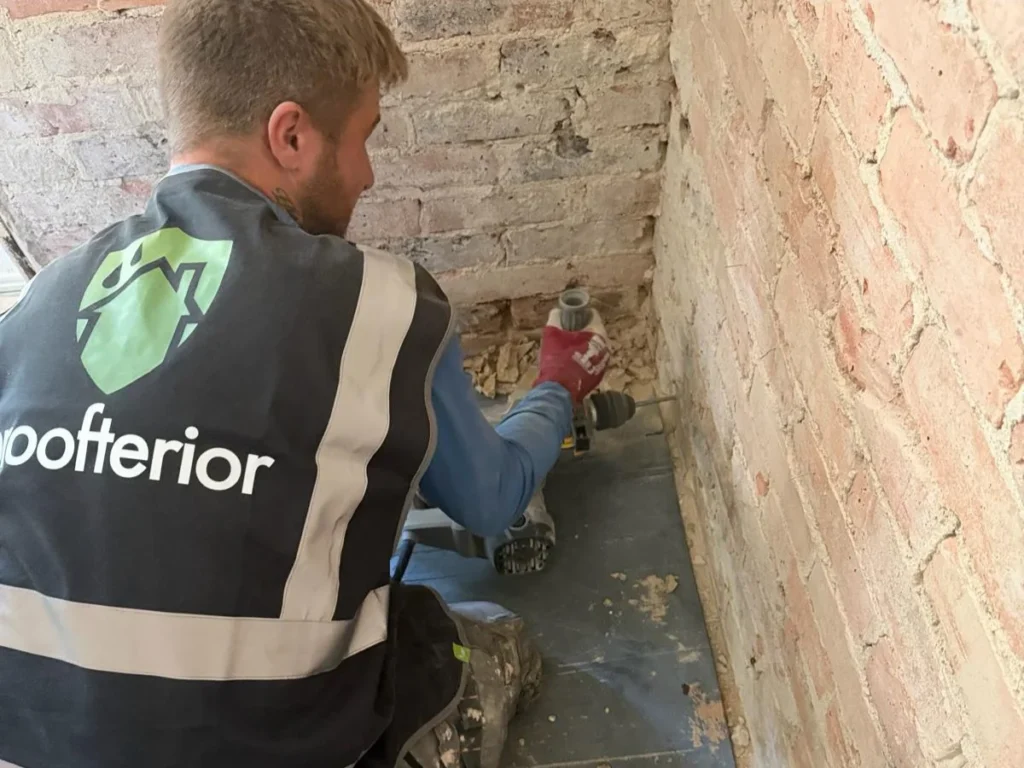
A new chemical damp proof course was installed by drilling and injecting silicone-based cream at the correct level along the base of the affected wall, forming a continuous horizontal barrier that permanently interrupts capillary action and prevents further rising damp from the ground. A salt-neutralising treatment was then applied across the full exposed masonry surface to stabilise the chloride and nitrate salts driven into the wall by years of active moisture ingress. This step is critical: without it, hygroscopic salts left behind in the masonry will continue attracting atmospheric moisture and cause new plaster finishes to appear persistently damp even after the water source is stopped.
4. Damp Proof Membrane Installation
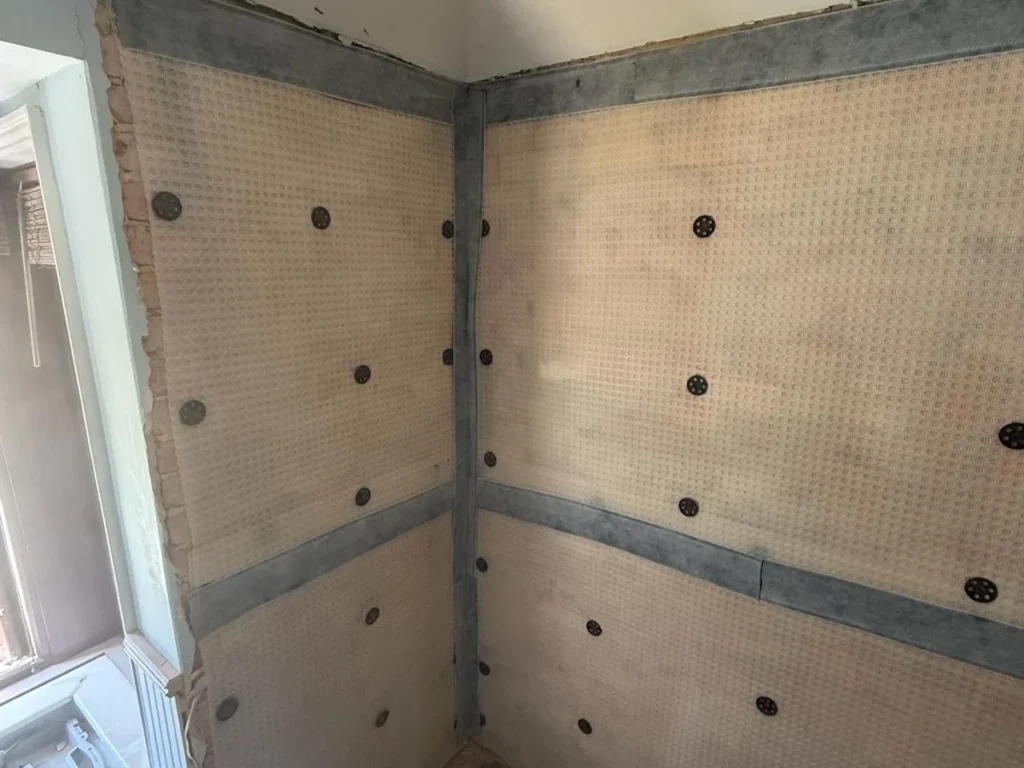
A studded or meshed plastic damp proof membrane was mechanically fixed across the full treated wall area, creating a controlled separation layer between the old masonry and the new internal finish. This physical barrier provides a guaranteed dry face for replastering regardless of how quickly the underlying masonry dries, which is particularly important in this Dorset bungalow where the wall had been subject to prolonged dual-pathway moisture exposure. By treating floor to ceiling in a single integrated specification, both the low-level rising damp and the higher-level bridging are isolated behind a continuous membrane rather than leaving any section of the original wall exposed.
5. Replastering, Full Reinstatement and Finishing
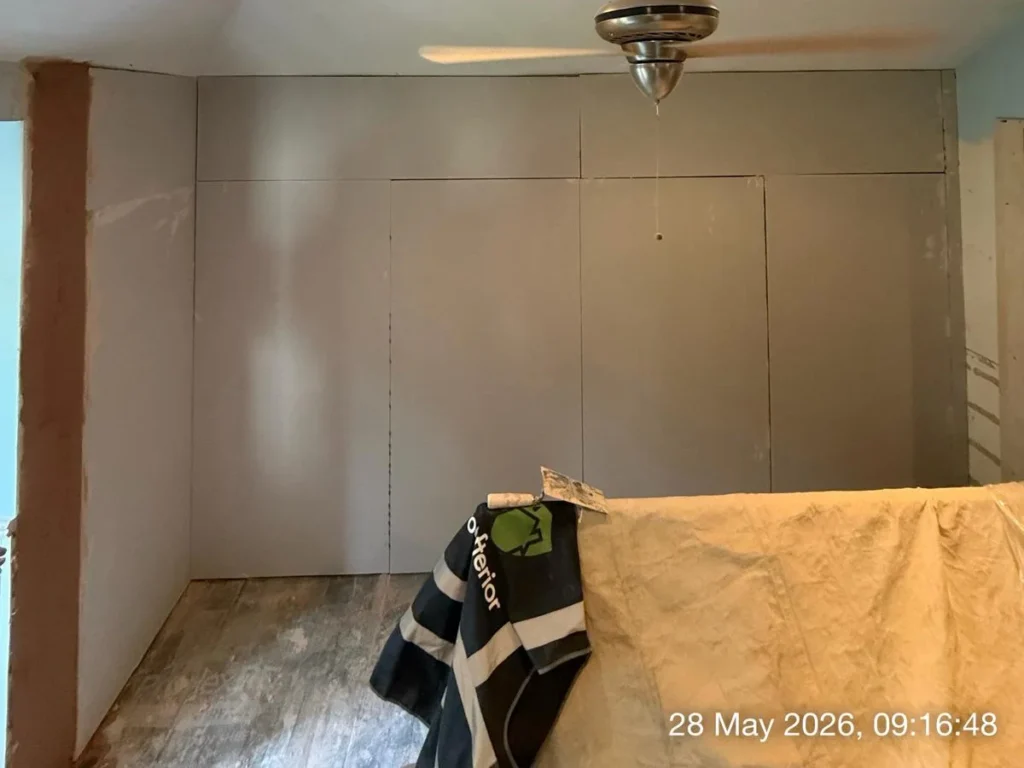
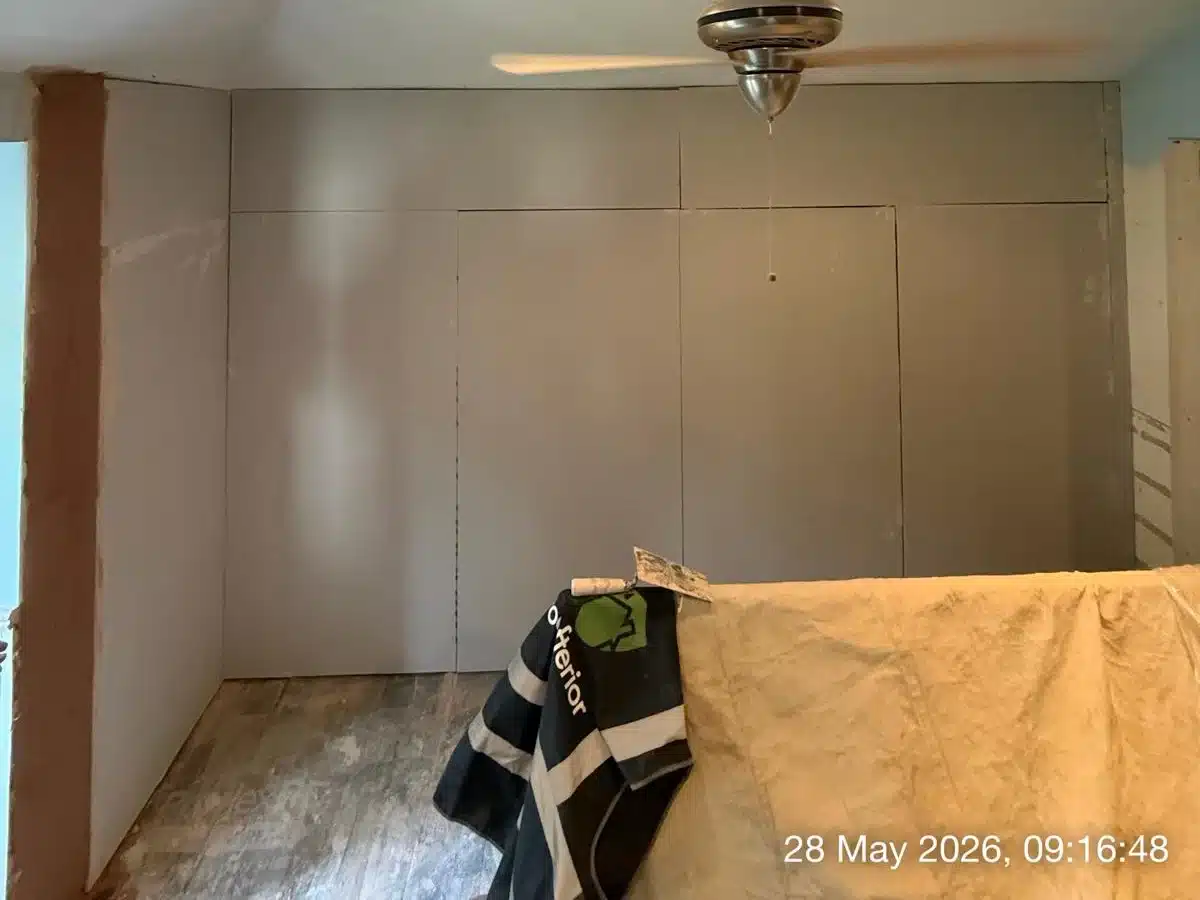
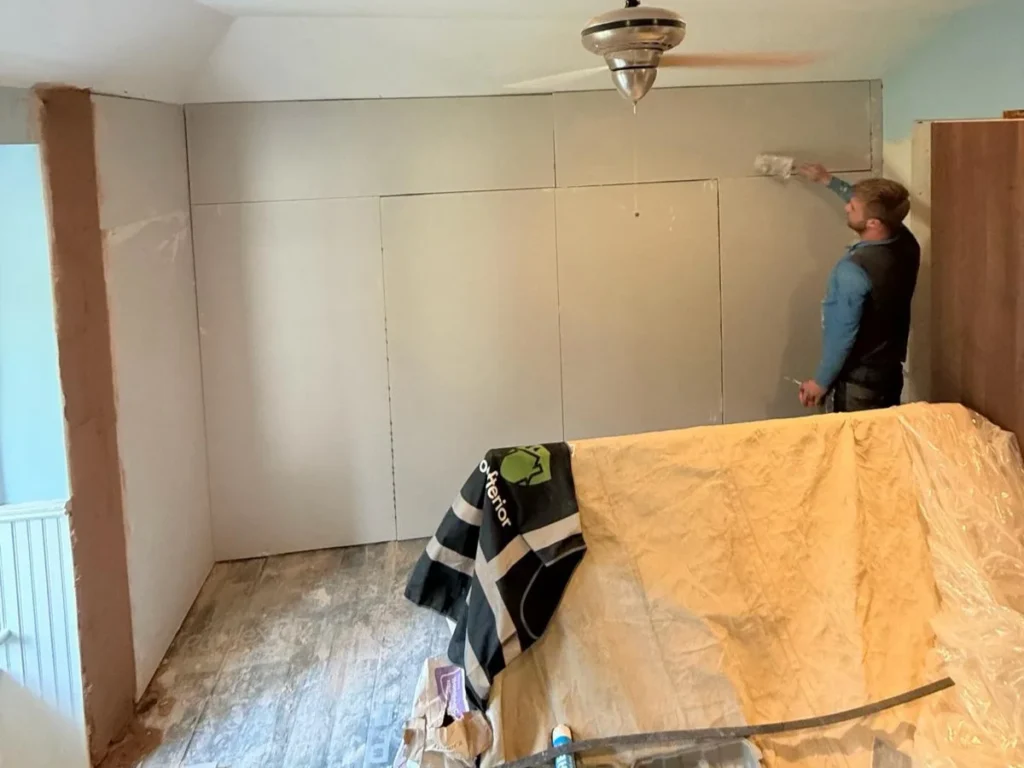
Wall surfaces were rebuilt over the damp proof membrane using a compatible backing coat and multi-finish skim to achieve a smooth, decoration-ready finish across the full floor-to-ceiling height. Skirting boards, radiators, and electrical points and faceplates were fully reinstated once plaster had sufficiently cured, restoring the bedroom to full functionality. The property was left clean and tidy with all waste materials removed from site on completion.
Treatment Outcome and Long-Term Protection Results
Before Treatment
- Moisture meter readings of 70% and above recorded up to approximately 1.5 metres on the main bedroom external wall
- Active rising damp confirmed through a failed or bridged DPC via capillary action from ground level
- Secondary moisture bridging identified at the upper section of the same external-facing wall
- Salt-contaminated plaster throughout the affected wall driving recurring damp staining
- Long-standing damp problem with no previous permanent resolution
- Risk of progressive timber decay in skirting boards and floor elements at the wall base
After Proofterior Dry System, Floor to Ceiling
- New chemical DPC barrier installed, permanently arresting capillary moisture rise at source
- Full floor-to-ceiling plaster removed and masonry thoroughly salt-neutralised
- Continuous damp proof membrane installed, providing a physical guaranteed dry face across the entire treated elevation
- Both rising damp and upper-wall bridging addressed in a single integrated specification
- Bedroom fully reinstated to decoration-ready condition
- All works backed by 25-year Proofterior workmanship guarantee, with optional 30-year Biokil Crown backed third-party guarantee
Following completion of works, the masonry will undergo a natural drying-out phase as residual moisture evaporates through the breathable new finishes. Adequate ventilation within the bedroom supports this process.
Why Rising Damp in Dorset Bungalows Is Frequently Misdiagnosed and Mismanaged
Detached bungalows in the BH postcode area are particularly susceptible to rising damp because single-storey construction means external walls are often subject to higher ground moisture exposure, original DPCs deteriorate or become bridged over decades, and constructional bridging at upper wall levels can go undetected when a survey only investigates at low level. At this property, Proofterior’s ISSE-accredited survey identified both moisture mechanisms on the same elevation, confirming that a standard low-level treatment would have left active dampness continuing to damage mid and upper wall finishes. When a damp problem has persisted for years without a permanent fix, incomplete diagnosis is almost always the reason. Correct identification of every active moisture pathway by a qualified Dorset damp specialist is the difference between a permanent solution and a recurring one.
Health Risks, Awaab's Law and hy Long-Standing Damp Cannot Be Left Untreated
Long-standing damp in an occupied bedroom carries serious and well-documented health consequences. Persistent moisture conditions actively support mould growth, which can trigger breathing difficulties, worsen asthma, and disproportionately affect children, elderly occupants, and those with compromised immune systems. Under Awaab’s Law and the Housing Health and Safety Rating System, sustained damp and mould in a habitable room can escalate to a Category 1 hazard, carrying legal obligations for landlords and significant health risks for owner-occupiers.
At this Upton property, leaving dual-pathway moisture ingress unresolved would have meant continued salt loading and recurring plaster failure, progressive risk of timber decay in skirting boards and floor elements at the wall base, and conditions persistently conducive to mould proliferation and elevated indoor humidity. Proofterior’s full-height intervention stopped that cycle completely.
Frequently Asked Questions About Bornemouth Damp Proofing
Will the Proofterior Dry System permanently solve the damp problem?
Yes. The Proofterior Dry System is a coordinated, evidence-led remedial solution carried out to PCA standards based on a thorough ISSE-accredited survey. By combining a new chemical DPC to arrest capillary moisture rise, cavity clearance to eliminate bridging pathways, salt neutralisation to remove hygroscopic contamination, and a DPM on critical sections to guarantee a dry internal face, the system addresses every identified moisture mechanism rather than masking visible symptoms. All works are backed by a 25-year Proofterior workmanship guarantee, with an optional third-party 30-year Biokil Crown backed guarantee available.
Why did my previous damp treatment fail?
In most cases where damp returns after previous treatment, one of two things happened: either the moisture source was never correctly identified in full, or only part of the problem was treated. If upper-wall bridging was present alongside rising damp and the treatment only addressed the low-level rising damp, the bridging pathway remained active and continued delivering moisture into mid and upper wall finishes. This is exactly why Proofterior’s ISSE-accredited surveys use professional diagnostic equipment across the full wall height, not just at low level, before specifying any treatment.
What is the difference between rising damp and penetrating damp?
Rising damp is groundwater drawn upward through porous masonry via capillary action, typically presenting as a band of moisture concentrated at low level up to approximately 1 to 1.5 metres from floor level, often with salt deposits and a tide mark. Penetrating damp is driven horizontally by rain through defective masonry, failed pointing, or porous brickwork, and can appear at any height on an external-facing wall following wet weather. In many Southampton properties, both occur simultaneously – a professional damp survey using calibrated moisture meters and expert assessment is essential to correctly identify which mechanisms are active and ensure the correct damp proofing treatment is specified.
Why does my newly plastered wall keep showing damp patches?
Recurring damp on replastered walls in Southampton properties is almost always caused by one of two things: the underlying moisture source was never treated, or salt-contaminated plaster was left in the wall before the new finish was applied. Hygroscopic salts carried into the wall by rising or penetrating damp remain embedded in the masonry even after the active water source is stopped, and they continue to attract atmospheric moisture, causing new plaster to appear persistently damp. This is why the Proofterior Dry System includes full hack-off of contaminated plaster, salt neutralisation of the exposed masonry, and a DPM on the most affected sections before any new finish is applied.
How long does rising damp treatment take to show results?
Following installation of the Proofterior Dry System, the new chemical DPC immediately interrupts the capillary moisture pathway, preventing further groundwater from rising into the wall fabric. However, residual moisture already within the wall will take time to evaporate naturally through the breathable new finishes. Walls typically stabilise over several weeks to a few months depending on wall thickness, masonry density, and seasonal ventilation conditions. Adequate airflow within the treated rooms supports the drying process, and the upgraded subfloor air bricks installed as part of this project also contribute to lowering moisture levels at the base of the wall during this period.
Ready to protect your Dorset Property?
Book a damp survey with Proofterior. Our local damp specialists deliver clear diagnosis, tidy repairs, and long-lasting proofing that keeps homes dry, healthy, and comfortable.