
How to Waterproof a Retaining Wall in Dorset: Lateral Penetrating Damp Treatment at a Wimborne Property
A detailed penetrating damp case study in Holt, Wimborne, Dorset, showing how a professional damp survey identified lateral water ingress through an earth-retaining wall, and how the Proofterior Tanking Damp Proof System permanently waterproofed the structure, eliminated salt contamination, and restored a dry, decoration-ready internal finish.
Diagnosing Lateral Penetrating Damp in a Ground Floor Retaining Wall.
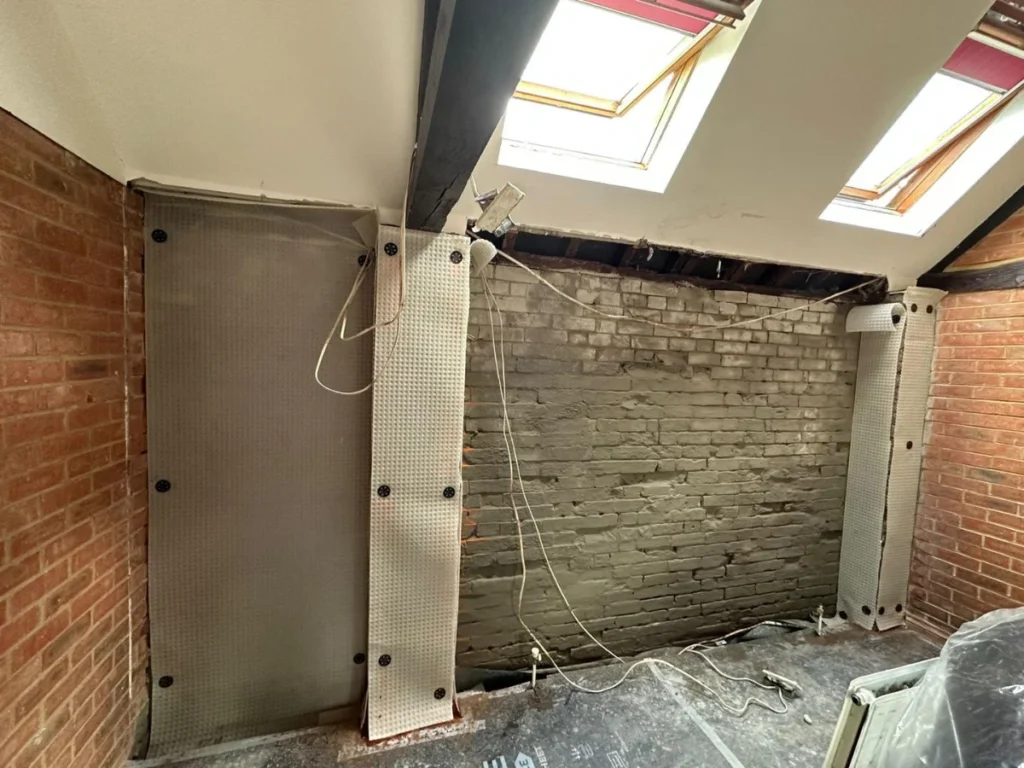
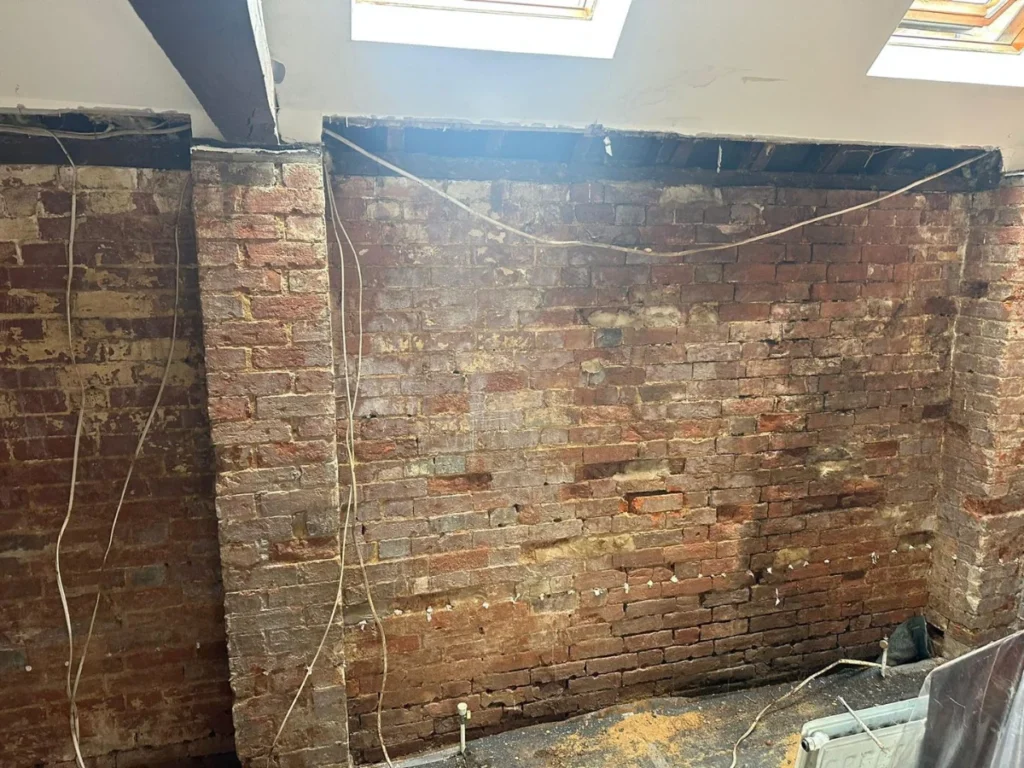
During a professional damp survey at a residential property in Holt, Wimborne, Dorset, the ground floor east-facing external wall was identified as a retaining wall and confirmed as the primary source of moisture ingress. Unlike standard rising damp or condensation, this wall retains external ground on its outer face, subjecting the internal masonry to near-continuous lateral water pressure from the surrounding soil. Professional moisture meter readings were consistently in the red zone across the affected wall, and visual assessment revealed visible salt efflorescence (white crystalline deposits) on the internal finishes, localised plaster spoiling, and areas of mould growth associated with persistent dampness. The pattern, extent, and height of the moisture confirmed the problem was predominantly lateral penetrating damp, confirming that both moisture pathways needed to be addressed together.
A subfloor inspection was carried out as part of the assessment and confirmed no wet rot, dry rot, fungal growth, or structural defects to timber joists or associated elements. Subfloor ventilation appeared adequate and there was no standing water indicative of a wider subfloor moisture problem. This confirmed the damp was localised within the wall and DPC zone itself – associated with historic saturation of the original damp proof course – rather than a subfloor failure, which directly shaped the targeted remedial approach.
Objective: Create a Continuous Waterproof Barrier Against Lateral Water Pressure.
The primary objective was to install a robust internal waterproofing system capable of resisting the ongoing lateral water pressure from the external retained ground and permanently preventing moisture from penetrating through to the internal finishes. The existing internal plaster offered no effective barrier to water ingress and had already failed, with hygroscopic salt contamination and mould growth confirming the wall had been actively transmitting moisture into the living space. Simply replastering would not resolve the issue – without a cementitious tanking system designed to resist hydrostatic pressure, any new finish would deteriorate in the same way.
The solution required a fully integrated approach: structural waterproofing of the retaining wall with tanking slurry, a chemical DPC to arrest rising damp at the base, a DPM lap strip to close the floor-to-wall junction, salt inhibitor treatment to neutralise residual contamination, and a moisture-resistant internal finish – all delivered as a single guaranteed system.
Step-by-Step Tanking Damp Proof System Process
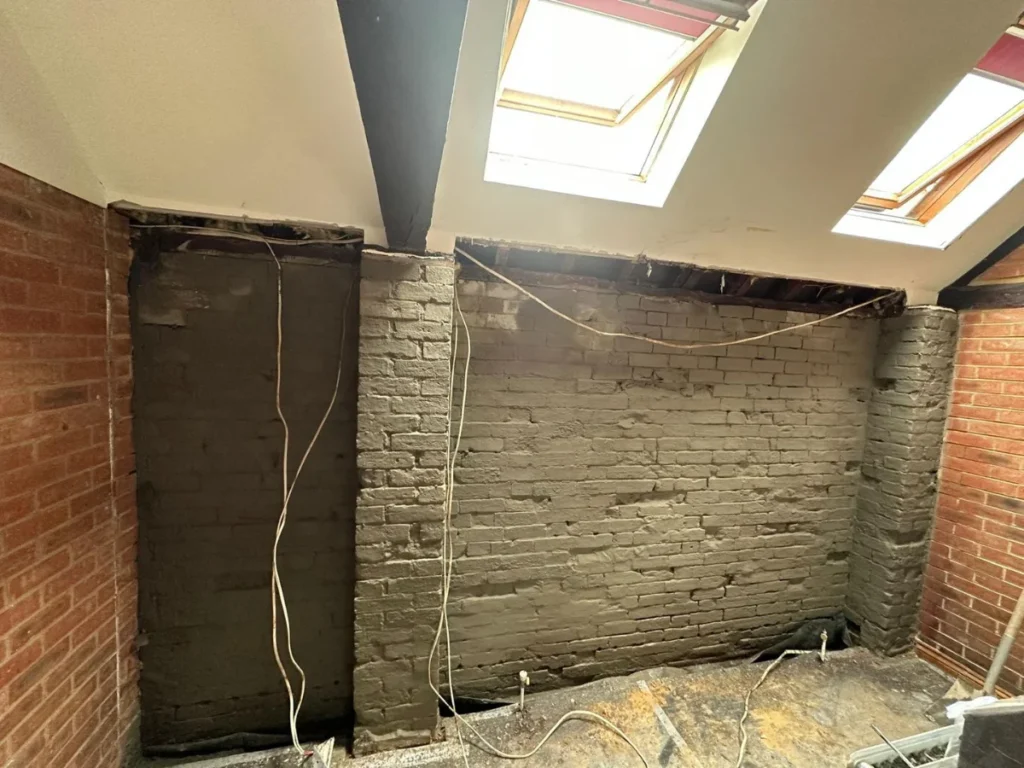
1. Preparation and Protection of the Work Area
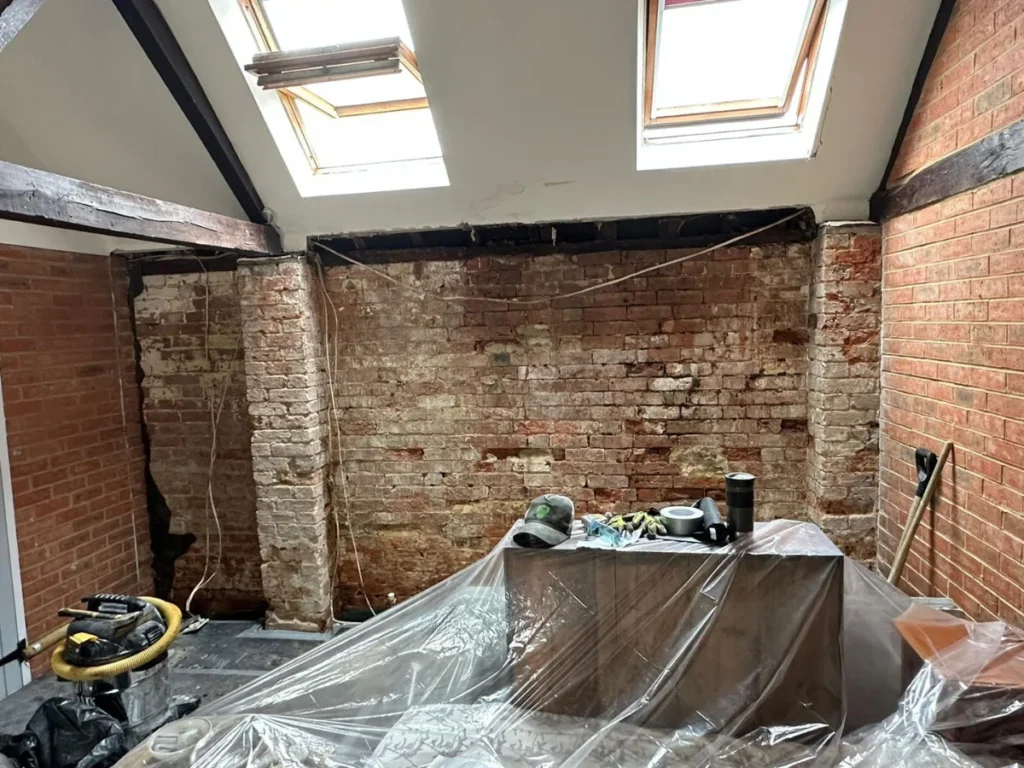
Floors, adjacent finishes, skirting boards, and radiators were fully protected and removed where necessary before work began, giving complete access to the east-facing retaining wall. Dust control systems were used throughout to keep disruption to the occupied property to a minimum.
2. Hacking Off Contaminated Plaster
All damp-affected and salt-contaminated plaster was removed back to bare masonry across the full height of the retaining wall. The exposed masonry was then mechanically cleaned, friable mortar joints repaired, and the surface lightly dampened in line with product requirements to ensure correct bonding and cure of the tanking system.
3. Cementitious Tanking Slurry and Chemical DPC Installation
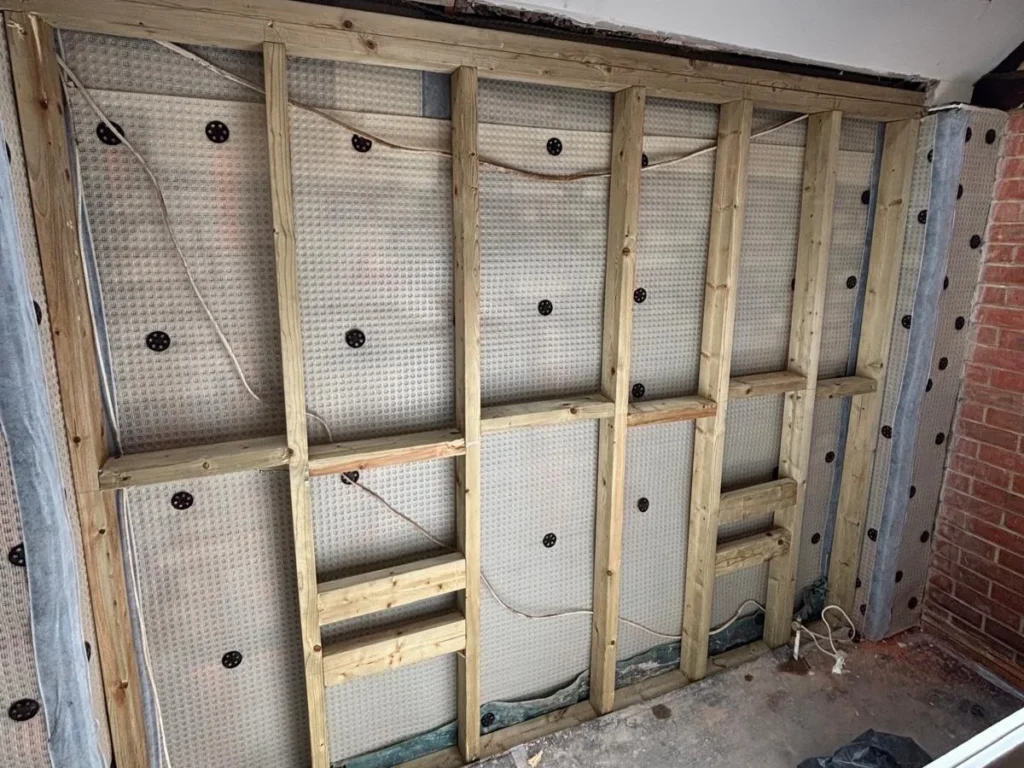
A high-performance cementitious tanking slurry was applied in two coats to the retaining section of the wall, extending to at least 0.5 metres above the external retaining ground level to fully cover the zone of lateral water pressure. A chemical DPC was also injected at the base of the wall to arrest any capillary moisture rise from below, ensuring the tanking system could not be undermined by upward moisture movement.
4. DPM Lap Strip and Salt Inhibitor Treatment
A damp proof membrane lap strip was installed at the floor-to-wall junction, overlapping both the chemical DPC and the cementitious tanking to close off this critical bridging point. The full treated wall surface was then treated with a salt-inhibiting solution to neutralise hygroscopic salts embedded in the masonry from years of moisture exposure, preventing them from migrating into new finishes after reinstatement.
5. Re-Boarding, Plastering and Reinstatement
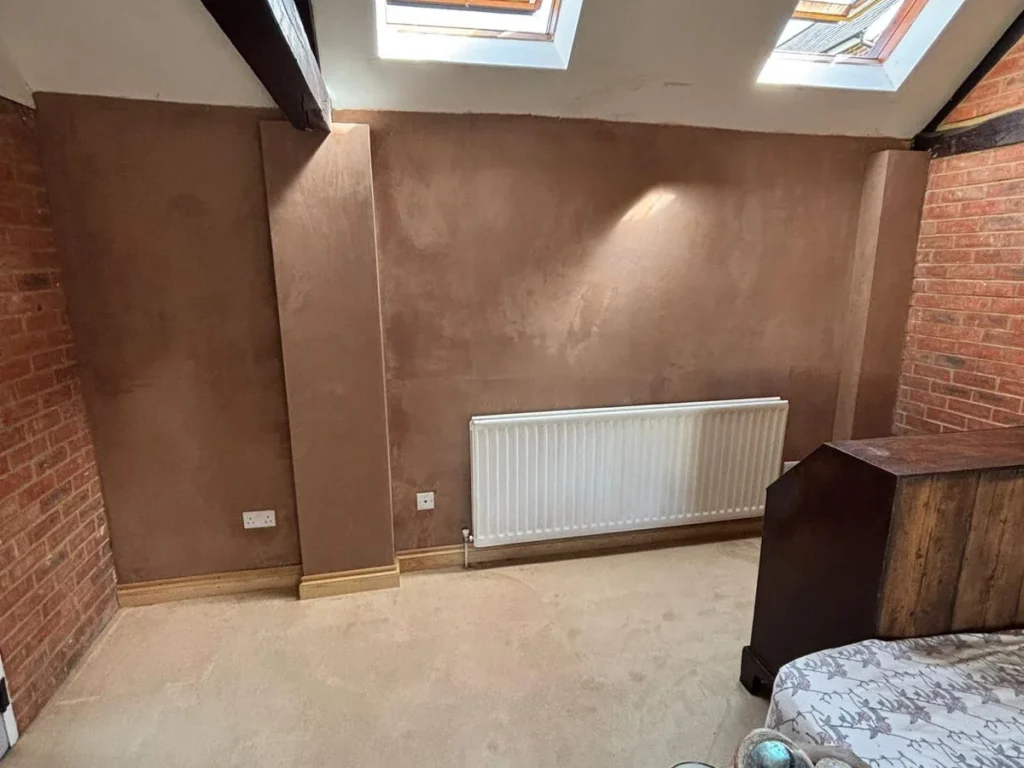
Moisture-resistant plasterboard was fixed to the treated wall using a non-moisture transferable adhesive system, ensuring the integrity of the waterproof layer was not compromised. A smooth plaster skim finish was applied ready for redecoration, and all skirting boards, radiators, and previously removed fixtures were refitted and made good on completion.
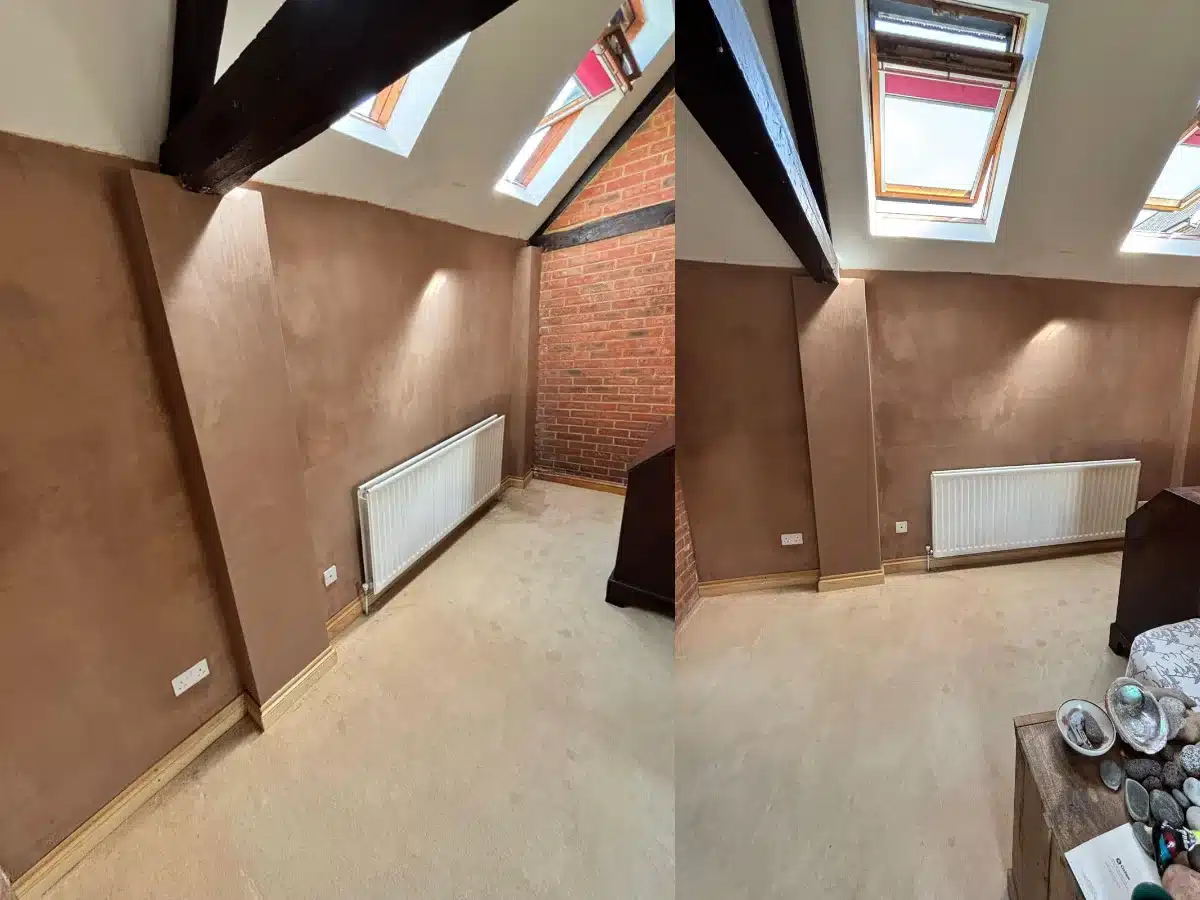
Treatment Outcome and Long-Term Protection Results
Before Treatment
- Moisture readings consistently in the red zone across the east-facing retaining wall
- Visible salt efflorescence and plaster spoiling to internal finishes
- Localised mould growth associated with persistent dampness
- Existing plaster offering no effective barrier to lateral water pressure
- Rising damp conditions also identified at the base of the wall
After Tanking Damp Proof System Installation
- Continuous cementitious waterproof barrier installed to resist lateral water pressure
- Chemical DPC arrests rising damp at base, protecting the new system from below
- DPM lap strip closes the floor-to-wall junction – a common hidden bridging point
- Salt inhibitor treatment neutralises residual hygroscopic contamination in the wall
- Moisture-resistant boarding and plaster skim restores a dry, decoration-ready finish
Following installation, the system requires a curing period before redecoration. The tanking slurry and chemical DPC work together behind the scenes to manage both lateral and capillary moisture pathways, delivering long-term structural protection.
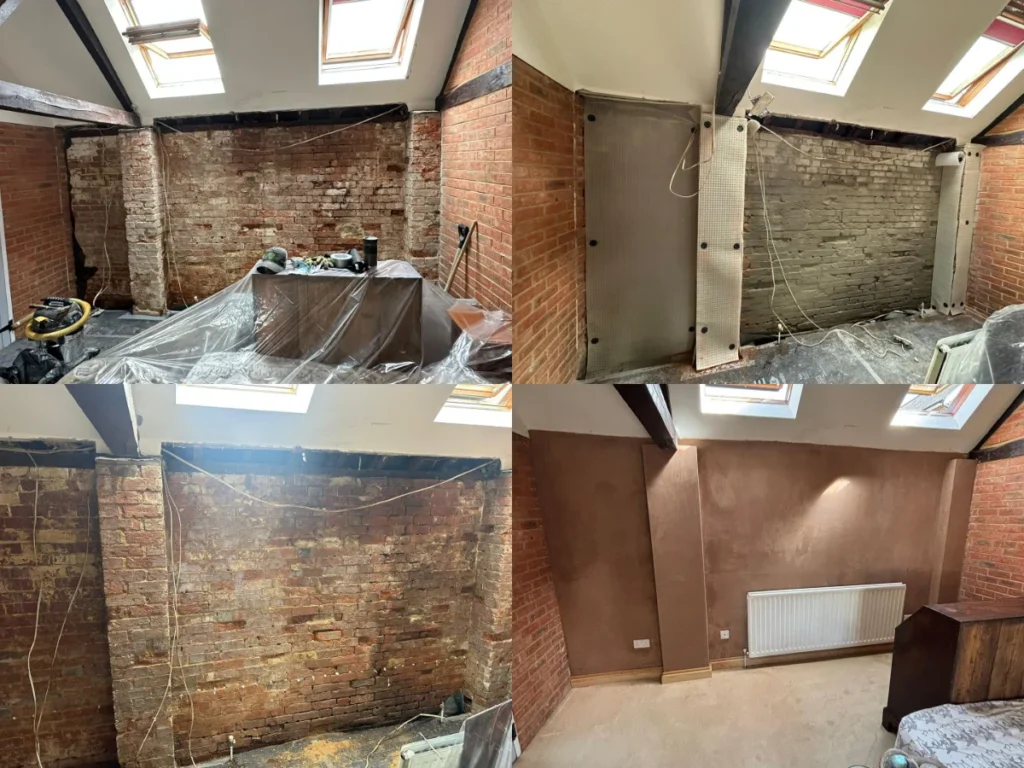
Why Retaining Walls Are a Hidden Damp Risk in Dorset Homes
Retaining wall damp is one of the most aggressive and commonly underestimated moisture problems in residential properties across Dorset, Hampshire, and Wiltshire. Unlike standard cavity or solid external walls that face air, a retaining wall is in direct, permanent contact with soil on its external face. That soil holds water year-round, and the pressure it exerts drives moisture through even dense masonry over time. In older Dorset properties where retaining walls were built without modern waterproofing membranes or where original DPCs have deteriorated, this lateral water pressure causes progressive plaster failure, salt contamination, and mould growth that many homeowners repeatedly try to fix cosmetically without ever addressing the structural moisture source. A professional damp survey in Wimborne or across Dorset is the only reliable way to confirm whether a wall is retaining external ground and to specify the correct tanking system needed to stop the water at the masonry rather than just at the surface.
Health Risks, Awaab's Law and Why Early Action Matters
Untreated penetrating damp through a retaining wall creates a persistent indoor environment that directly threatens occupant health and long-term structural integrity. Prolonged exposure to damp and mould can trigger breathing difficulties, worsen asthma, and disproportionately affect children, elderly occupants, and anyone with a weakened immune system. From a compliance standpoint, under Awaab’s Law and the Housing Health and Safety Rating System (HHSRS), sustained mould and moisture conditions can escalate into a Category 1 hazard – a serious risk in both owner-occupied and rented properties.
If left untreated, ongoing lateral water pressure will cause progressive plaster deterioration through repeated salt contamination and wetting cycles, increase the risk of timber decay to skirting boards and any embedded joinery, and sustain conditions that actively support mould proliferation. Early professional damp proofing in Dorset stops this cycle before it becomes a significantly more costly structural problem.
Frequently Asked Questions About Bornemouth Damp Proofing
Will tanking actually stop the damp permanently?
Yes. Cementitious tanking slurry is specifically engineered to resist hydrostatic pressure and form a dense, impermeable barrier on the internal face of masonry. Unlike surface replastering, which only replaces the sacrificial finish, tanking is designed to stop water at the structure itself. Combined with a chemical DPC injection, DPM lap strip at the floor junction, and salt inhibitor treatment, the Proofterior Tanking Damp Proof System addresses every moisture pathway affecting the retaining wall. All works are backed by a 25-year Proofterior guarantee, with an optional 30-year third-party Biokil Crown backed guarantee available.
What is lateral penetrating damp and how is it different from rising damp?
Rising damp is groundwater drawn upward through porous masonry via capillary action, typically appearing at low level with a vertical moisture gradient that reduces with height. Lateral penetrating damp occurs when water held in soil exerts horizontal pressure through a retaining wall, driving moisture through the masonry at any height where the wall is in contact with external ground. Retaining walls are subject to both mechanisms simultaneously, which is why the Proofterior Tanking Damp Proof System integrates both cementitious tanking for lateral pressure and a chemical DPC injection for capillary moisture at the base.
Why does salt efflorescence keep appearing on my wall?
Salt efflorescence (white crystalline deposits) is caused by hygroscopic salts – including chlorides and nitrates – carried into the wall fabric by moisture over time. Even after active water ingress is stopped, these salts remain embedded in the masonry and continue attracting atmospheric moisture, causing damp patches and surface blistering on any new finishes applied without a salt inhibitor treatment. This is why the Proofterior tanking process includes a dedicated salt-inhibiting application before reinstatement – to neutralise residual contamination and ensure the new system performs as intended.
How do I know if my wall is a retaining wall?
A retaining wall is any wall where one face is in direct contact with external soil or ground that sits at a higher level than the internal floor. In older properties across Dorset and Hampshire, ground floor walls – particularly at the rear or sides of a property built into a slope – frequently act as retaining structures without homeowners being aware of it. Key indicators include persistent low-to-mid-level damp patches on an external-facing wall, salt staining, and plaster failure that recurs despite redecorating. A professional damp survey in Dorset using moisture diagnostics and a site assessment will confirm whether a wall is retaining external ground and specify the correct waterproofing treatment.
Ready to protect your Dorset property?
Book a damp survey with Proofterior. Our local damp specialists deliver clear diagnosis, tidy repairs, and long-lasting proofing that keeps homes dry, healthy, and comfortable.