
How to Stop Mould and Condensation in a Bournemouth Bedroom Using Internal Wall Insulation
A detailed damp proofing case study in Bournemouth showing how cold bridging, penetrating damp, and condensation caused severe bedroom mould, and how internal wall insulation permanently resolved the issue.
Mould and Damp in a Bournemouth Bedroom Caused by Cold Bridging
During a professional damp survey in Bournemouth (BH12), this first-floor flat presented with significant mould growth across the external-facing bedroom walls .
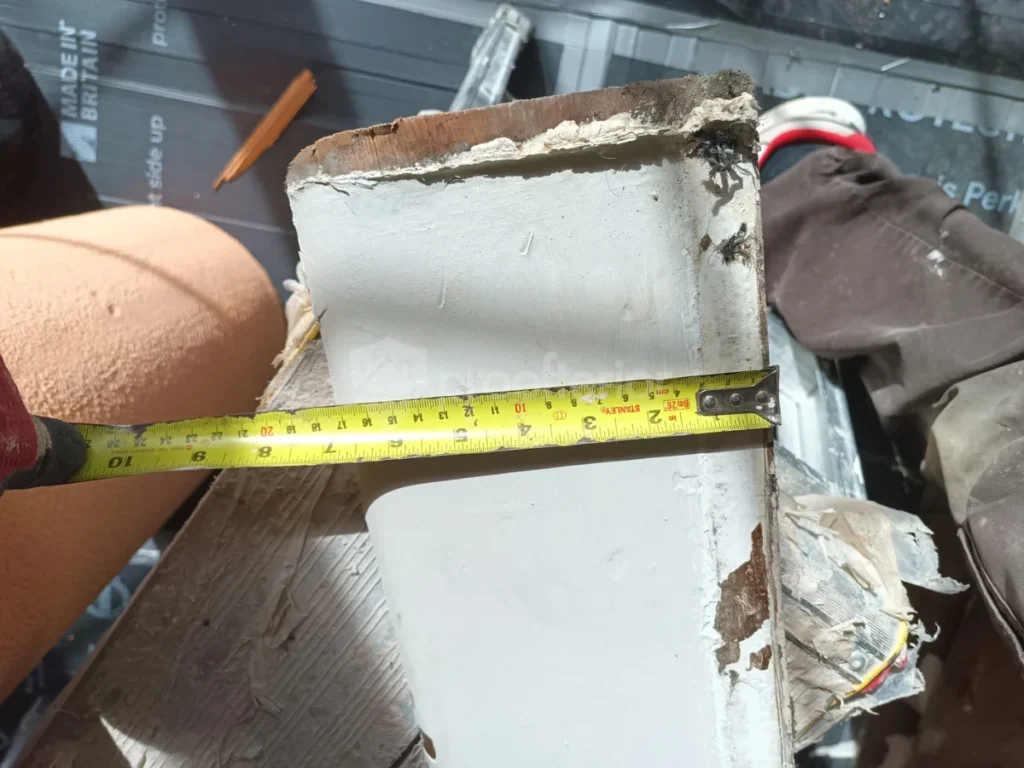
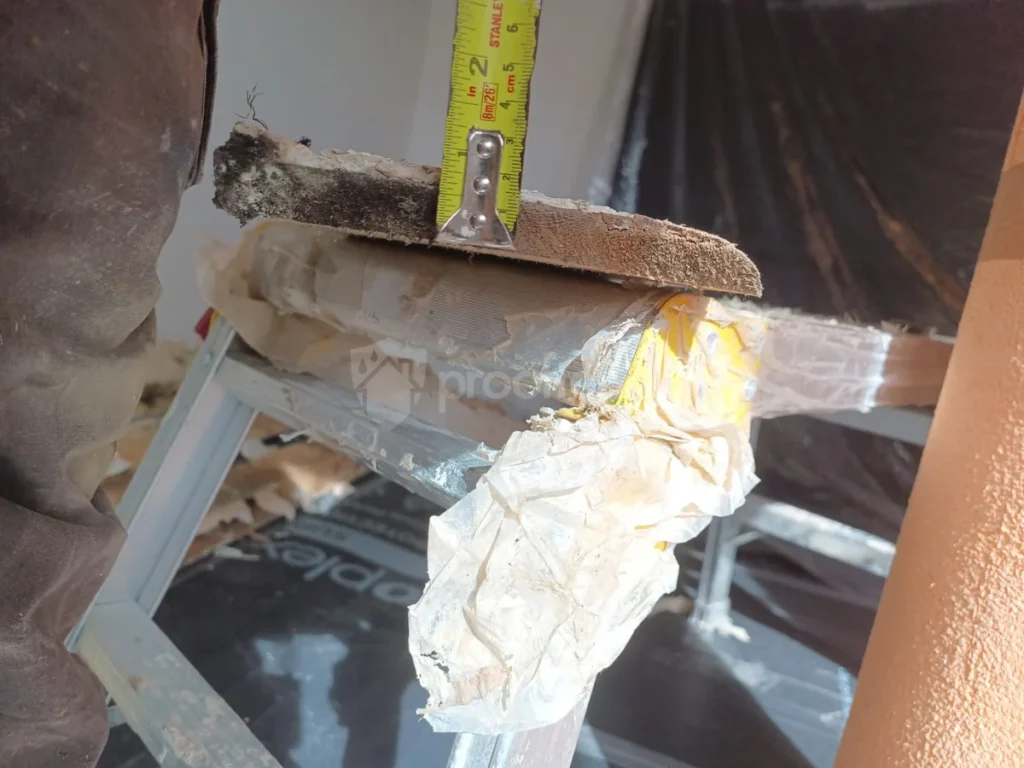
The issue was immediately visible, with established black mould indicating a long-term moisture problem rather than a short-term condensation event. Moisture meter readings confirmed high levels within the wall fabric, showing that the issue extended beyond surface-level dampness.
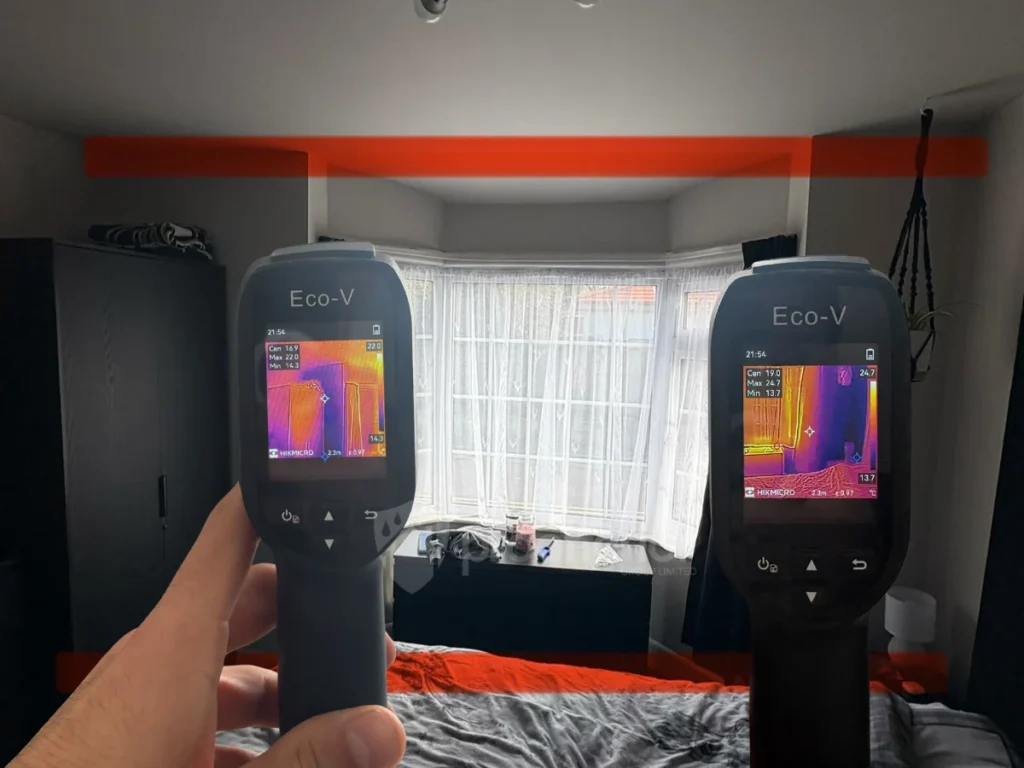
Thermal imaging revealed clear cold bridging patterns across the external walls. These colder areas allow surface temperatures to drop below dew point, causing repeated condensation to form. Over time, this creates the perfect environment for mould growth.
Additionally, the external wall itself showed signs of weathering and exposure, contributing to penetrating damp, which further increased moisture levels within the structure .
This combination of:
- Cold bridging
- Penetrating damp
- Internal humidity
created a continuous cycle of condensation and mould growth within the bedroom.
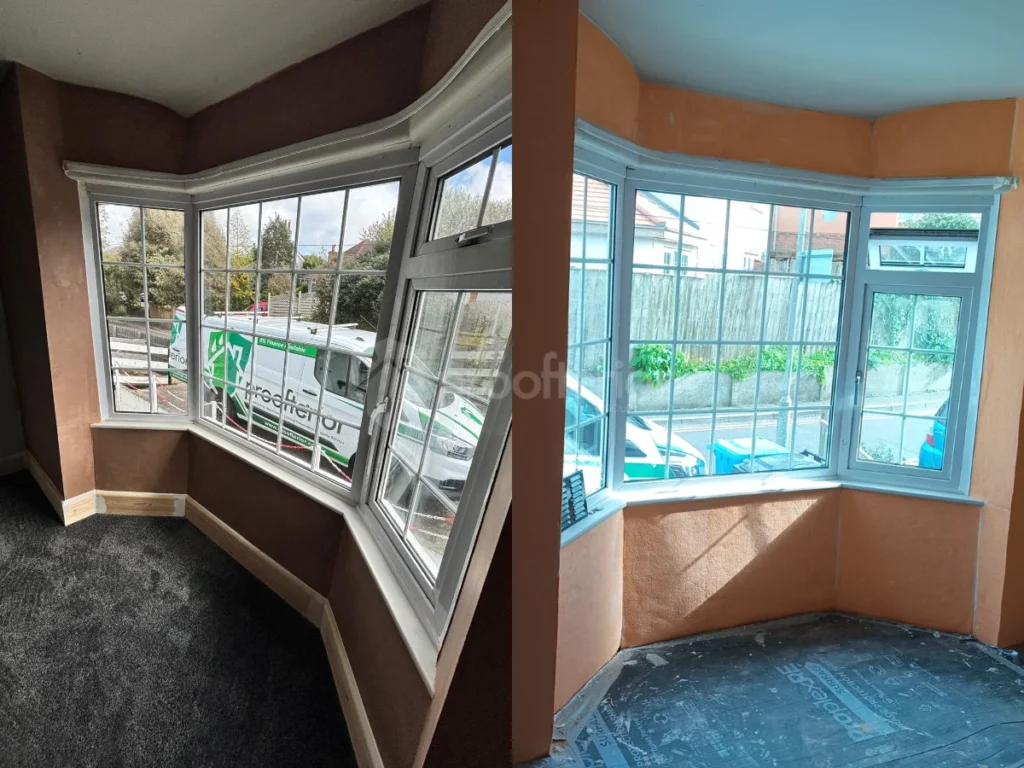
Objective: Eliminate Mould by Breaking the Condensation Cycle
The objective of this damp proofing project in Bournemouth was not just to remove visible mould, but to stop it from returning.
Key goals included:
- Raise internal wall surface temperatures
- Eliminate cold bridging on external walls
- Prevent condensation forming on wall surfaces
- Inhibit future mould growth
- Improve thermal comfort within the bedroom
- Provide a long-term, system-based solution
Simply cleaning mould or repainting would not resolve the issue, as the underlying cold surfaces would continue to generate condensation.
Step-by-Step Solution Using ISO-Therm Internal Wall Insulation
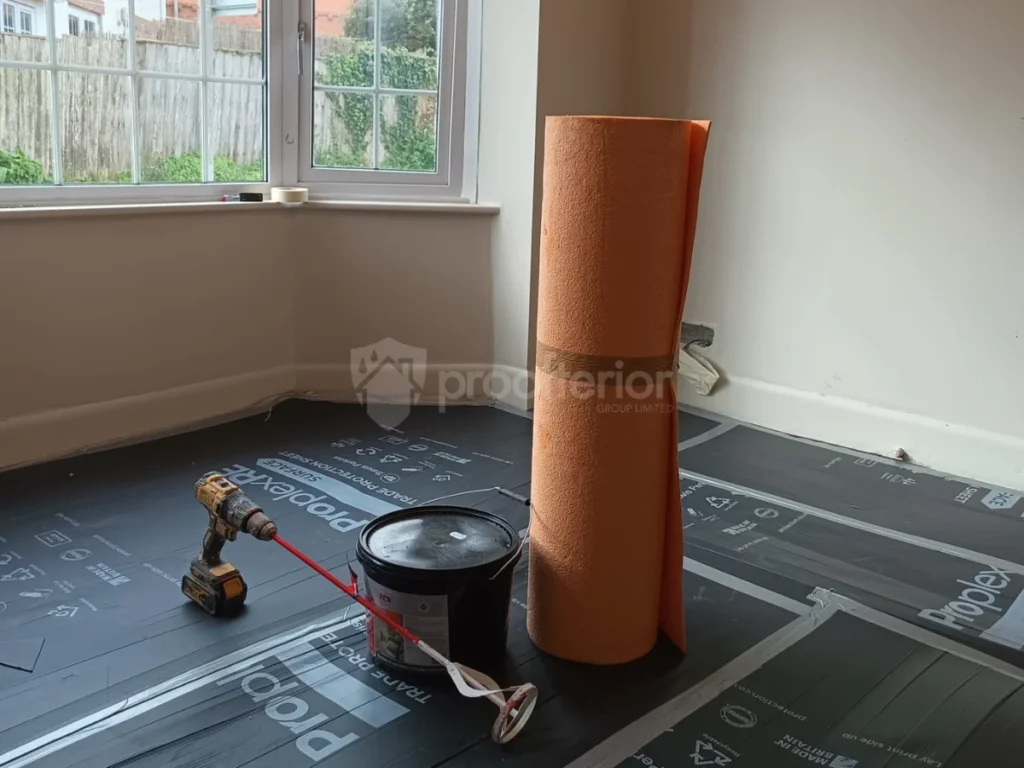
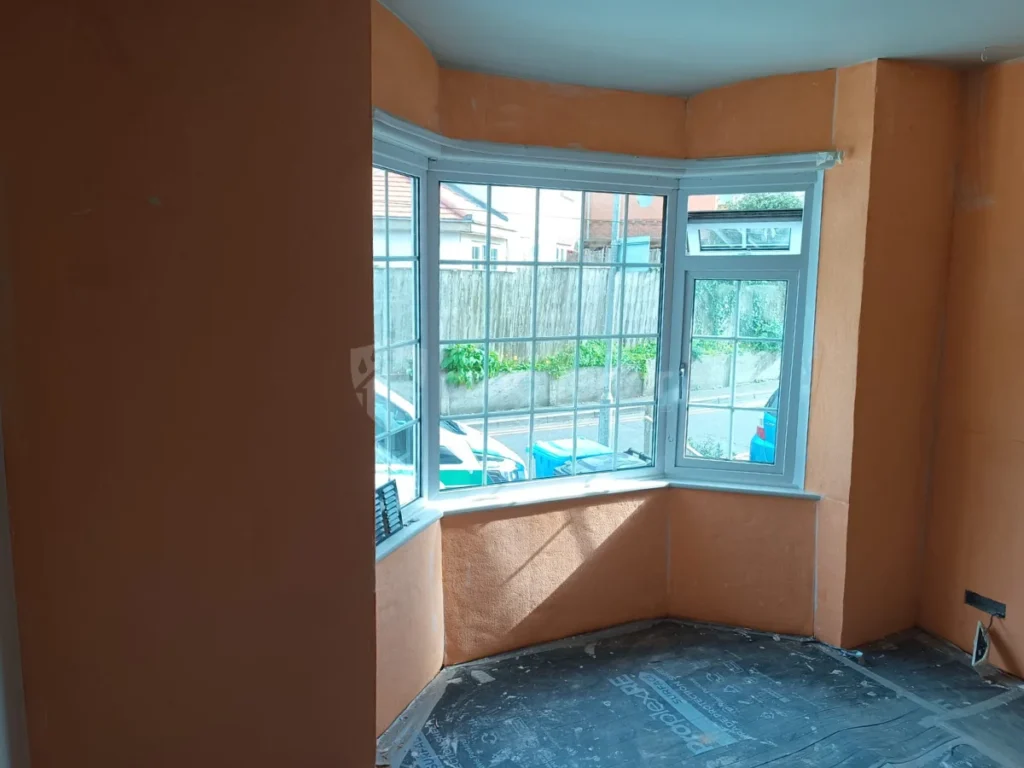
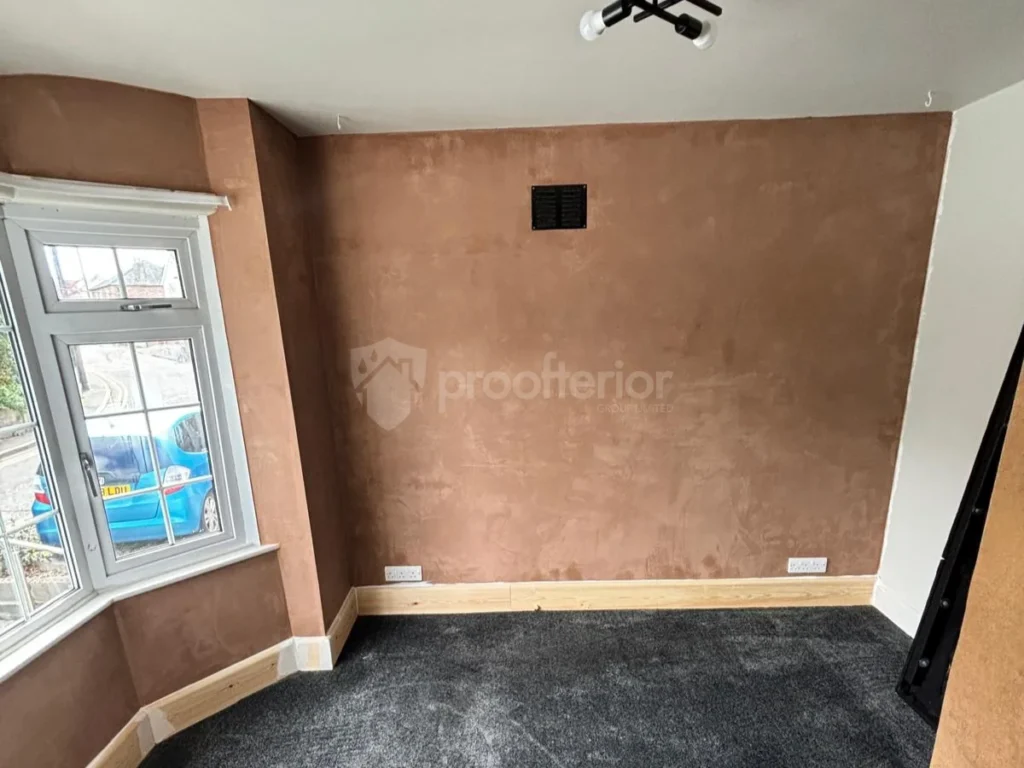
1. Preparation and Mould Remediation
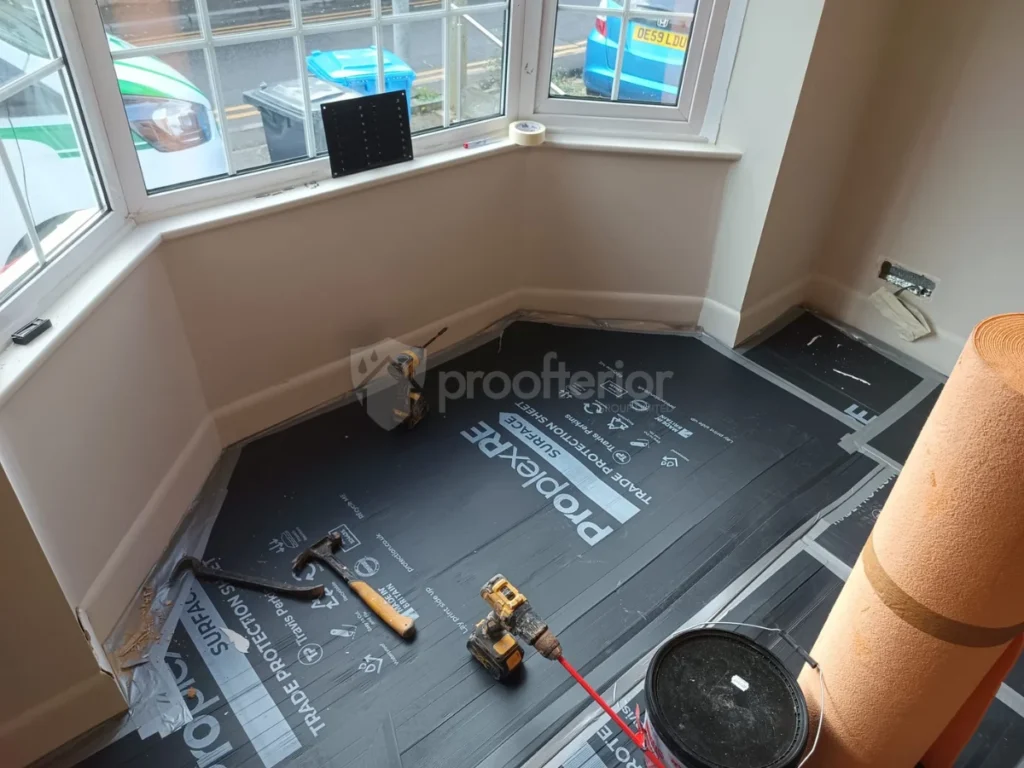
The affected bedroom areas were prepared by clearing the workspace and protecting floors and furnishings.
Existing wall surfaces were treated and stabilised, including addressing mould contamination and preparing the substrate for installation
2. Surface Preparation and Stabilisation
Loose or defective finishes were removed to create a stable base. Where necessary, the wall was treated with mould remediation and surface preparation solutions to ensure long-term system performance.
This step ensures proper adhesion and prevents contamination from affecting the new system.
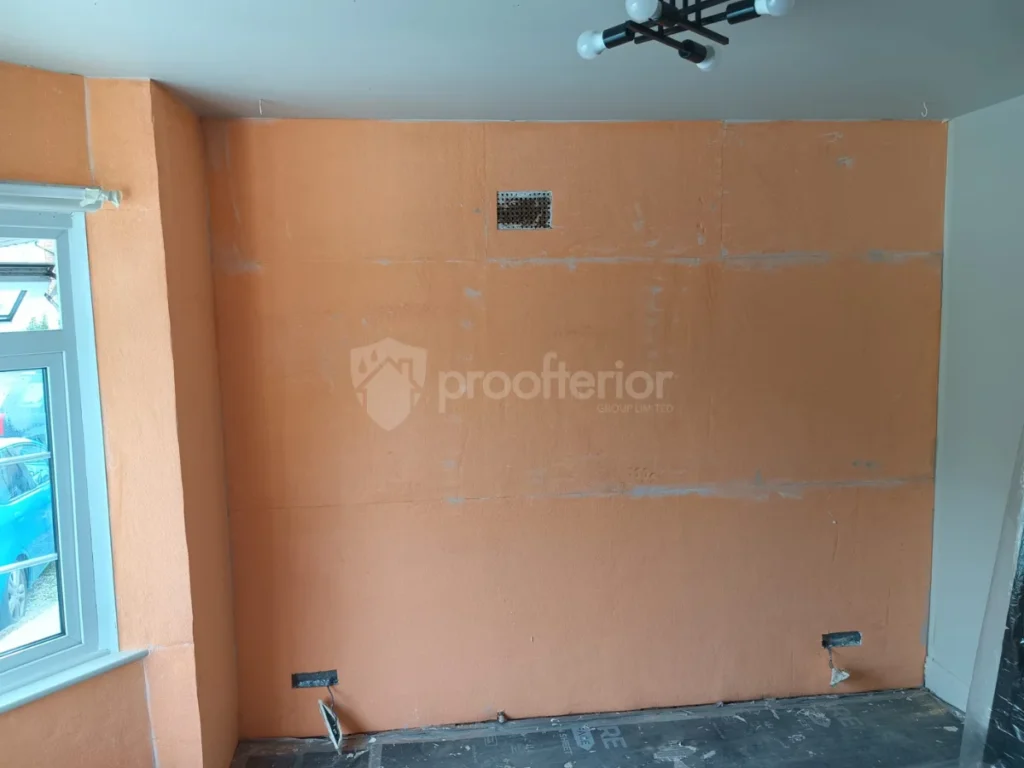
3. Installation of ISO-Therm Internal Insulation System
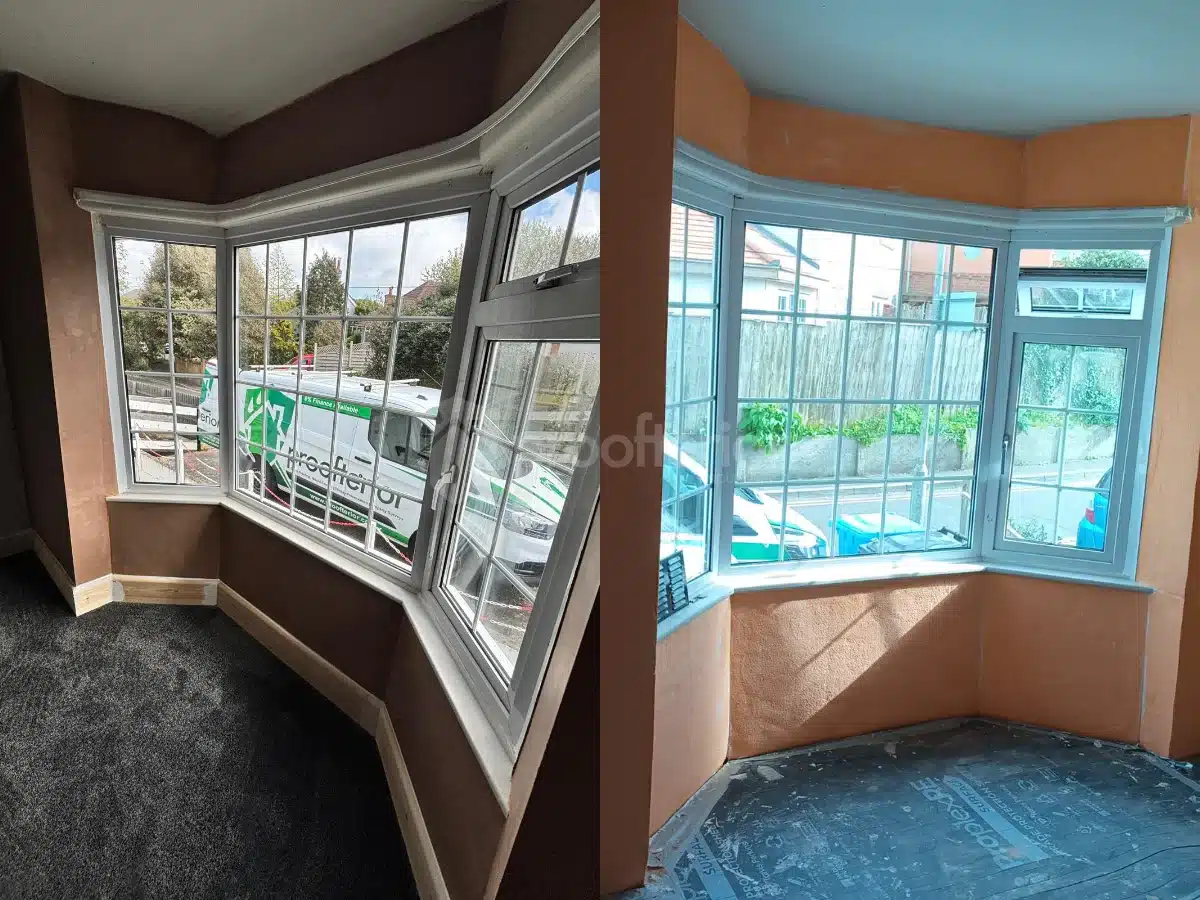
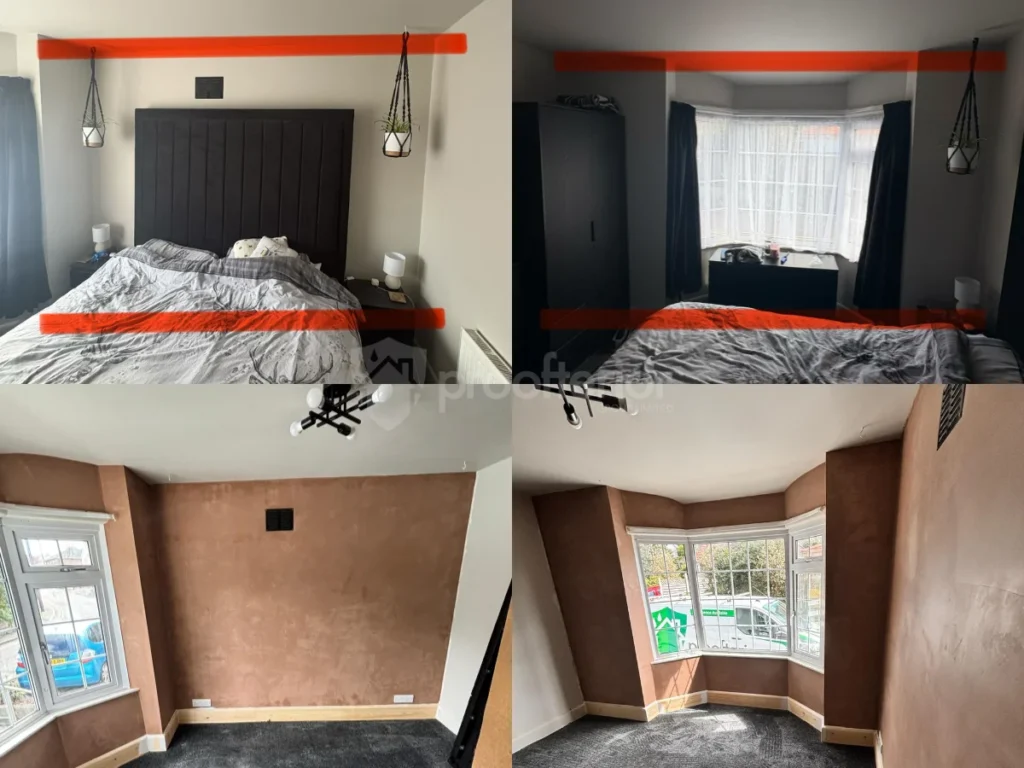
The ISO-Therm internal wall insulation system was installed from floor to ceiling across the affected external bedroom walls .
This system works by creating a thermal barrier on the internal face of the wall, which:
- Raises wall surface temperature
- Eliminates cold spots
- Prevents condensation forming
- Reduces heat loss
Special attention was given to joints, corners, and edges to ensure full continuity of the thermal barrier.
4. Finishing and Reinstatement
A high-quality plaster finish was applied over the insulation system, creating a smooth, decoration-ready surface.
All fixtures such as skirting boards and radiators were reinstated, and the room was left clean and ready for use
5. Results: A Warm, Dry and Mould-Free Bedroom
Before treatment:
- Established black mould across walls
- High moisture readings
- Cold bridging creating condensation zones
- Ongoing damp cycle
After installation:
- Wall surface temperatures increased
- Condensation cycle eliminated
- Mould growth prevented
- Bedroom environment stabilised
The system provides long-term protection and is backed by a 25-year guarantee, ensuring lasting performance and peace of mind
Why Mould and Condensation Are Common in Bornemouth Homes
Bournemouth properties, particularly flats and exposed buildings, often experience:
- Cold external walls
- Poor insulation
- High indoor humidity
- Coastal weather exposure
When these factors combine, cold bridging occurs, leading to condensation and mould growth.
Without professional damp proofing in Bournemouth, homeowners may repeatedly clean mould without addressing the root cause.
What Bornemouth Homeowners Should Know About Mould and Condensation
- Mould is often caused by cold surfaces, not just poor ventilation
- Cold bridging is a major driver of condensation
- External wall condition can contribute to internal damp
- Insulation systems can prevent mould by raising wall temperatures
- Surface cleaning alone will not stop mould returning
If you’re dealing with mould, condensation, or cold bedroom walls in your Bournemouth property, a professional damp survey is the first step toward a permanent solution.
Frequently Asked Questions About Bornemouth Damp Proofing
1. Will Using ISO-Therm Internal Wall Insulation actually stop mould from coming back?
Yes, our work is carried out to PCA (Property Care Association) standards and based on a thorough ISSE-accredited survey of your property. The solution is designed to eliminate the conditions that allow mould to grow, not just remove it.
By raising wall surface temperatures and preventing condensation, the ISO-Therm system stops mould at its source. This ensures long-term mould prevention and is backed by a 25-year guarantee.
2. What causes mould on bedroom walls in Bournemouth homes?
Mould is typically caused by condensation forming on cold wall surfaces. In Bournemouth properties, this is often due to cold bridging in external walls, combined with indoor humidity from everyday activities.
When surface temperatures drop below dew point, moisture forms and creates the perfect environment for mould growth.
3. Can insulation really stop condensation and mould?
Yes. Internal wall insulation systems like ISO-Therm work by raising the surface temperature of walls, preventing them from dropping below dew point.
This stops condensation forming, which in turn removes the moisture source that mould needs to grow.
4. Is mould caused by damp or ventilation problems?
Mould is often caused by a combination of factors. While poor ventilation can contribute, the root cause is usually cold surfaces where condensation forms.
In this case, cold bridging and penetrating damp were the main drivers, not just ventilation issues
5. How do I know if I need damp proofing in my home?
Common signs include damp patches at low level, peeling paint, crumbling plaster, and musty odours. Rising damp typically appears up to around 1 to 1.5 metres and follows a consistent vertical pattern.
The most reliable way to confirm the issue is through a professional damp survey in Southampton, where moisture readings and expert assessment determine the exact cause and appropriate treatment.
Ready to protect your Southampton property?
Book a damp survey with Proofterior. Our local damp specialists deliver clear diagnosis, tidy repairs, and long-lasting proofing that keeps homes dry, healthy, and comfortable.