
Damp vs Condensation: How to Tell the Difference
Damp is one of those problems homeowners often rush to fix. You notice a damp patch, search online, get a couple of quotes, and book whoever comes back fastest. It feels like a straightforward transaction. But damp proofing is not a straightforward trade, and the company you choose has a direct impact on whether the problem gets solved properly or whether you are dealing with it again in two years.
This guide covers what to actually look for before you book, and the questions most homeowners never think to ask.
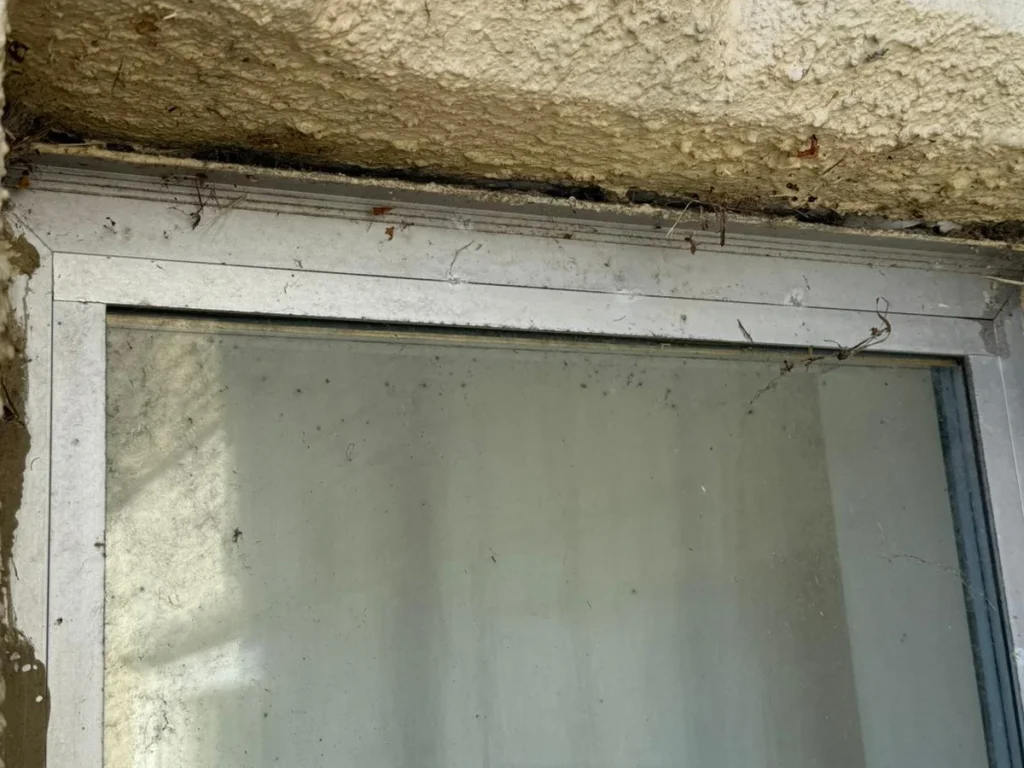
What is condensation?
Condensation happens when warm, moisture-laden air meets a cold surface. The air cools, it can no longer hold as much water vapour, and that moisture settles on the surface as water droplets. You see it most obviously on windows on a cold morning. When it happens repeatedly on walls and ceilings, usually in corners, behind furniture, or in rooms with poor airflow, it creates the conditions for black mould to grow.
Condensation is the most common moisture problem in UK homes. It tends to get worse in winter, when windows stay closed and heating cycles on and off, creating repeated cycles of warm humid air hitting cold surfaces.
Common signs of condensation:
- Black mould in corners, on ceilings, or behind furniture
- Water droplets on windows and cold walls
- Musty smell in poorly ventilated rooms
- Worse in bathrooms, kitchens, and bedrooms
- No obvious external source of moisture
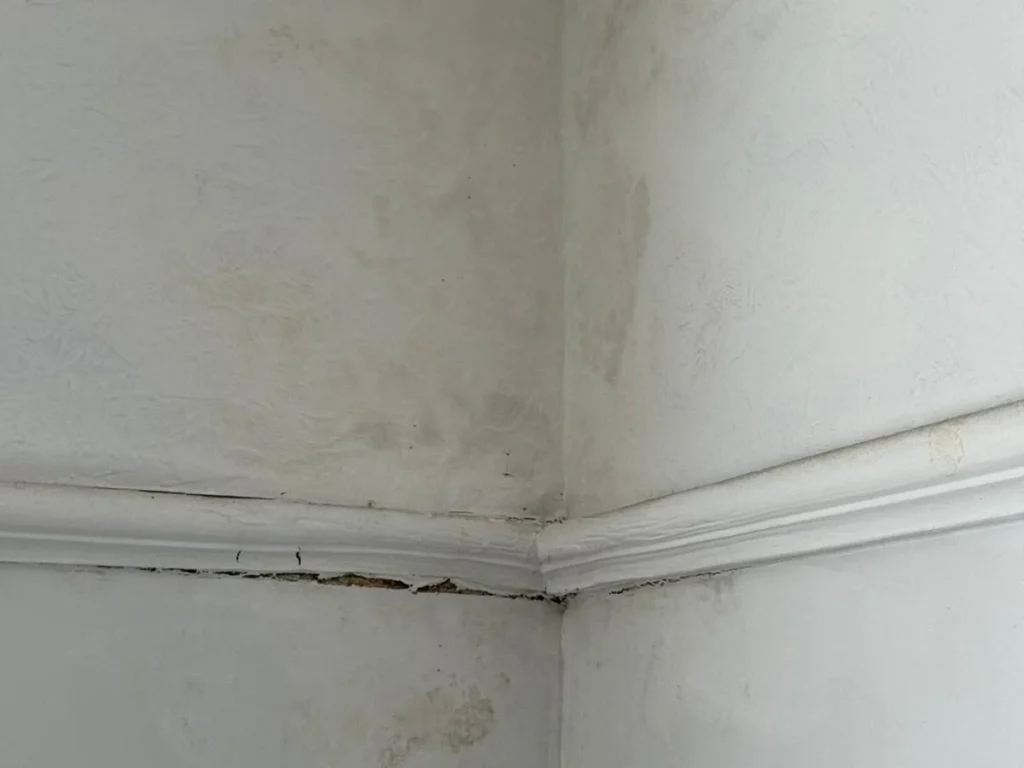
What is damp?
Damp refers to moisture entering a property from an external or structural source. It is not caused by the air inside your home. It comes in from outside, from below ground, or through a defect in the building fabric.
There are two main types.
Rising damp occurs when groundwater travels upward through porous masonry. Older properties built without an effective damp proof course are particularly susceptible. Rising damp typically affects the lower section of walls, usually up to around one metre, and leaves a distinctive tidemark where salts from the ground have been deposited as the water evaporated.
Penetrating damp occurs when water enters through a defect in the external structure. A cracked render, damaged pointing, a failed roof, leaking gutters, or poor window seals can all allow rainwater to work its way through the wall or ceiling. Penetrating damp tends to appear as a spreading wet patch rather than a tidal line, and it often follows rainfall.
Common signs of damp:
- Damp patches that spread or worsen after rain
- A tidemark on internal walls, particularly low down
- Salts or a white powdery residue on masonry
- Wallpaper peeling or paint bubbling from the wall outward
- Damp smell that does not go away with ventilation
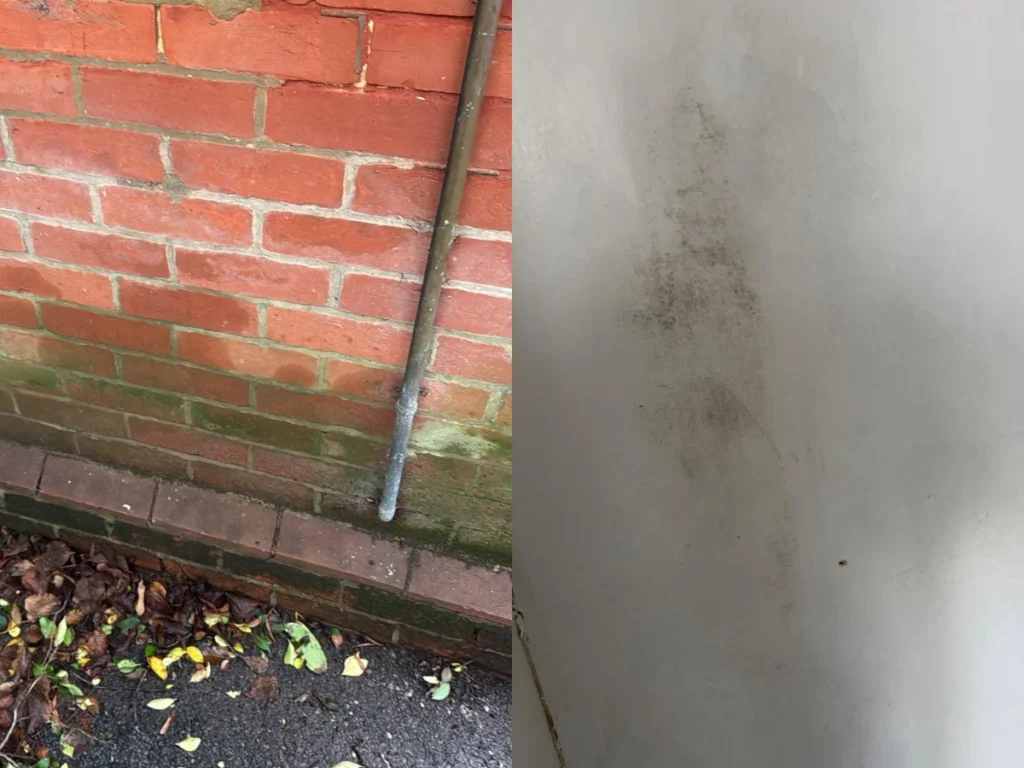
How to tell damp and condensation apart?
The location and pattern are your first clue.
Condensation tends to appear in corners, on north-facing walls, and in rooms with poor airflow or high moisture output. It is usually worse in winter and improves when you increase ventilation or reduce humidity.
Rising damp is almost always confined to the base of walls and stops at a consistent height. It does not appear on upper floors. It is associated with older properties and tends to be constant rather than seasonal.
Penetrating damp tends to follow the building’s external weaknesses. It appears on upper walls or ceilings where a roof or gutter is failing, or on any wall where the external surface has been compromised. It worsens after rain.
The other key difference is what happens when you ventilate the room. Condensation typically improves with better airflow and reduced moisture output. Damp does not. If ventilating the room makes no meaningful difference to the patch, the moisture is coming from outside the property.
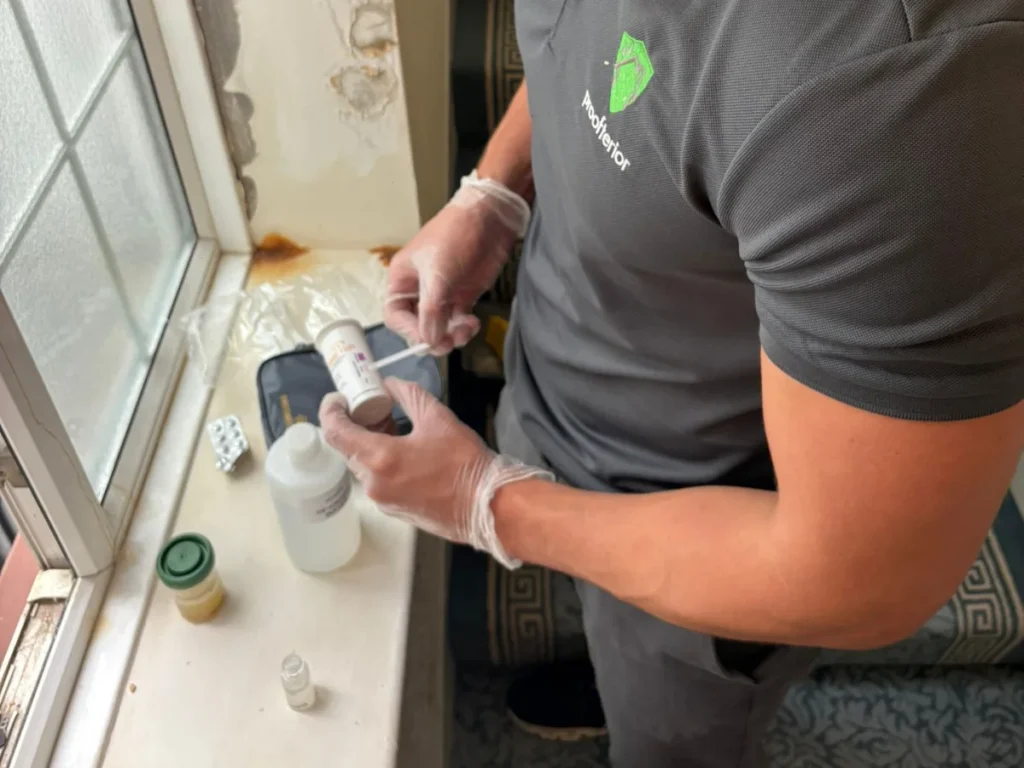
Why it matters to get the diagnosis right.
Treating condensation when you have rising damp will not stop the moisture from entering the wall. Treating rising damp when you actually have a condensation problem will not stop the mould from returning.
A professional damp survey uses moisture meters and thermal imaging to identify where the moisture is coming from, not just where it is showing up. That distinction is what makes the difference between a fix that works and one that does not.
Proofterior carries out free surveys across Dorset, Hampshire, and Wiltshire, each one completed by an ISSE-accredited surveyor. The written report and fixed quote are returned within 24 hours, so you know exactly what you are dealing with and what it will take to fix it.
What are the treatments?
Condensation is managed by reducing the moisture load in the air and improving how it moves through the property. That means better ventilation, positive input ventilation systems in severe cases, and sometimes addressing thermal bridging in cold spots where condensation consistently forms.
Rising damp is treated by reinstating or introducing a chemical damp proof course, treating the affected masonry for salts, and replastering with a salt-resistant backing coat. Proofterior’s own Proofterior Dry System covers this complete process from DPC injection through to replastering.
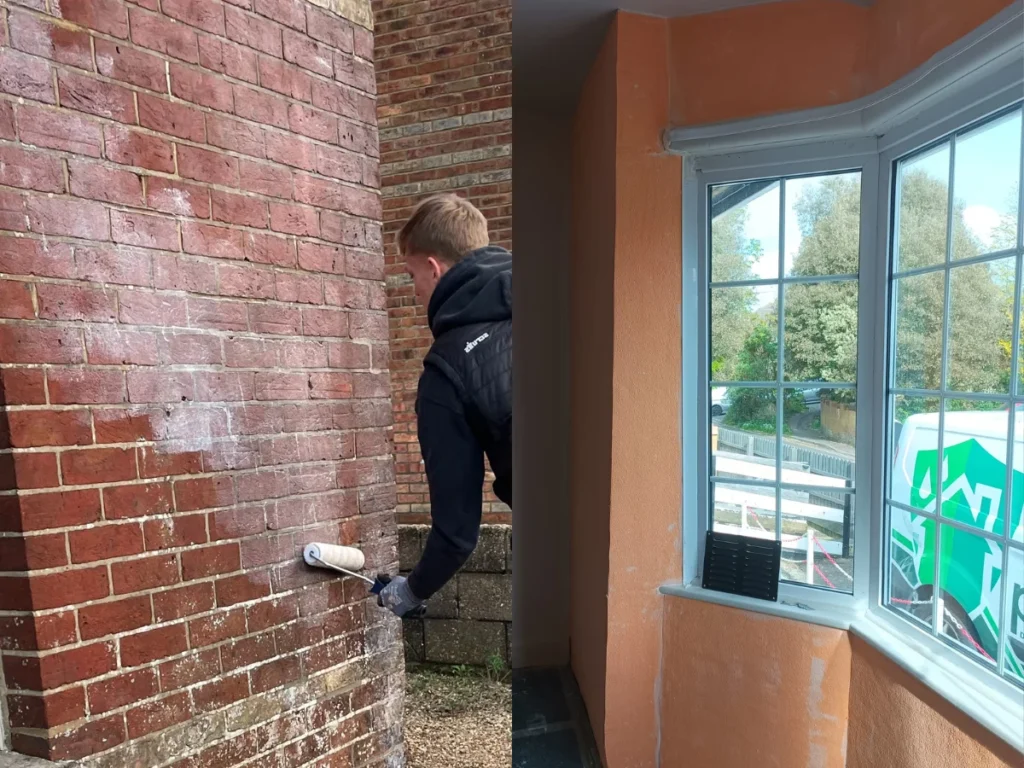
Penetrating damp requires identifying and repairing the external defect first. Depending on the source, that might mean repointing, render repair, gutter replacement, or applying a masonry protection cream to the external wall. Proofterior Masonry Protection Cream is a breathable treatment applied to external brickwork to prevent rainwater ingress without trapping moisture in the wall.
How Proofterior fixes it, whichever one you have
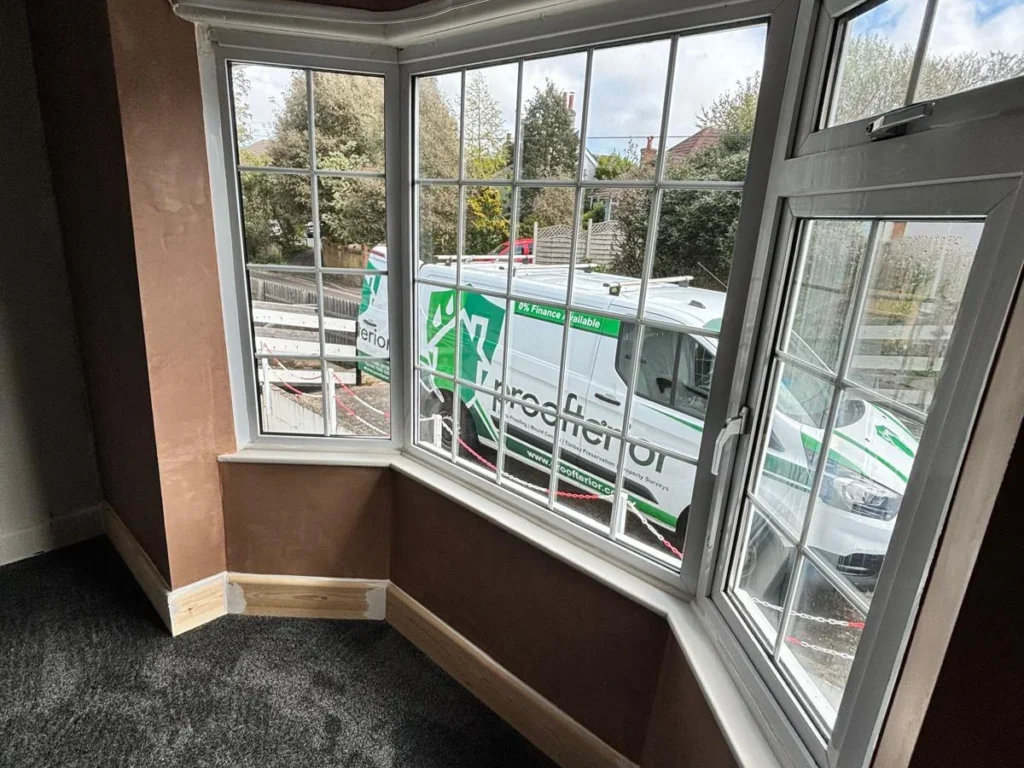
Whether your survey confirms condensation, rising damp, or penetrating damp, Proofterior is a specialist damp proofing company serving Dorset, Hampshire, and Wiltshire with a treatment pathway for each. Everything is handled in-house by a directly employed, fully qualified team. No subcontractors, no handoffs, no gaps in accountability between diagnosis and completed work.
For condensation treatment, Proofterior assesses the property’s ventilation and thermal performance and recommends the right solution for the severity. That might be a targeted ventilation upgrade or a positive input ventilation system for homes with persistent condensation across multiple rooms.
For rising damp treatment, the Proofterior Dry System covers the complete process. Chemical damp proof course injection, salt neutralisation, damp proof membrane where needed, and a full replaster with a salt-resistant backing coat. A proven rising damp solution that treats the wall at source and finishes it properly, not just covers it over.
For penetrating damp, Proofterior identifies and repairs the external defect first, whether that is failed pointing, cracked render, damaged roofing, or compromised guttering. Where the external masonry needs ongoing protection, Proofterior Masonry Protection Cream provides a breathable barrier that keeps rainwater out without trapping moisture inside the wall.
Every damp proofing and condensation control job carries a 25-year guarantee. Every damp survey is free, carried out by an ISSE-accredited surveyor, with a written report and fixed quote returned within 24 hours. And if you have questions before, during, or after the work, the 24-hour contact line puts you through to the same team that handled your property.
Frequently Asked Questions
What is the difference between damp and condensation?
Condensation is caused by warm, moist air cooling on cold surfaces inside the property. Damp is caused by moisture entering from an external or structural source, such as groundwater or rainwater. Both produce mould and moisture on walls, but they require different treatments.
How do I know if I have rising damp or condensation?
Rising damp appears low on walls, leaves a tidemark, and is consistent year-round. Condensation tends to appear in corners and poorly ventilated rooms, worsens in winter, and improves with better airflow. A professional survey with moisture meters will confirm which one you have.
Can condensation cause as much damage as damp?
Yes. Persistent condensation causes black mould, which damages plaster, finishes, and soft furnishings, and affects air quality in the home. Left untreated it can be as damaging as structural damp over time.
Does opening windows fix condensation?
Improved ventilation helps by reducing the humidity in the air, which reduces how much moisture settles on cold surfaces. For mild condensation it can make a significant difference. For severe condensation or anything involving structural damp, ventilation alone will not resolve the problem.
Can I treat damp myself?
Surface treatments and anti-mould paints can temporarily suppress the visible symptoms but do not address the source. Rising damp requires a reinstated chemical damp proof course. Penetrating damp requires the external defect to be identified and repaired. Both need professional diagnosis to treat effectively.