
Rising Damp in Bournemouth Home Diagnosed and Eliminated with Chemical DPC System
Rising damp is one of the most commonly misdiagnosed issues in Bournemouth homes, particularly in older properties with solid masonry walls and ageing or bridged damp proof courses. In this case, the homeowner contacted Proofterior after noticing bubbling paint and deterioration around the ground floor fireplace. What initially appeared to be surface-level damage was, following detailed moisture diagnostics, identified as classic capillary rising damp affecting the lower wall structure. Our Bournemouth damp survey confirmed elevated moisture readings up to 1.5 metres, requiring a structured and guarantee-backed chemical DPC installation to fully eliminate the problem at its source.
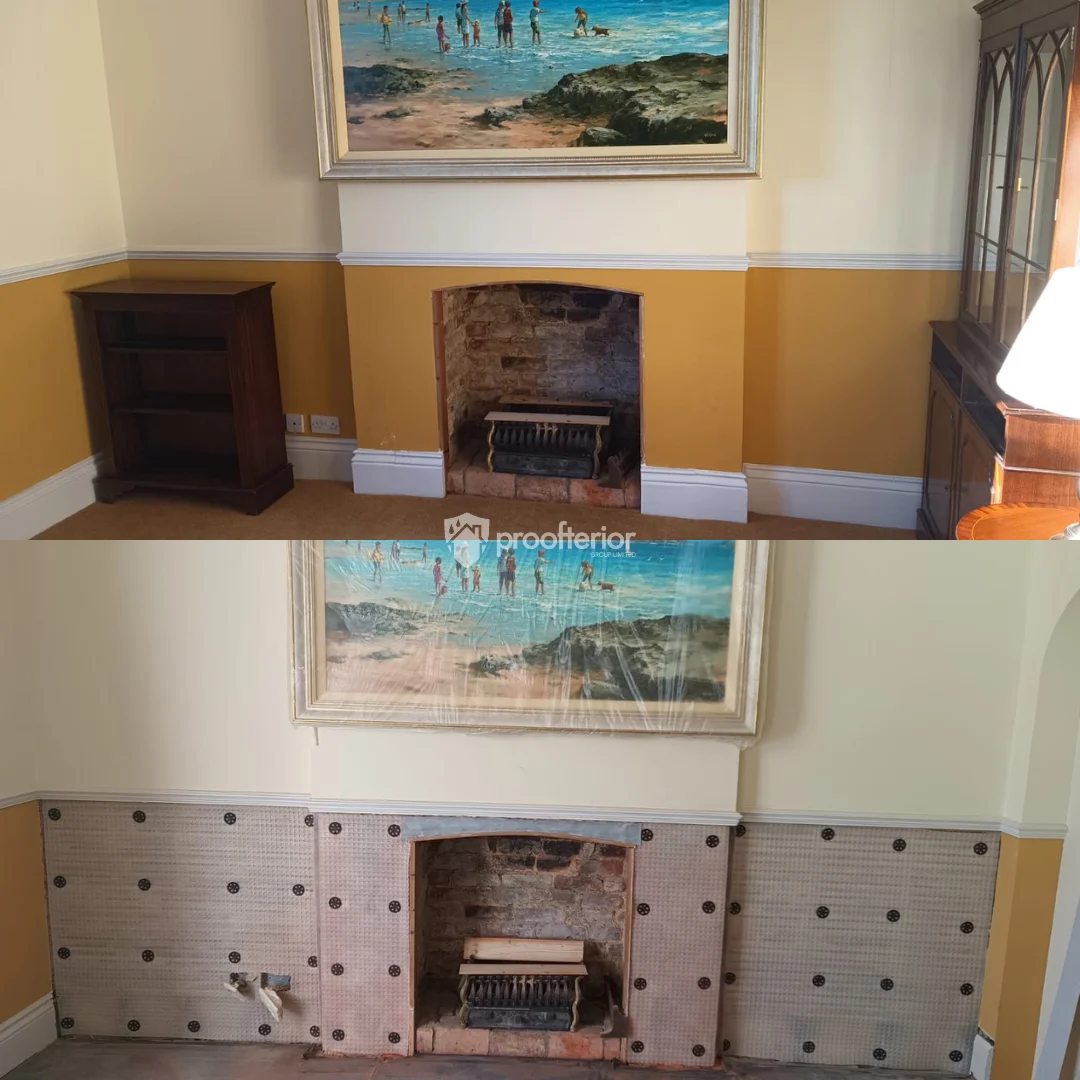
Diagnosing Rising Damp Around a Fireplace in a Bournemouth Property
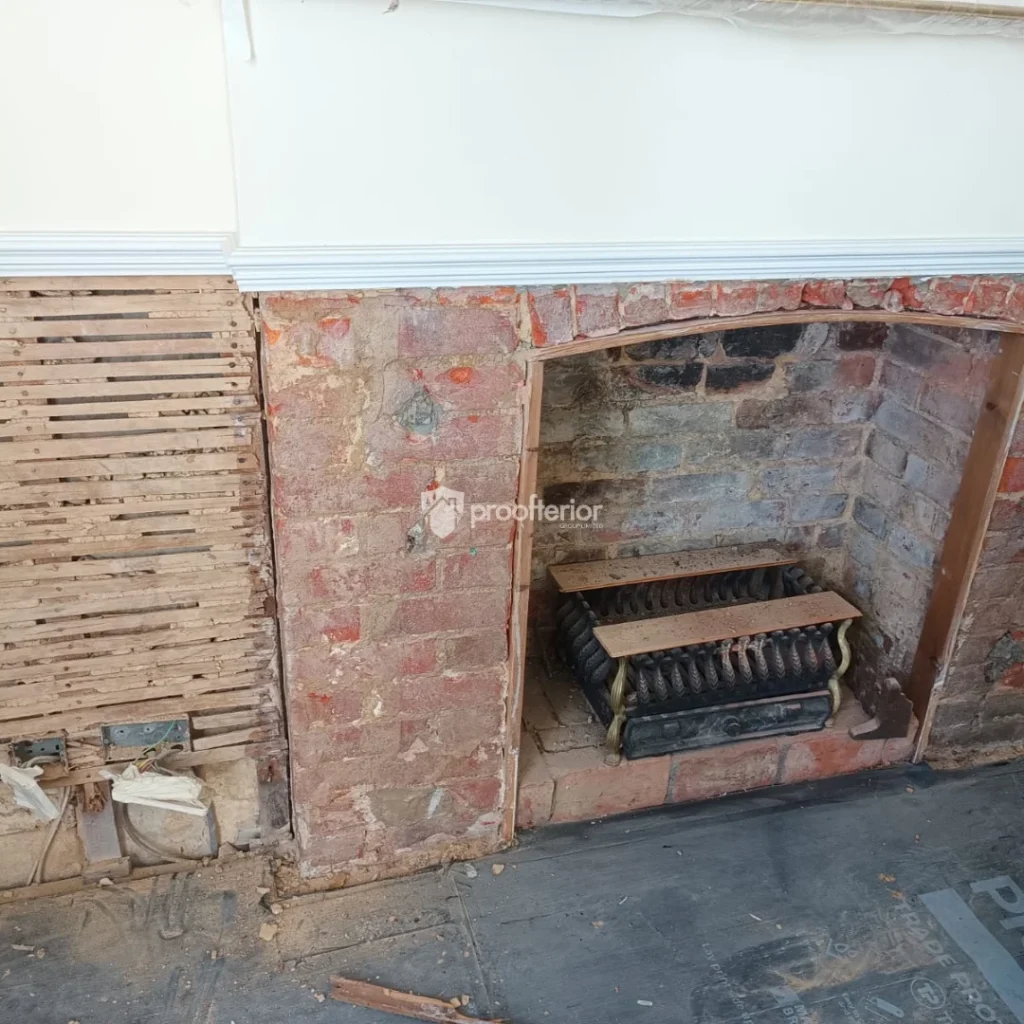
This Bournemouth property presented with visible damp deterioration around the ground floor fireplace. The homeowner reported bubbling paintwork and cracking finishes along the lower wall sections.
During inspection, we observed:
Decorative breakdown at low level
Bubbling and blistered paint
Suspected salt contamination
Damp readings concentrated below 1.5m
Moisture meter diagnostics confirmed elevated readings at lower wall sections, reducing with height. This moisture profile is a classic indicator of rising damp, rather than condensation or penetrating damp.
The damp pattern was technically consistent with capillary moisture movement from the ground through porous masonry.
The fireplace location often worsens rising damp issues due to:
Chimney breast bridging
Solid masonry construction
Older DPC failure or absence
Salt contamination from historic combustion residues
Left untreated, this type of rising damp can lead to:
Repeated plaster failure
Timber skirting decay
Salt hygroscopic moisture retention
Reduced indoor air quality
In coastal towns like Bournemouth, elevated ground moisture and seasonal humidity can accelerate deterioration if no effective damp proof course is present.
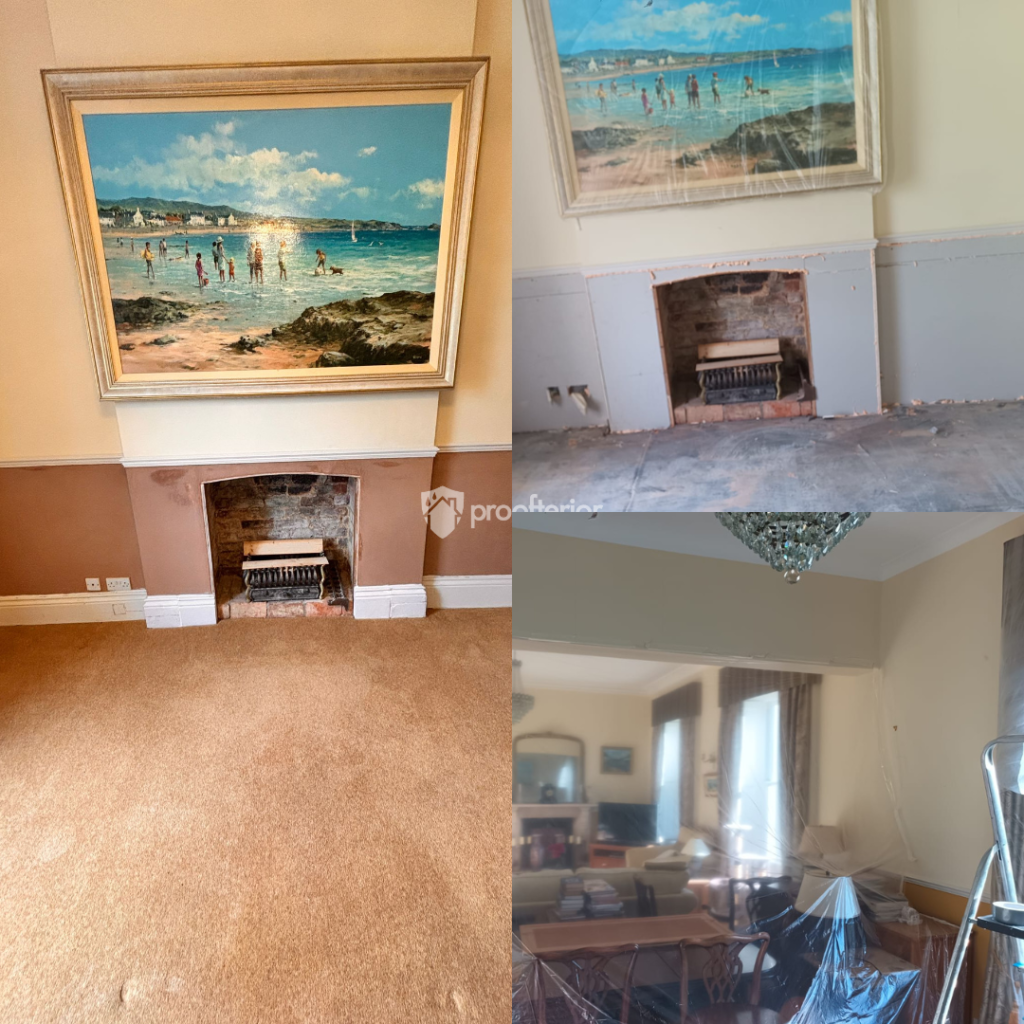
Objective: Arrest Capillary Moisture Movement and Restore Wall Integrity
The primary objective of this rising damp treatment in Bournemouth was to permanently stop ground moisture migrating upward through the masonry via capillary action. Rising damp occurs when groundwater is drawn into porous brick and mortar, transporting hygroscopic salts such as chlorides and nitrates into the internal wall fabric. Even when walls appear to dry temporarily, these salts continue attracting atmospheric moisture, leading to persistent damp patches, plaster breakdown, and decorative failure. To provide long-term damp proofing in Bournemouth, the solution required installation of a new chemical damp proof course, removal of all salt-contaminated plaster to a controlled height of 1.5 metres, and reinstatement using a breathable, system-compatible plaster finish. The goal was not simply to improve appearance, but to restore structural stability, protect internal timbers, and ensure the property benefits from a guarantee-backed damp proof course installation in Dorset.
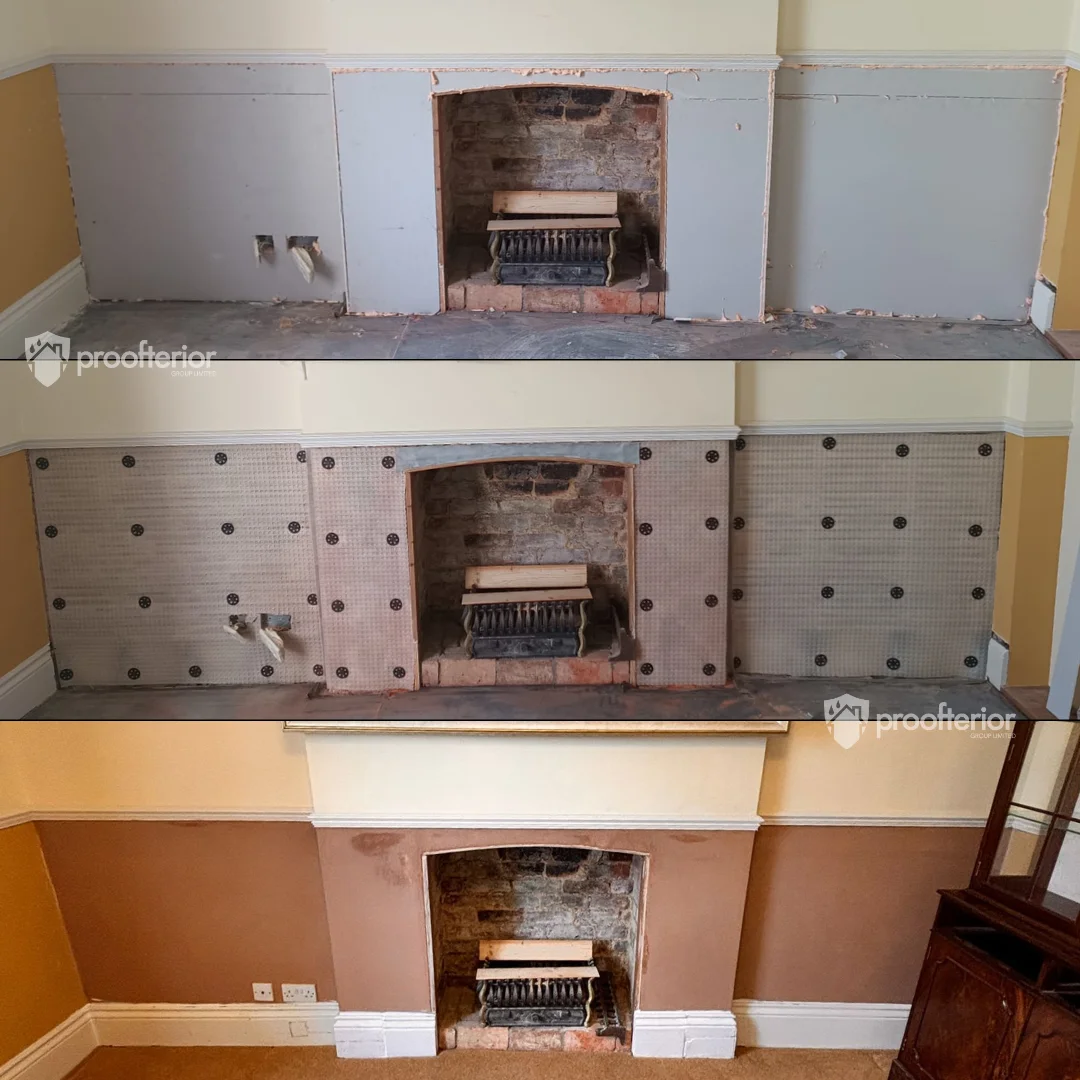
Step-by-Step Rising Damp Treatment Process Using a 1.5m Chemical DPC System
Proofterior follows a structured, PCA-aligned damp proofing process to ensures the fireplace wall is protected against future rising damp while maintaining breathability and durability.
Using calibrated moisture meters, we mapped the damp profile vertically and horizontally. The readings confirmed:
High moisture concentration at low level
Gradual reduction with height
Localised impact around fireplace walls
This distribution pattern ruled out condensation and supported rising damp diagnosis.
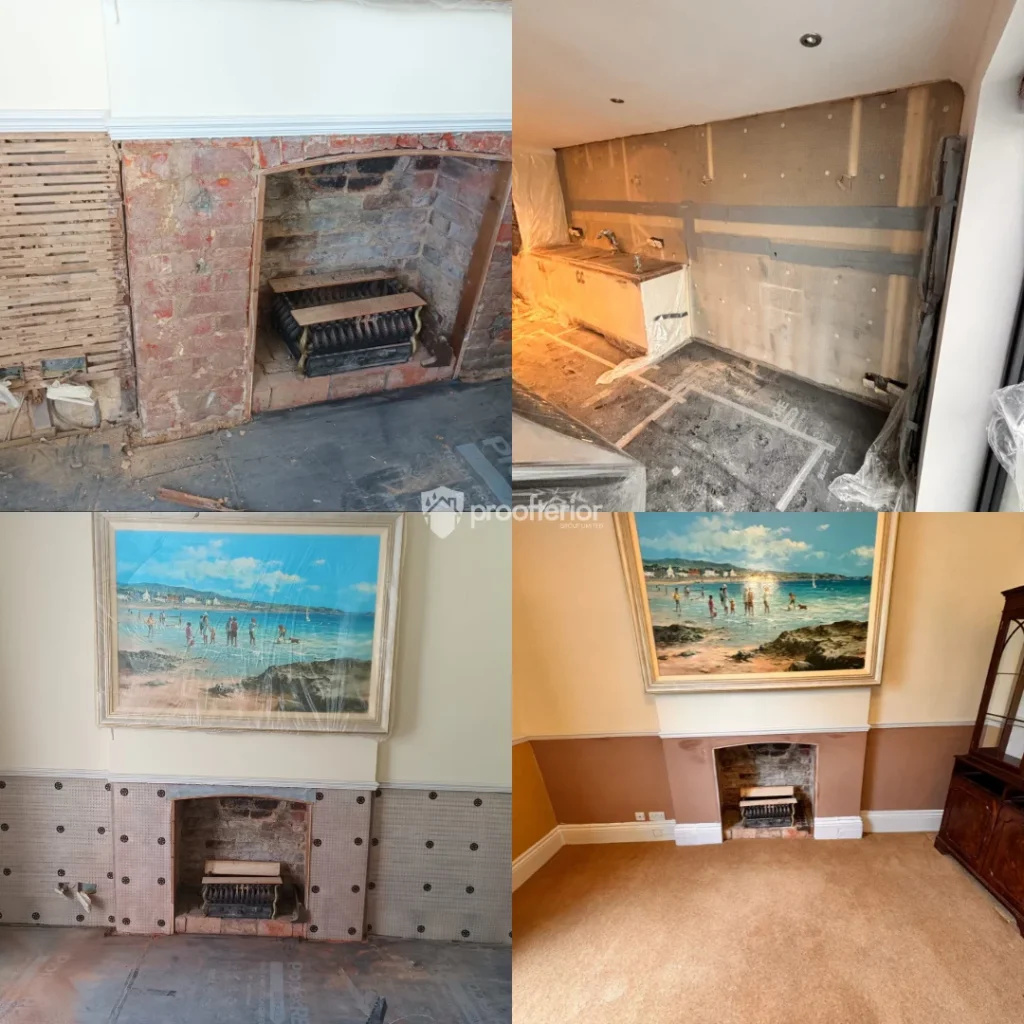
All salt-contaminated plaster was hacked off to:
1.5m height
300mm above highest damp reading
This ensures no residual hygroscopic salts remain within decorative layers.
Salt contamination is critical. Even if walls dry, retained salts attract airborne moisture, causing recurring damp patches.
A new chemical DPC was installed into the mortar bed at correct height.
This:
Interrupts capillary moisture movement
Creates a continuous moisture barrier
Prevents further ground moisture rise
In older Bournemouth properties, original DPCs often fail or become bridged over time.
Exposed masonry was treated with salt-neutralising solution.
Where required, a studded or meshed damp proof membrane may be applied to isolate new plaster finishes from residual moisture within masonry.
Walls were rebuilt using a compatible plaster system suitable for damp-proofed substrates.
The result:
Stable, dry surface
Decoration-ready finish
Long-term structural protection
All works are backed by a 25-year company guarantee, with optional 30-year third-party backing
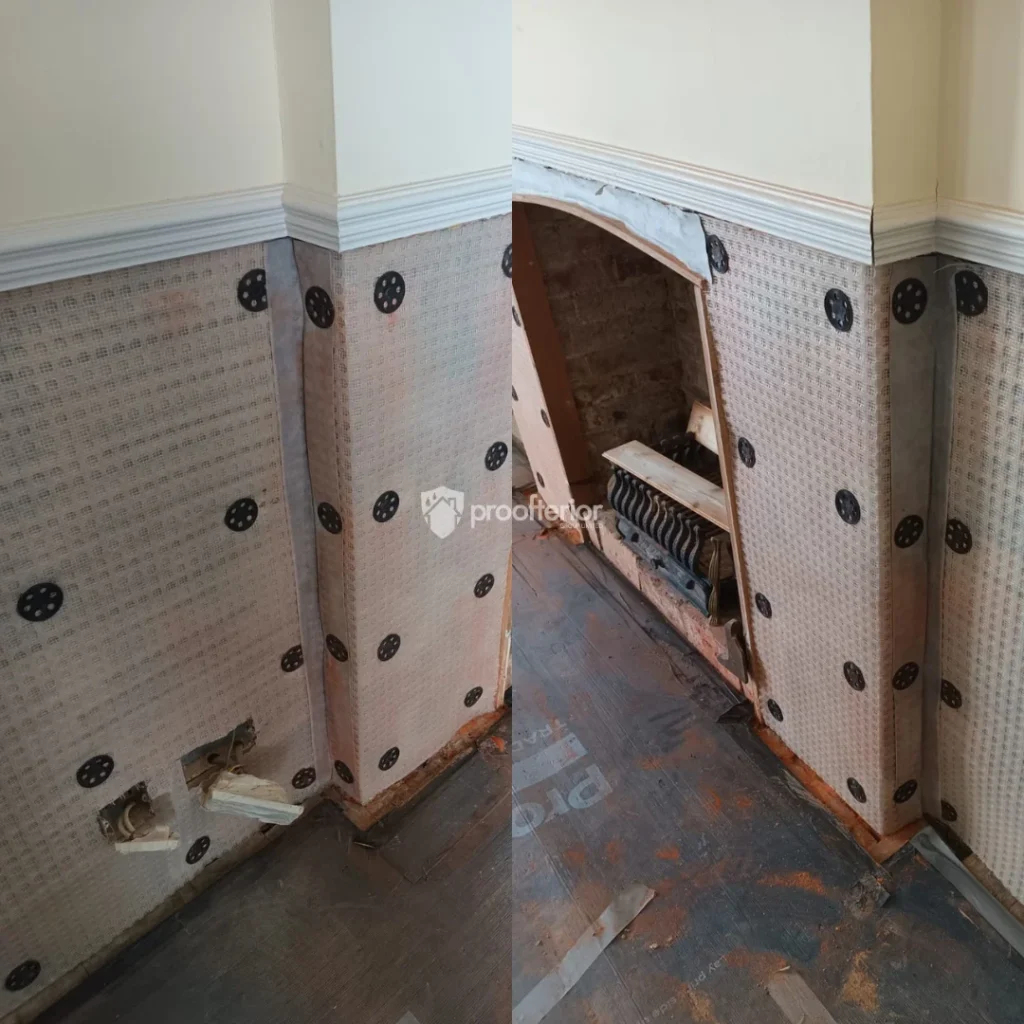
Moisture Readings, Treatment Outcome and Long-Term Protection Results
Prior to treatment, moisture diagnostics recorded elevated readings concentrated at low level around the fireplace wall, gradually reducing with height, confirming the presence of rising damp in this Bournemouth property. Decorative breakdown and blistering paint were visible indicators of underlying salt contamination and prolonged moisture exposure. Following installation of the chemical damp proof course and salt-neutralising treatment, the wall system is now protected from further upward moisture migration.
Over time, the treated masonry will dry gradually as residual moisture evaporates naturally through breathable finishes. This damp proofing installation in Bournemouth not only eliminates the active moisture pathway but also reduces the risk of associated timber decay, mould development in cooler wall zones, and repeated plaster failure. The works are supported by a 25-year company guarantee, offering long-term reassurance that the rising damp treatment has been carried out in line with recognised best practice for Dorset homes.
Why Rising Damp Is Common in Bournemouth’s Older Homes
Rising damp remains a frequent issue in Bournemouth and wider Dorset properties, particularly in homes built before modern damp proof course standards were consistently implemented. Many older solid-wall properties either lack an effective damp proof course or have experienced DPC failure due to age, ground level changes, or bridging from external landscaping.
Coastal ground conditions in Bournemouth, combined with seasonal humidity and porous masonry construction, can accelerate moisture movement within wall structures. Without effective damp proofing in Bournemouth, groundwater can continuously rise through brickwork, leading to chronic plaster deterioration, skirting board decay, and compromised indoor air quality. A professional damp survey in Bournemouth is essential to accurately distinguish rising damp from condensation or penetrating damp, ensuring homeowners receive the correct damp proofing treatment rather than temporary surface-level fixes.
What Bournemouth Homeowners Should Know About Rising Damp Treatment
Rising damp cannot be permanently resolved through repainting, surface drying, or cosmetic plaster repairs alone. Without installing a new chemical damp proof course and removing salt-contaminated plaster, moisture will continue to migrate upward and cause recurring damage. Effective damp proofing in Bournemouth requires accurate moisture diagnostics, professional DPC installation, salt neutralisation, and appropriate reinstatement using breathable materials.
Early intervention is crucial, as untreated rising damp can lead to more significant structural deterioration, timber decay, and costly long-term repairs. If you notice bubbling paint, crumbling plaster, damp patches near fireplaces, or musty odours at ground floor level, arranging a professional damp survey in Bournemouth is the safest first step. Correct diagnosis and system-based treatment protect not only the visible finishes but the long-term integrity and value of your Dorset property.
Frequently Asked Questions About Damp Proofing.
What are the common signs of rising damp?
Cost depends on the cause, access, and finish. A damp survey in Southampton identifies whether you need a chemical DPC, membrane, ventilation upgrade, or external repairs. Once the survey is complete, you receive a fixed, written quote so there are no surprises.
Do you offer guarantees for your damp proofing work?
Yes. All Proofterior treatments and services come with a written guarantee, supported by moisture readings and photographic documentation. Our team is Checkatrade and Google 5-Star Rated, giving homeowners confidence that their property is protected for the long term.
How long does damp proofing last?
When the source of moisture is treated and the right system is installed, damp proofing is designed to last for many years. Longevity improves with simple upkeep, clear gutters, sound pointing, and good ventilation. We include aftercare so results stay stable.
Seeking expert advice can further clarify specifics related to your property’s unique needs. Professional assessments are invaluable in providing tailored solutions. Always consult with a specialist for the most accurate guidance.
Ready to protect your Bornemouth property?
Book a damp survey in Bornemouth with Proofterior. Our local damp specialists deliver clear diagnosis, tidy repairs, and long-lasting proofing that keeps homes dry, healthy, and comfortable.