
What Is Penetrating Damp? Causes, Signs and Solutions
Penetrating damp is water entering your property from outside. Not from the ground below, not from moisture in the air, but from rain and weather working its way through the external fabric of the building. It can affect any wall, any floor, any ceiling, and any height. It gets worse when it rains and improves in dry weather, which is often the first clue that something is getting in from outside rather than building up from within.
Left unaddressed, penetrating damp causes progressive damage to plaster, finishes, structural timbers, and the masonry itself. The key to stopping it is identifying the entry point and fixing it at the source.
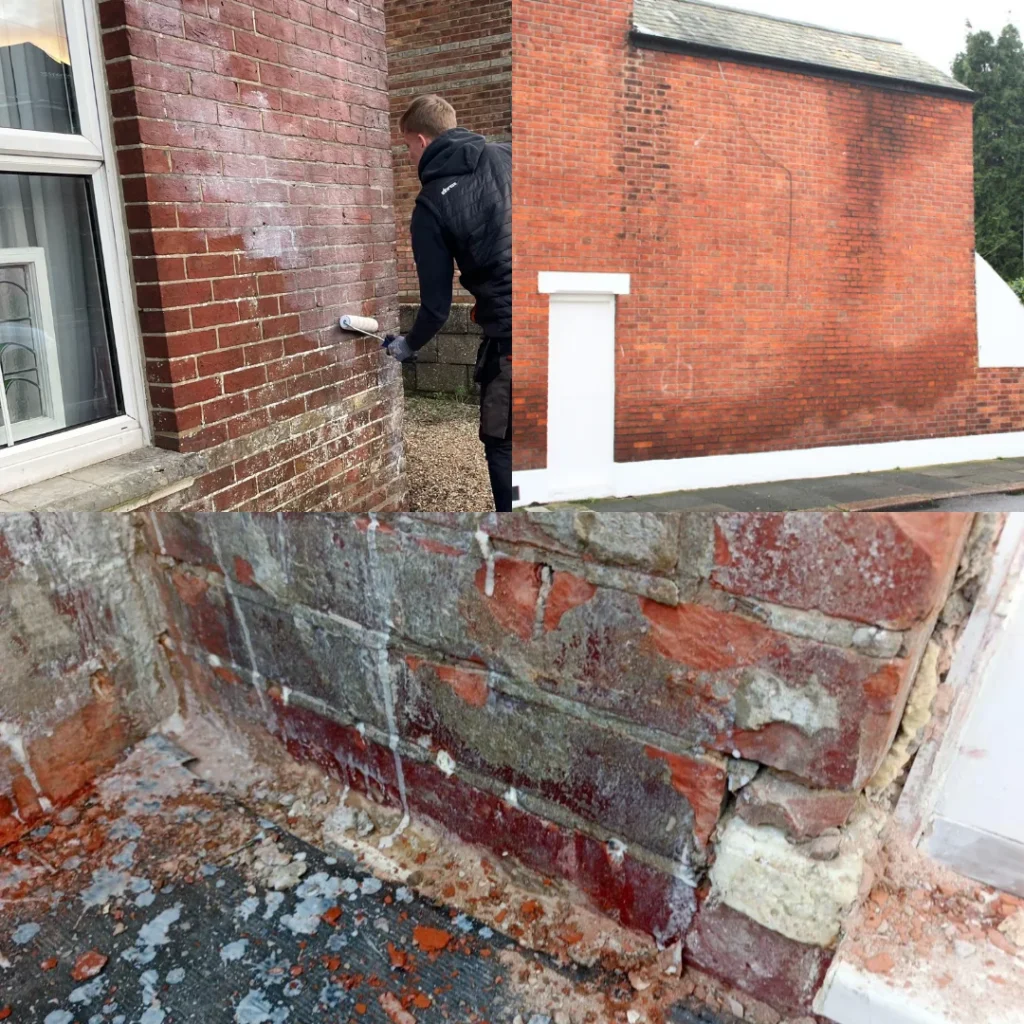
What is Penetrating Damp?
Penetrating damp is rainwater that soaks through the building envelope and reaches internal walls, ceilings, or floors. It is common in wind-driven rain, on exposed elevations, and in properties with aged or defective fabric. It shows as damp patches, peeling finishes, and sometimes black mould where moisture lingers.
Unlike rising damp, which travels upward through masonry from the ground, penetrating damp moves horizontally or downward through the wall, roof, or structure. It can occur at any level of a building and is particularly associated with solid wall construction, where there is no cavity to interrupt the path of moisture from the external face to the internal wall.
Buildings built with solid walls are considerably more likely to suffer from penetrating damp than properties built with cavity walls. Cavity wall construction includes an air gap between the external and internal walls that ensures moisture is not easily given access to the internal surface. Cavity walls are not entirely exempt, however. Cavities can become blocked, which provides water with a bridge to travel across. Cavity wall insulation, if the outer leaf allows rainwater to penetrate, can also soak up moisture and transfer it to the inner wall.
What Causes Penetrating Damp?
There is almost always a specific defect responsible. Penetrating damp does not simply happen because brickwork is old. It happens because something has failed or been left unrepaired. Water always finds the route of least resistance, and maintenance delays fund its journey inside.
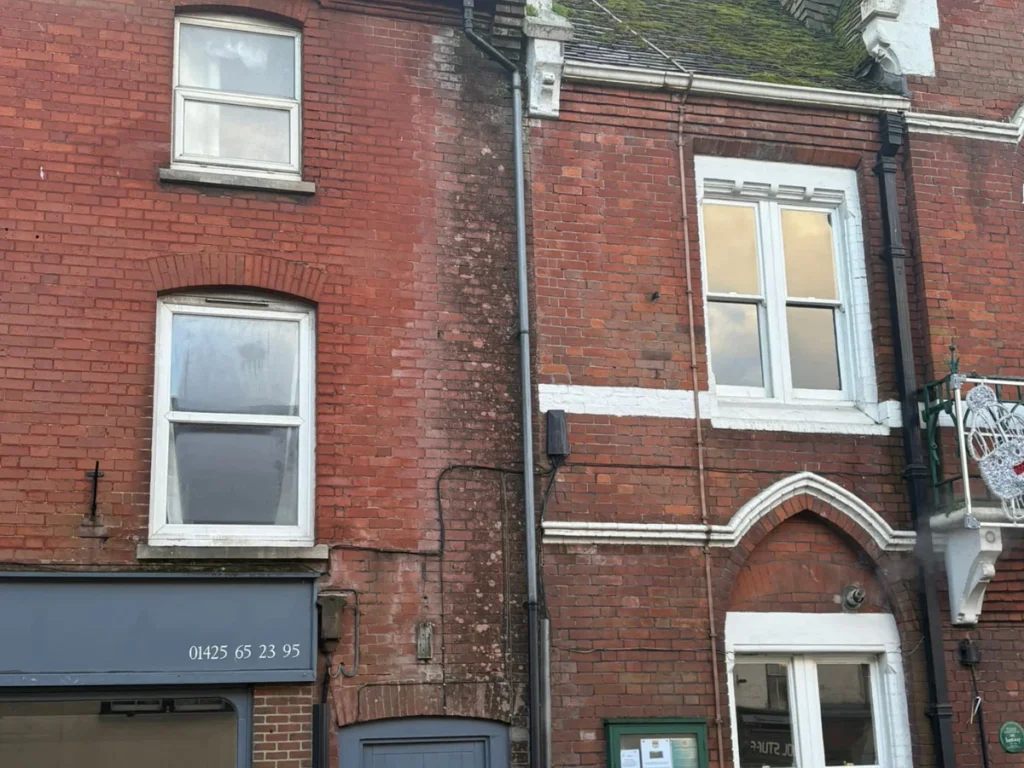
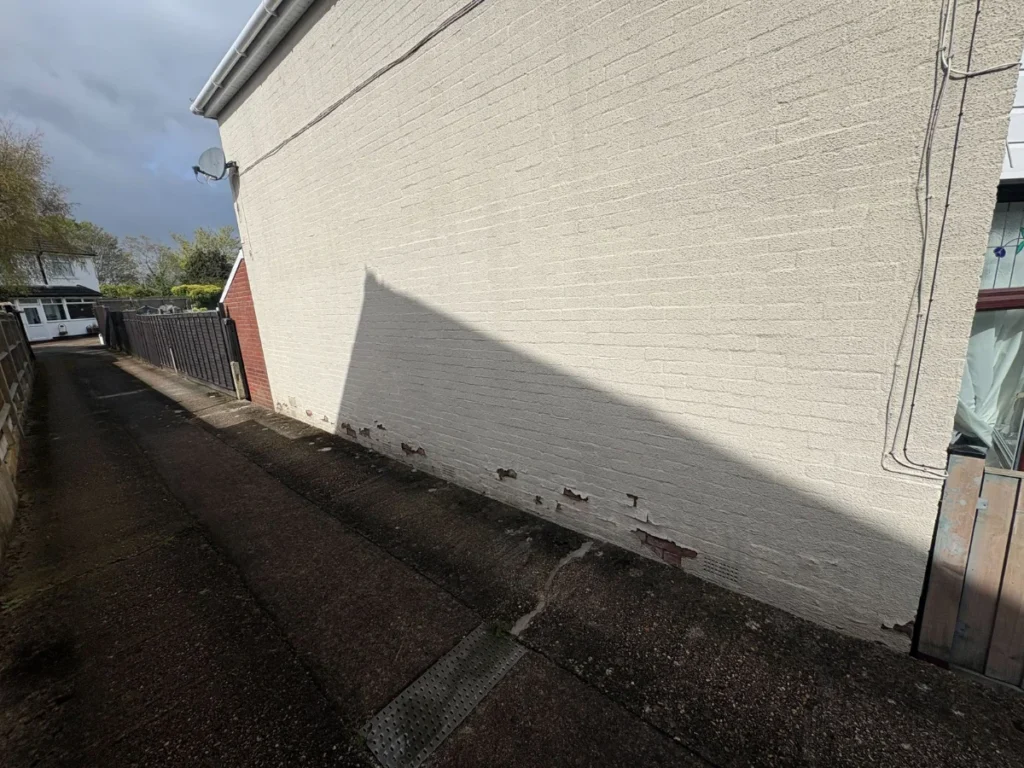
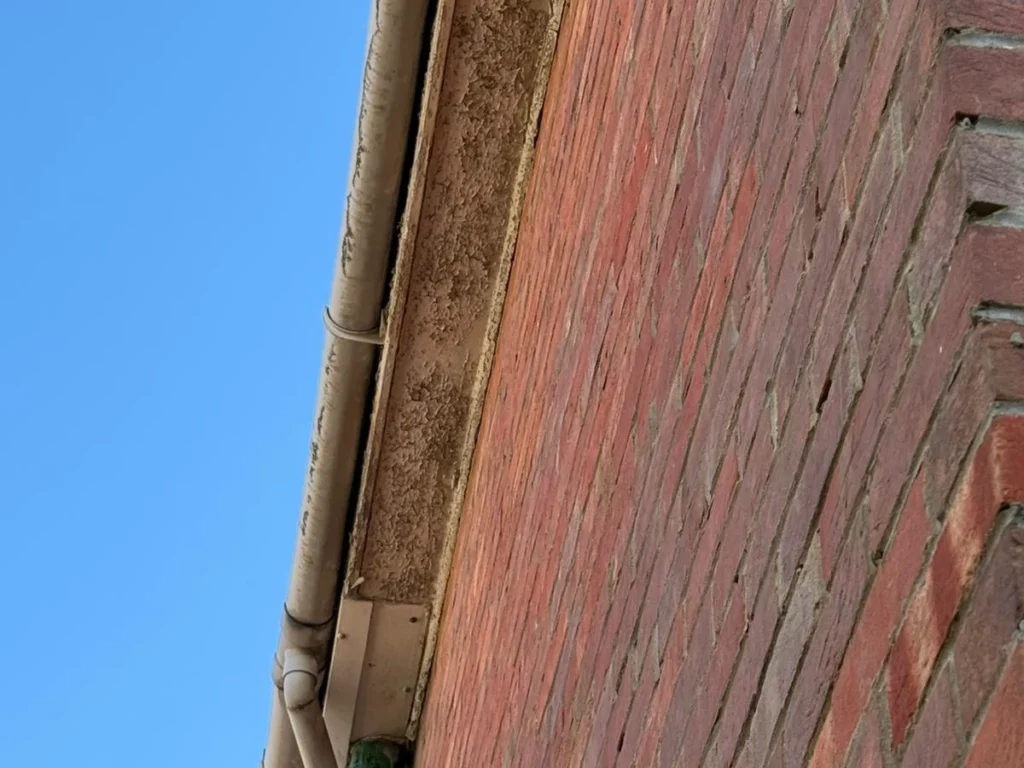
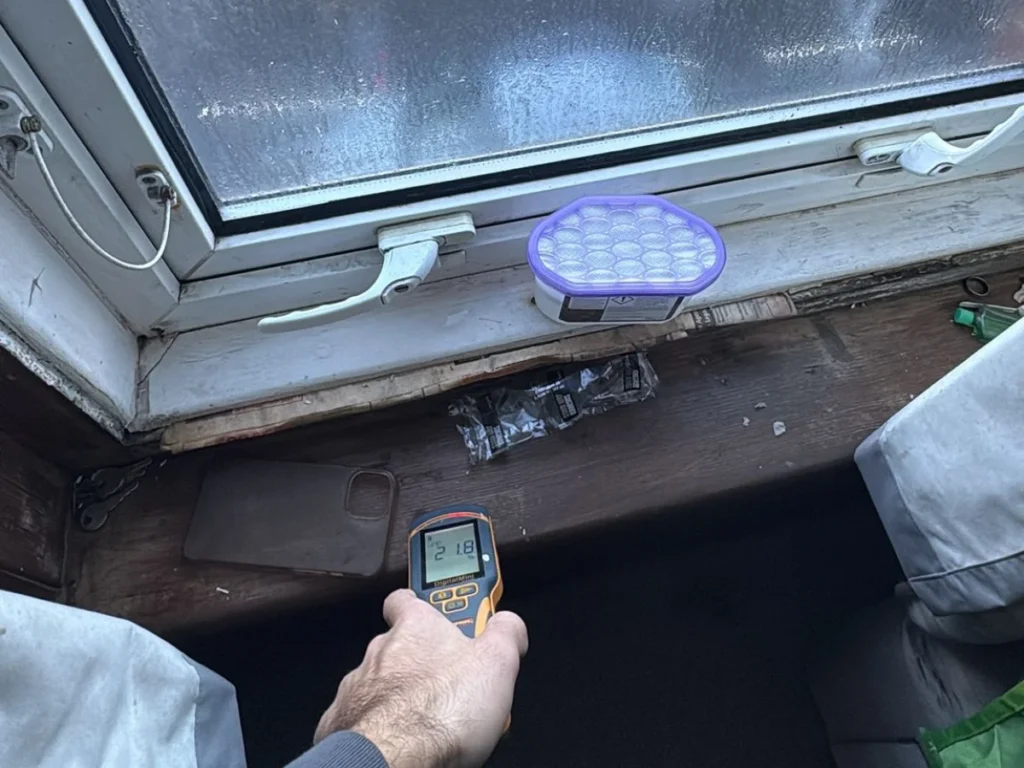
Failed or degraded pointing.
Over time, pointing mortar can shrink and degrade, creating small cracks between the pointing and the brickwork or stonework. When this happens, it can dramatically exacerbate penetrating damp. Mortar joints are the most porous part of a brick wall under normal conditions, and once the pointing has eroded or cracked, rain has a direct channel into the wall substrate. If bricks become spalled and the pointing has failed, the brickwork loses its ability to withstand the elements and can allow moisture to penetrate through to the internal walls.
Cracked or failed render.
Render is supposed to protect the external wall surface from weather. When it cracks, even hairline cracks, it ceases to function as a barrier. Cracked render with capillary bridging allows rain to enter a micro-crack and be wicked sideways into the substrate. Impermeable render systems are particularly problematic when they fail: they trap moisture inside the wall rather than allowing the wall to breathe, which accelerates deterioration from the inside out.
Leaking or blocked gutters and downpipes.
Gutters fail predominantly as a result of blockages. Any blockages will cause issues, especially in heavy rainfall, as the gutters will not be able to cope with the volume of water and will leak or overflow. This causes the external walls beneath the gutters to become saturated with water. Modern cavity walls resist direct penetration, but if the outer leaf becomes saturated, the cavity can bridge through debris or metal wall ties, allowing moisture to reach interior plaster. Rendered surfaces may crack, allowing water from a dripping gutter to pass straight behind the finish.
Roof defects.
Missing or cracked tiles, damaged flashing, or blocked valleys allow water to enter the property through the roof structure. Water entering through a roof defect does not stay at ceiling level. It tracks along joists, down rafters, and into cavity spaces before presenting as a damp patch on a wall or ceiling that may be some distance from the actual entry point. Chimneys are a particular vulnerability: lead flashing around the chimney stack is one of the most common locations for roof-level water ingress in older properties.
Defective window and door frames.
Poorly sealed frames allow water to seep through and collect around internal surfaces, especially during heavy rain. Window sills without adequate drip grooves allow water to run back against the wall rather than away from it. Failed mastic seals around frames are a frequent source of localised penetrating damp that presents as a damp patch directly below or beside a window.
Porous masonry
Brickwork is not waterproof. It is porous, meaning it absorbs water. This is a frequent issue in the UK’s wet climate. In solid wall construction, water passes from the external wall face to the internal wall, resulting in damp when the masonry absorbs more water than it can release before the next rainfall event. In exposed locations, particularly coastal or elevated properties across Dorset and Hampshire, wind-driven rain can saturate a solid wall in a way that intermittent or sheltered properties rarely experience.
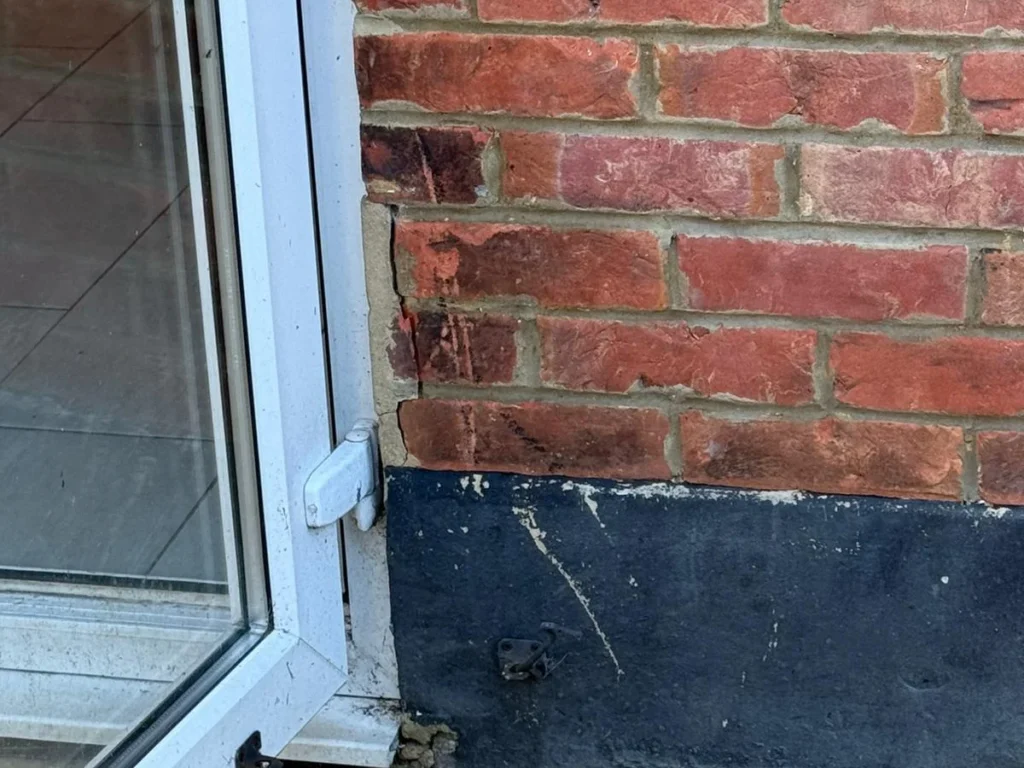
What are the signs of penetrating damp?
The pattern and behaviour of damp patches are the main diagnostic tool. Penetrating damp has a recognisable set of characteristics that distinguish it from condensation and rising damp.
Penetrating damp announces itself in reproducible ways: localised patches on internal or external walls that linger after wet weather, decorating damage including peeling or bubbling paint, musty or earthy odours that do not clear with ventilation, white powdery salt residue in patches above ground level, and skirting boards or timberwork that are warped, softened, or show signs of rot.
The most important distinguishing feature is the relationship with rainfall. If a damp patch appears or worsens within 24 to 48 hours of rainfall, penetrating damp is the likely cause. If it appears even in dry spells, condensation or rising damp should be considered instead.
Damp patches can appear at any height on internal walls, often mid-wall or upper-wall or in isolated corners, unlike rising damp which is confined to the base of walls. Patches that appear directly below a window, along a ceiling, or on the chimney breast are consistent with a localised external defect rather than a generalised moisture problem.
Externally, visible signs include discoloured masonry that darkens or appears wet after rain, eroded mortar joints, cracked or hollow-sounding render, moss and algae growth around blocked drains or near downpipes, and efflorescence, the white powdery salt deposit that forms as moisture moves through and evaporates from the masonry.
How is penetrating damp treated?
The treatment sequence for penetrating damp always starts with identifying and repairing the defect that is allowing water in. No internal treatment is effective if the external entry point remains open.
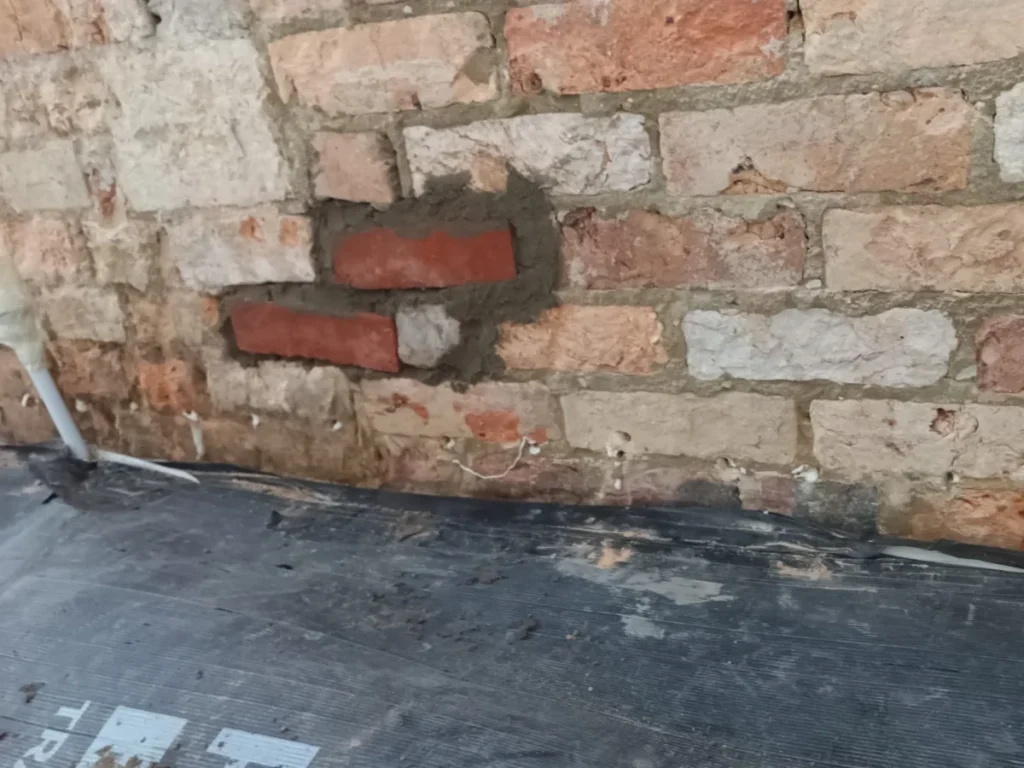
I. Repair the external defect first.
The golden rule is always to fix the cause first, whether that is cracked brickwork, leaking gutters, or damaged render. Treating the internal symptoms without stopping moisture at the source means the damp will return.
Repointing defective mortar joints is one of the most common and effective repairs. Faulty mortar should be raked out and repointed using a suitable mix. The combination of repointing and a treatment of masonry protection cream is often the ideal solution, addressing both the structural weakness in the mortar joints and the porosity of the masonry surface itself.
Where gutters are the source, the repair is straightforward: clear blockages, realign misaligned sections, replace cracked or corroded runs, and ensure downpipes discharge water well away from the wall base. Where roof defects are responsible, missing or damaged tiles need replacing, lead flashing around chimneys and abutments needs to be re-bedded or renewed, and any perished underfelt needs attention.
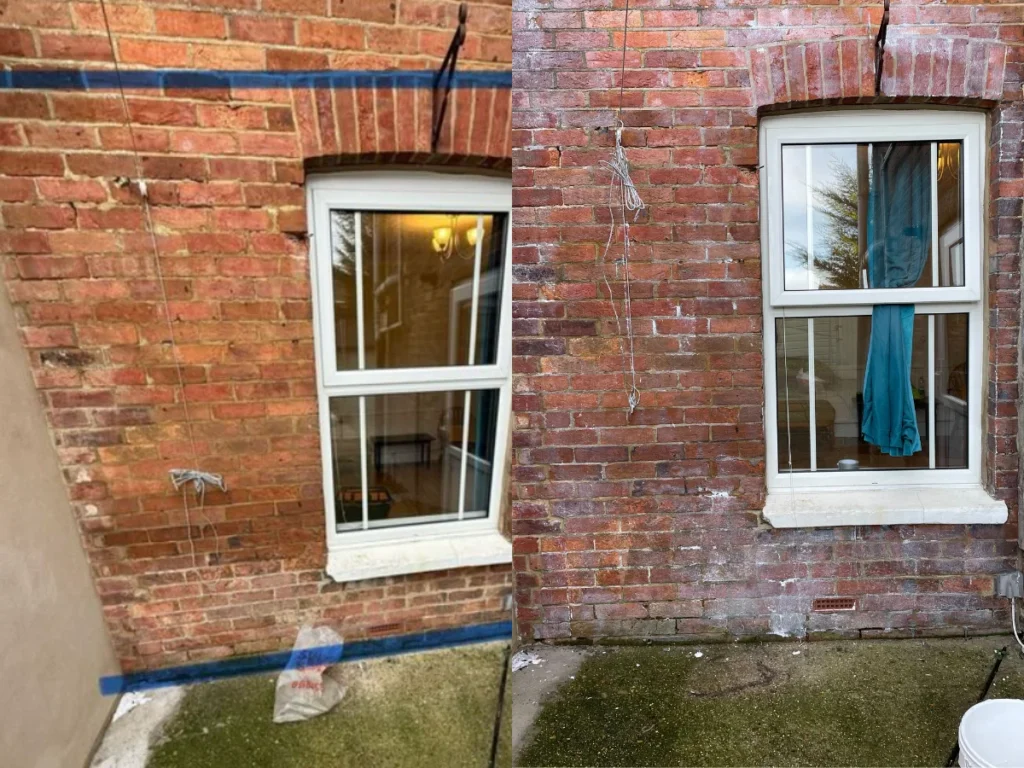
II. Apply masonry protection where required.
Once defects are repaired, the external masonry may benefit from a breathable masonry protection treatment, particularly on exposed elevations or solid wall properties that are inherently more vulnerable to rain penetration.
Proofterior Masonry Protection Cream is applied to external brickwork, stone, and render as a clear, breathable treatment. It diffuses into the surface and reacts with the masonry to create a hydrophobic barrier that repels liquid water while allowing water vapour to pass through the wall in both directions. Saturated brickwork can have up to 50% worse thermal resistance than dry masonry. A breathable masonry protection cream prevents moisture penetration while allowing any existing moisture to dry out through the treated surface, maintaining the wall’s ability to breathe.
The critical distinction between a breathable masonry cream and an impermeable sealant is that a breathable treatment does not trap moisture in the wall. Impermeable coatings applied over damp or porous masonry accelerate deterioration by preventing the wall from drying out.
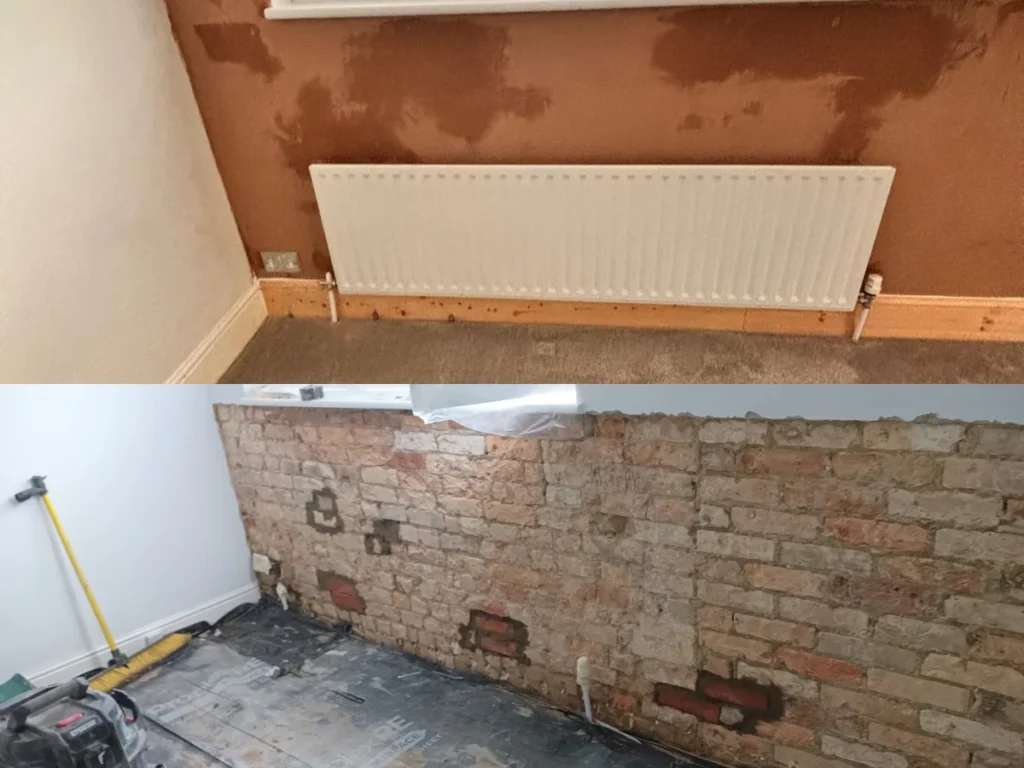
III. Dry out and repair the internal damage.
Once the external entry point is sealed, the affected internal area needs to be allowed to dry fully before any redecoration or replastering is carried out. Rushing redecoration over a wall that is still drying will result in failure of the new finish. Where plaster has been damaged, it needs to be removed and replaced. In cases where the masonry itself has absorbed significant moisture and salt contamination, a salt-resistant backing coat should be used before finishing.
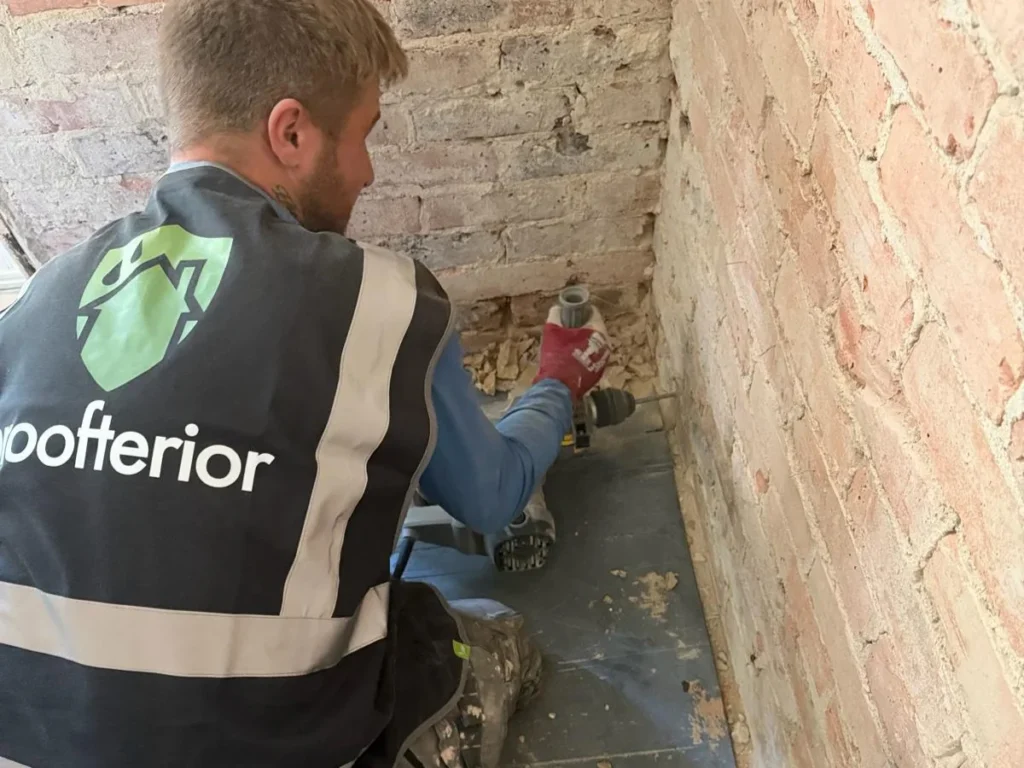
How Proofterior treats penetrating damp
Proofterior is a PCA and ISSE-accredited specialist serving Dorset, Hampshire, and Wiltshire. Every penetrating damp survey is carried out by an ISSE-accredited surveyor who identifies the specific defect or defects responsible before any treatment is recommended. That matters because penetrating damp rarely has a single cause: a property with failed pointing may also have a leaking gutter above it, and treating one without the other will not resolve the problem.
Where external repairs are needed, Proofterior’s in-house qualified team carries out the complete scope, from repointing and render repair through to the application of Proofterior Masonry Protection Cream on the external wall. No subcontractors. The surveyor who diagnoses the problem is connected to the team who fix it, and the same standard of workmanship applies from start to finish.
Every treatment carries a 25-year guarantee. The survey is free, the written report and fixed quote are returned within 24 hours, and the 24-hour contact line puts you through to the same team directly at any point.
Frequently Asked Questions
What is penetrating damp?
Penetrating damp is moisture from outside entering a property through defects in the external structure. Unlike rising damp, which travels upward from the ground, penetrating damp moves horizontally or downward through walls, roofs, and window or door frames. It can affect any level of the building.
What are the signs of penetrating damp?
The main signs are damp patches on walls or ceilings that worsen after rainfall, paint or plaster peeling from the wall outward, a musty smell that does not clear with ventilation, white salt deposits on masonry above ground level, and softening or rot in skirting boards and timbers near affected areas. Patches that appear or worsen within 24 to 48 hours of rain strongly indicate penetrating damp.
What causes penetrating damp?
The most common causes are failed or degraded pointing, cracked render, blocked or leaking gutters and downpipes, roof defects including damaged tiles and failed flashing, defective window or door seals, and porous masonry in solid wall properties. Most penetrating damp problems can be traced to a specific external defect rather than general ageing of the wall.
How do I tell the difference between penetrating damp and rising damp?
Rising damp is confined to the base of walls, rarely exceeds one metre in height, and leaves a horizontal tidemark with salt deposits. Penetrating damp can appear at any height and correlates with rainfall rather than being constant. A professional survey with moisture meters will confirm the cause.
Can cavity walls get penetrating damp?
Yes. While the air gap in cavity wall construction provides significant protection, cavities can become bridged by mortar droppings, debris, or saturated insulation. Where the outer leaf of a cavity wall becomes heavily saturated or the cavity insulation is poorly installed, moisture can reach the inner leaf and present as damp internally.