
How to Treat Damp Walls in Bournemouth with a Damp Proof Membrane and Cavity Wall Clearance
A detailed damp proofing case study in Bournemouth showing how cavity wall bridging and internal moisture retention were resolved using a high-performance damp proof membrane system and full wall reinstatement.
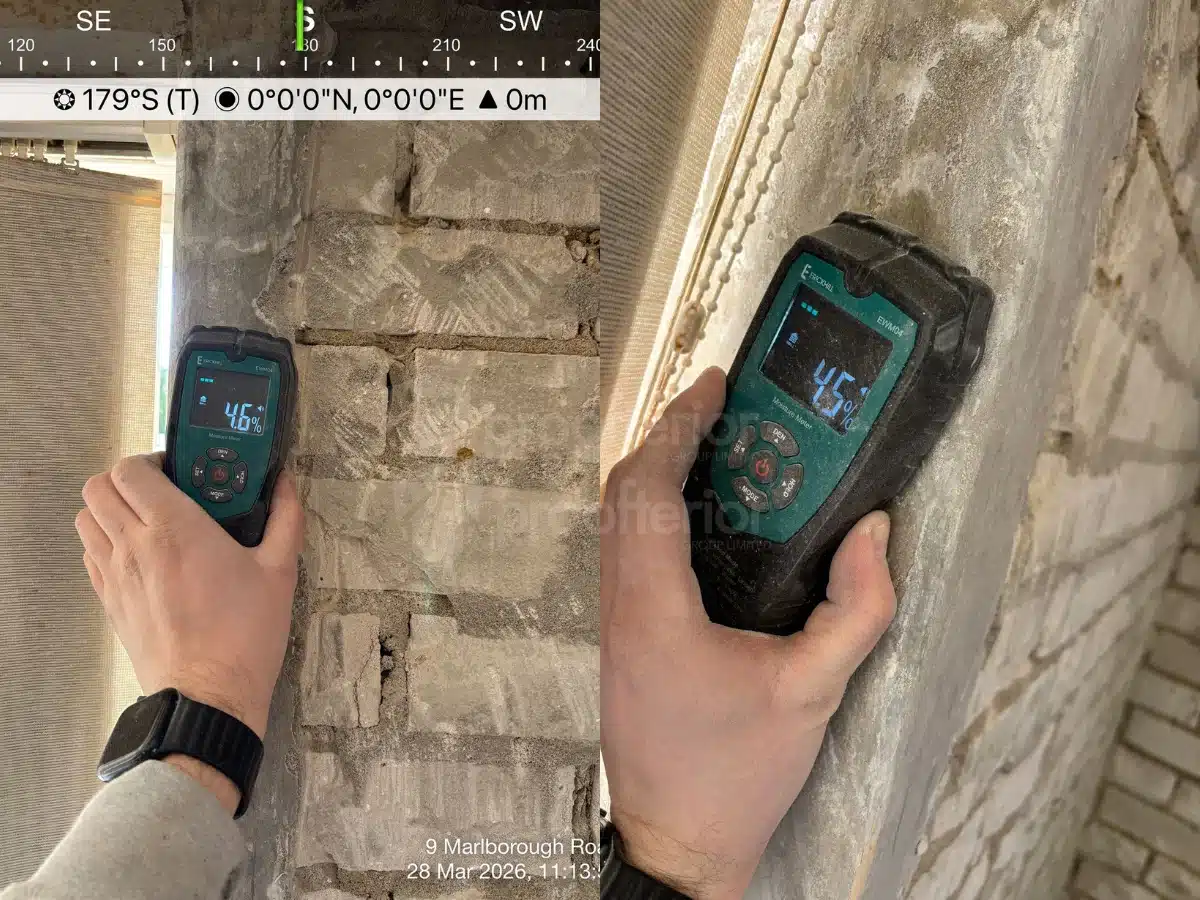
Diagnosing Damp Caused by Cavity Bridging and Internal Moisture Retention
During a professional damp survey in Bournemouth (BH4), damp-affected wall areas were identified requiring full strip-back and internal treatment .
The inspection revealed that the issue was not simple surface condensation, but a combination of:
- Moisture retention within the wall structure
- Possible cavity wall bridging from debris or insulation
- Salt contamination affecting internal plaster
As outlined in the report, recommended works included stripping plaster back to bare brick and clearing the cavity to remove bridging materials .
This is a critical step in damp proofing Bournemouth properties, as cavity obstructions can allow moisture to transfer across the wall and present internally.
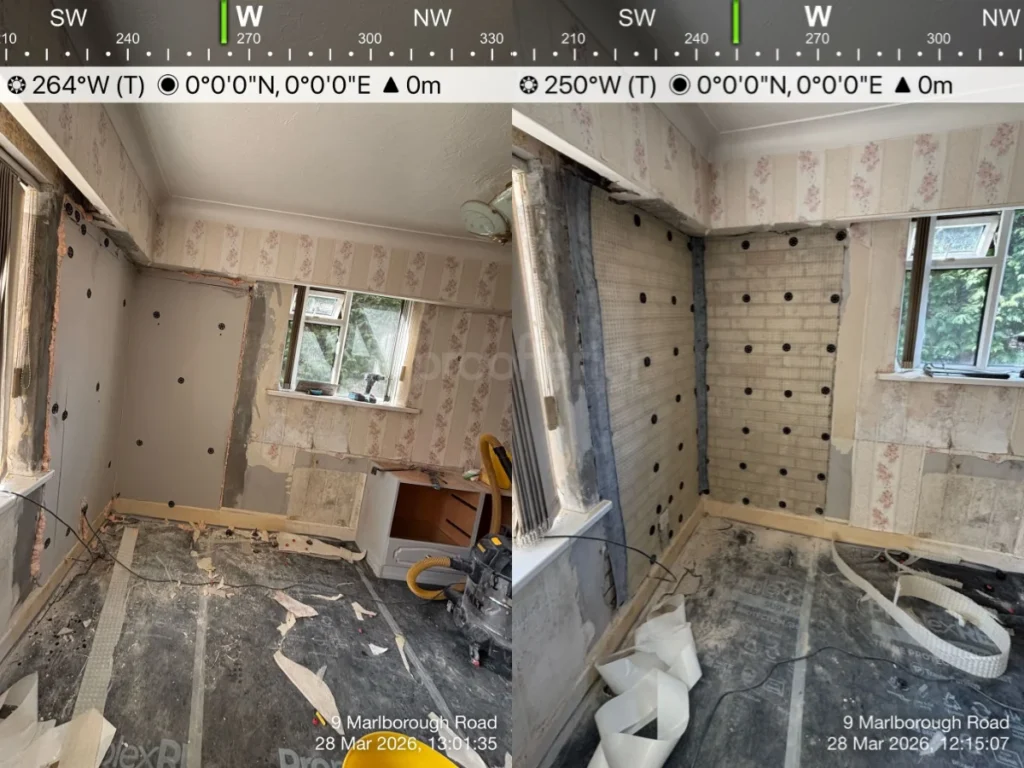
Objective: Isolate Internal Surfaces and Prevent Recurring Damp
The goal of this Bournemouth damp proofing project was to:
- Remove contaminated plaster and expose masonry
- Eliminate cavity bridging and trapped moisture
- Install a continuous internal damp proof membrane system
- Prevent salt migration into new finishes
- Restore a dry, stable wall surface
- Provide a long-term, guarantee-backed solution
Unlike rising damp treatment, this case required isolating the internal environment from moisture within the wall structure.
Step-by-Step Damp Proofing Process Using Internal Membrane System
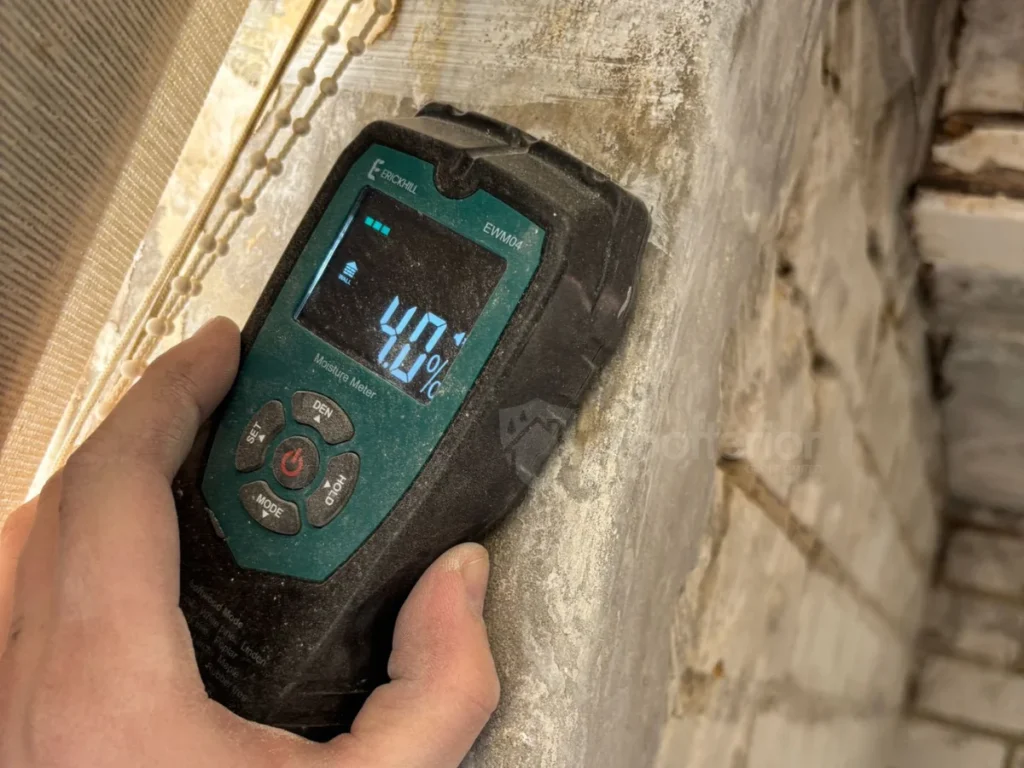
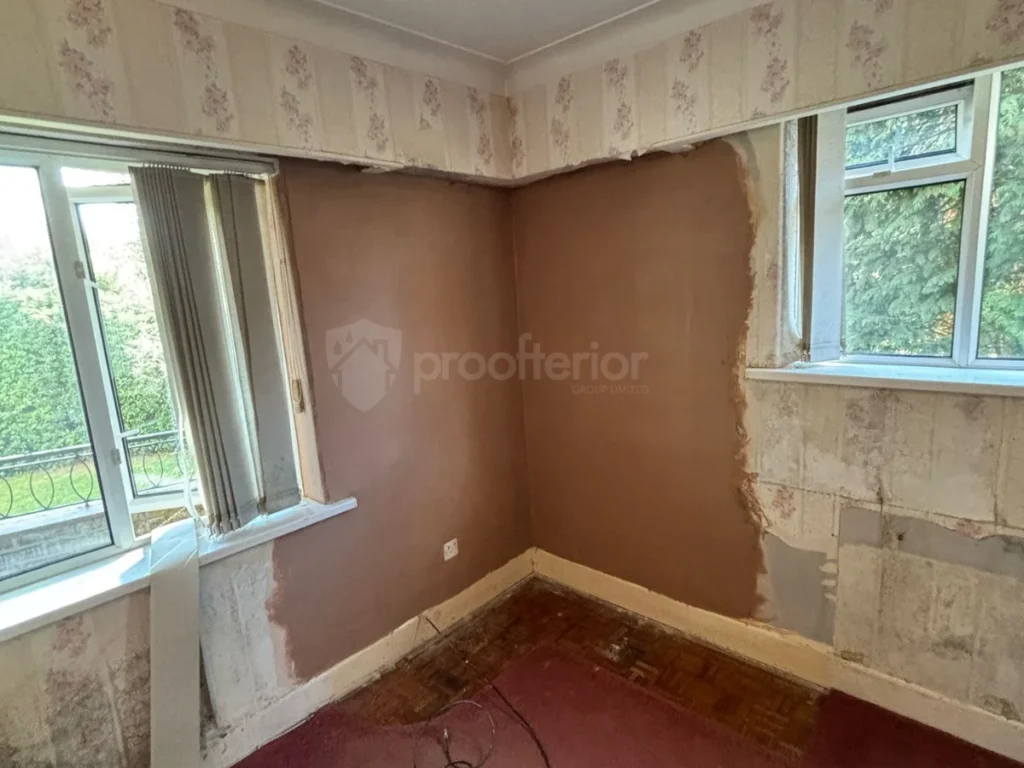
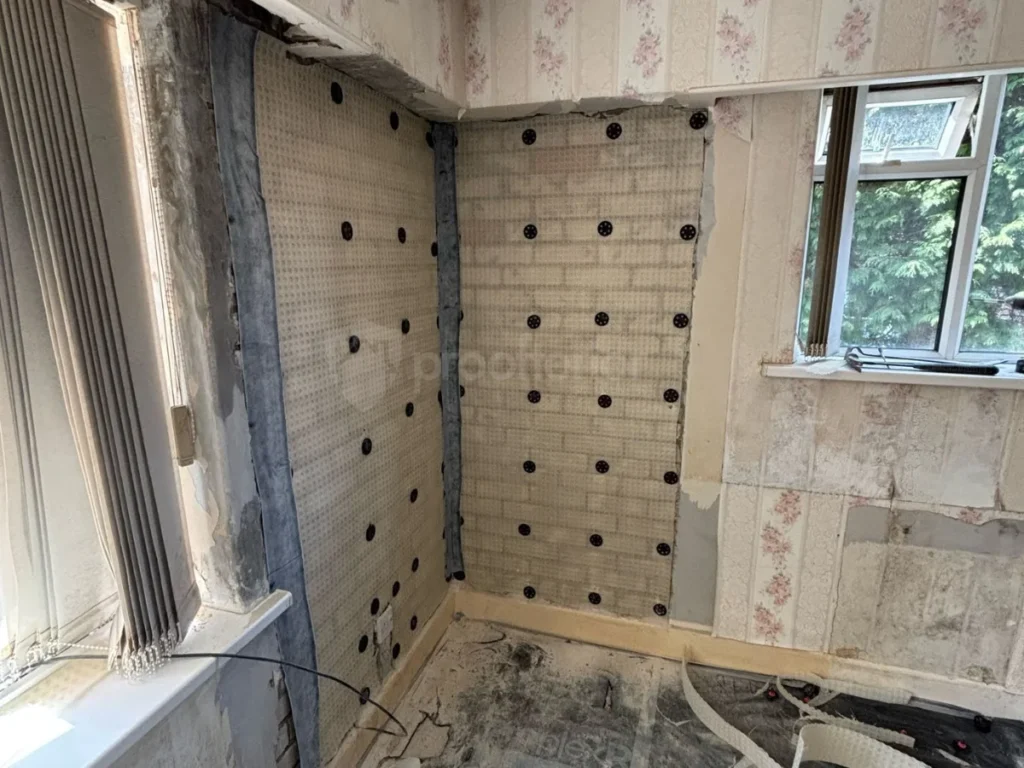
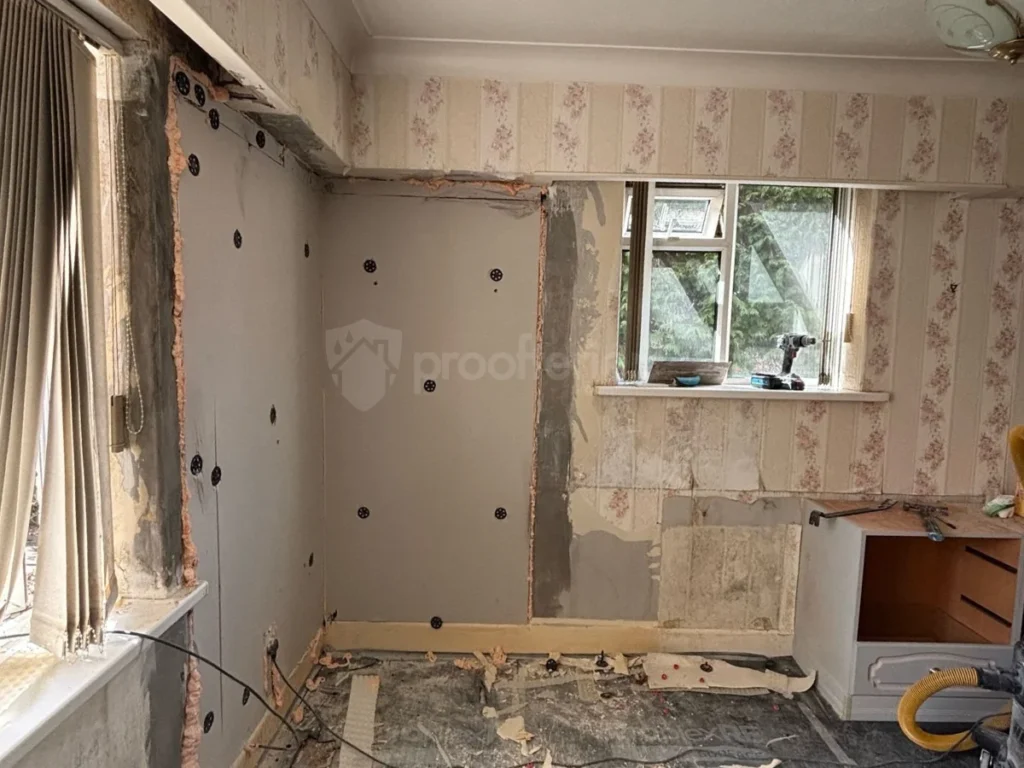
1. Strip Back to Bare Masonry
All affected plaster was removed across the identified red-zone treatment area, exposing the underlying brickwork .
This ensures:
- Full access to contaminated substrates
- Removal of hygroscopic salts
- Accurate assessment of masonry condition
2. Cavity Wall Clearance
The wall cavity was cleared of debris and any moisture-retaining materials such as insulation or bridging elements .
Cavity bridging is a common cause of damp in Bournemouth properties, allowing moisture to bypass the external wall barrier and transfer internally.
3. Salt Neutralisation Treatment
A specialist salt-inhibiting treatment was applied to stabilise hygroscopic salts within the masonry .
This prevents salts from attracting atmospheric moisture and causing recurring damp patches after replastering.
4. Installation of Damp Proof Membrane System
A high-performance internal damp proof membrane system was installed with full continuity and sealed laps .
This creates:
- A physical barrier between damp masonry and internal finishes
- Protection against residual moisture
- Long-term resistance to damp reappearance
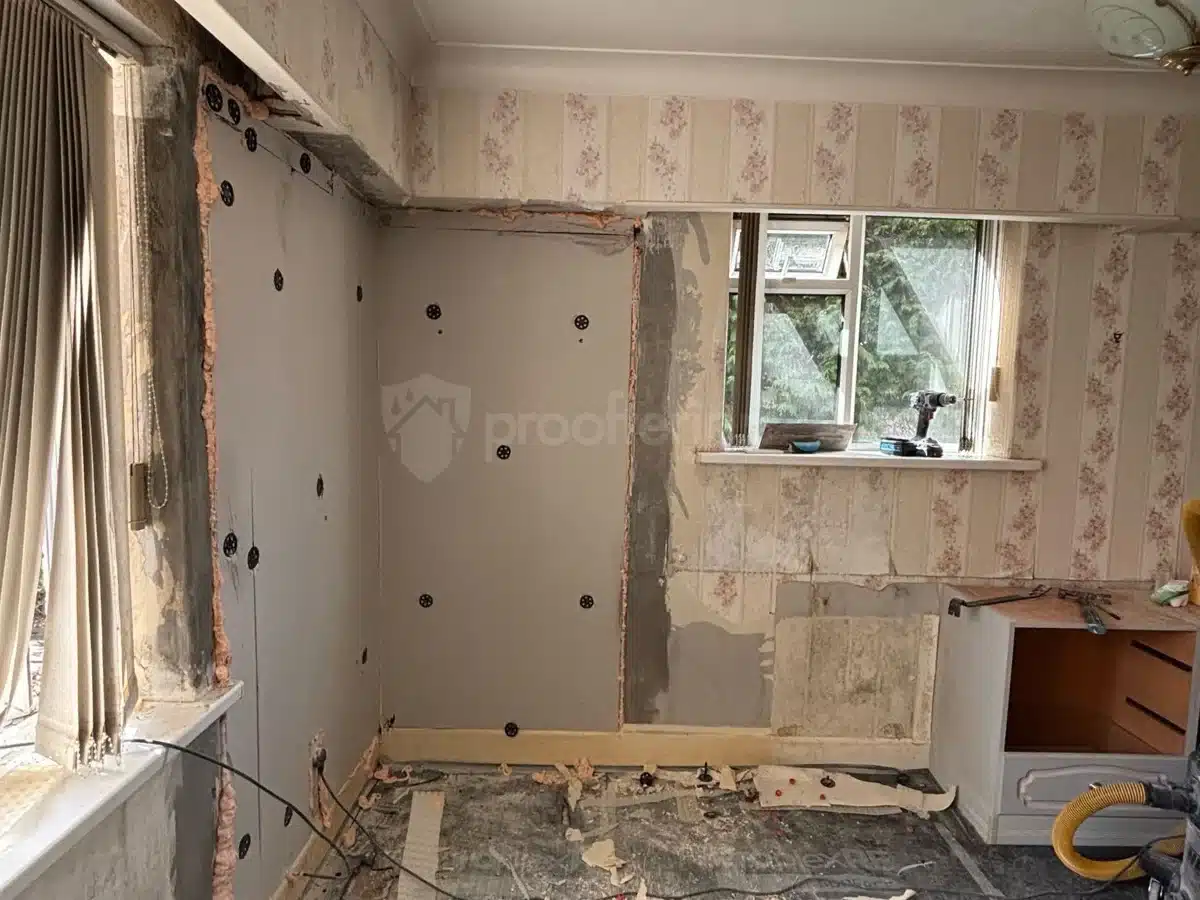
5. Reboarding and Plaster Reinstatement
The treated wall was reboarded and plastered to a smooth, decoration-ready finish, restoring the internal space for normal use .
Obstructions such as fitted units were temporarily removed and reinstated after works.
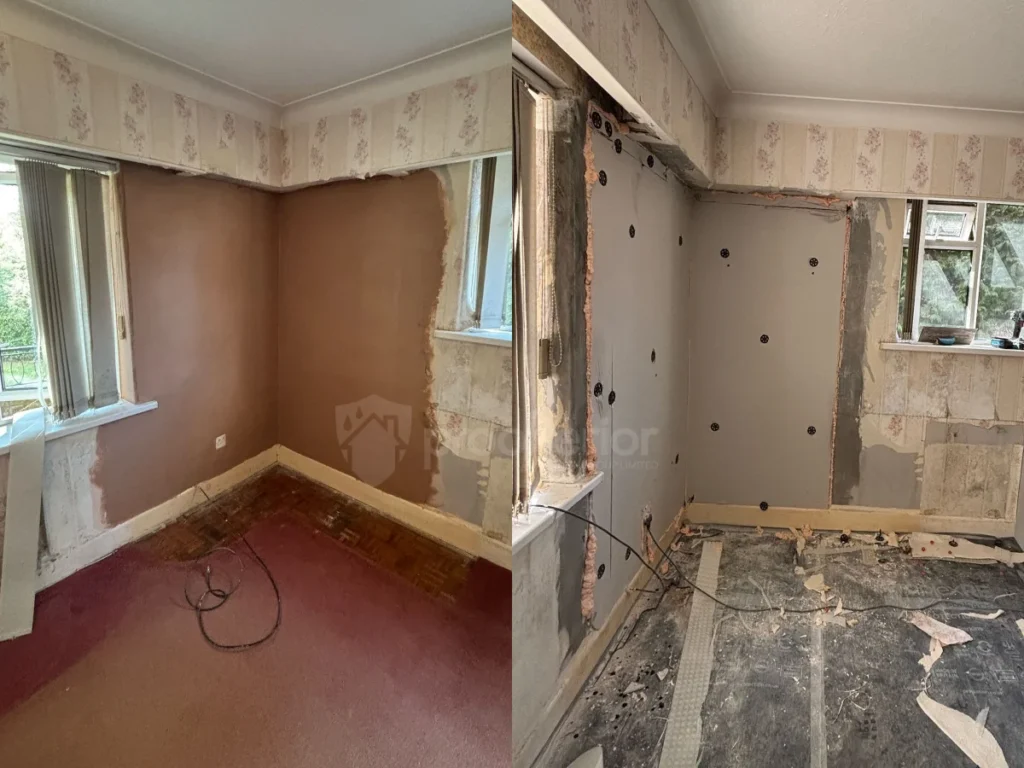
Before treatment:
- Damp-affected internal walls
- Salt contamination in plaster
- Potential cavity bridging
- Ongoing moisture transfer
After installation:
- Internal wall isolated from damp substrate
- Moisture transfer prevented
- Clean, dry, stable wall surface achieved
- Long-term damp protection in place
The system is backed by a 25-year guarantee, ensuring durability and long-term performance
Why Cavity Wall Damp Is Common in Bournemouth Ground Floor Flats
Many Bournemouth properties, particularly older homes or those with retrofitted insulation, can experience cavity wall damp due to:
- Debris bridging the cavity
- Poorly installed insulation
- Moisture retention within wall voids
- Exposure to coastal weather conditions
Without proper damp proofing in Bournemouth, moisture can transfer internally and cause recurring plaster damage.
A professional damp survey ensures accurate identification of cavity-related damp issues.
What Bornemouth Homeowners Should Know About Rising Damp
- Damp can originate from within the wall, not just from rising moisture
- Cavity bridging is a common hidden cause of internal damp
- Removing contaminated plaster is essential for long-term results
- Internal membrane systems isolate walls from moisture effectively
- Professional damp proofing prevents recurring damage and health risks
If you’re experiencing damp patches, peeling paint, or deterioration in your Bournemouth property, arranging a professional damp survey is the safest first step toward a permanent solution.
Frequently Asked Questions About Bornemouth Damp Proofing
1. What is an internal damp proof membrane and how does it work?
An internal damp proof membrane is a specialist system installed onto prepared wall surfaces to create a physical barrier between damp masonry and internal finishes. In Bournemouth damp proofing projects, it is commonly used where moisture cannot be fully removed from the wall structure.
The membrane prevents moisture and salts from reaching plaster surfaces, ensuring walls remain dry and stable even if residual moisture exists behind the system.
2. Can cavity wall problems cause damp inside the house?
Yes, cavity wall issues are a common cause of damp in Bournemouth homes. Debris, insulation, or mortar droppings can bridge the cavity, allowing moisture to pass from the external wall leaf to the internal wall surface.
This type of damp often mimics penetrating damp or condensation but requires targeted cavity clearance and damp proofing treatment to resolve.
3. How do I know if I need a damp proof membrane system in my Bournemouth home?
If damp keeps returning after replastering or decorating, or if moisture is present across wider wall areas rather than just at low level, an internal damp proof membrane system may be required.
A professional damp survey in Bournemouth will determine whether the issue is rising damp, penetrating damp, or cavity-related moisture, ensuring the correct solution is applied.
4. Will this actually solve the damp problem permanently?
Yes, our work is carried out to PCA (Property Care Association) standards and based on a thorough ISSE-accredited survey of your property. Every damp proofing solution we install is designed to tackle the root cause of rising damp, not just cover the visible symptoms.
By installing a chemical damp proof course (DPC), removing salt-contaminated plaster, and reinstating the wall using the Proofterior Dry System, we stop capillary moisture at source and prevent it from returning. This ensures long-term protection for Bournemouth properties and is supported by a 25-year company guarantee, with optional third-party guarantees available.
5. How do I know if my floor damp is serious?
Seeking expert advice can further clarify specifics related to your property’s unique needs. Professional assessments are invaluable in providing tailored solutions. Always consult with a specialist for the most accurate guidance.
Ready to protect your Bornemouth property?
Book a damp survey with Proofterior. Our local damp specialists deliver clear diagnosis, tidy repairs, and long-lasting proofing that keeps homes dry, healthy, and comfortable.