
Rising Damp and Cold Bridging in Southampton Victorian Home Resolved with ISO-Therm and Chemical DPC Installation
A comprehensive damp proofing case study in Southampton showing how moisture diagnostics, thermal imaging, ISO-Therm internal insulation, and a full chemical DPC installation eliminated rising damp, cold bridging, and recurring mould growth in a Victorian semi-detached property.
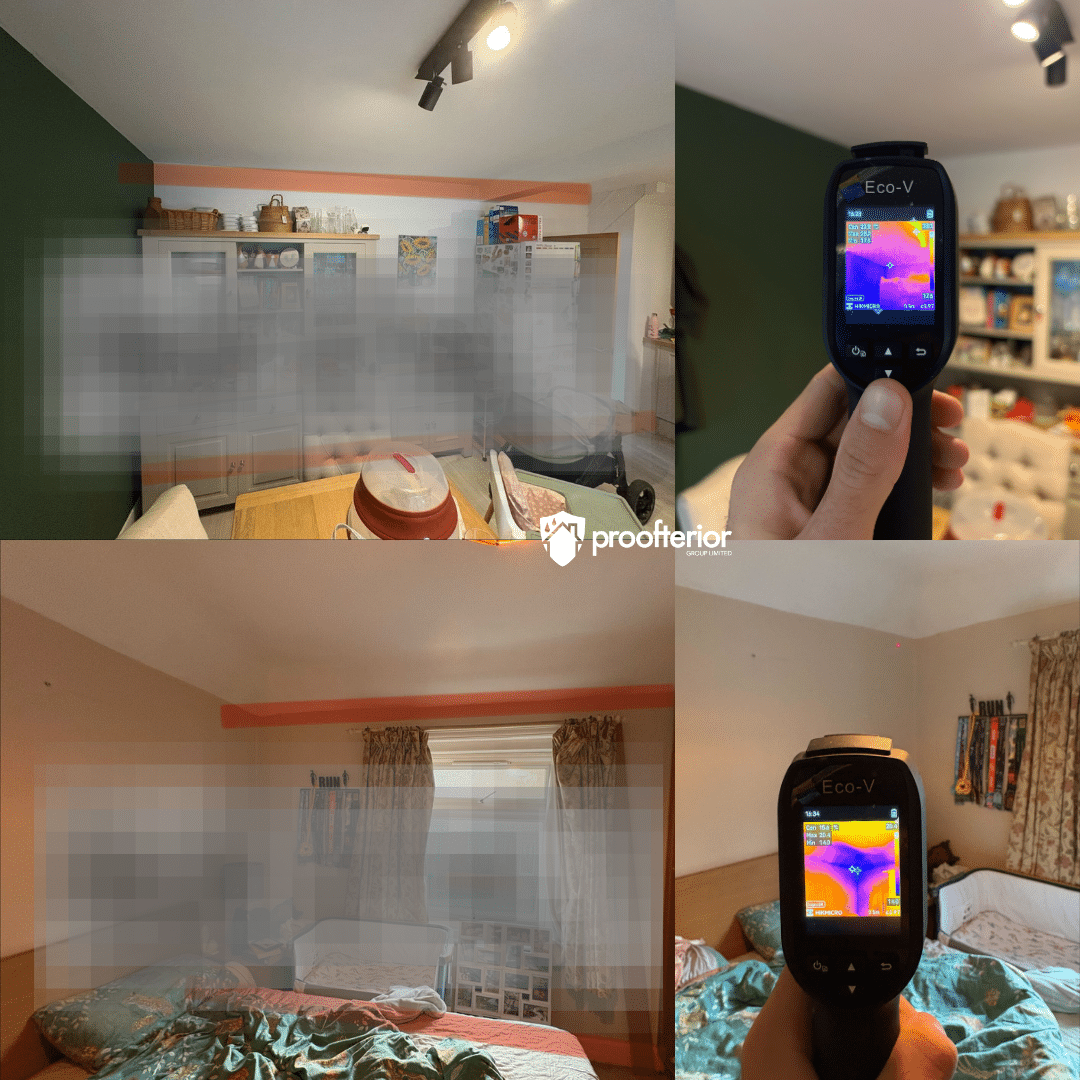
Diagnosing Rising Damp and Cold Bridging in a Southampton Property
This semi-detached Victorian-style property in Southampton (SO16) presented with multiple damp mechanisms affecting both the ground floor kitchen and first-floor bedrooms
Ground Floor Kitchen – Rising Damp Identified
- Moisture diagnostics were carried out on the external-facing kitchen wall. Readings of approximately 19% moisture content up to 1.5 metres high confirmed active rising damp.
- The vertical moisture gradient, highest at the base and reducing with height, is a classic indicator of capillary moisture movement from the ground.
- Visible signs included:
Damp staining to lower wall sections
Mould presence
Salt-contaminated plaster
First Floor Bedrooms – Cold Bridging and Condensation
- Moisture readings in both bedrooms showed elevated damp levels in the corners of external walls
- Thermal imaging confirmed cold bridging in these corner junctions
- These colder surfaces drop below dew point during normal occupancy, allowing condensation to repeatedly form and mould to develop.
- This Southampton home was therefore experiencing:
Rising damp at ground floor level
Cold bridging and condensation at both ground and first-floor levels
Secondary mould growth
Addressing only one issue would not solve the wider moisture cycle.
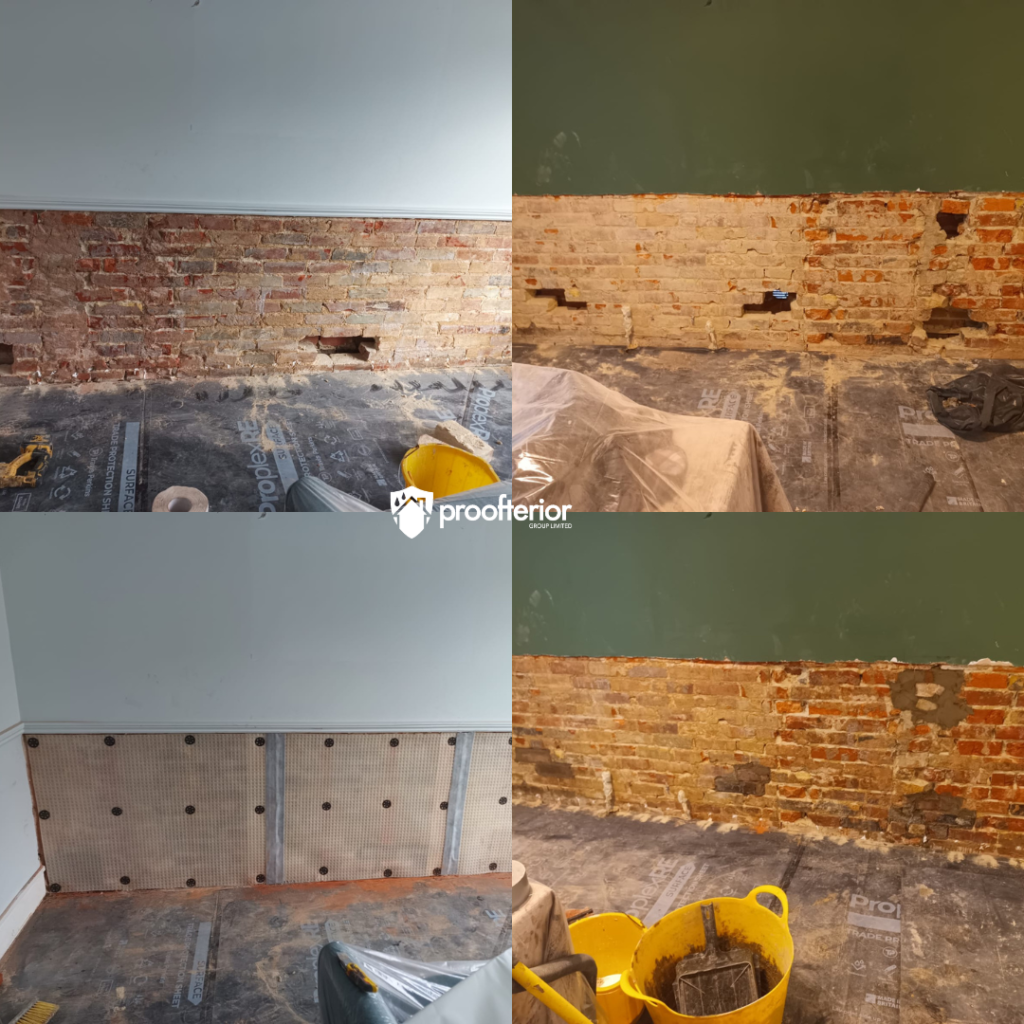
Objective: Break the Damp and Condensation Cycle
The clear objectives of this Southampton damp proofing project were:
Arrest rising damp at source via chemical DPC installation
Remove salt-contaminated plaster
Raise internal wall surface temperatures
Eliminate cold bridging in bedroom corners
Prevent recurring mould growth
Deliver a long-term, guarantee-backed solution
Without intervention, rising damp continues to migrate upward, while cold bridging continues triggering condensation and mould in thermally weak areas.
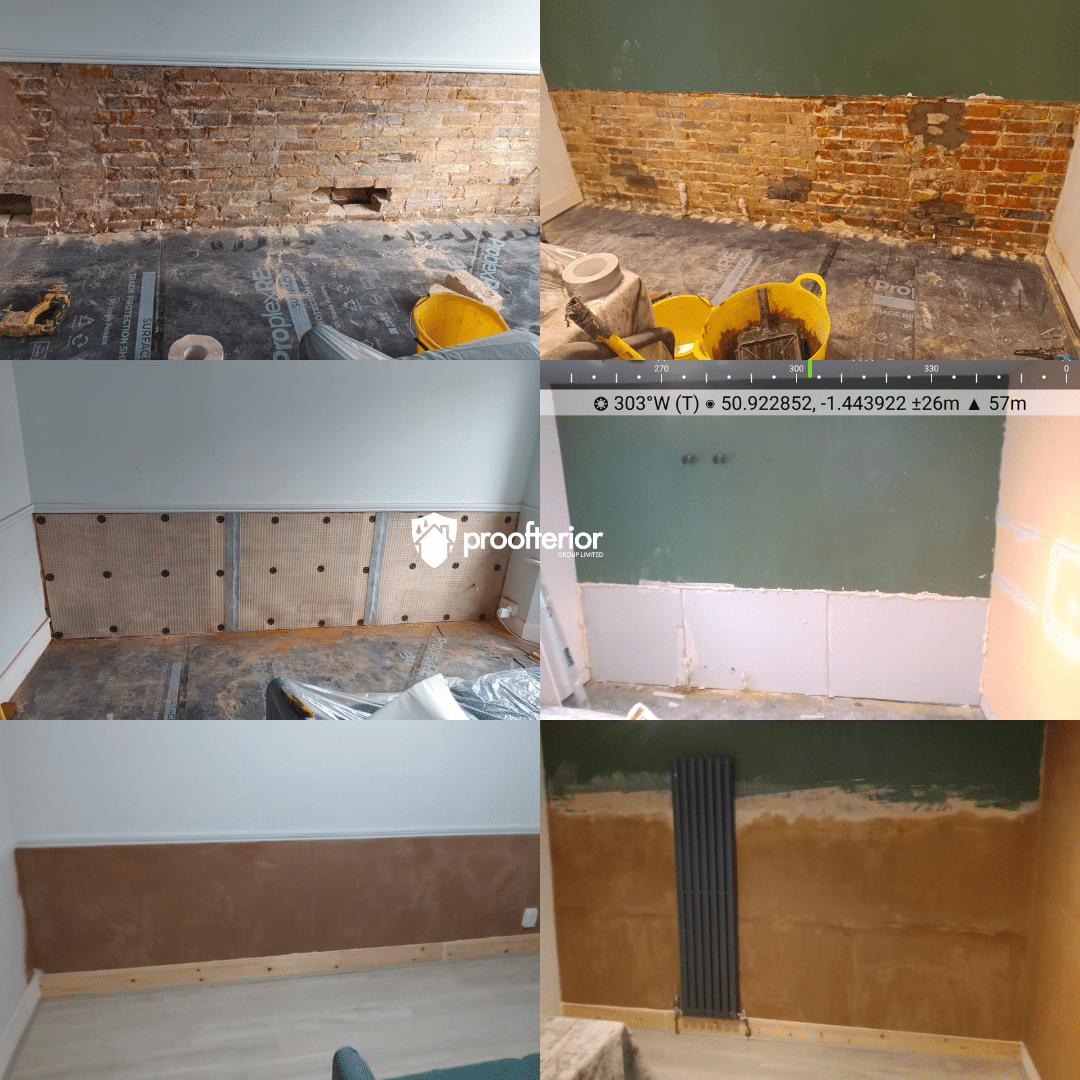
Step-by-Step Damp Proofing and Insulation Strategy in Southampton
The kitchen external wall was treated using the Proofterior Dry System.
Process:
Protection of floors, units and fixtures
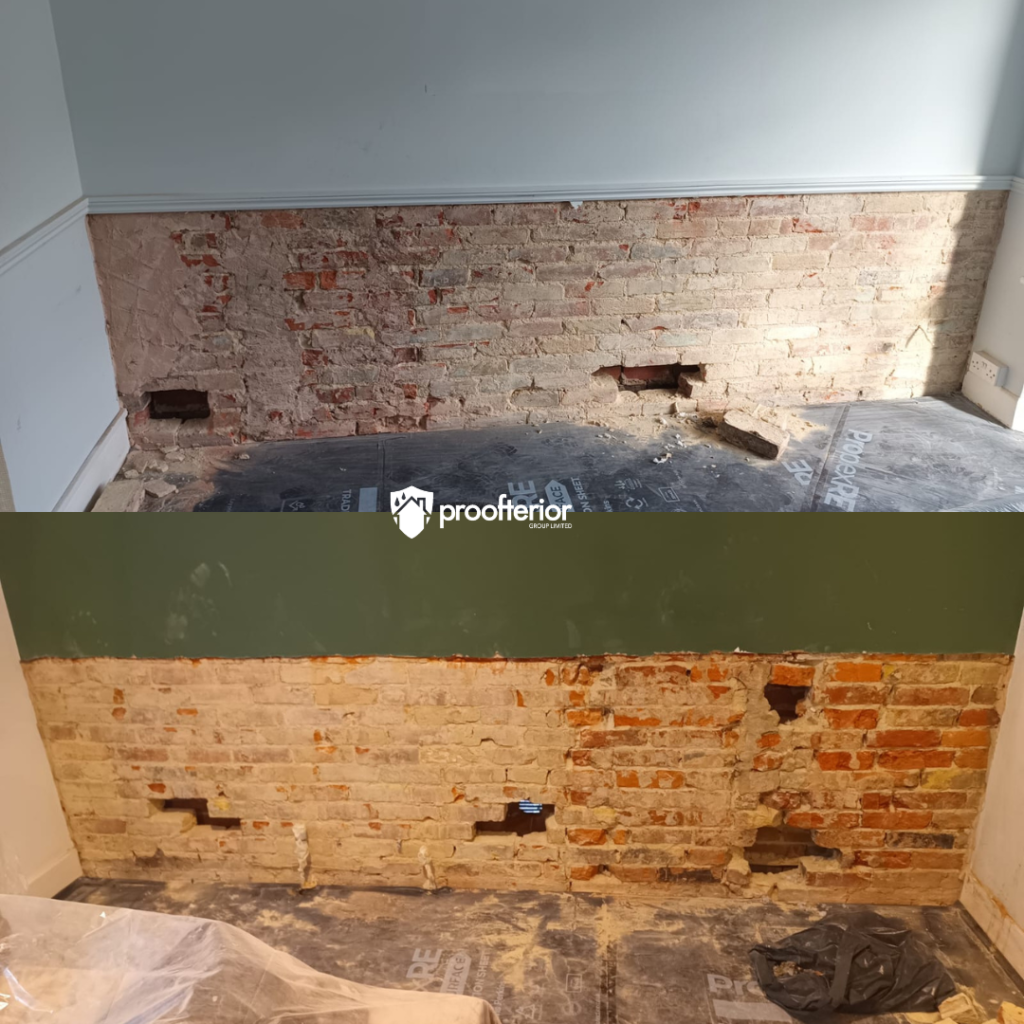
Removal of damp and salt-contaminated plaster to above 1.5m
Installation of a new chemical Damp Proof Course (DPC)
Application of salt-neutralising treatment
Installation of Damp Proof Membrane (DPM) where specified
Full replastering and reinstatement
The chemical DPC injection creates a continuous moisture barrier within the mortar bed, stopping capillary moisture rise from the ground.
This is essential in older Southampton homes where original damp proof courses may have failed or been bridged over time.
To resolve cold bridging and condensation issues, ISO-Therm internal wall insulation was installed in:
Both first-floor bedrooms
Allocated kitchen wall sections.
ISO-Therm is a specialist thin internal insulation system designed to:
Raise surface temperatures
Prevent walls falling below dew point
Eliminate condensation formation
Reduce mould regrowth risk
Thermal imaging images in the inspection documentation show temperature variation at corner junctions, confirming thermal imbalance prior to treatment.
By increasing internal surface temperatures, ISO-Therm interrupts the condensation cycle without trapping moisture within the wall structure.
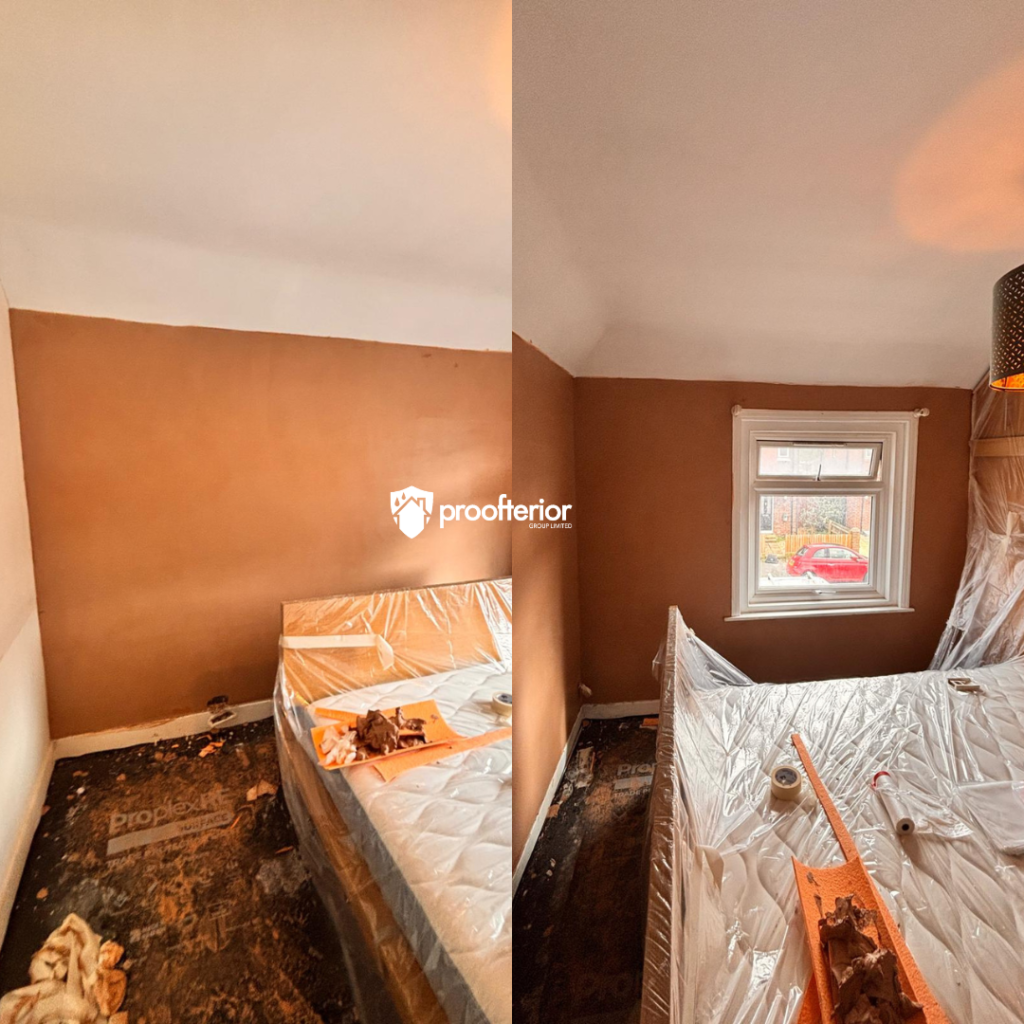
Results: A Fully Integrated Damp and Condensation Solution
Before Treatment
19% moisture readings up to 1.5m in kitchen
Mould growth in bedroom corners
Cold bridging confirmed via thermal imaging
Ongoing condensation in colder junctions
After System Installation
Capillary moisture rise arrested
Salt contamination removed
Internal wall temperatures increased
Condensation risk significantly reduced
Mould cycle broken
This integrated approach is essential. Treating rising damp without addressing cold bridging would allow condensation to persist. Installing insulation without controlling rising damp would leave moisture trapped behind finishes.
The works are supported by a 25-year company guarantee, with optional third-party 30-year backing
Why Damp and Cold Bridging Are Common in Southampton Victorian Homes
Southampton properties, particularly Victorian and early 20th-century homes, often experience:
Failed or absent damp proof courses
Solid wall construction
Thermal bridging at wall junctions
High internal humidity from modern lifestyles
Coastal humidity levels in Southampton can exacerbate condensation risk, particularly in bedrooms and kitchens.
Without professional damp proofing in Southampton, homeowners may repeatedly redecorate mould-affected areas without resolving the root cause.
A professional damp survey in Southampton ensures moisture profiling and thermal diagnostics accurately distinguish between rising damp and condensation mechanisms.
What Southampton Homeowners Should Know About Rising Damp and Condensation
- Rising damp and condensation often occur together in older homes.
- Moisture readings of ~19% up to 1.5m indicate active rising damp.
- Cold bedroom corners are often caused by thermal bridging, not ventilation alone.
- Internal wall insulation can prevent condensation by raising surface temperature.
- Chemical DPC installation is essential to permanently stop rising damp.
If you’re experiencing mould in bedroom corners, damp kitchen walls, or recurring condensation issues in your Southampton home, a professional damp survey is the safest first step toward a guaranteed solution.
Frequently Asked Questions About Damp Proofing.
What are the most common damp problems in Southampton homes?
The most common damp issues in Southampton properties include rising damp, penetrating damp, cold bridging, and condensation-related mould growth. Older Victorian and solid-wall homes in Southampton are particularly vulnerable to rising damp due to failed or bridged damp proof courses. Cold bridging in bedroom corners and kitchens is also common, especially where external walls are poorly insulated. A professional damp survey in Southampton is essential to accurately diagnose which mechanism is affecting your property before recommending treatment.
How is rising damp treated in Southampton properties?
Rising damp treatment in Southampton typically involves installing a chemical damp proof course (DPC) to stop capillary moisture rising through masonry. This is combined with removal of salt-contaminated plaster and installation of a damp proof membrane where required. Cosmetic replastering alone will not resolve rising damp. Professional damp proofing in Southampton must address both the moisture source and the internal damage to provide a long-term solution.
How is rising damp diagnosed during a damp survey?
A professional damp survey in Bournemouth involves moisture meter readings, visual inspection of plaster deterioration, and often thermal imaging to rule out condensation or cold bridging. Rising damp presents as a vertical moisture gradient, with readings highest at the base and reducing above.
Thermal imaging helps confirm that the issue is not isolated cold spots caused by ventilation issues. Accurate diagnosis ensures the correct damp proofing treatment is specified.
Can cold bridging cause mould in Southampton homes?
Yes, cold bridging is a major cause of mould growth in Southampton properties, particularly in bedrooms and kitchens. Cold bridging occurs where sections of external walls lose heat more rapidly, causing surface temperatures to fall below dew point. This leads to repeated condensation, which encourages mould growth. Installing internal wall insulation systems such as ISO-Therm can raise surface temperatures and prevent condensation-related mould.
Seeking expert advice can further clarify specifics related to your property’s unique needs. Professional assessments are invaluable in providing tailored solutions. Always consult with a specialist for the most accurate guidance.
Ready to protect your Bornemouth property?
Book a damp survey in Bornemouth with Proofterior. Our local damp specialists deliver clear diagnosis, tidy repairs, and long-lasting proofing that keeps homes dry, healthy, and comfortable.