
Rising Damp in External-Facing Wall Diagnosed and Eliminated with Chemical DPC Installation in Bornemouth
A detailed damp survey and rising damp treatment case study from a Bournemouth-based damp proofing specialist, showing how moisture diagnostics, thermal imaging, and a full Proofterior Dry System installation permanently resolved rising damp to an external-facing ground floor wall.
Diagnosing Rising Damp to an External-Facing Wall
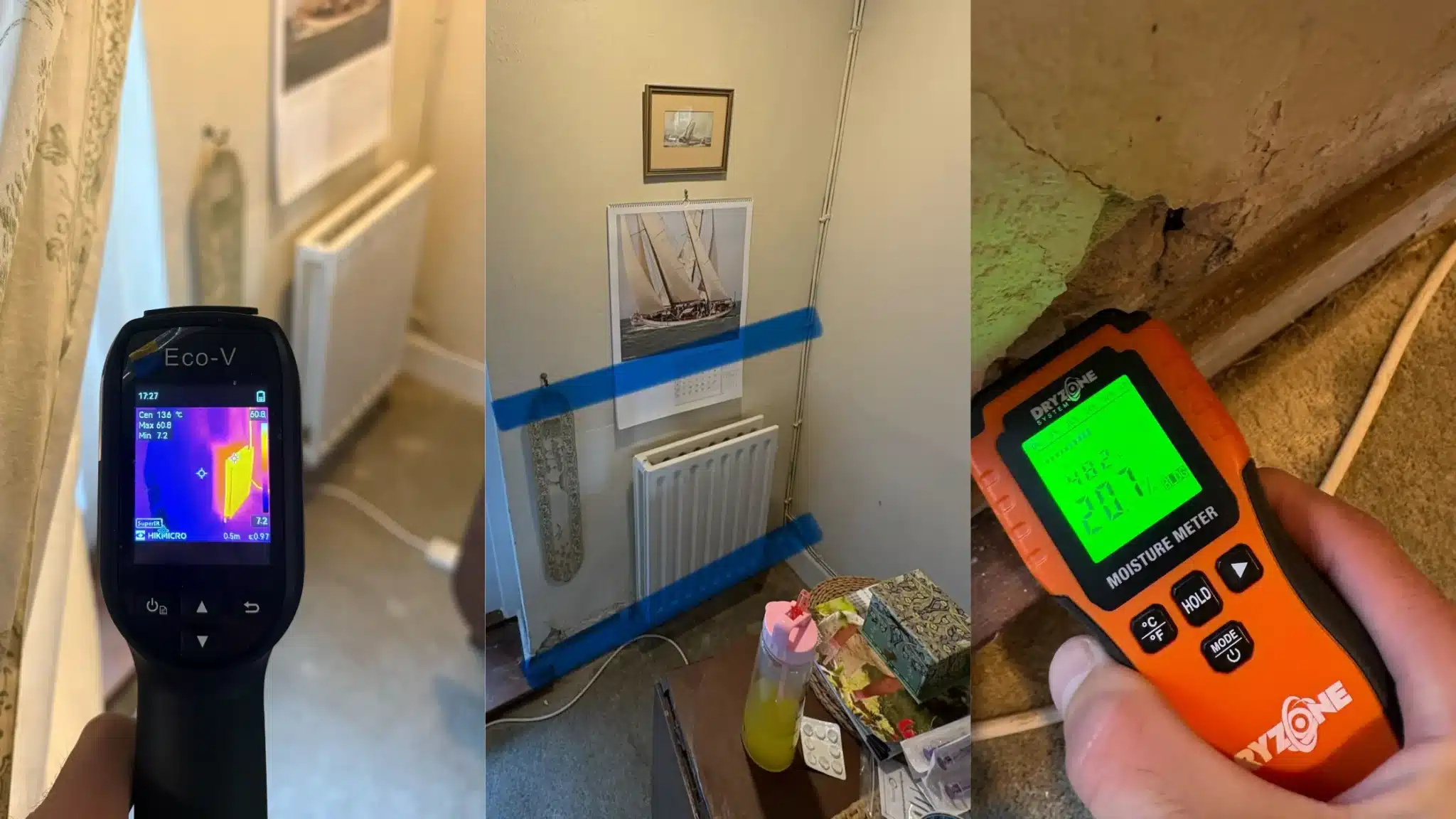
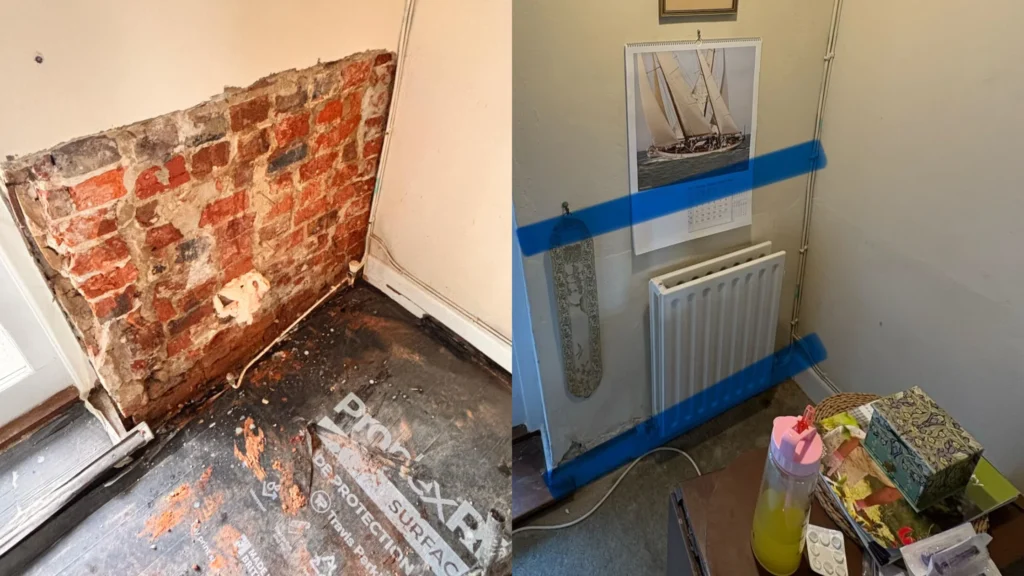
During a paid in-depth damp survey, concerns were raised about deterioration affecting an external-facing ground floor wall. The internal plaster showed extensive bubbling, blistering, and corrosion to decorative finishes concentrated along the lower section of the wall.
Moisture meter readings taken during the professional damp survey recorded values in the 20% moisture content range up to approximately 1.5 metres in height, with readings progressively reducing above this level. This vertical moisture gradient is technically consistent with rising damp caused by capillary action from the ground, rather than condensation or isolated penetrating damp.
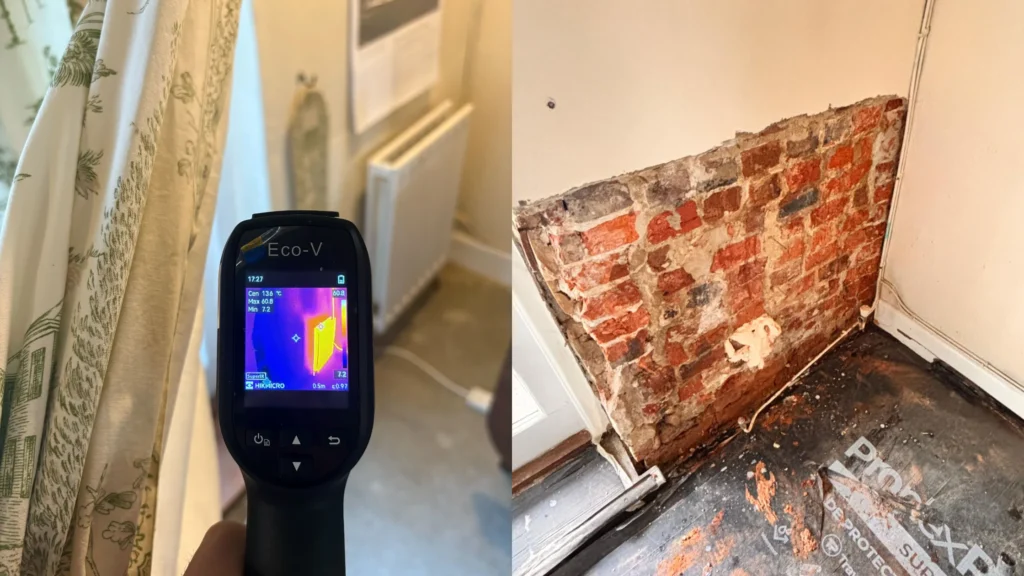
To eliminate cold bridging as the primary cause, thermal imaging was carried out. The imaging confirmed a continuous “rising belt” of dampness rather than isolated cold spots typically associated with condensation issues
This combination of:
High low-level moisture readings
Progressive reduction in moisture with height
Bubbling plaster and salt contamination
Thermal imaging confirmation
led to a clear diagnosis of active rising damp requiring chemical damp proof course installation.
Objective: Arrest Capillary Moisture Rise and Restore a Dry Internal Surface
The primary objective of this damp proofing project was to:
Stop capillary moisture rise from the ground
Install a new chemical DPC barrier
Remove salt-contaminated plaster
Provide a new dry, stable internal surface
Deliver a long-term, guarantee-backed rising damp solution
Rising damp in Bournemouth and surrounding areas is commonly linked to failed or bridged damp proof courses in older properties. Without intervention, moisture continues migrating upward, carrying hygroscopic salts that attract further atmospheric moisture and cause persistent decorative failure.
Simply replastering without installing a new DPC would result in recurring damp. Therefore, a structured, system-based damp proofing approach was essential.
Step-by-Step Rising Damp Treatment Process
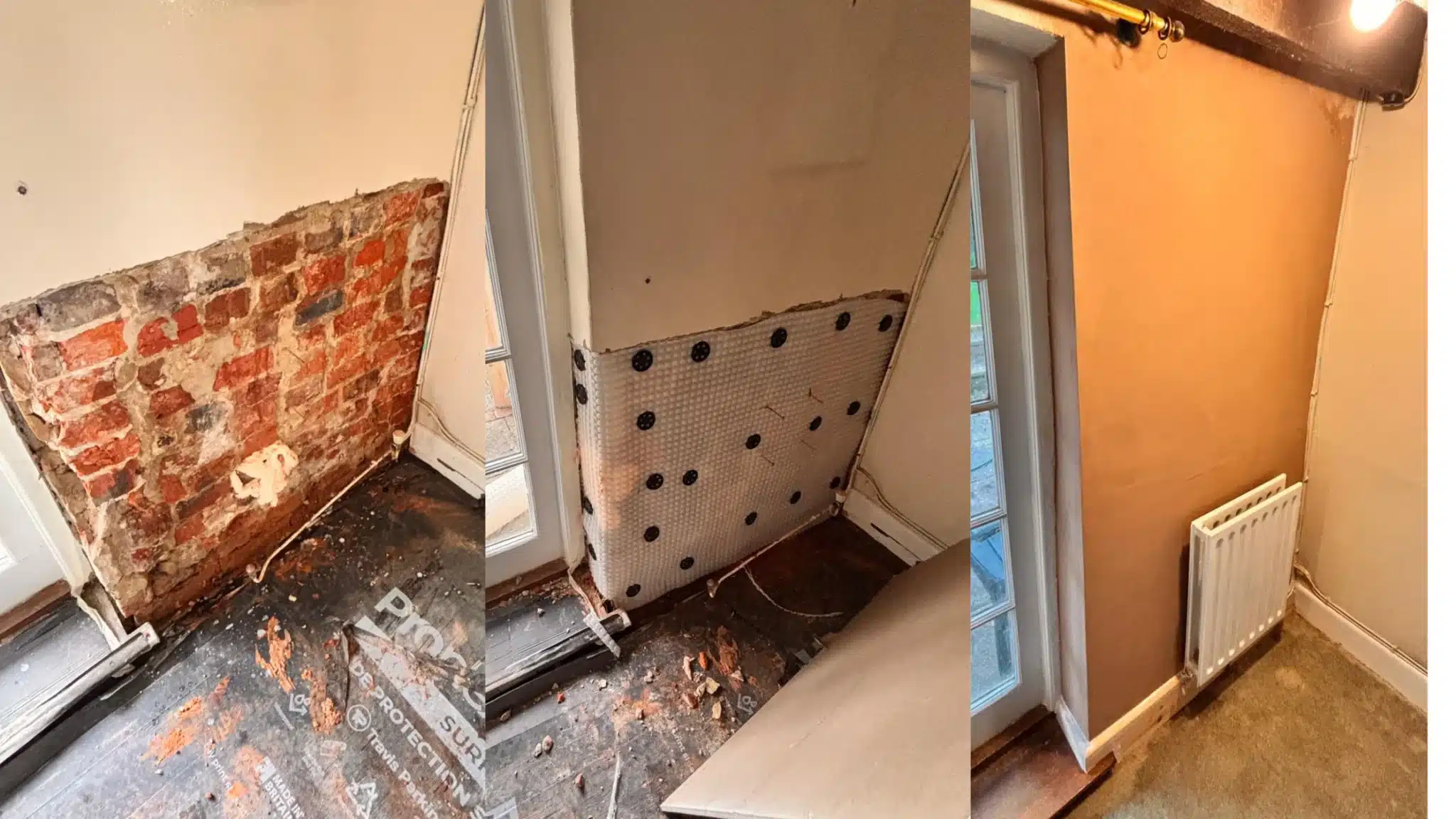
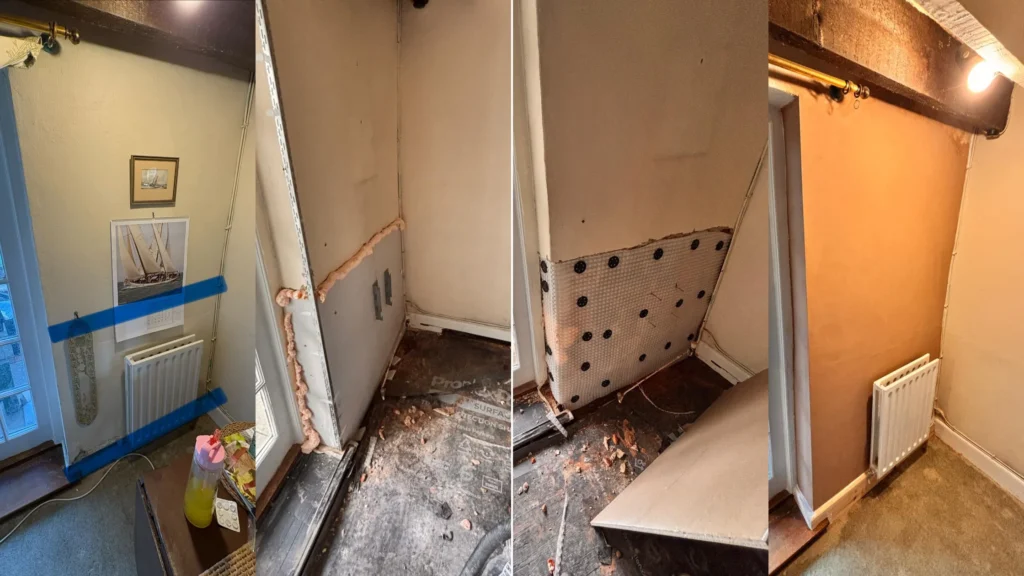
All floors and adjacent areas were protected. Skirting boards and fixtures were carefully removed to allow full access.
Salt-contaminated and defective plaster was mechanically hacked off to at least 300mm above the highest damp indication, exposing the masonry substrate.
This ensures that hygroscopic salts embedded within the plaster do not continue attracting moisture.
A chemical DPC injection was installed into the mortar bed at the correct level along the affected external-facing wall.
This process involves drilling into the bed joint and injecting a silicone-based damp proof cream that cures to form a continuous water-repellent barrier. The DPC arrests capillary moisture rise at source, stopping further ground moisture migration.
This is a proven method of rising damp treatment used by professional damp proofing specialists in Bournemouth and across Dorset.
After DPC installation, a salt-neutralising treatment was applied to stabilise residual hygroscopic salts within the masonry.
Where specified, an internal Damp Proof Membrane (DPM) was installed to create a physical separation between residual background moisture and new finishes. This isolates internal plaster from any remaining salts, preventing visible recurrence of damp staining
The wall was reinstated using a damp-resistant plaster system compatible with the membrane specification.
Skirting boards and fixtures were refitted, leaving a clean, dry and stable internal surface ready for decoration.
The complete system is backed by a 25-year company guarantee, with optional 30-year third-party guarantee options
Results: Measurable Damp Control and Long-Term Protection
Before treatment:
Moisture readings in the 20% range up to 1.5m
Bubbling, blistering plaster
Visible salt contamination
Continuous vertical damp profile
After system installation:
Capillary moisture rise arrested
Salt contamination neutralised
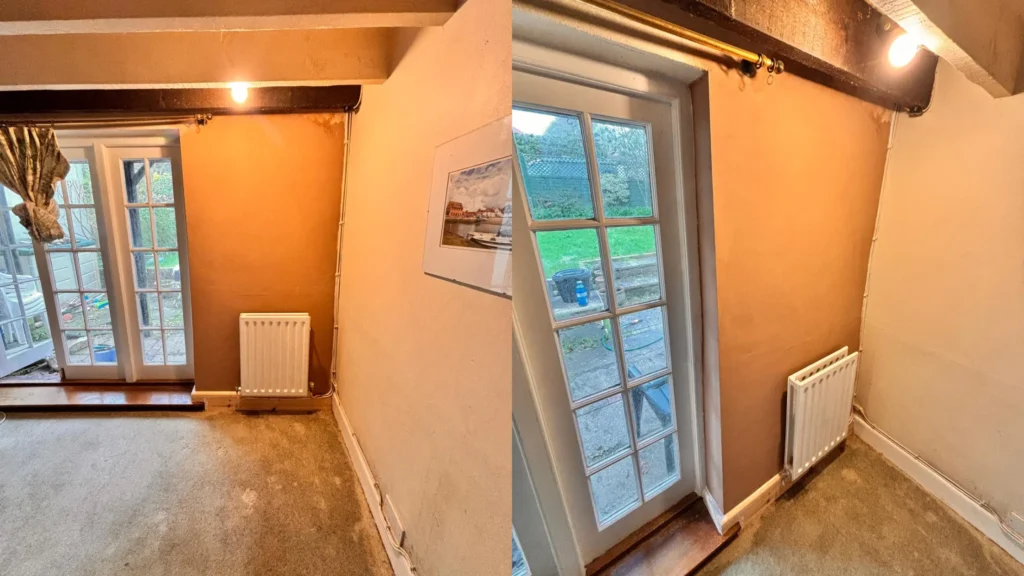
New dry internal finish established
Long-term rising damp protection in place
Over time, residual moisture will evaporate naturally through breathable finishes, leaving the treated wall stable and dry.
Why Rising Damp Is Common in Bournemouth Properties
Rising damp remains one of the most frequently diagnosed issues during damp surveys in Bournemouth. Older homes often have:
DPC failure or deterioration
Bridged damp proof courses due to ground level changes
Porous masonry allowing capillary moisture rise
Coastal moisture conditions in Dorset can further increase background humidity levels, making untreated rising damp more visible and damaging over time.
Without professional damp proofing in Bournemouth, homeowners may repeatedly redecorate without resolving the underlying moisture mechanism.
A structured damp survey using moisture profiling and thermal imaging ensures rising damp is accurately diagnosed before treatment.
What Bournemouth Homeowners Should Know About Rising Damp Treatment
- Rising damp typically presents as a vertical moisture gradient up to 1–1.5 metres.
- Bubbling plaster and “tide marks” are signs of salt contamination.
- Thermal imaging helps distinguish rising damp from condensation.\
- Installing a chemical DPC is essential to stop capillary moisture rise.
- Cosmetic replastering alone will not resolve rising damp.
If you are experiencing bubbling plaster, damp patches at ground floor level, or recurring decorative damage in your Bournemouth property, arranging a professional damp survey is the safest first step.
Frequently Asked Questions About Damp Proofing.
What are the common signs of rising damp in Bournemouth homes?
Common signs of rising damp in Bournemouth properties include bubbling or blistering plaster, peeling paint, “tide marks” along lower wall sections, and damp patches that rise vertically from floor level. Moisture readings typically show higher levels at the base of the wall, gradually reducing with height. In many cases, hygroscopic salts cause persistent staining even after surface drying.
If you notice recurring damp patches at ground floor level, especially on external-facing walls, a professional damp survey in Bournemouth is recommended to confirm whether rising damp is present.
How is penetrating damp different from rising damp?
Penetrating damp and rising damp are often confused, but they behave very differently. Rising damp occurs at ground level and moves upward through capillary action, typically presenting up to around one metre in height. Penetrating damp, on the other hand, can occur at any height on an external wall and is usually linked to rainwater entering through defective masonry or building fabric.
In Bournemouth properties, penetrating damp often appears on exposed elevations or kitchen extension walls where brickwork has become porous. A professional damp survey using moisture diagnostics and thermal imaging is essential to correctly distinguish between rising damp and penetrating damp before recommending damp proofing treatment.
How is rising damp diagnosed during a damp survey?
A professional damp survey in Bournemouth involves moisture meter readings, visual inspection of plaster deterioration, and often thermal imaging to rule out condensation or cold bridging. Rising damp presents as a vertical moisture gradient, with readings highest at the base and reducing above.
Thermal imaging helps confirm that the issue is not isolated cold spots caused by ventilation issues. Accurate diagnosis ensures the correct damp proofing treatment is specified.
What is a chemical DPC and how does it stop rising damp?
A professional damp survey in Bournemouth involves moisture meter readings, visual inspection of plaster deterioration, and often thermal imaging to rule out condensation or cold bridging. Rising damp presents as a vertical moisture gradient, with readings highest at the base and reducing above.
Thermal imaging helps confirm that the issue is not isolated cold spots caused by ventilation issues. Accurate diagnosis ensures the correct damp proofing treatment is specified.
Why is rising damp common in older Bournemouth properties?
Many older Bournemouth homes were built before modern damp proof course standards were consistently applied. Over time, original DPC materials can fail, become bridged by external ground levels, or deteriorate.
Coastal humidity conditions in Dorset can make rising damp symptoms more visible. Without professional damp proofing, moisture can continue migrating through porous brickwork, leading to structural and decorative damage.
Seeking expert advice can further clarify specifics related to your property’s unique needs. Professional assessments are invaluable in providing tailored solutions. Always consult with a specialist for the most accurate guidance.
Ready to protect your Bornemouth property?
Book a damp survey in Bornemouth with Proofterior. Our local damp specialists deliver clear diagnosis, tidy repairs, and long-lasting proofing that keeps homes dry, healthy, and comfortable.