
How to Fix Cold, Damp, Wet Walls in a Victorian Home in Dorchester
Understanding the root causes of dampness is the first step toward effective remediation. Common culprits include poor ventilation, leaks, and inadequate insulation. This detailed case blog will show how professional damp removal using chemical damp inject (DPC inject) and ventilation improvements can restore a Victorian home property.
Cold, Damp Walls in Victorian Homes Explained.
Victorian homes across Dorchester are especially prone to cold, damp, wet walls due to their age, construction style, and reliance on natural breathability rather than modern damp proofing systems. These properties typically feature solid masonry walls, suspended timber floors, and either no damp proof course or one that has failed over time.
In this area, moisture-retentive ground conditions combined with seasonal rainfall place additional pressure on external walls. When moisture rises from the ground through masonry, it carries salts into the wall fabric, causing plaster to deteriorate and walls to remain persistently cold and damp. This not only affects comfort but also prevents rooms from feeling clean, increases heating costs, and accelerates material decay if left untreated.

Investigation Findings From a Victorian Property in Dorchester.
A comprehensive damp survey was carried out by Proofterior at this Victorian property in Dorchester, focusing on the ground floor living and dining rooms where the homeowner reported ongoing dampness. Using calibrated diagnostic equipment, high moisture readings were recorded consistently across both rooms, with the most severe damp located along the lower sections of the external walls. Moisture mapping confirmed a pattern consistent with rising damp, alongside evidence of inadequate sub-floor ventilation.
Importantly, no signs of plumbing leaks, internal service failures, or external water ingress were identified, ruling out condensation or isolated defects. The findings confirmed that the dampness was ground-sourced and structural in nature, requiring professional damp removal rather than surface-level treatments.

Understanding Rising Damp and the Role of Poor Ventilation
Rising damp occurs when moisture travels upward through masonry via capillary action, a common issue in Victorian construction where damp proof courses were either absent or rudimentary. As this moisture rises, it deposits hygroscopic salts into plaster and brickwork, meaning walls continue to attract moisture from the air even during dry conditions. This makes walls feel permanently cold and wet and causes finishes to fail repeatedly.
In this property, the issue was compounded by poor sub-floor ventilation beneath the suspended timber floor. Limited airflow allowed moisture to build up beneath the property, increasing humidity levels internally and raising the risk of timber decay. Addressing both rising damp and ventilation was therefore essential for a clean, long-term solution.

Professional Damp Removal Using the Proofterior Dry System.
To properly resolve the issue, Proofterior installed its Dry System, a structured damp removal approach designed specifically for older properties. All salt-contaminated plaster was removed to an appropriate height to eliminate ongoing moisture attraction. A chemical damp inject, also known as a DPC inject, was then installed into the masonry to form a new chemical damp proof course, preventing further ground moisture from rising through the walls.
The exposed masonry was treated with a specialist salt-neutralising solution to prevent residual salts from reactivating. Finally, the walls were fully reinstated using breathable, damp-resistant materials suitable for Victorian construction, restoring the living and dining rooms to a dry, warm, and clean condition.

Improving Sub-Floor Ventilation With New Air Bricks.
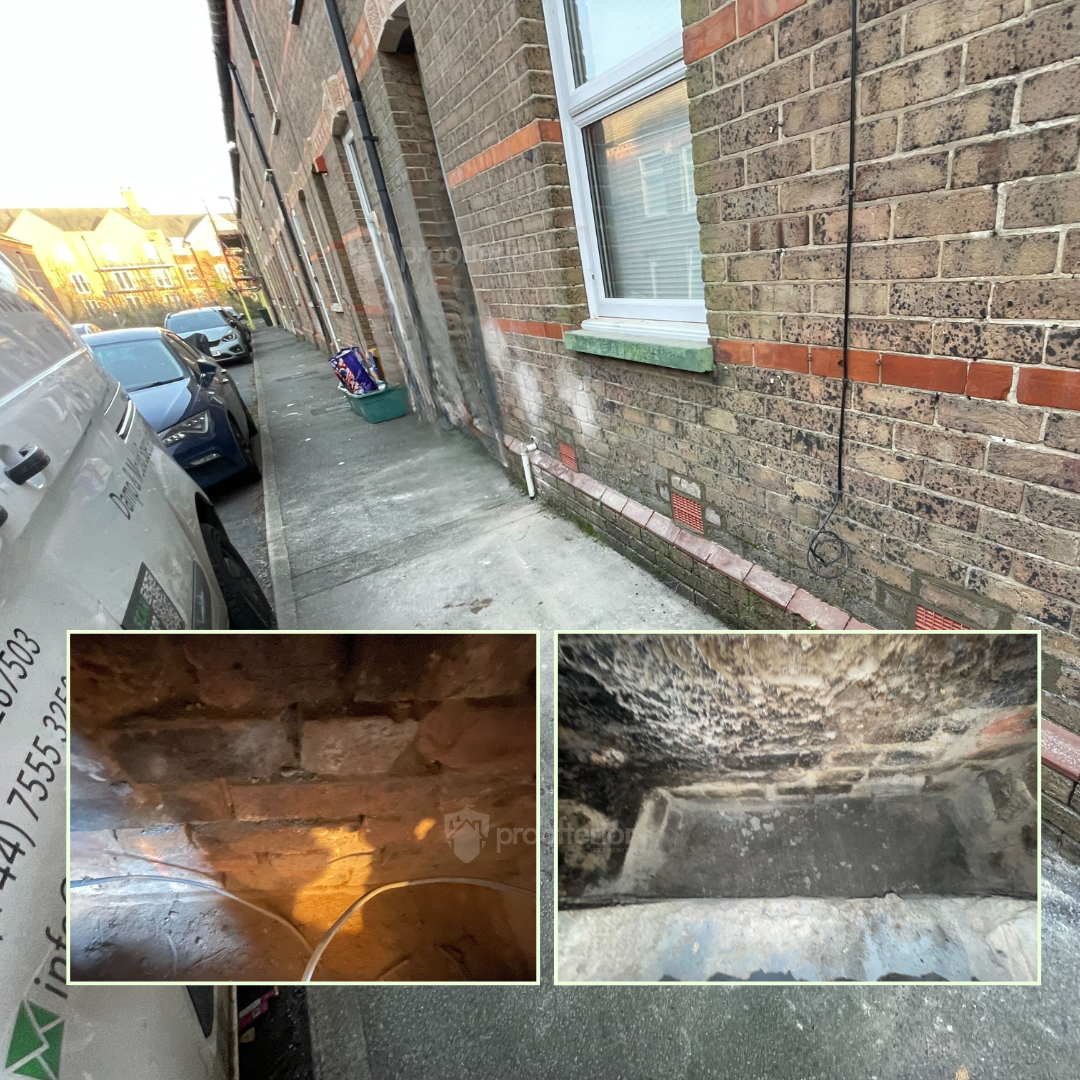
Alongside the damp proofing works, Proofterior supplied and installed three new air bricks to the front external elevation of the Dorchester property. These air bricks significantly improved airflow beneath the suspended timber floor, allowing moisture vapour to disperse naturally rather than becoming trapped.
Improved sub-floor ventilation plays a critical role in preventing recurring damp, protecting structural timbers from rot, and supporting the effectiveness of a chemical damp inject system. In Victorian homes, ventilation is just as important as damp proofing, and neglecting it often leads to repeat failures. This combined approach ensures the property remains dry, structurally sound, and healthier long term.

Long-Term Results and Advice for Dorchester Homeowners.
Following completion of the works, the homeowner experienced noticeably warmer rooms, improved indoor air quality, and walls that remained clean and free from staining. This Dorchester case study highlights why cosmetic fixes such as damp-proof paints, dehumidifiers, or replastering alone often fail. Without proper damp removal and ventilation, moisture continues to rise unseen.
Victorian homes require a considered, building-appropriate solution that addresses moisture at source. If you own a period property in Dorchester and are experiencing cold, damp, wet walls, a professional damp survey followed by chemical damp inject installation and ventilation improvements is the most reliable way to protect your home, your health, and your investment for the future.
Frequently Asked Questions About Damp Removal
How can I tell if damp on my internal wall is serious?
Damp-proof paints and dehumidifiers may temporarily reduce visible symptoms but they do not stop rising damp. Without proper damp removal and a chemical damp inject, moisture will continue to rise behind the walls, leading to recurring problems and further damage.
Why does wall reinstatement matter after damp proofing?
If left untreated, rising damp can damage plaster, finishes, timber floors, and structural elements. Over time, it may lead to timber decay, increased repair costs, and reduced property value.
What is a DPC inject?
A DPC inject is a chemical damp proof course installed into masonry to stop ground moisture rising up through walls.
Is damp proofing internal walls different from treating condensation?
Good sub-floor ventilation allows moisture to escape beneath suspended timber floors, reducing damp and the risk of timber decay.
Do air bricks help prevent damp?
Yes. Air bricks improve airflow under the floor, helping control moisture and supporting long-term damp removal.
Ready to protect your Dorchester property?
Book a damp survey in Dorchester with Proofterior. Our local damp specialists deliver clear diagnosis, tidy repairs, and long-lasting proofing that keeps homes dry, healthy, and comfortable.