
Dropping Chimney Stacks: What It Means, Why It Happens, and How to Fix It
Redundant or deteriorating chimney stacks are a common source of water ingress, damp staining, and structural stress. When chimneys are no longer in use, they often become vulnerable points in the roof where moisture can enter and cause ongoing issues internally. At Proofterior, chimney stack removal, often referred to as dropping a chimney stack, is carried out following structural and moisture assessment to ensure the work resolves the underlying risk and protects the building fabric long term.
Chimney stacks were designed to work as part of an active heating system. Once fireplaces are removed or flues are no longer used, chimneys lose the airflow and warmth that helped keep them dry. This can lead to trapped moisture, deteriorating masonry, failed flashings, and damp penetration into ceilings, walls, and roof timbers.
Common issues associated with unused chimney stacks include:
Persistent damp staining around chimney breasts
Failed lead flashing and mortar joints
Porous brickwork absorbing rainwater
Cracked flaunching and defective chimney caps
Cold, unventilated flues trapping moisture
Without intervention, these issues often worsen over time.
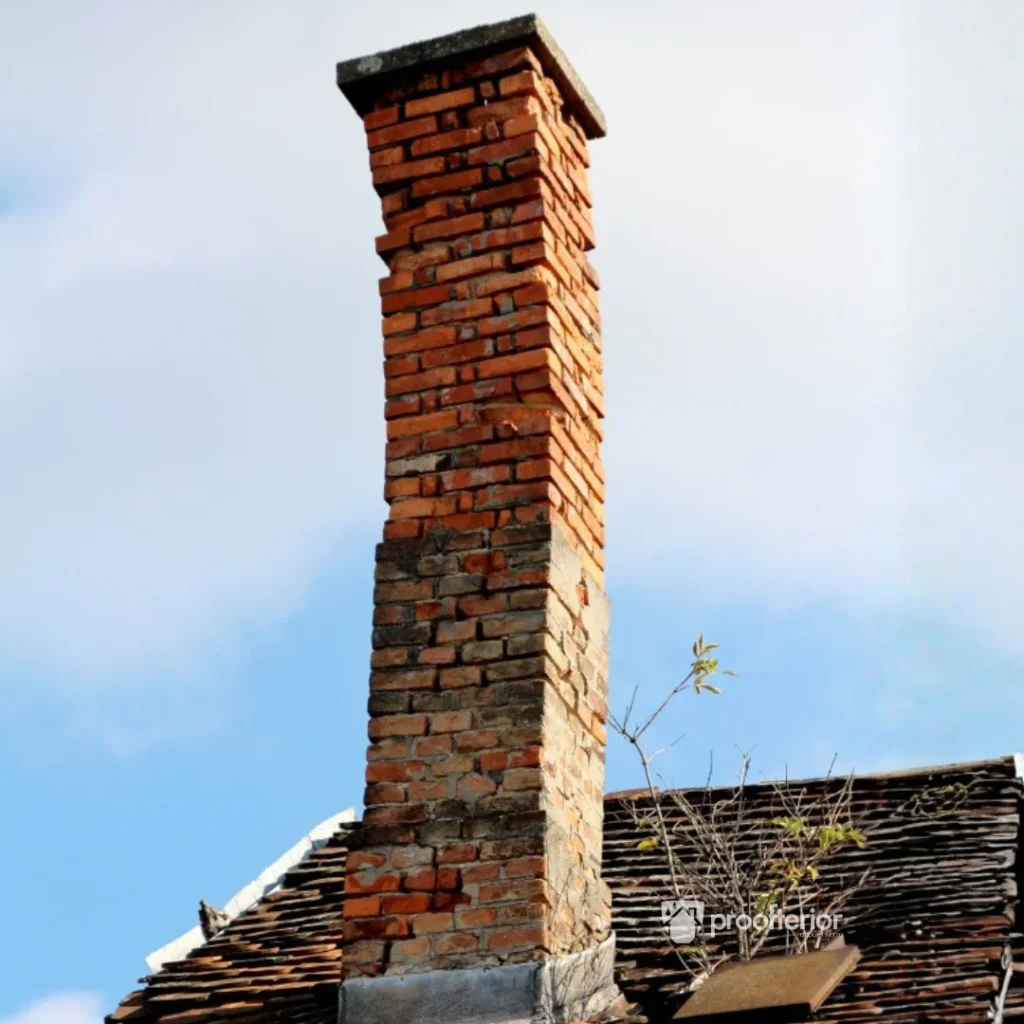
Chimneys are one of the most exposed parts of a property, projecting above the roofline and facing weather from multiple directions. Unlike walls or roofs that are designed to shed water quickly, chimney masonry is often absorbent, meaning rainwater can soak into bricks and mortar rather than run off immediately. Once moisture enters the structure, it can travel downward through the chimney and into surrounding roof timbers, ceilings, and internal walls.
Water damage in chimneys rarely comes from a single heavy leak. More commonly, it develops gradually as small defects allow repeated moisture ingress over time. Cracked mortar, worn brickwork, failed flashing, or damaged flaunching can all provide pathways for water to enter. In unused chimneys, the absence of heat and airflow prevents moisture from drying out, allowing damp conditions to persist and worsen.
Understanding how water behaves within a chimney is essential when deciding on the correct solution. Surface repairs may slow moisture entry, but if the chimney remains a cold, absorbent structure, damp can continue internally. A professional assessment helps determine whether targeted repair, improved protection, or removal of the chimney stack is the most effective way to stop water damage and protect the wider building fabric.
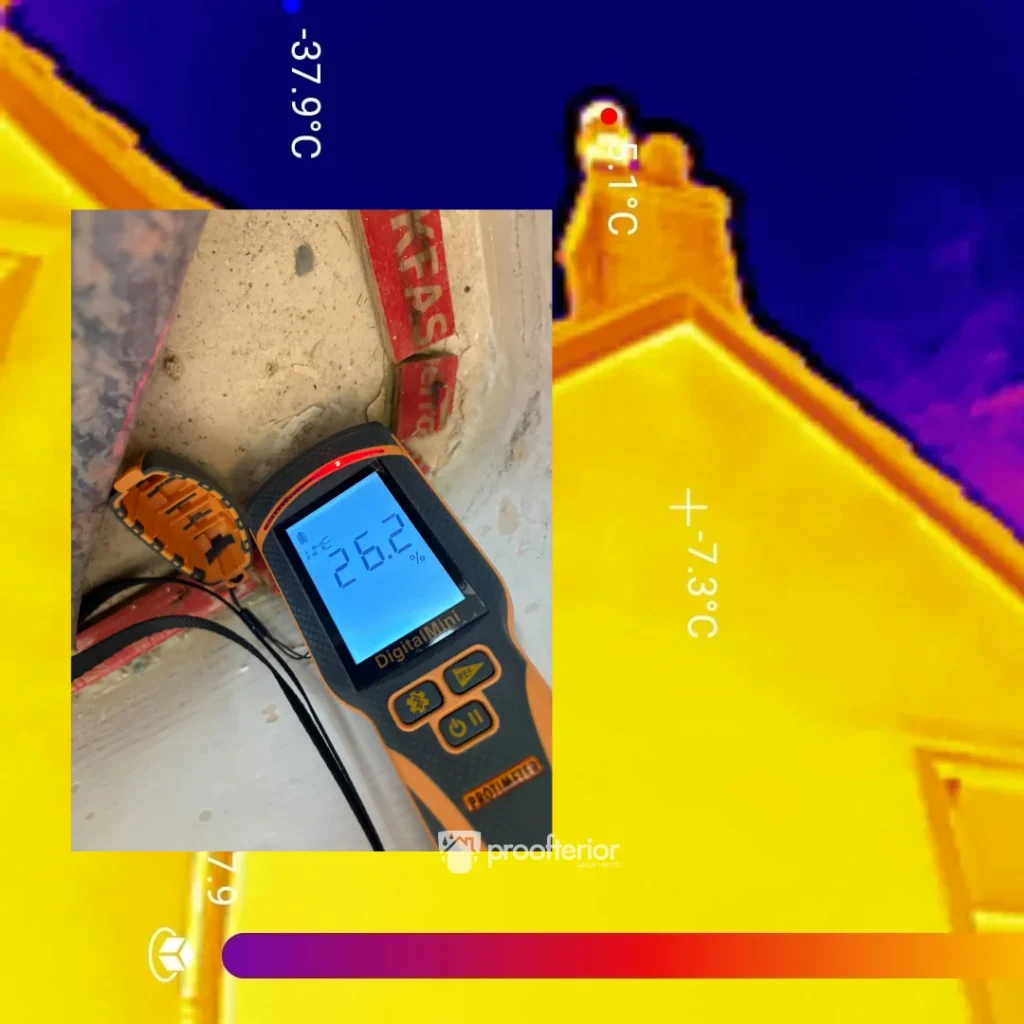
Water damage to chimneys usually develops through a combination of exposure, ageing materials, and failed detailing. Because chimneys sit above the roofline and are exposed on multiple sides, even small defects can allow water to penetrate and spread internally over time.
Common causes of chimney-related water damage include:
Deteriorated brickwork and mortar joints allowing rainwater to soak into masonry
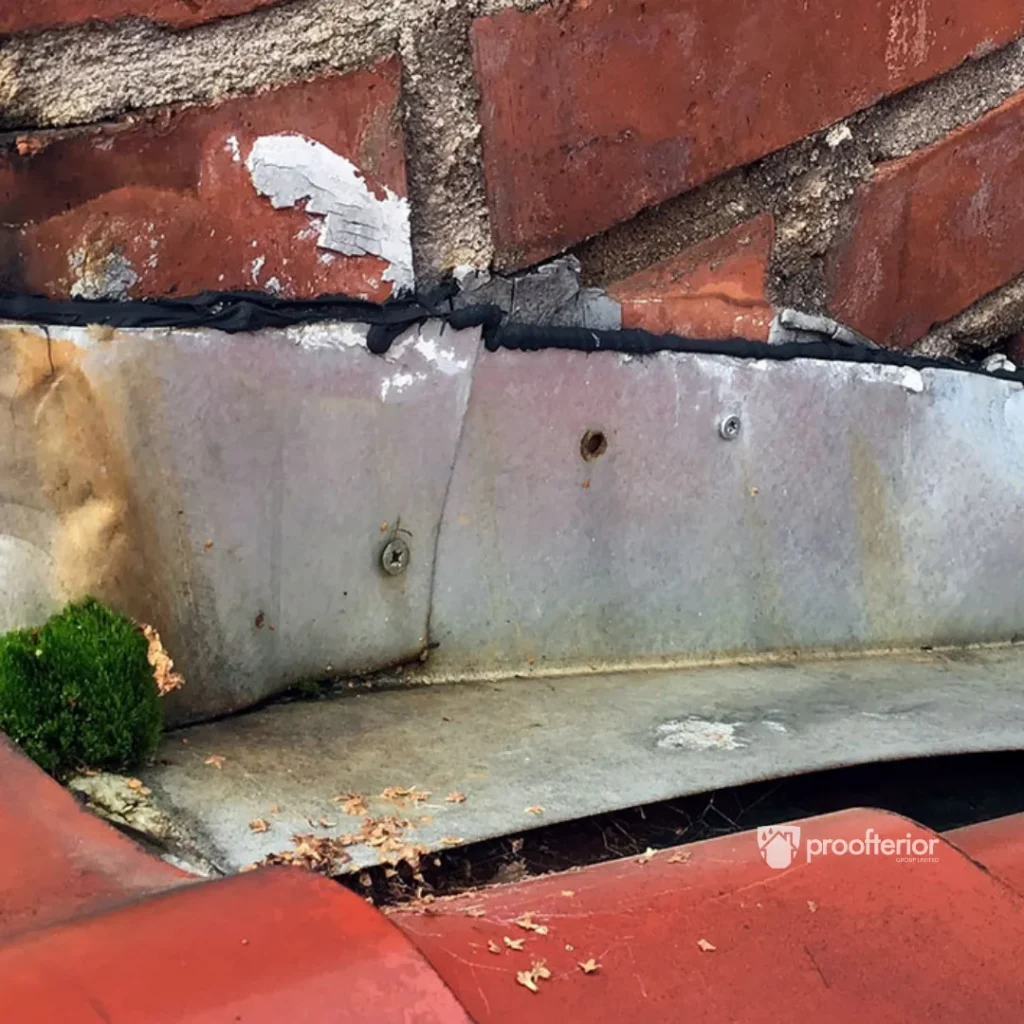
Failed lead flashing where the chimney meets the roof, creating a direct water pathway
Cracked or damaged flaunching around chimney pots, allowing water to collect and penetrate
Defective chimney caps or open flues permitting rainwater entry
Unused chimneys where lack of heat and airflow allows moisture to remain trapped
Wind-driven rain, particularly in exposed or coastal areas
Without proper drainage or evaporation, absorbed moisture can migrate into surrounding roof timbers, ceilings, and walls.
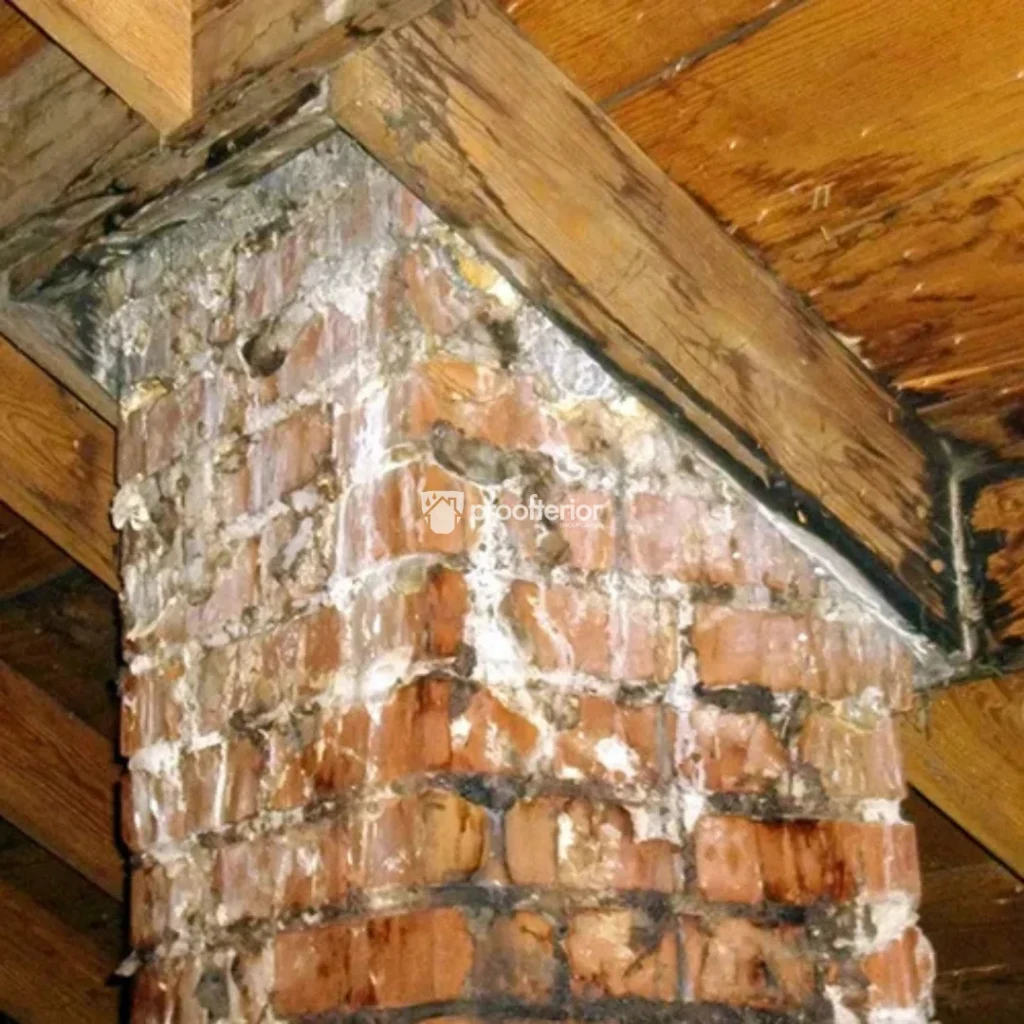
Water damage linked to chimneys often shows subtle signs before more serious issues develop. Recognising these early can help prevent further deterioration and reduce repair costs.
Common signs include:
Damp staining or discolouration around chimney breasts or ceilings
Peeling paint or bubbling plaster near chimney areas
Musty odours in rooms adjacent to chimneys
Crumbling mortar or visible brick deterioration externally
White powdery deposits (efflorescence) on brickwork
Leaks or damp patches that worsen during or after rainfall
These signs usually indicate ongoing moisture penetration rather than a one-off issue. A professional assessment helps identify whether repair, improved protection, or chimney stack removal is the most appropriate long-term solution.
Repair vs Removal: Which Chimney Solution Is Right?
Repair is often appropriate where chimneys remain structurally sound and in use. Removal is recommended where chimneys are redundant and repeatedly contribute to damp or roof leaks.
| Repairing a Chimney Stack |
|---|
- Suitable where the chimney is in good structural condition.
- May include repointing, flashing repairs, caps, or flaunching.
- Can reduce water ingress short-term
- Requires ongoing inspection and maintenance
- Risk of recurring damp if moisture remains trapped
| Dropping a Chimney Stack |
|---|
- Suitable where the chimney is unused or severely deteriorated,
- Involves removing the external stack and reinstating the roof.
- Removes the chimney as a moisture pathway entirely.
- Reduces long-term maintenance requirements
- Permanent solution when repairs are no longer effective
Common Chimney Stack Problems Requiring Immediate Attention
Chimney stacks are exposed to constant weathering and, over time, even minor defects can develop into serious structural or water ingress issues. Identifying and addressing these problems early helps prevent escalating damage to both the chimney and the wider property.
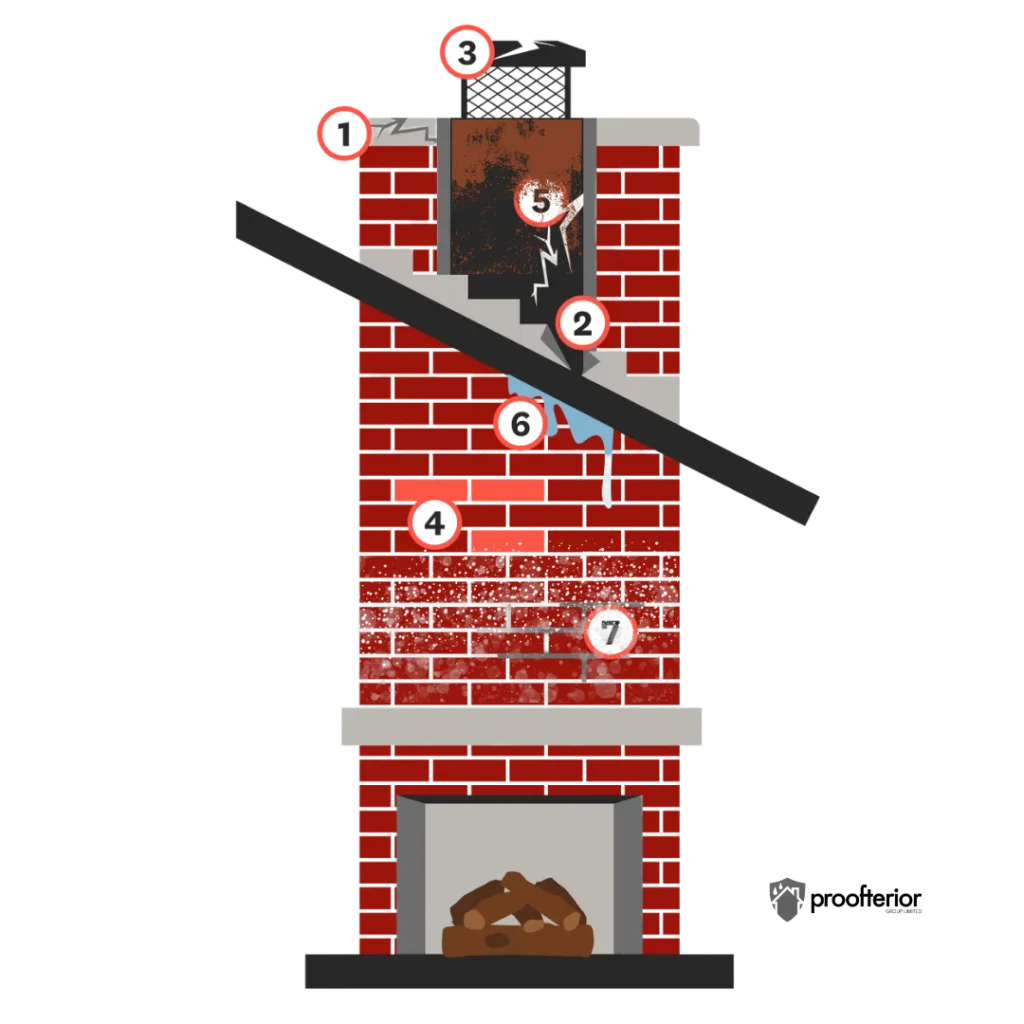
Cracks in chimney bricks or mortar joints often develop due to repeated exposure to rain, wind, and temperature changes. Once cracks form, water can penetrate the masonry, accelerating deterioration and compromising structural stability. Left unaddressed, moisture ingress can lead to internal damp and further breakdown of the stack.
Flashing seals the junction between the chimney and the roof. When flashing becomes loose, corroded, or damaged, it creates a direct pathway for water to enter the roof structure and chimney masonry. This is one of the most common causes of chimney-related leaks and often results in internal damp staining.
The chimney crown and cap play a key role in preventing water from entering the stack. Cracks in the crown or a missing or damaged cap allow rainwater to penetrate directly into the chimney, leading to internal damp, masonry breakdown, and long-term structural issues.
A chimney that appears to be leaning or pulling away from the roofline is a strong indicator of structural movement or mortar failure. This can be caused by foundation settlement, long-term moisture damage, or material decay. A leaning stack presents a safety risk and should be assessed promptly to determine whether repair or removal is required.
Rust on chimney caps, cowls, or dampers is a clear sign of prolonged moisture exposure. Corrosion reduces the effectiveness of these components and often points to wider moisture issues within the chimney stack. Addressing these problems early can prevent more extensive deterioration.
Damp patches or staining on ceilings or walls near a chimney breast usually indicate active water ingress. This may be linked to defective flashing, porous brickwork, or issues at the chimney crown. Internal staining should always be investigated, as ongoing moisture can lead to mould growth and damage to internal finishes.
White powdery deposits on chimney masonry are caused by salts being drawn to the surface by moisture. While efflorescence itself is not structurally damaging, it indicates excessive water absorption within the chimney. If ignored, this ongoing moisture can accelerate brick and mortar decay.
Proofterior’s Detailed Chimney Damp Surveys
At Proofterior, we know that a chimney stack problem is rarely just cosmetic. Our detailed and thorough property surveys are designed to identify damp-related damage before it becomes a structural risk.
Our survey includes:
Inspecting gutters and downpipes for leaks or blockages.
Checking mortar joints and flashing for cracks or failed seals.
Assessing chimney breast walls for internal damp signs.
Providing a clear report and recommendation — whether it’s repair, repointing, or chimney stack removal.
✅ With Proofterior, you get more than a quick fix. You get expert diagnosis and a long-term solution that keeps your home safe and dry.
Areas We Cover
Proofterior provides independent damp surveys and specialist damp proofing services across Dorset, Hampshire, and surrounding areas. We work with homeowners, landlords, property managers, and buyers who need clear answers, accurate diagnosis, and long-term solutions, not guesswork or sales-driven recommendations.
FREQUENTLY ASKED QUESTIONS
How do I know if my chimney stack is unsafe?
Look for loose or missing bricks, cracks in the mortar, damp stains around the chimney breast, or visible leaning from outside. These are all signs that your chimney needs urgent attention.
Can damp cause chimney stacks to deteriorate?
Yes. Broken gutters, poor flashing, and cracked mortar allow water to penetrate, leading to damp that weakens the chimney stack over time.
Should I repair or remove a chimney stack?
It depends on the damage. Minor issues can be fixed with repointing or flashing repair, but severe deterioration often requires chimney stack removal for safety.
Who should I contact if my chimney stack is dropping?
Always call a qualified damp-proofing and property care company like Proofterior. We provide free surveys to assess chimney condition and offer safe, long-term solutions.
Don’t Ignore a Dropping Chimney Stack
If you’ve noticed loose bricks, damp patches, or signs of chimney deterioration, book your free property survey with Proofterior today. We’ll identify the issue, provide honest advice, and protect your home for the long term.